 Whatcom County
 Asphalt Shingle Roofing Built for the Samish Climate
Samish sits close enough to the water that homes here take a different kind of weather than roofs just a few miles inland. Salt-laden air moves through the area steadily, driving rain comes in sideways more often than straight down, and the long, damp stretch from fall through spring gives moss every opportunity it needs to take hold. An asphalt shingle roof that's installed correctly for these conditions will hold up for decades. One that's installed to a generic spec — the kind used in drier, calmer parts of the country — will show its age early, usually in the form of curling shingle edges, granule loss, and moss creeping up from the eaves.
We install asphalt shingle roofs on Samish homes with those specific stressors in mind. That means paying attention to details that don't matter as much in other climates but matter a great deal here: ventilation that actually moves moist air out of the attic, underlayment that can handle prolonged wetting, and flashing work that assumes wind-driven rain will find every gap you leave it.
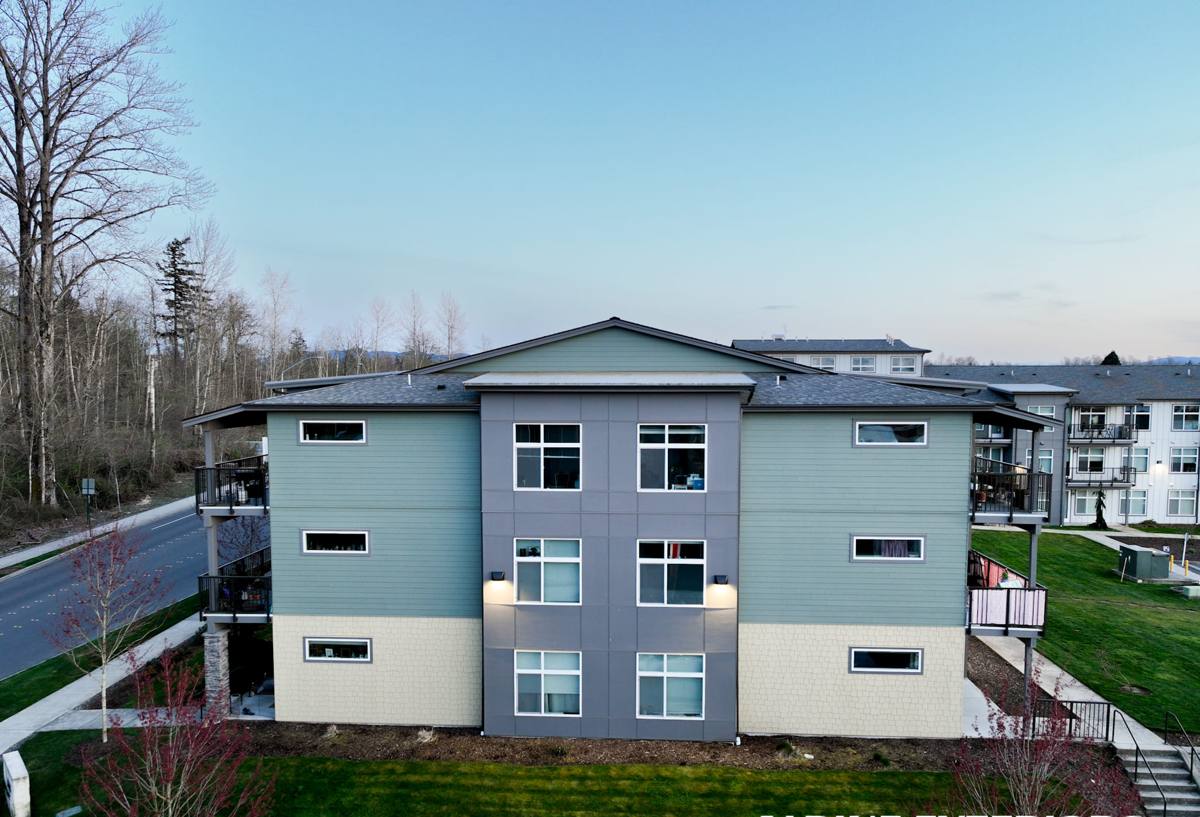
What Samish Homes Actually Need From a Roof
Salt Air and Metal Components
Salt exposure accelerates corrosion on any exposed metal — nails, flashing, vent caps, and drip edge. Standard galvanized fasteners can start showing rust streaks on shingles well before the shingles themselves are due for replacement. We spec corrosion-resistant fasteners and flashing for homes in this area rather than defaulting to whatever's cheapest, because a few dollars saved on hardware isn't worth a roof that stains or leaks at the metal joints in year eight instead of year twenty-five.
Driving Rain and Wind-Driven Water
Rain that comes in at an angle doesn't behave like rain falling straight down. It gets pushed under shingle tabs, into valleys, and around anything protruding through the roof deck — vents, chimneys, skylights. Proper installation accounts for this with correctly lapped underlayment, ice-and-water shield or a comparable self-adhered membrane at vulnerable points, and valley and flashing details that are sealed for lateral water movement, not just gravity.
Moss Season
Whatcom County's wet season runs long, and shaded, north-facing roof slopes or those under tree cover stay damp for extended stretches. Moss doesn't just look bad — it holds moisture against the shingle surface, works its way under tabs, and lifts them over time, which is how a moss problem turns into a leak problem. Roof pitch, tree overhang, and shingle selection all factor into how much moss pressure a given roof will face, and we walk through that with the homeowner before we ever propose a spec.
What a Correct Asphalt Shingle Installation Involves
A shingle roof is a system, not a single layer of material. Skipping or cutting corners on any one part of the system shortens the life of the whole roof, even if the shingles themselves are high quality.
- Tear-off and deck inspection — rotted or soft decking gets replaced, not shingled over
- Ice-and-water shield at eaves, valleys, and roof penetrations
- Synthetic underlayment across the full deck, properly lapped for water shedding
- Corrosion-resistant drip edge and step/counter flashing at all walls and penetrations
- Balanced intake and exhaust ventilation sized to the attic volume
- Shingles installed to manufacturer nailing pattern and exposure specs, not "close enough"
- Ridge cap and hip installation matched to the field shingle
- Final walk-through covering gutters, downspout tie-ins, and cleanup
Choosing the Right Shingle for This Area
Not every asphalt shingle product performs the same way in a wet, moss-prone climate. Algae-resistant shingles, which contain copper-releasing granules, are worth the modest upcoat in a place like Samish because they slow moss and algae growth on the roof surface — a real, measurable trade-off rather than a marketing add-on. Architectural (dimensional) shingles also tend to shed water better than older three-tab profiles because of their layered design, and most manufacturers now warranty them for wind speeds well above what three-tab products carry.
| Shingle Type | Typical Lifespan Here | Best Fit |
|---|---|---|
| 3-Tab Asphalt | 15–20 years | Budget-conscious re-roofs, low-slope simplicity |
| Architectural/Dimensional | 25–30 years | Most Samish homes; better wind and water shedding |
| Algae-Resistant Architectural | 25–30 years | Shaded lots, north-facing slopes, heavy moss pressure |
| Premium/Designer Asphalt | 30+ years | Steeper rooflines, higher-visibility homes |
We don't push homeowners toward the most expensive option by default. We look at the roof's slope, sun exposure, tree cover, and the homeowner's timeline for staying in the house, then recommend the product that actually matches those conditions.
Our Process, Start to Finish
1. On-Site Assessment
We walk the roof and attic in person before quoting anything. That includes checking current ventilation, looking for signs of past leaks or moss damage, and noting anything about the site — tree overhang, roof pitch, existing flashing condition — that affects the spec.
2. A Written, Itemized Estimate
The estimate spells out material, tear-off scope, deck repair contingencies, and ventilation work as separate line items, so there's no ambiguity about what's included before work starts.
3. Tear-Off and Deck Repair
We remove the existing roofing down to the deck rather than layering over it, and we address any soft or rotted sheathing before new material goes down — roofing over a compromised deck just hides the problem.
4. Full System Installation
Underlayment, flashing, ventilation, and shingles go in as a coordinated system, following the practices outlined above.
5. Final Inspection and Cleanup
We walk the finished roof with the homeowner, confirm gutters and downspouts are functioning correctly with the new roofline, and make sure the site is cleared of debris and stray fasteners.
Maintenance That Extends Roof Life in This Climate
A well-installed roof still benefits from periodic attention in a climate like this one. None of it is complicated, but skipping it shortens the roof's usable life.
- Clear moss buildup gently — no pressure washing directly on shingles, which strips granules
- Keep gutters and downspouts clear so water doesn't back up under the eaves
- Trim back overhanging branches to reduce shade and debris buildup
- Have flashing around chimneys and vents checked every few years, since that's where most leaks start
- Address small leaks immediately rather than waiting — trapped moisture under shingles causes damage that spreads
Why It Matters to Hire a Crew That Already Works This Area
A roofing crew that mostly works drier, inland regions doesn't build the same habits a Whatcom County crew builds by default. They may not automatically spec algae-resistant shingles, may under-ventilate an attic because it wasn't a problem where they usually work, or may not think twice about standard fasteners in an area where salt air corrodes them faster. None of that is incompetence — it's just a different set of conditions than what they're used to solving for.
Working in and around Samish and the rest of Whatcom County regularly means we see how roofs here actually age — which slopes hold moss, which flashing details fail first, which shingle lines hold color and granule adhesion through repeated wet-dry cycles. That's the kind of judgment that only comes from doing the work locally, over and over, and it shows up in fewer callbacks and roofs that make it to their full expected lifespan instead of falling short of it.
Cost Factors to Understand Before You Get a Quote
Every roof is different, and any contractor quoting a flat price without seeing the roof is guessing. That said, a few factors consistently move the price up or down, and it's worth knowing them going in.
| Factor | Effect on Cost |
|---|---|
| Roof pitch and complexity | Steeper, cut-up rooflines take more labor and material waste |
| Number of layers to remove | Multiple existing layers add tear-off time and disposal cost |
| Deck condition | Rotted sheathing found during tear-off adds repair cost |
| Shingle grade selected | Algae-resistant and premium lines cost more per square than standard |
| Ventilation upgrades | Adding intake or exhaust vents where none exist adds labor |
| Access and site conditions | Steep lots or limited access add setup and safety costs |
We break these out clearly in every estimate so homeowners understand exactly what's driving the number, rather than getting a single lump-sum figure with no explanation behind it.
Get a Straightforward Estimate
If your Samish home needs a new roof, a repair, or you just want an honest read on how much life is left in your current shingles, we're glad to come take a look. There's no pressure and no obligation — just a clear assessment and a written estimate you can take your time with. Fill out the form below to get started.