 Whatcom County
Decking Built for the Samish Climate, Not a Catalog Photo
Samish sits close enough to open water and low-lying wetlands that homes here deal with a version of Whatcom County weather that's a little more aggressive than a typical inland lot: salt-tinged air, wind-driven rain that gets pushed sideways under eaves and railings, and a moss season that can run eight or nine months out of the year. A deck built to a generic national spec often looks fine for the first year or two, then starts showing problems that are specific to this kind of exposure — swelling at fastener points, dark streaking in low-light areas, boards that feel slick by November and stay that way until spring.
Composite decking exists precisely because wood struggles with this environment. But "composite" isn't one product with one behavior. How it's installed matters as much as which board you pick, and that's the part most homeowners never get told about until something's already gone wrong.
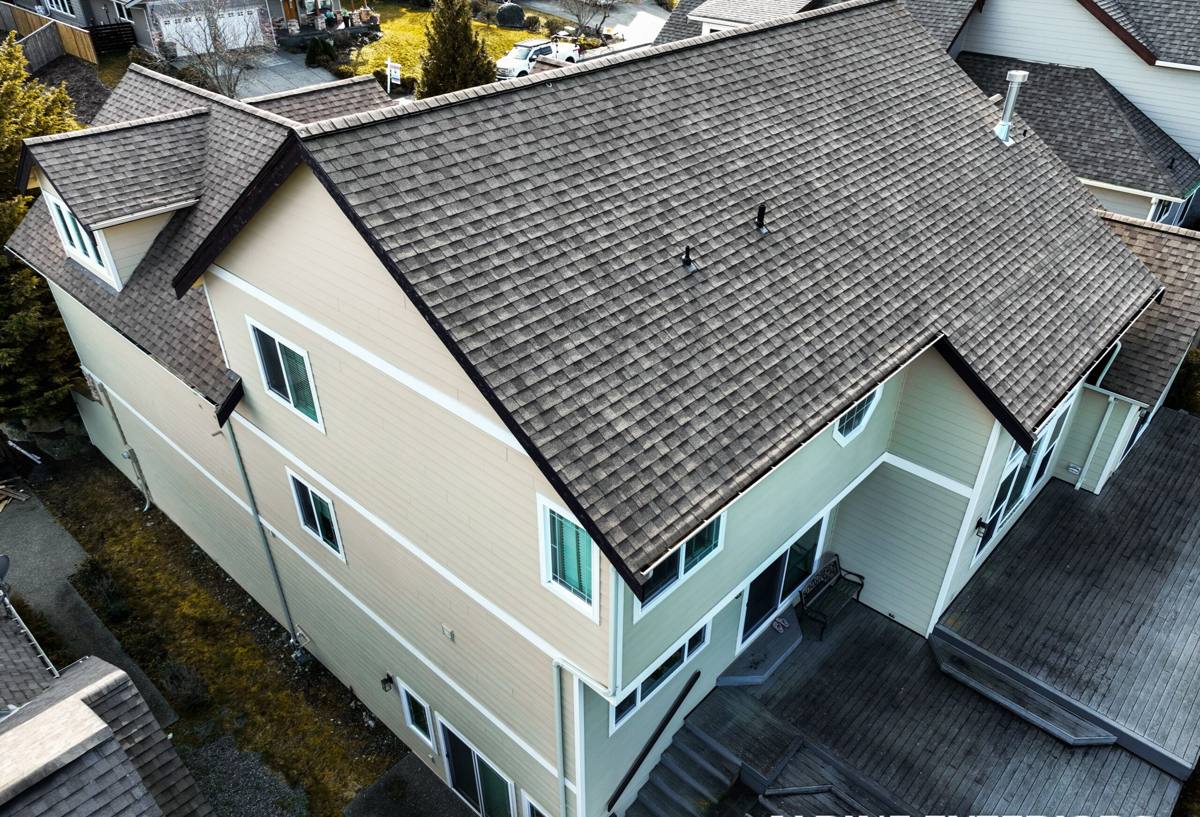
What Samish Homes Actually Need From a Deck
Before talking about brands or boards, it's worth being clear about what the climate is actually asking of the structure:
- Resistance to moisture wicking at cut ends and fastener holes, not just surface water resistance
- A surface texture that sheds algae and moss growth instead of trapping it in grain grooves
- Hardware and fasteners rated for coastal/marine-adjacent air, not standard interior-grade hardware
- A substructure that drains and dries between rain events, since dry stretches are short here
- Flashing at the house connection that assumes wind-driven rain, not just vertical rainfall
Any of these done wrong will eventually show up as rot at the ledger board, cupped or swollen boards, or a deck that's functionally a moss farm by year three.
Salt Air and Fastener Corrosion
Samish isn't oceanfront, but it's close enough to tidal water and open exposure that airborne salt is a real factor, especially on decks facing prevailing weather. Standard zinc-coated screws and brackets corrode faster here than they would twenty miles inland. We spec stainless steel or marine-grade coated fasteners and hardware on every composite deck we build in this area — it costs a little more up front and it's the difference between hardware that lasts the life of the deck and hardware that's staining your boards with rust streaks in five years.
Driving Rain and the Ledger Connection
The single most common failure point on any deck attached to a house isn't the decking material at all — it's the ledger board where the deck meets the wall. Wind-driven rain gets forced up and under poorly flashed ledger connections, and because that spot is hidden behind the rim joist, rot can run for years before anyone notices, usually from the inside during a remodel or an inspection. Correct flashing (proper metal flashing integrated with the house's water-resistive barrier, not just caulk) is non-negotiable on every ledger-attached deck we build.
Composite vs. Wood vs. PVC for This Climate
Homeowners in Samish usually narrow it down to three real options. Here's an honest comparison based on how each performs under our specific conditions, not marketing claims.
| Material | Moisture Behavior | Moss/Algae Resistance | Maintenance | Typical Lifespan Here |
|---|---|---|---|---|
| Pressure-treated wood | Absorbs and releases moisture constantly; prone to cupping and splitting | Low — porous surface holds spores | Annual sealing/staining required | 10-15 years with upkeep |
| Composite (capped) | Water-resistant shell, minimal absorption | Good — smoother cap resists growth, still needs occasional cleaning | Periodic washing, no sealing/staining | 25-30 years |
| PVC (cellular) | Fully synthetic, no absorption | Best — least organic material for spores to grip | Occasional washing | 25-30+ years |
Composite is the sweet spot for most Samish homeowners: meaningfully better moisture and moss performance than wood, without the higher material cost and different fastening requirements of full PVC. Capped composite (a fully wrapped protective shell rather than an exposed composite core) is what we recommend as the baseline standard for this area — uncapped or partially capped boards are more vulnerable at cut edges, which matters more here than in drier climates.
Getting the Installation Right
Substructure and Joist Protection
Composite boards are only as good as what they're screwed into. We use joist tape over the framing to protect it from moisture wicking up through fastener penetrations — a cheap step that's easy to skip and expensive to regret. Framing itself should be pressure-treated or naturally rot-resistant lumber, spaced correctly for the specific composite product's span rating, which varies more between brands than people expect.
Fastening and Board Spacing
Composite expands and contracts with temperature more than wood, and in a climate with big swings between damp winter cold and warm dry summer stretches, gap spacing at board ends and edges has to account for that movement. Too tight and boards buckle; too loose and you get a sloppy-looking deck that collects debris in the gaps. Hidden fastener systems (clips underneath rather than screws through the face) give a cleaner look and reduce the number of penetration points where water could otherwise find a path in.
Airflow Underneath
A deck that can't dry out underneath stays damp longer after every rain, and Whatcom County doesn't give you long dry stretches to make up for it. Adequate ground clearance, vented skirting where skirting is used, and avoiding low spots that trap standing water underneath all matter more here than they would in a drier region.
Moss and Algae: The Long-Season Reality
Even a well-built composite deck in Samish will see some moss and algae growth, especially in shaded areas or under tree cover — it's the nature of this many wet months in a row. The difference between a good installation and a bad one is how easily that growth comes off and how much it damages the surface in the meantime.
Textured, capped composite surfaces resist staining and let a simple wash (mild soap, soft-bristle brush, garden hose or low-pressure washer) knock growth loose without damaging the surface. Smooth, uncapped, or lower-grade boards can stain permanently or roughen over time, making each cleaning less effective than the last. Part of our job is steering homeowners toward boards that will still look clean after five winters, not just at the final walkthrough.
Railings, Fascia, and Trim
The decking boards get most of the attention, but railings and fascia trim take a similar beating from the same weather. We match hardware grade and material coating across the whole structure — there's no point protecting the decking with marine-grade fasteners if the railing posts are held with standard hardware that'll corrode and streak the composite below it. Fascia boards (the vertical trim hiding the rim joist) should be the same capped composite as the decking, not a mismatched wood trim that will rot faster and telegraph moisture problems to the structure behind it.
Our Process on a Samish Deck Project
- On-site assessment — we look at sun/shade exposure, wind direction, drainage slope, and the condition of the existing ledger connection or framing if it's a rebuild.
- Material selection — we walk through capped composite options and hardware grades based on your specific exposure, not a one-size answer.
- Permitting and flashing plan — ledger flashing and structural connections are detailed before any demo begins, since this is where most long-term failures start.
- Framing and substructure — joist tape, correct spacing for the chosen board's span rating, and hardware matched to the coastal-adjacent air.
- Decking, railing, and trim installation — hidden fastener systems where appropriate, consistent material grade across boards, fascia, and railings.
- Final walkthrough — we go over basic care (seasonal washing, what to expect from moss in shaded spots) so there are no surprises the first wet winter.
What Drives Cost on a Composite Deck Here
Every project is different, but the same factors move the price up or down on nearly every Samish job we quote:
| Factor | Why It Matters Locally |
|---|---|
| Deck size and shape | More cuts and edges mean more exposed ends that need proper sealing/capping |
| Height and ledger complexity | Second-story or complex ledger connections need more careful flashing work |
| Board grade (capped vs. partially capped) | Fully capped boards cost more up front, less maintenance and longer life in this climate |
| Hardware and fastener grade | Marine-grade stainless costs more than standard but avoids corrosion streaking |
| Railing style | Composite or aluminum railing systems vs. wood affects both cost and long-term upkeep |
| Existing structure condition | Rebuilding rotted framing found during demo adds cost but is not optional |
Why Local Experience on This Specific Job Matters
A crew that's built decks across Whatcom County — and specifically in areas like Samish with this exposure profile — already knows where moisture tends to collect, which board textures actually hold up against moss versus which ones just claim to, and how much clearance and flashing detail is enough versus overkill. That's the difference between a deck that needs real attention after five wet seasons and one that just needs an occasional wash.
If you're planning a new composite deck or replacing a tired wood one in Samish, we're glad to take a look and walk you through honest options for your specific site — no pressure, no upsell, just a straight assessment of what your home needs. Reach out for a free estimate using the form below.