 Whatcom County
 Why Window Replacement Works Differently in Samish
Samish sits close enough to open water that salt air is just part of daily life, and that changes what a window has to survive. Salt-laden moisture speeds up corrosion on hardware and metal components, driving rain off the water finds every gap in a tired seal, and the long, damp moss season here keeps wood trim and sills wet for weeks at a time. A window that would hold up fine forty miles inland can fail early in this environment if it wasn't specified or installed with that exposure in mind.
That's the lens we use on every Samish job: not just "replace the window" but "replace it with something built and installed to handle what this specific spot in Whatcom County throws at it." The right glass and frame choice, the right flashing detail, and the right sealant all matter more here than they do in a drier, more sheltered part of the county.
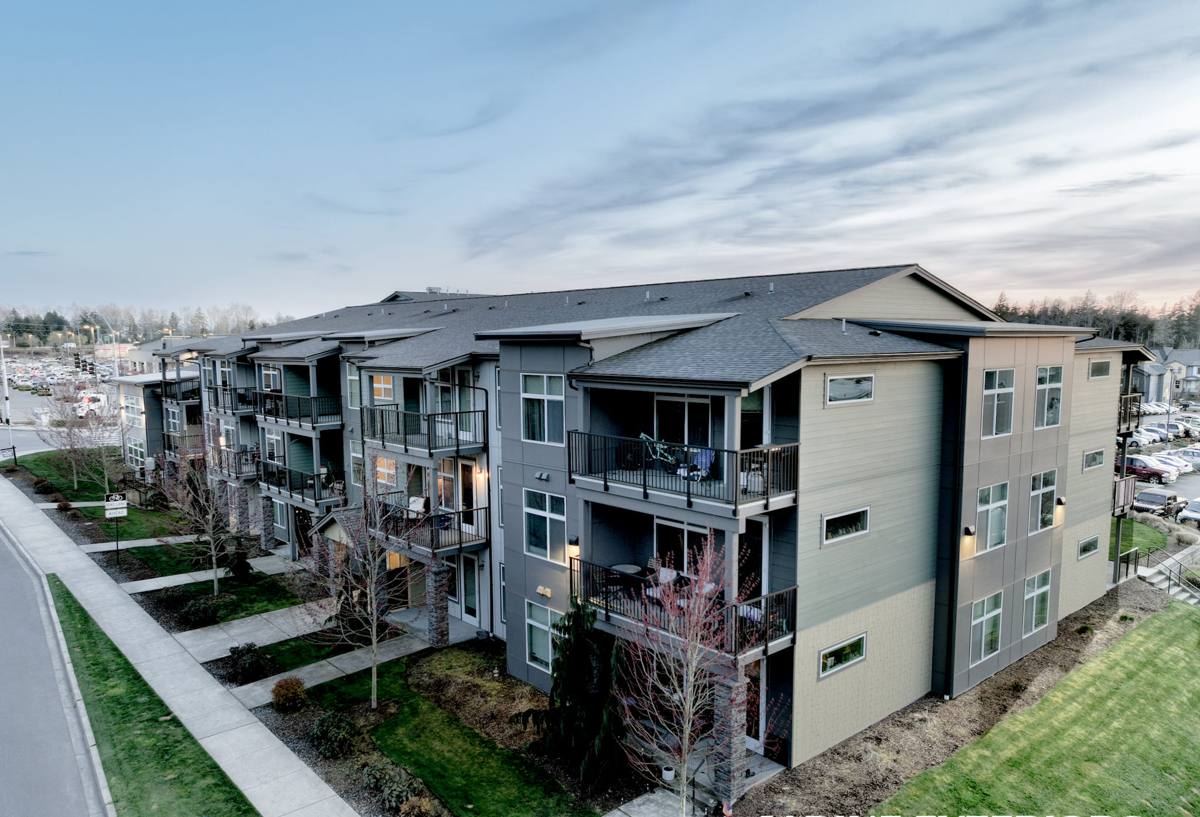
Signs Your Current Windows Are Losing the Fight
Most homeowners don't replace windows because they woke up wanting new ones — they replace them because the old ones are visibly or invisibly failing. In a salt-air, high-rain climate, the failure signs tend to show up in a fairly predictable order.
- Fogging or a permanent haze between double-pane glass (the seal has failed and moisture is trapped)
- Soft, spongy, or discolored wood at the sill or bottom corners of the frame
- Hardware — cranks, locks, hinges — that's gone stiff, pitted, or won't latch flush anymore
- Visible moss or dark streaking building up on the exterior trim around the window
- Drafts or a cold "wall of air" near the glass on windy, wet days
- Paint that's bubbling or peeling specifically around the window opening, not the rest of the wall
- Noticeably higher heating bills compared to similar-sized homes nearby
Any one of these on its own might just mean a caulking touch-up. Two or three together, especially on the weather-facing side of the house, usually mean the window itself — not just the seal around it — is due.
What a Correct Window Replacement Job Actually Involves
It's Not Just Swapping Glass
A full-frame replacement done right is as much about what happens in the wall opening as it is about the window unit itself. In a climate that sees driving rain off the water, the flashing and moisture barrier around the window matter at least as much as the window's own rating. We install a proper weather-resistive barrier and flashing sequence — sill pan, jamb flashing, head flashing — so that any water that does get past the exterior trim sheds outward instead of working its way into the wall cavity.
Sealing That Accounts for Wind-Driven Rain
Standard caulking alone isn't enough on a home that regularly takes rain sideways. We use sealants and backer rod sized for the actual gap, not just a bead smeared over the surface, and we check that the window's own weep holes and drainage paths are clear and functioning — a window can be perfectly sealed and still leak if its built-in drainage is blocked.
Fastening and Hardware for Salt Exposure
Where salt air is a factor, fastener and hardware material choice matters more than most homeowners realize. Cheap or mismatched metal hardware can start corroding within a couple of seasons this close to the water, which is why we pay attention to corrosion-resistant fasteners and hardware finishes rather than whatever came cheapest with a builder-grade window package.
Choosing Materials for a Salt-Air, High-Rain Climate
There's no single "best" window material — there's a best fit for the exposure, the home's style, and the budget. Here's how the common options actually perform in Samish's conditions:
| Material | Salt-Air Performance | Moisture / Rain Behavior | Maintenance |
|---|---|---|---|
| Vinyl | Good — won't corrode or rust | Handles moisture well when properly flashed | Low; occasional cleaning |
| Fiberglass | Very good — dimensionally stable, corrosion-resistant | Excellent; holds seals well over time | Low |
| Aluminum-clad wood | Fair — cladding protects wood but exposed metal can pit near salt air | Good if flashed and finished correctly | Moderate; watch cladding seams |
| Bare wood | Poor without diligent upkeep — prone to rot and moss staining | Needs regular refinishing to stay sealed | High; annual inspection recommended |
We're honest with Samish homeowners that bare wood, while it has real appearance appeal, is a harder sell in this specific microclimate unless someone is genuinely committed to yearly maintenance. It's not that wood is a bad product — it's that this stretch of the county's combination of salt air and a long wet season punishes any material that depends on an intact paint or finish film to stay protected. Vinyl and fiberglass simply ask less of the homeowner over the life of the window.
Energy Efficiency and Condensation Considerations
Whatcom County's damp, cool climate means condensation control is as important as raw insulation value. A window with a poor U-factor or a single weak point in the seal will show it first as condensation on the interior glass on cold, wet mornings — which, over years, is what feeds mold and sill rot. When we spec glass packages for Samish homes, we're looking at:
- U-factor — how well the window resists heat loss; lower is better for our winters
- Low-E coatings — help manage both heat loss and solar gain without darkening the glass noticeably
- Gas-filled double or triple glazing — the sealed gap between panes is what actually stops the cold, not just the glass thickness
- Warm-edge spacers — reduce the cold band at the glass edge where condensation tends to start first
None of this needs to be complicated for the homeowner — it just needs to be matched to the specific exposure of each window opening, since a south-facing window and a north-facing window on the same house can have different priorities.
How Our Process Works
- On-site assessment — we look at every window from both inside and outside, checking framing condition, flashing, and drainage, not just glass and trim
- Honest recommendation — full-frame replacement where the frame or sill is compromised, insert replacement where the existing frame is sound
- Measurement and ordering — precise measurements matter more here than in a milder climate, since a sloppy fit is exactly where wind-driven rain finds its way in
- Removal and prep — old units come out carefully so we can inspect the wall cavity for hidden rot or moisture damage before anything new goes in
- Flashing and moisture barrier install — this step gets done right whether or not it's visible in the finished product
- Window installation and sealing — set, shimmed, and sealed to spec, with attention to drainage paths and weep holes
- Interior and exterior trim finish — matched to the home so the new windows don't look like an obvious patch job
- Final walkthrough — we check operation, seals, and drainage with the homeowner before we call it done
What Affects the Cost
We don't quote a flat per-window price up front because the honest cost depends on real variables specific to the home. Broadly, expect the following to move the number:
| Factor | Why It Matters |
|---|---|
| Full-frame vs. insert replacement | Full-frame costs more but is often required if the existing frame or sill has rot damage |
| Window material | Vinyl is typically the most budget-friendly; fiberglass and clad-wood cost more up front but ask less in upkeep |
| Glazing package | Double vs. triple pane, Low-E coatings, and gas fill all affect price and long-term energy performance |
| Number and size of openings | Larger or custom-sized windows cost more than standard sizes |
| Hidden wall damage | Rot found once old windows come out can add labor and material not visible at the initial quote |
| Access and height | Upper-story or hard-to-reach windows take more labor time |
Rather than guess, we walk every job in person and give a written estimate that accounts for what we actually find — not a generic number pulled from a size chart.
Why It Matters to Hire a Crew That Already Works in Samish
Window replacement in a coastal, high-rain part of Whatcom County isn't the same job as window replacement in a dry inland climate, even though the products on the shelf look identical. A crew that already works this area knows to check drainage and flashing details that don't matter as much elsewhere, knows which materials hold up against salt air over the long run instead of just the first year, and knows how to sequence a job around the wet season instead of leaving a wall opening exposed during a stretch of driving rain. That local pattern recognition is what keeps a "correct on paper" installation from becoming a callback two winters later.
It also matters for permitting and code familiarity specific to the jurisdictions in this part of the county, and for knowing which manufacturer warranties actually hold up well under real coastal exposure versus which ones look good in a brochure but come with maintenance requirements that are easy to miss.
After the Install: Keeping Moss and Moisture From Undoing the Work
New windows still need a little seasonal attention in this climate. A short annual check keeps them performing the way they should:
- Clear moss and debris from the sill and surrounding trim before it holds moisture against the surface
- Check exterior caulking for cracking or separation, especially after the first full wet season
- Test that weep holes and drainage channels are clear of dirt or moss buildup
- Look for condensation on interior glass on cold mornings — a change from prior years can flag an early seal issue
- Operate each window through a full open-close cycle so hardware doesn't seize from disuse
If you're weighing window replacement for a home in Samish, we're glad to come take a look and tell you honestly what your windows need — whether that's a full replacement, a partial fix, or nothing urgent yet. Fill out the form below for a free, no-pressure estimate.