 Whatcom County
Deck Replacement in Samish: Built for the Water and the Weather
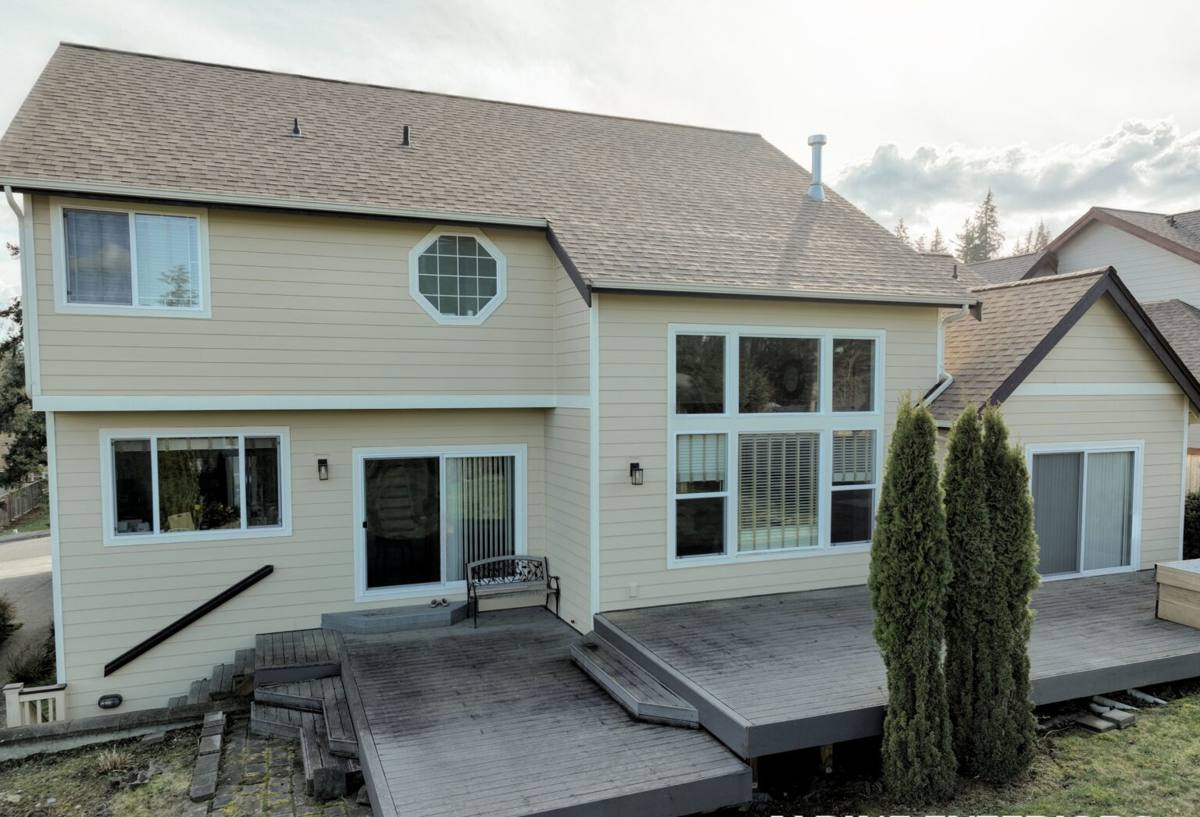
Samish sits close enough to tidal water and open exposure that decks here take a different kind of beating than decks a few miles inland. Salt-tinged air moves through on the wind off Samish Bay, driving rain comes in sideways more often than straight down, and the long gray stretch of fall through spring keeps everything damp for months at a time. A deck that would hold up fine in a drier part of Whatcom County can fail early out here — not because it was built wrong for a generic deck, but because it wasn't built for this specific exposure.
If you're looking at a deck that's gone soft underfoot, has ledger board staining, or just looks tired every time you walk out the back door, replacement is usually the more honest answer than another round of patching. We work Samish regularly, and this page covers what actually matters when you're rebuilding a deck for this stretch of Whatcom County — not a generic national checklist.
Why Salt Air, Rain, and Moss Change the Job
Salt-Laden Air
Even a light, near-constant salt presence in the air accelerates corrosion on any fastener, bracket, or connector that isn't rated for it. This is the single most common reason we see decks fail early near the water in Whatcom County — not the boards, the hardware. Once a ledger bolt or joist hanger starts rusting, it's working against you from the inside where you can't see it.
Driving, Wind-Blown Rain
Rain that comes in at an angle finds its way into places a vertical downpour never would — under rail caps, behind fascia boards, into end grain at butt joints. On a deck, that means water tracking into places builders often assume stay dry, like the top of a ledger board or the underside of decking near the house.
Moss and Prolonged Dampness
Whatcom County's moss season isn't a cosmetic issue on a deck — it's a moisture-retention issue. Moss and algae hold water against the surface of boards and structural members far longer than bare wood would dry on its own, which is exactly the condition that lets rot get started and keep going, especially on north-facing or shaded decks.
What "Correct" Looks Like for a Samish Deck Rebuild
A deck replacement done right for this location isn't just new boards on old framing. It means rethinking the assembly with this climate in mind:
- Structural framing sized and fastened for our region's snow and wind load requirements, not just "what was there before"
- Fasteners and structural connectors rated for corrosive or coastal-adjacent exposure, not standard interior-grade hardware
- A ledger connection that's properly flashed and sealed against the house, since this is the single most common source of hidden rot on older decks
- Decking material chosen with real moisture behavior in mind, not just upfront cost
- Drainage and airflow underneath the deck so it can actually dry out between rain events instead of staying damp for weeks
- Attention to shaded or low-airflow sections separately, since moss and algae rarely spread evenly across a whole deck
Decking Material Trade-Offs for This Climate
There's no universally "best" decking material — there's the material that matches your budget, your maintenance appetite, and how exposed your specific deck is to rain and shade. Here's how the common options actually perform out here:
| Material | How It Handles Our Climate | Maintenance Reality |
|---|---|---|
| Pressure-treated wood | Affordable, but end grain and fastener holes are entry points for moisture over time | Needs periodic sealing/staining to keep performing; skipping it shortens the deck's life |
| Cedar | Naturally moisture- and rot-resistant, ages well with our rain if maintained | Wants regular cleaning and refinishing, especially on shaded sections prone to moss |
| Composite/PVC boards | Doesn't absorb water or feed rot the way wood does; consistent performance under repeated wet-dry cycles | Low maintenance, but surface can still grow algae film in shade — periodic washing still matters |
| Reclaimed/reused old decking | Not recommended for structural reuse here — fastener holes and hidden moisture damage are common in older boards | Higher risk of hidden failure; we don't advise it for a full replacement |
We'll walk you through which option makes sense for your specific deck's sun exposure, budget, and how much upkeep you actually want to commit to — there's no single right answer for every Samish property.
The Hidden Part of the Job: What's Under the Boards
Homeowners understandably focus on what the new decking will look like, but the part of a replacement that determines how long it lasts is underneath — the framing, the ledger connection, and the hardware. This is also where a lot of quick "resurfacing" jobs cut corners, because it's the part nobody sees once the new boards go down.
When we replace a deck in Samish, we treat the substructure inspection as the real diagnostic step, not a formality:
- Checking the ledger board and house connection for water intrusion or soft wood, since this is the most structurally critical point on the whole deck
- Inspecting posts and footings for movement, rot, or inadequate embedment
- Confirming joist spacing and hardware match current structural expectations, not decades-old assumptions
- Looking for corrosion on any existing metal connectors, especially on decks that have had any exposure to salt-carrying wind
- Assessing drainage under the deck and grading nearby, since standing water at the base of posts is a slow, quiet way decks fail
Our Deck Replacement Process
1. On-Site Assessment
We walk the existing deck with you, probe suspect boards and framing, and give you a straight read on what's actually failing versus what's just cosmetic wear. This is also where we talk through material options based on your deck's specific sun and rain exposure.
2. Plan and Permitting
We confirm what permitting applies for your project in Whatcom County and design the replacement to current structural standards — this isn't a spot where we cut corners to save time, since it's the part that protects you long-term.
3. Demolition and Disposal
Old decking, framing, and hardware come out cleanly, and we take a hard look at everything underneath before we close anything back up. If we find rot or damage that wasn't visible from the surface, we'll show you before proceeding.
4. Structural Rebuild
New framing, ledger flashing, posts, and footings go in to current code and to a standard that accounts for our rain and moisture exposure — not just the minimum to pass inspection.
5. Decking, Railing, and Finish
Your chosen decking material goes down, along with railing and any finish work, with attention to drainage gaps and airflow so the new deck can actually dry between rain events.
6. Final Walkthrough
We walk the finished deck with you, point out any care or maintenance specifics for the material you chose, and answer whatever questions come up before we consider the job done.
Signs Your Samish Deck Needs Replacing, Not Just Repair
Not every deck problem calls for a full replacement, but there are signs that patching is just delaying the inevitable:
- Soft, spongy, or bouncy spots in the decking or framing underfoot
- Visible rot, staining, or discoloration at the ledger board where the deck meets the house
- Rusted, loose, or missing structural hardware
- Persistent moss or algae that returns quickly after cleaning, especially in shaded areas
- Posts or railings that feel loose or move when pushed
- A deck older than its expected service life for the material it was built with
If you're only seeing one or two of these and the framing checks out, repair may still be reasonable. If several show up together, that's usually a sign the structure underneath has been compromised for a while.
Why a Crew That Already Works Samish Matters
A lot of deck problems out here trace back to a build that didn't account for this specific exposure — a ledger flashing detail that works fine inland but fails near the water, or hardware that was never rated for salt-carrying air. A crew that already works Samish and the surrounding Whatcom County area has seen how decks actually fail in this exact climate, not just in a textbook. That shows up in small decisions during the build — how the ledger is flashed, which fasteners get specified, where drainage gaps are placed — that add years to a deck's life and don't show up on a quote sheet.
It also means we're not guessing at load requirements or weather exposure for your area; we've built to them before, on decks not far from yours.
Get a Straight Answer on Your Deck
If your deck is showing signs of wear, soft spots, or persistent moss, it's worth having someone look at what's actually happening underneath before deciding between repair and replacement. Reach out for a free, no-pressure estimate — we'll give you an honest read on your deck's condition and what a proper replacement would involve, using the form below.