 Whatcom County
 Window Installation Built for Samish's Coastal Climate
Samish sits close enough to open water that homes here deal with a different set of conditions than houses further inland in Whatcom County. Salt-laden air moves through window hardware and finishes faster than most manufacturers' warranty language accounts for. Driving rain, pushed sideways by wind off the water, tests every seam, flange, and sealant joint a window has. And the long stretch of grey, wet months every year gives moss, algae, and mildew plenty of time to work into any gap that wasn't sealed correctly the first time. A window installation that would hold up fine in a dry inland climate can fail here in a fraction of the time if it's not detailed for these specific conditions.
Salt Air and Marine Moisture
Airborne salt accelerates corrosion on window hardware, screen frames, and exposed fasteners. It also interacts with certain sealants and finishes, causing them to break down faster than their rated lifespan. Homes closer to the water in Samish need hardware and fastener specifications that account for this, not just whatever ships standard with a given window line.
Driving Rain and Wind-Driven Water
Rain that falls straight down is a minor concern for a window. Rain that's being pushed horizontally by wind is a different problem entirely — it finds its way into any flashing detail that was installed loosely, in the wrong order, or with gaps. This is where most window failures in this region actually start, and it's rarely the window unit itself that's at fault.
The Long Moss and Mildew Season
Whatcom County's wet season runs long, and shaded, moisture-retentive areas around window trim and sills are exactly where moss and mildew take hold. Once organic growth gets a foothold in a gap in the trim or sealant, it holds moisture against the wood or wall assembly behind it, and that's when rot starts — often invisibly, behind the window casing.
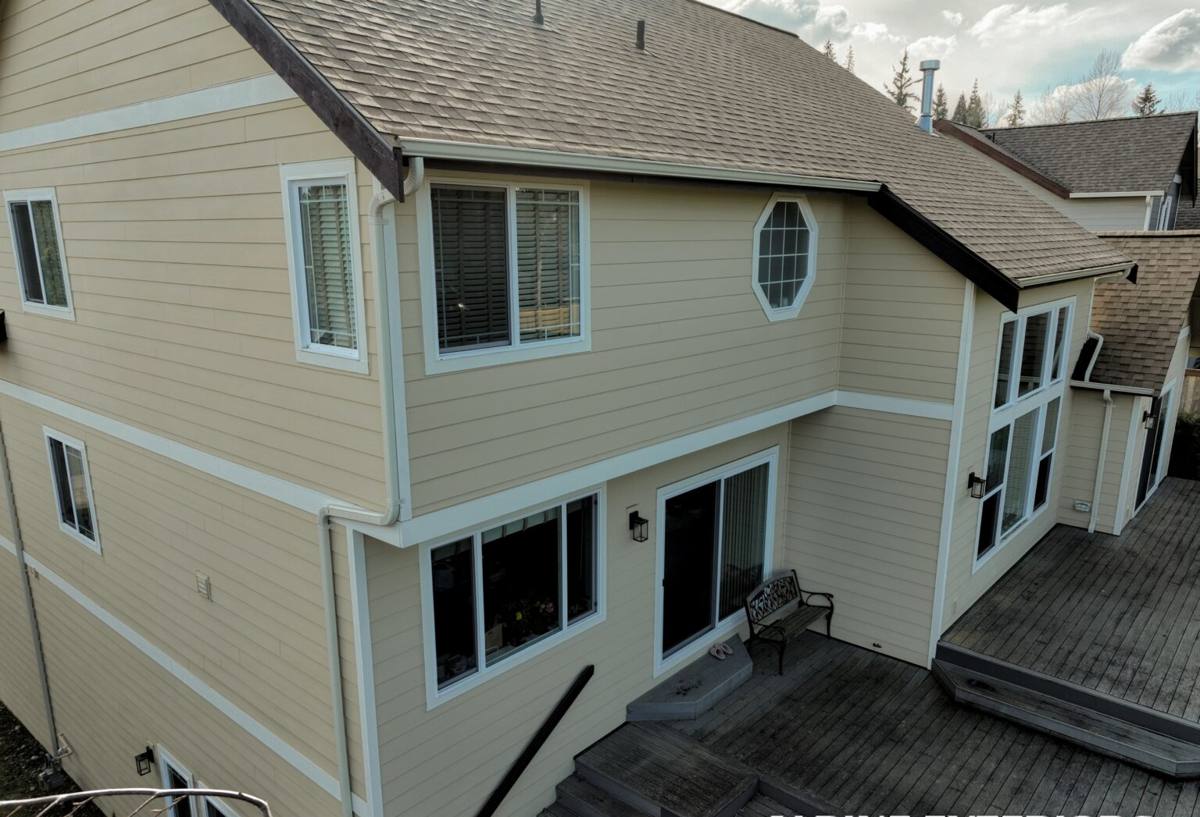
What a Correct Window Installation Actually Involves
Setting a window into a rough opening is the easy part. The work that actually determines whether that window performs for the next 20+ years happens in the details most homeowners never see once the trim goes back on.
Flashing and Weather Barrier Integration
Every window opening needs to be flashed so that any water that gets past the exterior cladding is directed back out, never into the wall cavity. That means the correct layering order — sill flashing first, then side flashing, then head flashing, each one lapping over the one below it like shingles — integrated properly with the house's existing weather-resistive barrier. Skipping a layer or reversing the order is one of the most common causes of hidden water damage we find when we open up an older window opening.
Sill Pan and Drainage Details
A sloped sill pan under the window gives any water that does get in a way out, instead of letting it sit and soak into the framing. This is a small, inexpensive detail that gets skipped constantly on lower-quality installations, and it's one of the first things we check for when we're diagnosing a leaking or rotting window.
Fastening, Shimming, and Air Sealing
A window has to be shimmed square and plumb before it's fastened, or it will bind, leak at the corners, or fail prematurely under normal seasonal movement. After fastening, the gap between the window frame and the rough opening needs to be sealed with the right materials — not just caulk smeared around the trim — to control both air leakage and moisture intrusion without trapping water inside the assembly.
Signs Your Samish Home's Windows Need Attention
Because coastal moisture and rain exposure work slowly, window problems in this area often show up as small issues well before a window fails outright. Worth checking for:
- Soft or discolored trim or sill wood around the window frame
- Fogging or moisture between panes of double-glazed glass (a sign the seal has failed)
- Drafts or a noticeable temperature difference near the window even when it's fully closed
- Difficulty opening, closing, or locking a window that used to operate smoothly
- Visible moss, algae, or persistent black mildew staining on or around the frame
- Peeling paint or bubbling finish on interior or exterior trim near the window
- Condensation forming on interior glass or sills more than you'd expect for the season
Any one of these on its own isn't necessarily an emergency, but they're worth having looked at before the next wet season, since moisture problems around windows tend to compound quietly over time.
Choosing the Right Window for This Climate
There's no single "best" window for every home — the right choice depends on exposure, budget, and how the rest of the house is built. Here's how the common options stack up for a coastal Whatcom County property like the ones around Samish:
| Frame Material | Moisture Performance | Maintenance | Typical Trade-offs |
|---|---|---|---|
| Vinyl | Good — won't rot, doesn't corrode | Low — occasional cleaning | Limited color/finish options; can flex on very large openings |
| Fiberglass | Very good — stable in wet/dry cycling | Low | Higher upfront cost than vinyl |
| Wood (unclad) | Requires diligent upkeep in this climate | High — regular refinishing needed | Best appearance for some homes, but highest ongoing maintenance burden near salt air |
| Wood-clad (aluminum or vinyl exterior) | Good, if cladding seams are detailed well | Moderate | Interior wood look with better weather protection, at a higher price point |
For homes closer to the water, we generally steer people away from bare wood exteriors and unclad hardware unless they're genuinely willing to keep up with the maintenance schedule — not because the material is bad, but because salt air and driving rain shorten the window between needed refinishing cycles. That's an honest trade-off worth knowing before you commit to a look.
Glass Packages Worth Considering
Beyond frame material, the glass package matters just as much for comfort and condensation control. Double-pane with a low-E coating is the practical baseline for this climate; homes with significant west or water-facing exposure often benefit from an upgraded gas fill or a third pane, mainly for comfort and reduced condensation rather than dramatic energy savings.
Our Window Installation Process
- On-site assessment — we inspect existing openings, framing condition, and any signs of past moisture intrusion before quoting anything.
- Product selection — we walk through frame material, glass package, and hardware options suited to the specific exposure of your home.
- Removal and opening inspection — old units come out carefully so we can check the framing underneath for rot or prior flashing mistakes before anything new goes in.
- Flashing and sill pan installation — done in the correct layered order, tied into the existing weather barrier.
- Setting, shimming, and fastening — each window is set square and plumb and fastened per manufacturer specification.
- Air sealing and interior/exterior trim — sealed and finished to shed water and control drafts.
- Final walkthrough — every window operates, locks, and seals correctly before we consider the job done.
Cost Factors for Window Installation in Samish
Every home is different, but the same handful of factors drive most of the cost variation we see on window jobs in this area:
| Factor | Why It Matters |
|---|---|
| Number and size of openings | More or larger windows means more material and labor |
| Frame material chosen | Vinyl, fiberglass, and clad-wood carry different price points |
| Existing damage found during removal | Rotted framing or old, failed flashing adds repair work before the new window goes in |
| Access and height | Second-story or hard-to-reach windows take longer and need more setup |
| Glass package upgrades | Better low-E coatings, gas fills, or triple-pane options add cost per unit |
We give straightforward, itemized estimates so you can see exactly what you're paying for — no vague lump-sum numbers that make it hard to know what you're actually getting.
Why a Crew That Already Works in Samish Makes a Difference
A contractor who works across Whatcom County regularly, including the areas around Samish, already knows what to expect from homes with this kind of coastal exposure — where moisture tends to collect, which flashing details actually hold up, and which materials are worth the extra cost versus which ones just add expense without a real benefit here. That local pattern recognition matters more than it sounds like it should, because it's usually the difference between a window installation that's still performing well in fifteen years and one that starts leaking quietly behind the trim in three or four.
It also means someone who understands local permitting expectations and who isn't guessing at how a given product line has actually held up in this specific climate over time, rather than just going off manufacturer literature written for a national market.
Maintaining Your New Windows Through Whatcom County Winters
A correct installation does most of the work, but a little seasonal attention keeps it performing:
- Clear moss and debris from window sills and trim before it holds moisture against the wood
- Check exterior caulking annually and touch up any cracked or separated joints
- Keep gutters and downspouts clear so roof water isn't sheeting down across upper windows
- Operate each window a few times through the wet season so hardware doesn't seize
- Watch for condensation between panes, which signals a failed seal worth addressing early
None of this takes much time, but it's the kind of upkeep that lets a well-installed window actually reach its full lifespan instead of falling short of it.
If you're weighing whether it's time to replace aging windows or want a second opinion on a leak or draft you can't quite pin down, we're glad to take a look. Fill out the form below for a free, no-pressure estimate on your Samish home.