 Whatcom County
Samish sits close enough to the water and the tree line that a deck here works harder than a deck almost anywhere else in Whatcom County. Salt-laden air off the bay, long stretches of driving rain through fall and winter, and a moss season that seems to start earlier every year all put real stress on outdoor structures. A deck that isn't built and finished with those conditions in mind will show it within a few seasons — soft spots, green film on the boards, corroded fasteners, and railings that start to wobble. We build custom decks for Samish homeowners with all of that in mind from the first design conversation, not as an afterthought once problems show up.
Why Samish Decks Take More Punishment Than You'd Think
It's easy to assume a deck just needs to survive rain. In Samish, it needs to survive rain, salt, shade, and time all at once. Homes closer to the water pick up airborne salt that settles on every horizontal surface, including deck boards and hardware. Combine that with the region's overcast, moisture-heavy winters and you get long stretches where wood surfaces simply don't dry out between storms.
That constant dampness is exactly what moss and algae need to take hold. Once a deck surface starts holding a thin layer of organic growth, it's not just a cosmetic problem — it holds moisture against the wood or composite surface even longer, and it makes the deck genuinely slippery underfoot. We see this most on decks with heavy tree cover or a north-facing orientation that never gets a full afternoon of direct sun.
The Three Forces at Work
- Salt air: accelerates corrosion on fasteners, hinges, and any exposed metal hardware; can also dull and streak certain finishes over time.
- Driving rain: pushes water into joints, ledger connections, and end grain rather than letting it simply run off, which is why flashing and drainage detailing matter more here than in drier climates.
- Moss and algae: thrive in shaded, damp conditions typical of a Whatcom County winter, and left unchecked they hold moisture against the deck surface and structure.
What a Deck Built for This Climate Actually Needs
A correct deck build for a Samish property isn't about picking the fanciest materials — it's about making a series of sound decisions at every layer of the structure, from the ledger board down to the fasteners you'll never see once the project is done.
Ledger Attachment and Flashing
The ledger board — where the deck attaches to the house — is the single most common failure point on decks in wet climates. If it isn't properly flashed and sealed, water works its way behind the ledger and into the house rim joist, where it can sit unnoticed for years. We flash every ledger connection to shed water away from the house, not toward it, and we don't take shortcuts here regardless of how the rest of the budget is allocated.
Fasteners and Hardware
Standard hardware corrodes faster in a salt-air environment, and corroded fasteners are a structural problem, not just an appearance issue. We use hot-dip galvanized or stainless structural hardware rated for coastal and wet-climate exposure, and we match fastener type to the decking material so there's no reaction between dissimilar metals.
Decking Material Choice
There's no single "best" decking material for Samish — there's a best material for your specific site conditions, sun exposure, and how much upkeep you want to do. We walk through the real trade-offs rather than pushing one product.
| Material | How it handles this climate | Maintenance reality |
|---|---|---|
| Pressure-treated wood | Affordable, but end grain and fastener holes need regular sealing to resist moisture intrusion | Annual cleaning and re-sealing recommended, especially in shaded areas |
| Cedar | Naturally rot-resistant and handles moisture well, but softens over time without upkeep | Periodic cleaning and oiling to maintain color and water resistance |
| Composite decking | Resists moisture absorption and won't rot, but can still grow surface algae in shaded, damp spots | Occasional washing; no sealing or staining needed |
| PVC/capped composite | Best resistance to moisture, salt, and organic growth of the common options | Lowest ongoing maintenance; higher upfront material cost |
Design Choices That Reduce Moss and Water Problems Later
A lot of long-term deck problems can be designed out before construction ever starts. Board spacing, orientation, and airflow underneath the structure all affect how quickly a deck dries out after rain — which directly affects how much moss and algae it collects.
- Proper gapping between boards so water drains through instead of pooling on the surface
- Adequate clearance and ventilation underneath the deck so the substructure can dry between rain events
- Positioning stairs and railings to avoid creating shaded, standing-water pockets where moss establishes first
- Sloping the deck surface slightly away from the house to keep water moving toward the edges
- Choosing hardware and fastener placement that avoids trapping moisture against the framing
Framing and Structure: What's Underneath Matters Most
Homeowners naturally focus on the decking surface because it's what they see, but the framing underneath is what determines whether the deck is actually safe and long-lasting. In a climate like Whatcom County's, framing lumber needs to be rated for ground contact or exterior exposure where appropriate, joists need consistent spacing to support the chosen decking material without excessive flex, and posts need to be set on footings that go below frost depth and account for local soil and drainage conditions.
We also pay close attention to how the substructure ventilates. A deck that looks fine on the surface but has a damp, poorly ventilated crawl space underneath is a deck that's quietly rotting from below. This is one of the areas where corners get cut on lower-quality builds, because it's invisible once the decking goes down — and it's exactly the kind of thing that shows up as a costly repair five or ten years later.
Railings, Stairs, and Hardware in a Coastal-Influenced Climate
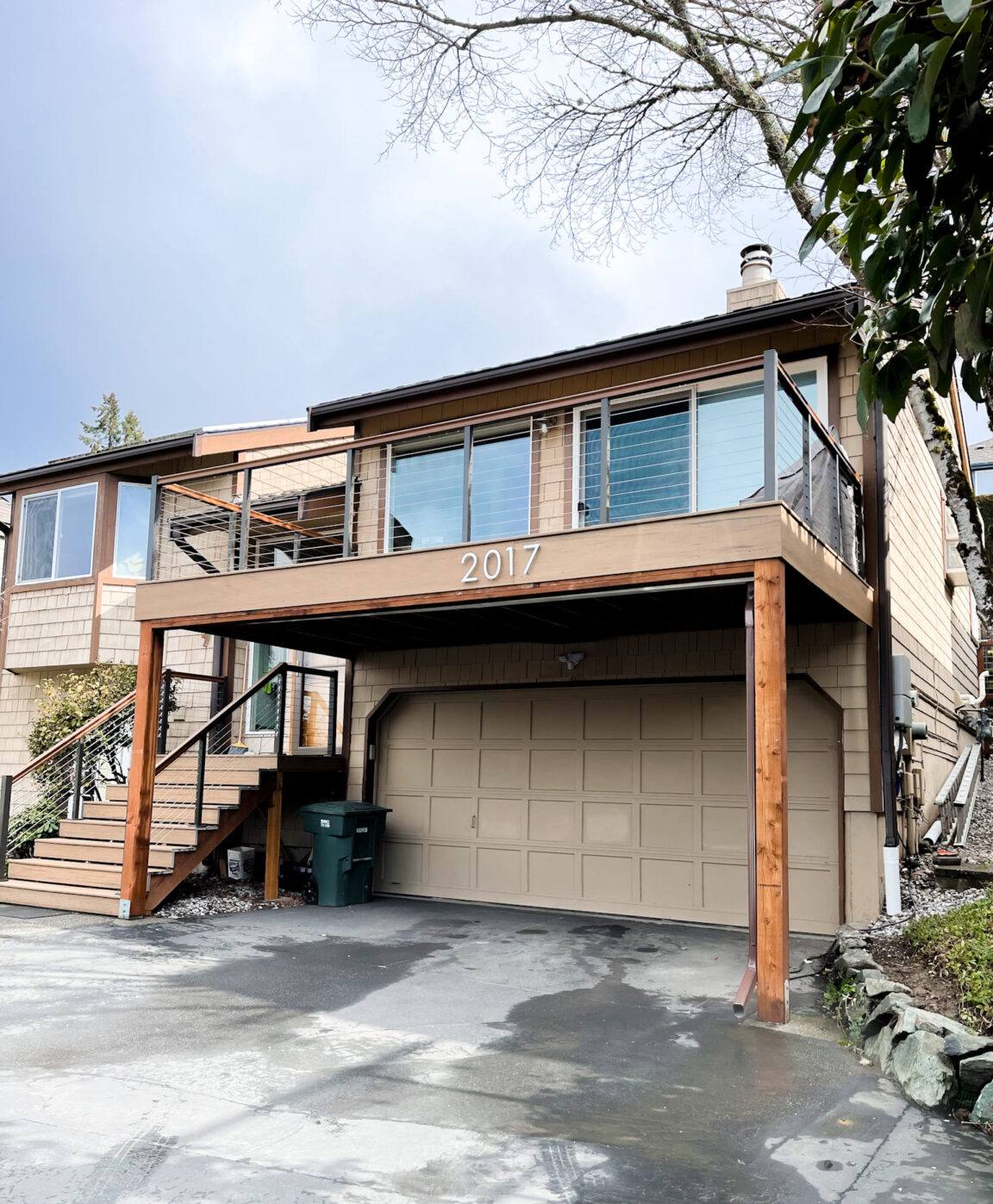
Railings and stairs see constant handling and constant weather exposure, which makes them a common place for salt air and moisture to cause early wear. Metal railing components need a finish or material genuinely rated for coastal exposure — not just a standard powder coat that looks fine in the showroom but starts pitting within a couple of wet seasons near the water. Wood railings need the same attention to end-grain sealing and fastener quality as the rest of the deck.
Stair stringers and treads take the brunt of foot traffic in wet, occasionally icy conditions, so tread material and any anti-slip detailing matter for safety, not just looks. We factor this into material selection especially for decks with more than a step or two, or for households with kids or older family members using the stairs regularly.
Our Process for a Samish Deck Project
- On-site assessment: We look at sun exposure, tree cover, soil conditions, drainage patterns, and how close the property is to salt air influence — all of which shape material and design recommendations.
- Design and material conversation: We walk through decking, railing, and hardware options with honest trade-offs on cost, appearance, and long-term maintenance, tailored to what your specific site will actually experience.
- Permitting: Deck projects in Whatcom County often require permitting depending on size, height, and attachment to the home. We handle this so it isn't left on your plate.
- Structural build: Footings, framing, ledger flashing, and substructure ventilation come first — the parts that determine whether the deck lasts, even though they're the parts you won't see later.
- Decking, railing, and finish work: Surface materials go down with attention to drainage and airflow, followed by railings, stairs, and any finishing or sealing the chosen material requires.
- Final walkthrough: We go over maintenance expectations specific to the material you chose, so you know what upkeep actually looks like in a Whatcom County winter.
Maintenance That Actually Matters Here
Every deck needs some maintenance, but what matters most in Samish's climate is different from what matters in a drier region. Sealing against UV fading is a secondary concern here compared to managing moisture and organic growth. A short, honest maintenance checklist goes further than an expensive material choice with no upkeep behind it.
- Sweep debris and standing leaves off the deck surface regularly, especially in fall when they trap moisture
- Wash the surface periodically to remove early moss and algae growth before it establishes
- Check fastener heads and hardware yearly for early signs of corrosion, particularly on decks closer to the water
- Inspect ledger flashing and the house connection point annually for any signs of water intrusion
- Re-seal wood decking and railings on the schedule appropriate to that material, not just when it looks worn
- Keep an eye on shaded corners and under-railing areas, which are usually the first place moss takes hold
Why Hiring a Crew That Already Works in Samish Matters
A deck contractor who mostly works inland or in a drier climate can still build something that looks good on installation day. The problems show up later — in year two or three, when the fasteners they used start showing rust, or the ledger flashing they used wasn't detailed for this much sustained rain, or the shaded side of the deck is green with moss because nobody accounted for how little sun it gets. Building decks specifically in and around Whatcom County means we've already seen which details matter here and which shortcuts cause callbacks.
We also know the practical side of building in this area — the permitting process, the kind of soil and drainage conditions common around Samish, and realistic timelines given the amount of rain the build schedule has to work around. That local familiarity translates into fewer surprises during construction and a deck that's actually built for the place it's sitting in.
Getting Started
If you're planning a new deck or replacing one that's showing its age, we're happy to come take a look at your property, talk through material options honestly, and put together a straightforward plan — no pressure, no upsell on materials you don't need. Reach out for a free estimate using the form below.