 Whatcom County
Columbia homeowners in Whatcom County know that a bad storm rarely announces itself with a single dramatic event. More often it's a windy night that lifts a few shingles, followed by weeks of steady rain finding its way into the gap before anyone notices a stain on the ceiling. Between the salt-laden air moving in off the water, driving rain that comes in sideways during winter systems, and a moss season that can run most of the year here, roofs in this part of Whatcom County take a specific kind of beating. Storm damage repair done right in this climate isn't just about patching what broke — it's about understanding why it broke and what's likely to fail next if it's ignored.
Why Columbia Roofs Take Storm Damage Differently
Every region has its own combination of weather stressors, and Columbia's mix is a demanding one. Wind off the water can drive rain at an angle that defeats roofing systems designed for straight-down precipitation. That same coastal air carries salt, which accelerates corrosion on exposed fasteners, flashing, and metal roof edges faster than you'd see further inland. Add in the region's long, wet moss season, and you have a roof surface that's frequently damp, slowly losing granule protection to organic growth, and more vulnerable to wind uplift because moss and debris hold moisture against the shingle mat instead of letting it shed.
What this means practically: storm damage here rarely shows up as one clean failure point. A wind event will often expose a roof that was already weakened by months of moss intrusion or salt corrosion on flashing. That's why an honest inspection after a storm has to look past the obvious missing shingle and check the surrounding areas for the slower damage that made the storm's job easier.
The Three Culprits Working Together
- Salt air: corrodes exposed nails, staples, and metal flashing over time, weakening the roof's grip on itself well before a storm arrives.
- Driving rain: finds horizontal or wind-angled entry points — lifted shingle tabs, worn pipe boots, gaps at valleys — that a straight rain would never exploit.
- Moss season: holds moisture against the roof deck for extended periods, degrades shingle granules, and lifts shingle edges as it grows, creating the initial weak points wind later takes advantage of.
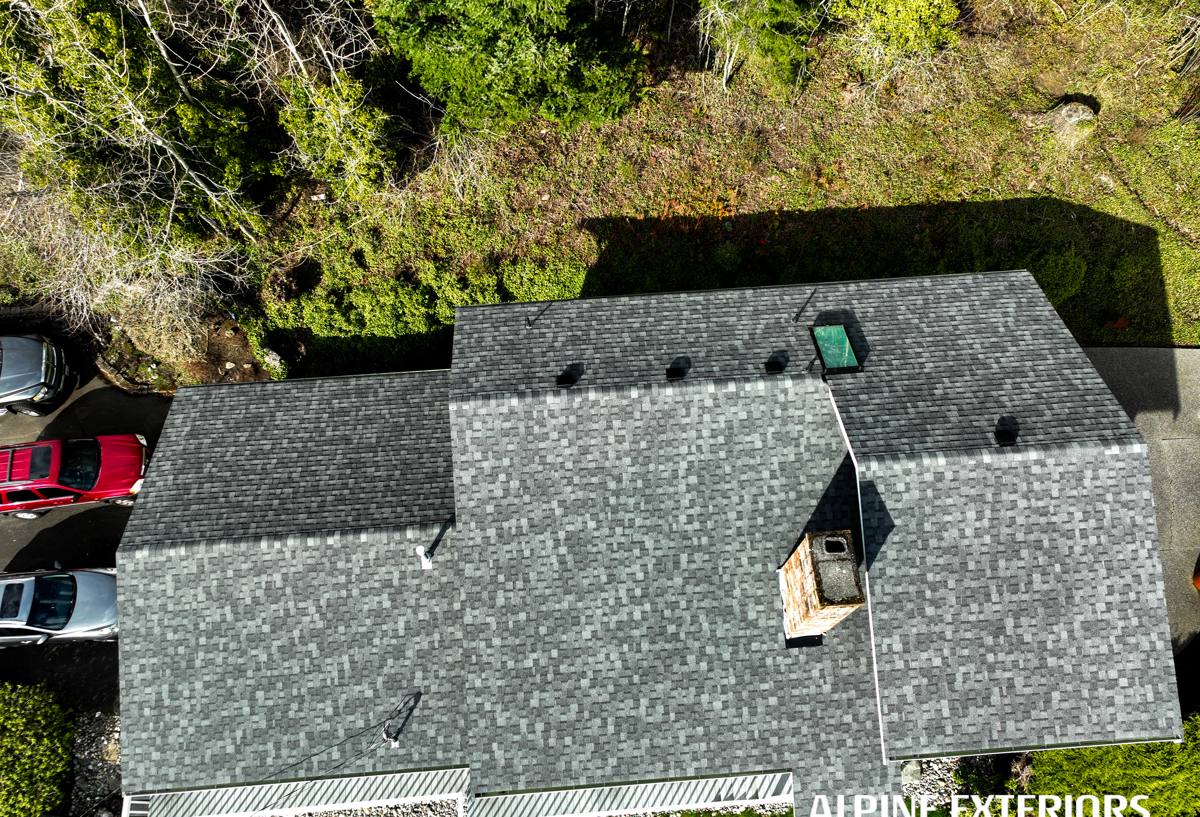
What a Correct Storm Damage Repair Involves
A quality repair starts well before anyone touches a shingle. It begins with a full assessment, because storm damage often extends past the visible break. A missing shingle at the ridge, for example, can mean water has already tracked several feet down the underlayment before it shows up as a stain inside the home. Rushing to patch only the visible spot without checking underneath it is one of the most common ways storm repairs fail within a year or two.
Steps We Look At On Every Storm Call
- Assess the full roof plane, not just the area a homeowner points to — wind damage is rarely isolated to one spot.
- Check underlayment and decking condition anywhere shingles were lifted or torn away, since this is where hidden rot starts.
- Inspect flashing around chimneys, vents, and valleys for corrosion or separation, especially given the corrosive effect of salt air in this area.
- Clear moss and organic debris from the repair area and surrounding roof surface so the new work isn't undermined by the same growth that contributed to the original failure.
- Match replacement materials to the existing roof as closely as possible, both for weatherproofing consistency and appearance.
- Confirm proper fastening and sealing methods suited to wind-driven rain, not just standard installation patterns.
Common Storm Damage We See in This Area
| Damage Type | Typical Cause | Why It Matters If Ignored |
|---|---|---|
| Lifted or missing shingles | High wind combined with moss-weakened adhesion | Exposes underlayment directly to driving rain |
| Corroded flashing | Salt air exposure over years | Creates slow, hidden leaks at valleys and penetrations |
| Granule loss / bald patches | Long-term moss growth and moisture retention | Reduces UV and water protection, ages the roof faster |
| Cracked or lifted pipe boots | Wind flexing combined with material fatigue | One of the most common sources of interior leaks after storms |
| Damaged ridge caps | Direct wind exposure at the roof's highest point | Can unzip an entire ridge line in a follow-up storm |
Why Timing Matters More Here Than in Drier Climates
In a dry climate, a small storm-damaged area might sit exposed for weeks without much consequence. That's not the case in Whatcom County. Between the frequency of rain events and the ever-present moss season, an opening in the roof surface here starts absorbing moisture almost immediately. Untreated, that moisture accelerates decking rot, feeds mold growth in the attic space, and gives moss an even easier foothold to spread from. What might have been a straightforward shingle repair in July can turn into a decking replacement job by the following spring if it's left alone through a wet winter.
This is part of why we treat storm damage calls with urgency, especially heading into the wetter months. A same-week tarp-and-inspect visit followed by a proper repair is almost always cheaper and less disruptive than waiting until the damage has spread.
Our Process for Columbia Homeowners
1. Free, No-Pressure Inspection
We start by walking the roof (and the attic, when accessible) to document the actual extent of the damage — not just what's visible from the ground. We'll tell you plainly if something is cosmetic versus something that needs immediate attention.
2. Clear, Honest Scope
You'll get a straightforward explanation of what needs to be repaired, why, and what the options are. We don't upsell a full roof replacement when a targeted repair will hold up, and we won't recommend a patch job if the underlying decking is already compromised.
3. Repair Using Materials Suited to This Climate
We select fasteners, flashing, and sealants with this region's salt air and moisture exposure in mind, not just whatever is fastest to install. That's a meaningful difference over the life of the repair.
4. Cleanup and Moss Prevention Guidance
Since moss is such a persistent factor in storm damage here, we'll flag any areas of your roof that are showing early moss growth or granule loss so you can address it before it becomes the next storm's weak point.
Repair vs. Replacement: How We Help You Decide
Not every storm-damaged roof needs full replacement, and not every roof can be safely patched indefinitely. A few honest factors guide that decision:
- Age of the roof: a roof already near the end of its expected lifespan may not be worth repeated storm patching.
- Extent of decking damage: widespread rot under the shingles usually points toward replacement rather than repair.
- Pattern of prior repairs: a roof with several past storm patches in different areas may be signaling systemic wear, not isolated bad luck.
- Moss and granule condition overall: heavy moss coverage across the whole roof, not just the damaged section, changes the math on repair versus replacement.
We'll walk you through where your roof falls on that spectrum honestly, rather than defaulting to the more expensive option.
Why It Matters to Hire a Crew That Already Works Columbia
Storm damage repair isn't a one-size-fits-all trade. A crew that primarily works in drier or more inland regions may not think twice about moss buildup or salt corrosion, because they don't see it often. A crew that regularly works roofs in and around Columbia and greater Whatcom County has already seen how these specific conditions play out over time — which flashing types hold up, which pipe boot materials degrade fastest under coastal exposure, and which repair shortcuts tend to fail within a season here.
That local pattern recognition is hard to replace with a generic checklist. It's the difference between a repair that's technically correct and one that's actually built for what this roof will face over the next several winters.
Simple Steps to Protect Your Roof Between Storms
- Have gutters and downspouts cleared before the wet season ramps up, so water isn't backing up under roof edges.
- Keep an eye on moss growth and address it early rather than letting it spread across a full roof plane.
- After any significant windstorm, do a visual check from the ground for obviously lifted or missing shingles.
- Don't ignore small interior stains — they're often the first visible sign of a storm-related leak that started weeks earlier.
- Schedule a periodic roof check even in years without major storm damage, since salt air corrosion happens gradually and quietly.
If a recent storm has left your Columbia home with missing shingles, a leak, or damage you're not sure how serious it is, we're happy to take a look. Reach out for a free, no-pressure estimate using the form below, and we'll give you a straight answer about what your roof actually needs.