 Whatcom County
Roof Replacement in Columbia's Climate
The Columbia neighborhood sits close enough to Bellingham Bay that homes here deal with a specific combination of weather stress most inland roofs never see: salt-laden air off the water, long stretches of driving rain, and a moss season that can run most of the year in shaded, north-facing sections of a roof. None of these alone is unusual for Whatcom County. Together, on an older or aging roof, they speed up problems that would otherwise take years to show up.
A roof replacement done right in this area isn't just "new shingles on the same deck." It's an opportunity to correct whatever let the old roof fail early — usually ventilation, flashing, or underlayment gaps — so the next roof actually gets its full expected life instead of repeating the same failure pattern in half the time.
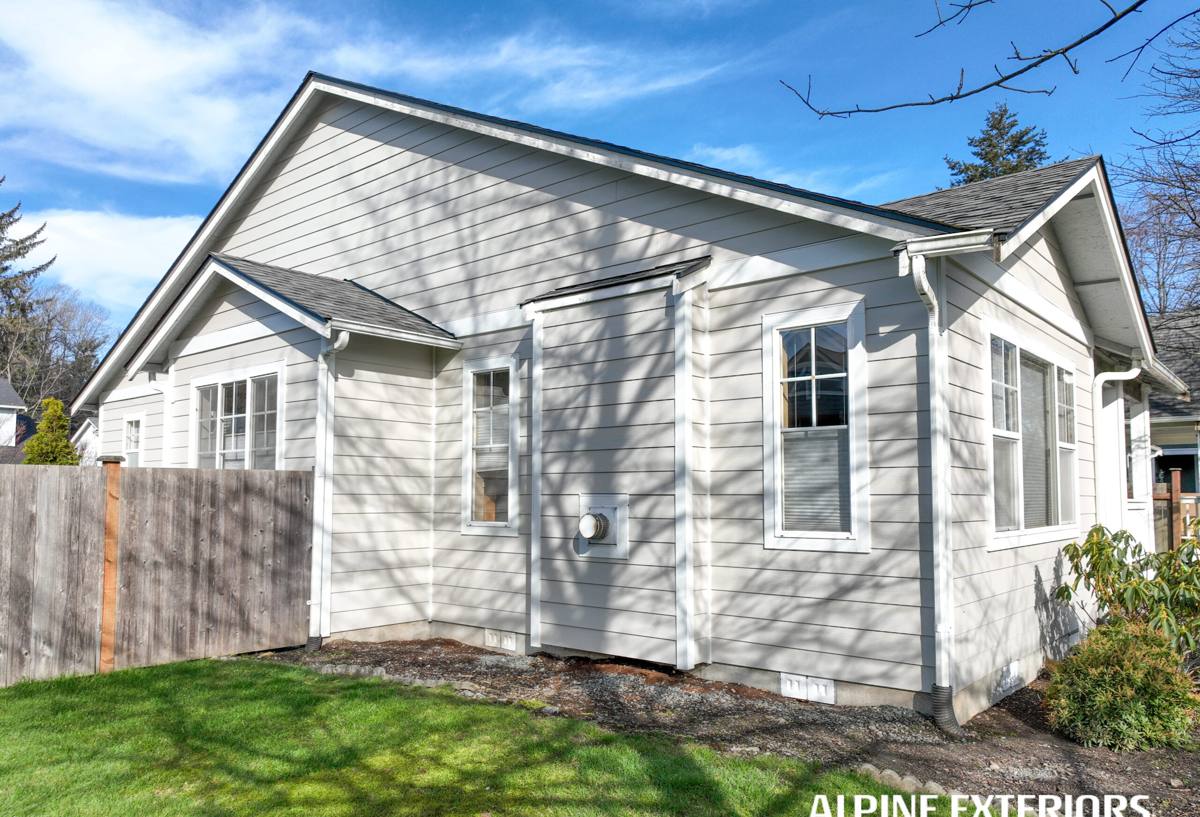
Why Roofs Wear Out Faster in This Part of Whatcom County
Salt Air
Airborne salt from Bellingham Bay accelerates corrosion on exposed metal — flashing, fasteners, gutter hardware, and vent stacks. Standard galvanized fasteners and thin-gauge flashing can pit and rust years ahead of schedule in homes closer to the water. It's a slow process, but it's steady, and it's one of the first things we check on any Columbia roof inspection.
Driving Rain
Wind-driven rain doesn't just fall straight down — it pushes sideways under shingle tabs, around vents, and into any gap in flashing or underlayment that a calm-weather roof might get away with. Roofs here need underlayment and flashing detail work that's a step above what a drier climate would require, especially at valleys, chimneys, and roof-to-wall transitions.
Moss Season
Shaded roof sections — under trees, on north slopes, in areas that stay damp longer after a storm — grow moss for a large part of the year in Whatcom County. Moss holds moisture against the roofing material, lifts shingle edges as it grows, and works its way into gaps over time. A roof that isn't detailed or ventilated with moss in mind will show granule loss and soft spots well before its rated lifespan is up.
Signs a Columbia Roof Needs Replacement, Not Another Repair
- Granules collecting in gutters or at downspout outlets in noticeable amounts
- Shingles that are cupping, curling, or cracking across large sections, not just one spot
- Moss growth that keeps returning to the same areas within a season of cleaning
- Soft or spongy decking felt underfoot in the attic or during a close inspection
- Rusted or pitted flashing, especially around chimneys, vents, and skylights
- Daylight visible through the roof deck from inside the attic
- Multiple past repairs in different areas within a short span of years
- Roof age at or beyond the manufacturer's expected service life for the material
One or two of these on their own might mean a targeted repair is enough. Several at once, especially combined with the roof's age, usually means repair costs start competing with replacement costs without buying you much extra time.
What a Correct Roof Replacement Actually Involves
Tear-Off and Deck Inspection
We remove the old roofing down to the deck rather than layering over it. That's the only way to actually see the plywood or plank decking underneath — soft, delaminated, or water-stained sections need to be replaced before anything new goes down. Roofing over a compromised deck just hides the problem under a new layer of material.
Underlayment and Ice/Water Protection
Given how much wind-driven rain this area gets, underlayment isn't a place to cut corners. Self-adhered ice-and-water shield belongs at eaves, valleys, and around every roof penetration — the spots where wind-driven rain is most likely to find a way in. The rest of the deck gets a synthetic underlayment layer as a second line of defense under the roofing material itself.
Flashing
Flashing around chimneys, skylights, vent stacks, and wall intersections is where most leaks actually start, not in the open field of shingles. We use corrosion-resistant flashing material and detail it correctly given the salt-air exposure closer to the water — this is one area where using a lighter-gauge or lower-grade product now turns into a callback in a few years.
Ventilation
Proper intake and exhaust ventilation keeps the attic space dry and temperature-balanced, which matters for two reasons here: it reduces the condensation that feeds moss and mildew, and it protects the new decking and shingles from the underside, not just the top. A replacement is the right time to correct ventilation that was never adequate on the original build.
Final Material Installation and Cleanup
Shingles or panels go down to manufacturer spec — correct nail pattern, exposure, and fastening for the wind exposure in this area. We haul away the old material and do a full magnetic sweep of the property for stray fasteners before calling the job done.
Choosing a Roofing Material for a Columbia Home
There's no single "best" material for every house — it depends on the roof's slope, sun/shade exposure, budget, and how the home looks alongside its neighbors. Here's how the common options actually compare for this specific climate.
| Material | Moss & Moisture Resistance | Salt Air Durability | Typical Lifespan | Notes |
|---|---|---|---|---|
| Asphalt Composition Shingle | Good with proper ventilation; algae-resistant granule options help | Good — least metal exposure to corrode | 25-30 years | Most common choice; wide style and color range |
| Standing Seam Metal | Excellent — sheds moss and moisture fastest | Requires marine-grade or coated fasteners near the water | 40-60 years | Higher upfront cost, lower long-term maintenance |
| Synthetic/Composite Shingle | Very good — resists moisture absorption | Good | 30-50 years | Mimics wood or slate look without the moisture issues those materials carry |
| Wood Shake | Poor without aggressive, ongoing maintenance | Moderate — wood itself doesn't corrode but retains moisture | 20-30 years with upkeep | We're upfront that the maintenance burden in this moss-heavy climate is significant; happy to discuss trade-offs |
We'll walk through these honestly during an estimate — including where a lower-maintenance option might save more over ten years than it costs upfront.
Our Process for a Columbia Roof Replacement
- On-site inspection — we get on the roof and in the attic, not just a ground-level look, to assess deck condition, ventilation, and flashing
- Written estimate — material options, scope, and a clear cost breakdown, no vague allowances
- Scheduling around weather — we plan tear-off days around dry windows given how much rain this area gets, and protect the open deck if weather shifts mid-job
- Tear-off, deck repair, and underlayment — done in stages so the roof is never left exposed longer than necessary
- Installation — flashing, ventilation, and final material installed to spec
- Final walkthrough — we review the finished roof with you and answer questions before we consider the job complete
What Roof Replacement Typically Costs
Actual pricing depends on roof size, pitch, deck condition, and material choice, but the main cost drivers are worth understanding before you get quotes:
| Factor | Why It Moves the Price |
|---|---|
| Roof size (squares) | Material and labor scale directly with total roof area |
| Pitch and complexity | Steep or multi-valley roofs take longer and require more safety setup |
| Deck condition | Rotted or soft decking found during tear-off adds material and labor to replace it |
| Material choice | Asphalt, metal, and composite carry different material and install costs |
| Access | Tight lots, tree coverage, or difficult staging can add time |
We give a firm, itemized number after the on-site inspection — not a rough phone quote — because deck condition and access genuinely can't be judged accurately from the street.
Why It Matters That We Already Work in Columbia
A crew that already works this part of Whatcom County knows which streets have the tightest access, which lots hold onto shade long enough to grow moss year-round, and how the local permitting process runs for a full tear-off replacement. That familiarity shows up in fewer surprises mid-project — not because every roof is the same, but because the climate and building patterns in this specific area repeat often enough that we've already seen most of the variations.
It also matters for accountability. A local crew is around to stand behind a warranty claim years down the road, not a name that shows up for one job and is gone.
Get a Free, No-Pressure Estimate
If your roof is showing its age, holding onto moss it shouldn't, or just due for an honest inspection, we're glad to take a look. Use the form below to request a free estimate — we'll assess the roof, walk you through material and cost options in plain terms, and let you decide from there. No pressure, no obligation.