 Whatcom County
Why Columbia Homes Need Siding Built for This Climate
The Columbia neighborhood sits close enough to Bellingham Bay that homes here deal with a mix of conditions that most siding products simply weren't designed to handle at once: salt-tinged air drifting off the water, driving rain that comes in sideways during winter storms, and a long, wet moss season fed by mature tree canopy and shaded lots. Any one of those on its own is manageable. Together, over years, they expose the weak points in cheaper or poorly-installed siding fast — and they're exactly why we install one product, to one standard, on every job we take in Whatcom County.
This page is about one job specifically: fiber cement siding installed correctly on a Columbia home. Not a generic overview of siding materials, but what this climate actually does to a wall system, what a correct install looks like in response, and why the crew you hire for it matters as much as the material itself.
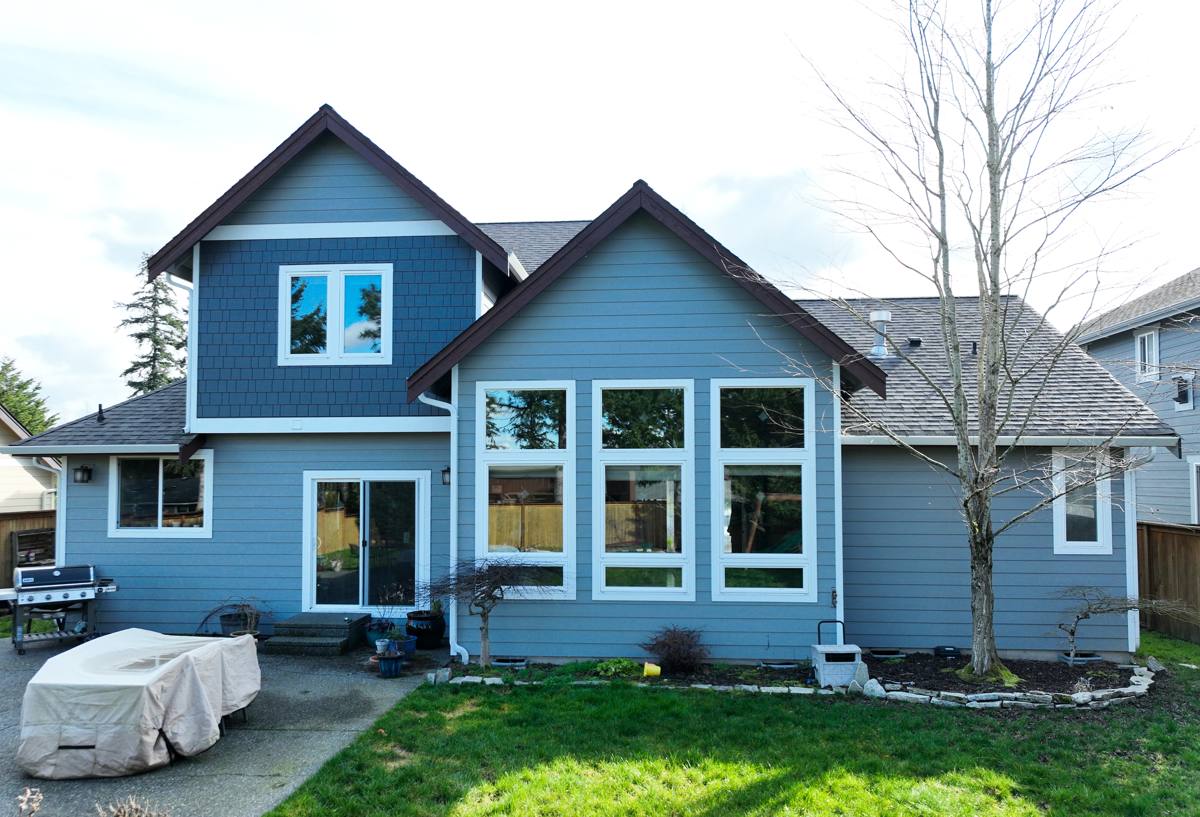
What Whatcom County's Climate Does to Siding Over Time
Salt Air and Corrosion
Homes within a few miles of Bellingham Bay pick up airborne salt that accelerates corrosion on fasteners, flashing, and trim. Siding materials that rely on exposed metal fasteners, aluminum trim coil, or unprotected cut edges show this first — streaking, rust bleed, and premature failure at the fastener heads long before the field of the siding itself gives out.
Driving Rain and Wind-Driven Moisture
Whatcom County storms don't just drop rain straight down — wind pushes it sideways into wall assemblies, especially on exposed elevations and around window and door openings. Siding that depends on caulk and paint film alone to keep water out, rather than proper water-resistive barrier and flashing detailing behind it, eventually lets moisture past the surface. Once that happens, what's underneath the siding matters more than what's on top of it.
Moss, Shade, and Slow-Drying Walls
Columbia has plenty of mature trees, and shaded, tree-lined lots stay damp longer after a storm than open ones. That extended dry-out time is what drives moss and algae growth on north-facing walls and anything under heavy canopy. Materials that absorb moisture into their surface, or that require frequent repainting to hold a protective film, are the ones that show green streaking and soft spots first.
Why We Install Only James Hardie Fiber Cement
We don't install LP SmartSide, vinyl, Cemplank, Allura, primed spruce, or cedar. That's not brand loyalty — it's a standard we set based on what holds up in this specific climate, on this specific coastline, over decades rather than years.
A Non-Combustible, Moisture-Stable Core
James Hardie fiber cement is made from cement, sand, and cellulose fiber. It doesn't absorb and swell with moisture the way engineered wood products can, and it doesn't soften or delaminate at cut edges and exposed panel faces the way some composite sidings do when water gets past a failed seal. That matters directly in a climate where the siding is wet more often than it's dry for months at a stretch.
ColorPlus Factory Finish
Rather than site-applied paint, ColorPlus finish is baked on at the factory in multiple coats, which gives it better fade and chip resistance than field paint — and it means the color match holds consistently if a board ever needs replacing later. In a salt-air environment, a factory-cured finish holds up longer against the kind of surface breakdown that leads to moss and mildew taking hold.
Climate-Engineered Formulations
James Hardie engineers different siding formulations for different regional climate demands through its HardieZone system, rather than selling one universal product everywhere. For a wet, moisture-heavy coastal climate like ours, that means a formulation built with this kind of exposure in mind, not one optimized for a drier or more temperate region.
A Real, Transferable Warranty
James Hardie backs its siding with a long, non-prorated limited warranty on the material, and the ColorPlus finish carries its own separate finish warranty. Both are transferable to a new owner within the coverage terms, which matters for resale — a documented, transferable warranty on the siding is something buyers and their inspectors ask about.
What a Correct Fiber Cement Install Actually Involves
The material is only half the equation. Most siding failures we get called to look at — on any brand — trace back to installation shortcuts, not the product itself. On a Columbia home, a few details matter more than usual because of the rain and salt exposure.
Water-Resistive Barrier and Flashing First
Before a single piece of siding goes up, the wall needs a continuous water-resistive barrier, properly lapped and sealed, with flashing integrated at every window, door, and horizontal transition. The siding is the second line of defense, not the only one. Given how much wind-driven rain this area sees, a wall with a compromised barrier will eventually leak regardless of what siding covers it.
Fastening and Clearances Done to Spec
James Hardie publishes specific fastener types, spacing, and penetration requirements, along with minimum clearances from grade, roof lines, and other flatwork. Skipping these — using the wrong fastener, hand-nailing at the wrong depth, or running siding too close to grade — is the single most common cause of early moisture intrusion and fastener corrosion we see, especially in a salt-air setting where a bare fastener head starts corroding faster than an inland home would ever notice.
Trim, Caulking, and Gaps
Every seam, corner, and trim intersection needs to be sealed with a caulk rated for the movement and exposure it will see, and gapped correctly where the manufacturer calls for it rather than caulked solid. Done wrong, water gets trapped behind trim instead of shedding off it — which, combined with shaded, slow-drying walls in Columbia, is a direct path to moss and rot starting from the inside out.
A Quick Homeowner Checklist
- Water-resistive barrier installed and inspected before siding starts, not covered up quickly
- Flashing integrated at every window, door, and roof-to-wall transition
- Fasteners match James Hardie's specification for the product and exposure
- Minimum clearances maintained from grade, decks, and roofing
- Caulk and sealant used only where specified, not as a substitute for proper flashing
- ColorPlus finish free of field paint touch-up except where the manufacturer allows it
Our Process for a Columbia Project
- On-site assessment — we walk the home, check the current siding and sheathing condition, and look specifically at shaded elevations and areas exposed to prevailing wind and rain.
- Scope and product selection — we confirm the James Hardie profile and ColorPlus color, and identify any areas needing sheathing repair or additional flashing work before siding goes on.
- Written estimate — a clear, itemized quote with no surprise add-ons buried in the fine print.
- Install — water-resistive barrier and flashing first, then siding installed to manufacturer spec, with attention to fastener and clearance details throughout.
- Final walkthrough — we go over the finished job with the homeowner before calling it complete.
Comparing Siding Options for Columbia's Climate
| Factor | James Hardie Fiber Cement | Vinyl | Engineered Wood (LP-type) |
|---|---|---|---|
| Moisture absorption | Does not absorb or swell | Doesn't absorb, but seams can trap water behind it | Can swell and delaminate if water gets past the coating |
| Salt air / coastal exposure | Stable core, factory finish resists surface breakdown | Can become brittle and discolor over time | Coating breakdown exposes wood substrate to moisture |
| Moss and algae resistance | Factory finish resists surface growth | Prone to surface algae in shaded, damp spots | Prone to surface growth where coating has worn |
| Fire resistance | Non-combustible core | Can soften or melt under heat exposure | Combustible wood-based core |
| Finish longevity | Factory-cured, separate finish warranty | Color molded in, but fades and chalks over time | Field or factory paint that requires more frequent upkeep |
Cost Factors for a Columbia Fiber Cement Project
Every home is different, but the line items that actually move the price on a Columbia job tend to be the same handful of factors:
| Cost Factor | Why It Matters Here |
|---|---|
| Sheathing condition underneath old siding | Shaded, damp walls sometimes need repair before new siding can go on correctly |
| Home size and wall complexity | More corners, dormers, and trim details mean more labor and cut waste |
| Siding profile and accessory trim | Lap width, trim style, and corner details all affect material cost |
| Access and site conditions | Mature trees, tight side yards, and slopes common on Columbia lots can affect setup and staging |
| Removal and disposal of existing siding | Tear-off adds labor and disposal cost versus siding over an already-sound wall |
We give a firm, written number after seeing the actual house — not a phone estimate — because the sheathing condition underneath the old siding is often the biggest unknown until it's opened up.
Maintenance After Installation
Fiber cement with a ColorPlus finish needs far less upkeep than wood or repainted siding, but "less" isn't "none," especially with Columbia's tree cover and moisture load:
- Rinse the siding down annually to clear pollen, dust, and early moss growth before it takes hold
- Keep gutters clear so overflow doesn't run down the wall face repeatedly
- Trim back branches and shrubs that keep a wall shaded and slow to dry
- Check and re-caulk trim joints periodically as part of normal home upkeep
- Address any impact damage or chipped finish promptly rather than letting exposed edges sit
Why Hiring a Crew That Already Works in Columbia Matters
Fiber cement siding is only as good as the details it's installed with — and those details change based on exposure, shade, and moisture load, which vary block to block in a place like Columbia. A crew that already works this neighborhood knows which elevations take the worst of the weather off the bay, which lots stay damp longest under tree cover, and how to sequence a job around Whatcom County's rain patterns instead of getting caught mid-install by a system rolling in off the water. That local familiarity, combined with sticking to one manufacturer's spec instead of juggling install methods across five different products, is what keeps a siding job doing its job for decades instead of years.
If you're weighing a siding project on a Columbia home, we're happy to take a look and put together a free, no-pressure estimate — no obligation, just a straight assessment of what your home actually needs.