 Whatcom County
Windows in Columbia Take a Different Kind of Beating
Columbia sits close enough to Bellingham Bay that salt-laden air is a real factor in how fast exterior materials age, and it's far enough into a wet Pacific Northwest winter pattern that driving rain off the water finds every weak point in a window's flashing and seals. Add in a moss season that can stretch from October through May, and you've got a climate that's genuinely hard on windows — not in a dramatic way, but in the slow, cumulative way that rots sills, fogs glass, and lets cold air creep in around frames that looked fine five years ago.
Homes in this part of Whatcom County are often older builds with original or first-generation replacement windows that were never rated for this level of moisture exposure. That's the starting point for almost every window replacement conversation we have in Columbia — not "do these windows look bad," but "how much moisture has already gotten behind them."
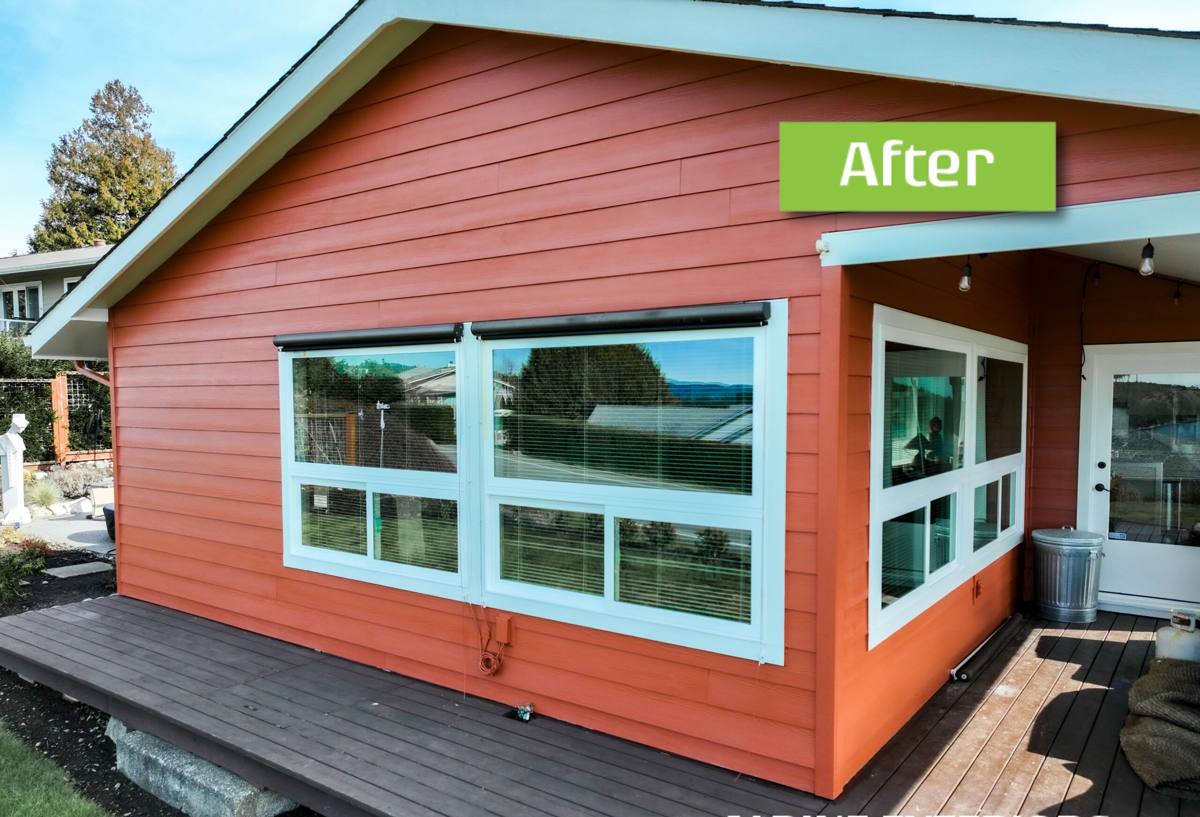
Signs Your Columbia Home's Windows Are Failing
Window failure rarely announces itself. It shows up as small, easy-to-dismiss symptoms that add up over a wet season or two. If you're noticing any of the following, it's worth a closer look before it turns into a bigger repair:
- Fogging or a visible haze between panes on double-glazed windows — a sign the seal has failed and moisture is trapped inside the glass unit
- Soft or spongy wood at the sill or lower frame corners, especially on windows facing prevailing weather
- Visible moss or dark streaking on the exterior trim around a window, which usually means water is sitting there longer than it should
- Drafts you can feel by hand along the frame edges, even with the window latched shut
- Windows that are difficult to open, close, or lock — frames can swell and warp as they take on moisture
- A noticeable rise in heating costs without any other explanation
Any one of these on its own isn't necessarily an emergency. Several together, or any sign of soft wood, usually means the window and possibly some of the surrounding wall assembly need attention.
What a Correct Window Replacement Actually Involves
Swapping in a new window is the easy part. What separates a job that lasts from one that fails again in a few years is everything around the window unit itself — the flashing, the sealants, and how the opening is prepared before the new window ever goes in.
Before the New Window Goes In
We remove the old unit and inspect the rough opening for hidden rot, especially at the sill, since that's where water pools and does the most damage over time. Any compromised framing gets repaired before anything new is installed — putting a new window into a wet or rotten opening just hides the problem for a while.
Flashing and Water Management
This is the step that matters most in a climate like ours. Proper window flashing directs water that gets behind the siding back out and away from the framing, rather than letting it collect. With the amount of driving rain Columbia sees, a window installed without correct flashing sequencing — sill pan, side flashing, and head flashing layered in the right order — is a leak waiting to happen, even if the window itself is a good product.
Sealing and Insulating
The gap between the window frame and the rough opening gets insulated and sealed correctly, not just packed with whatever's on hand. Over-filling with rigid foam can actually bow window frames; under-insulating leaves a cold, drafty gap. This is a detail that's easy to rush and hard to notice until winter.
Exterior Trim and Finish
The trim and caulking around the finished window are what you actually see, and they're also the last line of defense against moisture. We finish this so water sheds away from the window rather than pooling on horizontal trim surfaces, which is exactly where we see moss and rot take hold first on older homes.
Choosing the Right Window for a Whatcom County Home
There's no single "best" window material — it depends on your home's exposure, your budget, and how much maintenance you're willing to keep up with. Here's how the common options compare for a home dealing with salt air and heavy rain:
| Material | How It Handles Our Climate | Maintenance | Typical Lifespan |
|---|---|---|---|
| Vinyl | Doesn't rot or corrode from salt air; good seal performance | Low — occasional cleaning | 20–30 years |
| Fiberglass | Very stable in temperature swings and moisture; strong long-term option near the water | Low | 30+ years |
| Wood | Classic look but most vulnerable to rot without diligent upkeep | High — regular painting/sealing | 15–20 years without consistent maintenance |
| Wood-clad (wood interior, aluminum/vinyl exterior) | Protects the exterior face from weather while keeping a wood interior look | Moderate | 25–30 years |
| Aluminum | Prone to condensation and thermal transfer in our damp, cool winters unless thermally broken | Low | 20–25 years |
For most Columbia homes near the water, we steer people toward vinyl or fiberglass because they hold up to salt exposure without asking for ongoing upkeep. Wood windows can still be the right call on an older or historic home where matching the original look matters — we just make sure the homeowner understands the maintenance commitment that comes with that choice.
Glass and Frame Details Worth Asking About
- Double- or triple-pane glazing with argon fill for better insulation against damp, cold air
- Low-E coatings to cut down on heat loss without darkening the room
- Weep holes and drainage paths that stay clear so the window can shed water on its own
- Multi-point locking hardware, which also helps window seals stay tight against wind-driven rain
Our Process for a Columbia Window Replacement
- On-site assessment. We look at each window individually — exposure, condition, and any signs of moisture already getting into the framing.
- Honest recommendation. We'll tell you which windows genuinely need replacing now, which can wait, and which just need re-caulking or minor repair.
- Product selection. We walk through material and glazing options based on your home's exposure and budget — no upselling toward a product that doesn't fit the situation.
- Opening prep and repair. Any rot or damage found during removal gets fixed before the new window goes in, with clear communication if that changes scope.
- Installation with proper flashing. Sill pan, flashing, insulation, and air sealing done in the correct order — the part of the job that actually determines whether it lasts.
- Finish work and cleanup. Trim, caulking, and a final check that every window opens, closes, and locks properly.
What Affects the Cost of a Window Replacement
| Factor | Why It Matters |
|---|---|
| Number of windows | Per-window cost typically drops on larger jobs done in one visit |
| Frame material | Vinyl is generally the most budget-friendly; fiberglass and wood cost more upfront |
| Extent of rot repair | Hidden sill or framing damage found during removal adds labor and material |
| Window size and style | Large picture windows, bays, or custom shapes cost more than standard double-hungs |
| Full-frame vs. insert replacement | Full-frame replaces flashing and framing too — more thorough, more involved |
Whole-home window replacement projects typically run from a few thousand dollars for a small number of standard-size windows up into the higher five figures for a full-home, full-frame replacement with premium materials. Every home is different, which is why we price after seeing the actual windows rather than off a generic per-window number.
Why Local Experience in Whatcom County Matters
A crew that's worked windows across Whatcom County knows which directions catch the worst of the weather, how fast moss builds on north-facing trim, and where salt air tends to do the most damage first. That's not something you learn from a manufacturer's install manual — it comes from having done this work on homes with the same exposure as yours. It also means we're not guessing at flashing details or improvising a fix for wood rot we've never seen before; we've dealt with it on other Columbia homes and know what actually holds up here.
It also means we're around after the job's done. If a window ever needs adjustment or a warranty issue comes up, you're not calling a company that installed once in the area and moved on.
Keeping New Windows Performing Long-Term
A correct install goes a long way, but a little upkeep keeps windows performing for their full lifespan in this climate:
- Clear moss and debris from window sills and surrounding trim a couple of times a year
- Check caulking annually for cracking or gaps, especially after a hard winter
- Make sure weep holes stay clear so water can drain out as designed
- Operate windows through their full range periodically so hardware and seals stay in working condition
- Address any new soft spots in surrounding trim right away rather than waiting
If you're noticing drafts, fogged glass, or trim that's starting to look tired on a home in Columbia or elsewhere in Whatcom County, we're happy to take a look. The estimate is free, there's no pressure, and you'll get a straight answer about what actually needs to be done — just fill out the form below to get started.