 Whatcom County
 Asphalt Shingle Roofing Built for Nooksack's Weather
Nooksack sits in the Nooksack River valley near the Canadian border, in a part of Whatcom County that gets hit hard by wet weather nine months out of the year. The same marine air that carries salt off Bellingham Bay pushes rain and humidity inland through the valley, and that moisture doesn't just fall once and drain off — it sits. It soaks into shaded roof slopes, feeds moss and algae, and works its way into any gap in a roof system that wasn't installed with this climate in mind. An asphalt shingle roof that would hold up fine in a dry climate can start showing granule loss, curling edges, and moss lines within a few years here if it was cut corners on underlayment or ventilation.
We work on roofs in Nooksack and the surrounding Whatcom County communities regularly, and the failures we get called out to inspect follow a pattern: not usually bad shingles, but bad installation details — flashing that was reused instead of replaced, underlayment that wasn't rated for the exposure, or a roof deck that never had a chance to dry out because there wasn't enough airflow underneath the shingles.
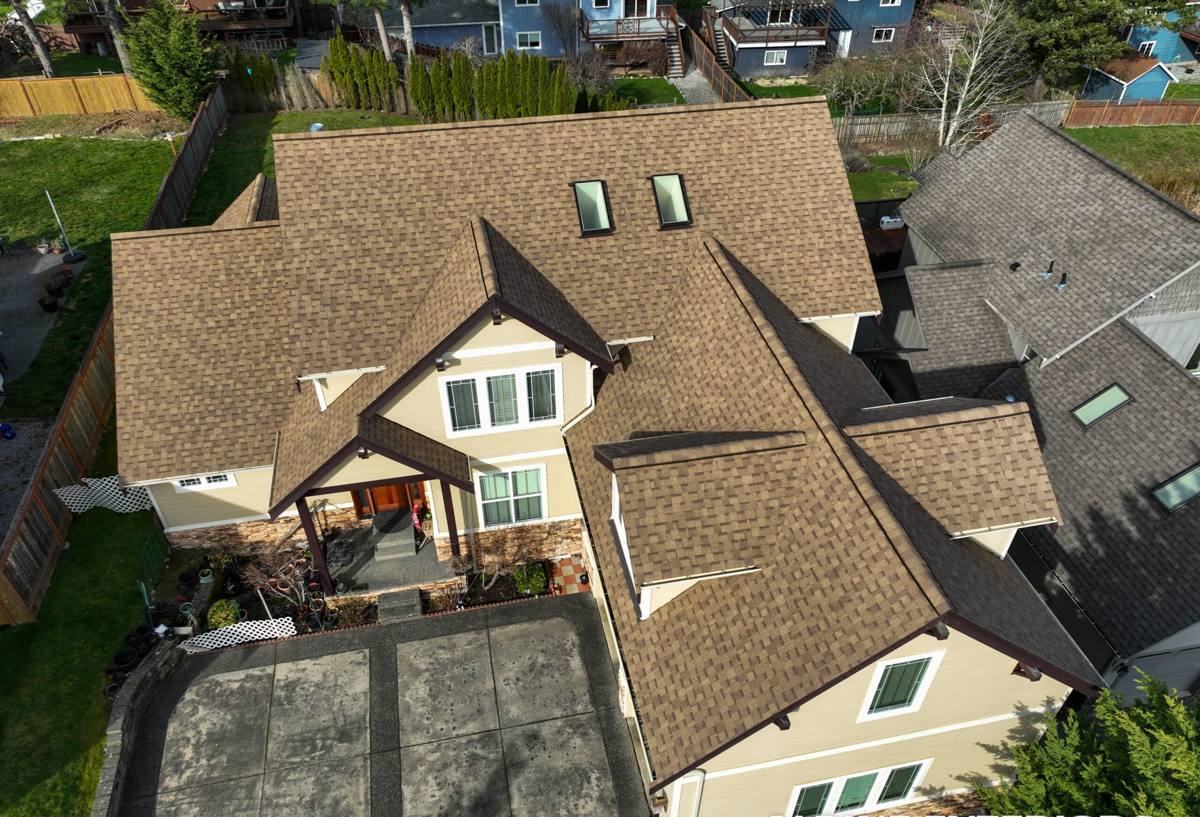
What a Correct Shingle Roof Needs in This Climate
A shingle roof is a system, not just a layer of shingles nailed to plywood. In Whatcom County's driving rain and long moss season, every layer underneath the shingles matters as much as the shingles themselves.
Ice and Water Shield at the Vulnerable Points
Eaves, valleys, and any roof-to-wall transition are where wind-driven rain gets pushed backward under shingles instead of running off. We install self-adhering ice and water shield membrane at those points, not just a starter strip, because that's where the driving rain typical of this area actually causes leaks.
Full-Coverage Synthetic Underlayment
Between the ice and water shield and the shingles, the rest of the deck gets a synthetic underlayment rated to handle extended exposure and repeated wetting. Older felt underlayment breaks down faster when a roof sits damp for days at a time, which is common here in fall and winter.
Flashing That's Actually Replaced, Not Reused
Step flashing, counter-flashing, and valley metal take a beating from moisture cycling and should be replaced during a re-roof, not bent back into place and reinstalled. Reused flashing is one of the most common causes of the "mystery leak" we get called to track down on roofs that are only a few years old.
Ventilation That Matches the Insulation Below
A roof deck that can't breathe stays damp longer, and a damp deck grows moss and rots faster. Balanced intake (soffit) and exhaust (ridge) ventilation keeps air moving under the shingles so the deck actually dries between rain events instead of staying saturated all winter.
Signs Your Nooksack Roof Needs a Look
Most shingle roof problems in this area show up gradually. Catching them early is the difference between a repair and a full replacement.
- Dark streaks or green-black moss patches, especially on north-facing or shaded slopes
- Granules collecting in gutters or at the base of downspouts
- Shingle edges curling up or looking cupped rather than lying flat
- Daylight visible through the roof deck from inside the attic
- Soft or spongy spots when walking the roof (a sign of a wet, deteriorating deck)
- Missing or lifted shingles after a windstorm
- Water stains on interior ceilings, especially near chimneys, skylights, or valleys
- Visible rust or lifting at flashing around vents and chimneys
Our Process for a Nooksack Roofing Job
Inspection and Honest Estimate
We start by getting on the roof, not just looking at it from the ground. We check the deck condition, existing ventilation, flashing points, and how many layers of shingles are already up there, since that affects whether a tear-off is required. You get a written estimate that spells out materials, scope, and price — no vague allowances that turn into surprise add-ons.
Tear-Off and Deck Inspection
We remove the old roofing down to the deck. This is the point where hidden rot or soft plywood shows up, and it's far cheaper to replace bad decking now than to install a new roof over a weak substrate that will fail early. Any damaged sheathing gets replaced before anything else goes down.
Underlayment, Flashing, and Ventilation
Ice and water shield goes down at eaves and valleys, synthetic underlayment covers the rest of the deck, and all flashing is replaced — not reused. Ventilation components are installed or upgraded here if the existing setup is undersized for the attic space.
Shingle Installation
Shingles are installed to manufacturer nailing specs, with proper starter strips and ridge caps, so the wind and warranty ratings actually apply. This is also where valley type (open metal vs. woven) and starter course details get decided based on the roof's specific geometry.
Cleanup and Walkthrough
We run a magnetic sweep for nails, clear debris, and walk the finished roof with you before calling the job done.
Shingle Options and What They Cost You Long-Term
Not every shingle product makes sense for every roof or every budget. Here's how the common options compare for a home in this climate.
| Shingle Type | Typical Lifespan | Best For | Trade-Offs |
|---|---|---|---|
| 3-tab asphalt | 15-20 years | Budget-conscious re-roofs, rental properties | Lower wind rating, flatter appearance, less algae resistance in standard lines |
| Architectural (laminate) asphalt | 25-30 years | Most owner-occupied homes | Higher upfront cost than 3-tab, but better wind rating and dimensional look |
| Algae-resistant architectural | 25-30 years | Shaded lots, north-facing roofs, moss-prone properties | Slightly higher cost; copper-infused granules resist algae/moss growth longer |
| Impact-resistant (Class 4) asphalt | 25-30+ years | Homeowners wanting hail/debris resistance | Highest material cost; may qualify for insurance discounts |
For most Nooksack homes, we recommend algae-resistant architectural shingles specifically because of how much shaded, moisture-heavy roof surface is typical here. The added cost over standard architectural shingles is modest compared to the labor cost of a moss remediation and re-treatment down the road.
Ventilation and Moss: The Long Game
Why Moss Keeps Coming Back
Moss doesn't grow because a roof is old — it grows because a roof surface stays damp and shaded long enough for spores to take hold. Even a brand-new shingle roof will grow moss again if the ventilation underneath is poor or if overhanging trees keep a slope shaded and wet through the winter. Treating moss without fixing airflow or shade just buys a year or two.
Zinc and Copper Strips
Installing a zinc or copper strip near the ridge lets rainwater carry trace metal ions down the roof slope every time it rains, which suppresses moss and algae growth on the surface below it. It's a low-cost addition during a re-roof and works especially well paired with algae-resistant shingles.
What You Can Do Between Services
Keep gutters clear so water isn't backing up under the shingle edge, and have overhanging branches trimmed back where practical. A soft-wash treatment (not high-pressure) every couple of years extends the life of moss prevention measures without damaging the granule surface.
Why a Crew That Already Works This Area Matters
Roofing crews that work Whatcom County regularly know which details actually matter here versus which ones are overkill for a drier climate. We know how much ice and water shield coverage the fall rain pattern actually justifies, which ventilation setups hold up in older Nooksack-area homes with tighter attic spaces, and what the local permitting process requires before work starts. That familiarity shows up in fewer surprises during the job and a roof that's built for the weather it will actually face, not a generic spec sheet.
Being local also means we're not disappearing after the invoice is paid. If a question comes up two years down the road, you're calling a crew that's still working in the same towns and can get back out to look at it.
After Installation: Keeping the Roof Performing
A correctly installed shingle roof in this climate should need only light maintenance: gutter clearing, an occasional soft-wash if moss starts to return, and a visual check after major windstorms. We recommend a walk-through inspection every few years, especially after the roof passes the ten-year mark, just to catch flashing wear or granule loss before it turns into an interior leak.
If your Nooksack roof is showing any of the signs above, or if you're planning ahead rather than reacting to a leak, we're happy to take a look and give you a straight answer about what it actually needs. Reach out for a free, no-pressure estimate using the form below.