 Whatcom County
 Why Metal Roofing Makes Sense for Nooksack Homes
Nooksack sits in the Nooksack River valley, and like the rest of Whatcom County it gets weather that doesn't let up for long stretches of the year. Marine air moves inland off the Sound, rain arrives sideways more often than straight down, and shaded, damp roof sections spend months growing moss instead of drying out. A roof here isn't just shedding water a few times a year — it's dealing with near-constant moisture, wind-driven rain that finds every weak seam, and a slow biological attack from moss and algae that most asphalt shingle roofs never fully recover from.
Metal roofing holds up to that combination better than almost any other residential roofing material, but only when it's specified and installed correctly for this climate. A metal roof put on the way you'd do it in a dry inland climate will underperform here. The details that matter in Whatcom County are different, and that's the part worth understanding before you sign a contract.
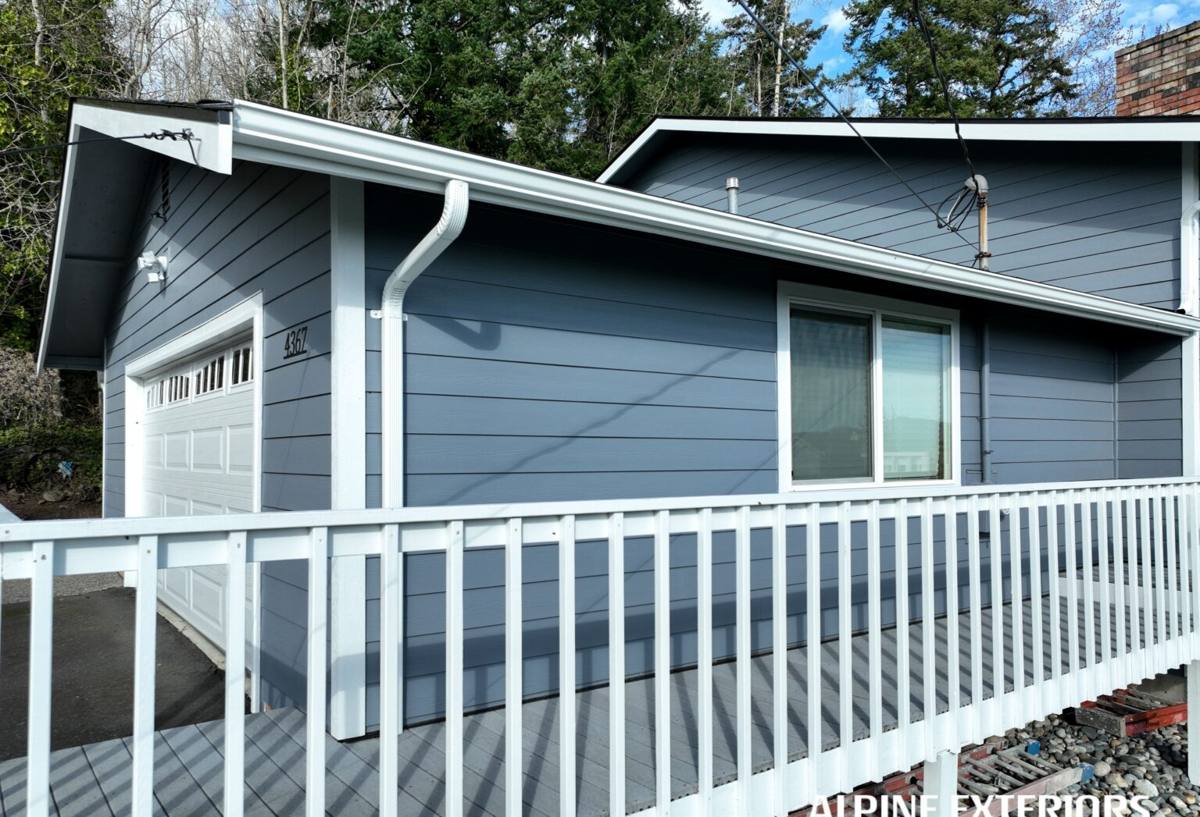
What Whatcom County's Climate Actually Does to a Roof
Salt Air and Corrosion
Even away from the immediate waterfront, salt-laden marine air travels inland on the wind and settles on exposed metal, fasteners, and flashing. Over years, untreated or poorly coated steel will show surface rust first at cut edges, fastener heads, and scratches from installation — the places where the protective coating was compromised. This is why coating quality and correct field practices (like using factory-matched touch-up paint on any cut edge) matter more here than in a dry climate.
Driving Rain
Wind-driven rain doesn't just fall on a roof, it pushes sideways and upward under laps, around penetrations, and into any gap that a calmer climate would never expose. Metal roofing is excellent at shedding water, but only if the panel laps, underlayment, and flashing details are built to handle water moving in more than one direction. A roof that only manages water falling straight down will eventually leak here.
The Long Moss Season
Shaded roof slopes, tree cover, and long damp stretches mean moss and algae get a real foothold on roofs that stay wet for days at a time. Moss holds moisture against roofing material, and on asphalt shingles that moisture works its way under the granules and shortens the roof's life. Metal roofing doesn't feed moss the way shingles do, and its smooth, hard surface makes it much harder for moss to establish and much easier to keep clean when it does.
What a Correct Metal Roof Involves in This Climate
A metal roof is a system, not just a layer of panels. Every component below the visible surface matters as much as the panel itself, and this is where corners get cut on lower-quality jobs.
- Ice and water barrier at eaves, valleys, and penetrations — self-adhering underlayment in the areas most likely to see wind-driven water intrusion.
- Synthetic underlayment across the full deck — a breathable, water-resistant layer that also protects the deck during install before panels go on.
- Correct fastening pattern and fastener type — matched to the panel profile and gauge, with proper torque so gaskets seal without over-compressing.
- Flashing at every transition — chimneys, skylights, sidewalls, and roof-to-wall junctions are where most metal roof leaks actually start, not in the field of the panels.
- Ventilation that still works after install — ridge and soffit venting sized correctly so the attic doesn't trap moisture under the new roof.
- Panel expansion allowance — metal expands and contracts with temperature swings, and fastening that doesn't account for movement leads to oil-canning and stress cracks at fastener points.
Panel Types: What Fits a Nooksack Home
Not every metal roofing product is a good fit for every home or budget. Here's how the common options compare for a wet, salt-influenced, moss-prone climate.
| Panel Type | Best For | Climate Trade-offs |
|---|---|---|
| Standing seam (concealed fastener) | Main roofs, long-term ownership | Best water-shedding and longest service life; fasteners hidden and clips allow proper thermal movement; higher upfront cost |
| Exposed-fastener panel (e.g. corrugated or ribbed steel) | Outbuildings, shops, budget-conscious re-roofs | Lower cost, but exposed fasteners are the first thing to loosen or corrode and need periodic checking |
| Stone-coated steel | Homes wanting a shingle or shake look | Good durability, but more seams and coating detail to get right; heavier than standard panel |
For most primary homes in this area, we lean toward standing seam because the concealed fastener system removes the biggest long-term weak point — exposed screws that sit in wind-driven rain for decades. On detached shops or outbuildings where budget matters more than a 40-plus year service life, exposed-fastener panel is often the honest, reasonable choice.
Steel vs. Coating: Why the Finish Matters as Much as the Metal
The base metal (steel or aluminum) matters less than the paint system on top of it for most homes in Whatcom County. A high-quality PVDF (Kynar-type) finish resists fading and chalking far longer than a basic polyester coating, and it holds up better to the combination of UV, salt air, and constant moisture this region delivers. We won't put a budget coil-coated product on a home here and call it a long-term roof — the maintenance and premature fading it produces isn't worth the upfront savings on a project meant to last decades.
Our Process for a Nooksack Metal Roofing Project
- On-site inspection. We check the existing roof deck, ventilation, and any moss or moisture damage before recommending tear-off vs. overlay.
- Honest scope and options. We walk through panel type, coating, and budget trade-offs specific to your roof's exposure and slope — not a one-size answer.
- Deck prep and underlayment. Any soft or moss-damaged decking gets addressed before anything else goes down; underlayment and ice/water barrier go in per the details above.
- Panel installation. Panels, flashing, and fasteners go in to the manufacturer's specification for this climate, not a shortcut version.
- Final walk-through. We review the finished roof and ventilation with you and go over care and warranty coverage before we consider the job done.
Maintenance: Keeping Moss and Debris From Undoing the Work
Metal roofing needs far less upkeep than asphalt shingles, but "far less" isn't "none" in a climate like this one.
- Keep gutters and valleys clear of needles and leaf debris that trap moisture against the panel edges.
- Trim back overhanging branches where practical to reduce shade and speed up drying after rain.
- Rinse visible moss or algae growth with a soft wash rather than a pressure washer, which can damage coatings and gasketed fasteners.
- Check exposed-fastener panels periodically for loosened screws, especially after high wind events.
- Have flashing at chimneys, skylights, and sidewalls inspected every few years — that's where age-related leaks actually start.
Cost Factors Homeowners Should Understand
Metal roofing costs more upfront than asphalt shingles, and the honest answer is that the final number depends on your specific roof. What we can tell you is what actually drives the price up or down.
| Factor | Effect on Cost |
|---|---|
| Panel type (exposed-fastener vs. standing seam) | Standing seam typically costs more per square due to labor and concealed clip systems |
| Roof pitch and complexity | Steep roofs, multiple valleys, and dormers add labor time and material waste |
| Tear-off vs. overlay | Removing an existing roof and repairing deck issues adds cost but avoids trapping moisture problems underneath |
| Coating quality | PVDF/Kynar-type finishes cost more than basic polyester but last significantly longer in this climate |
| Ventilation and flashing needs | Older homes often need ventilation upgrades or added flashing detail work during the re-roof |
As a rough, honest range, expect metal roofing to run higher per square foot than a standard asphalt shingle roof — the exact spread depends heavily on the factors above. We'll give you real numbers for your roof, not a generic estimate, during a site visit.
Why Hiring a Crew That Already Works in Nooksack Matters
A lot of roofing problems in this region trace back to a crew installing a product the way they would in a drier, calmer climate. Flashing details that would be fine in eastern Washington aren't enough here. Underlayment choices that work in a dry summer climate don't hold up through a wet Whatcom County winter. A crew that already works Nooksack and the surrounding county knows which roof sections take the worst of the driving rain, which slopes hold moss longest, and how to detail a roof so it's still performing right in twenty years, not just at the final walk-through.
If you're weighing metal roofing for a home in Nooksack, we're glad to walk your roof with you and give you a straight read on what it needs — no pressure, no inflated scope. Fill out the form below for a free estimate.