 Whatcom County
Why Window Choice Matters More in Nooksack Than It Looks
Nooksack sits in a part of Whatcom County where homes take a real beating from moisture over the course of a year. It's not one dramatic storm that causes trouble here — it's the accumulation. Driving rain that comes in sideways during winter fronts, salt-tinged air moving in off the Sound and up the valleys, and a long stretch of the year where shaded surfaces stay damp enough to grow moss and algae. Windows sit right at the intersection of all three. A window unit is a hole in your wall assembly, sealed with materials that degrade, caulked with sealant that eventually cracks, and flashed with details that either shed water or trap it. When any one of those pieces fails, the water doesn't stay at the window — it tracks into the wall cavity, the sill plate, and sometimes the subfloor below.
That's the case for treating window work in this area as a system, not a product purchase. The glass and frame matter, but so does the flashing tape, the sill pan, the sealant joint, and the trim detail that directs water away from the opening instead of into it. A custom window job done right accounts for all of it. One done wrong looks fine for a year or two, then starts showing soft trim, peeling paint, or a musty smell in the room below.
What "Custom" Actually Means for a Window Job
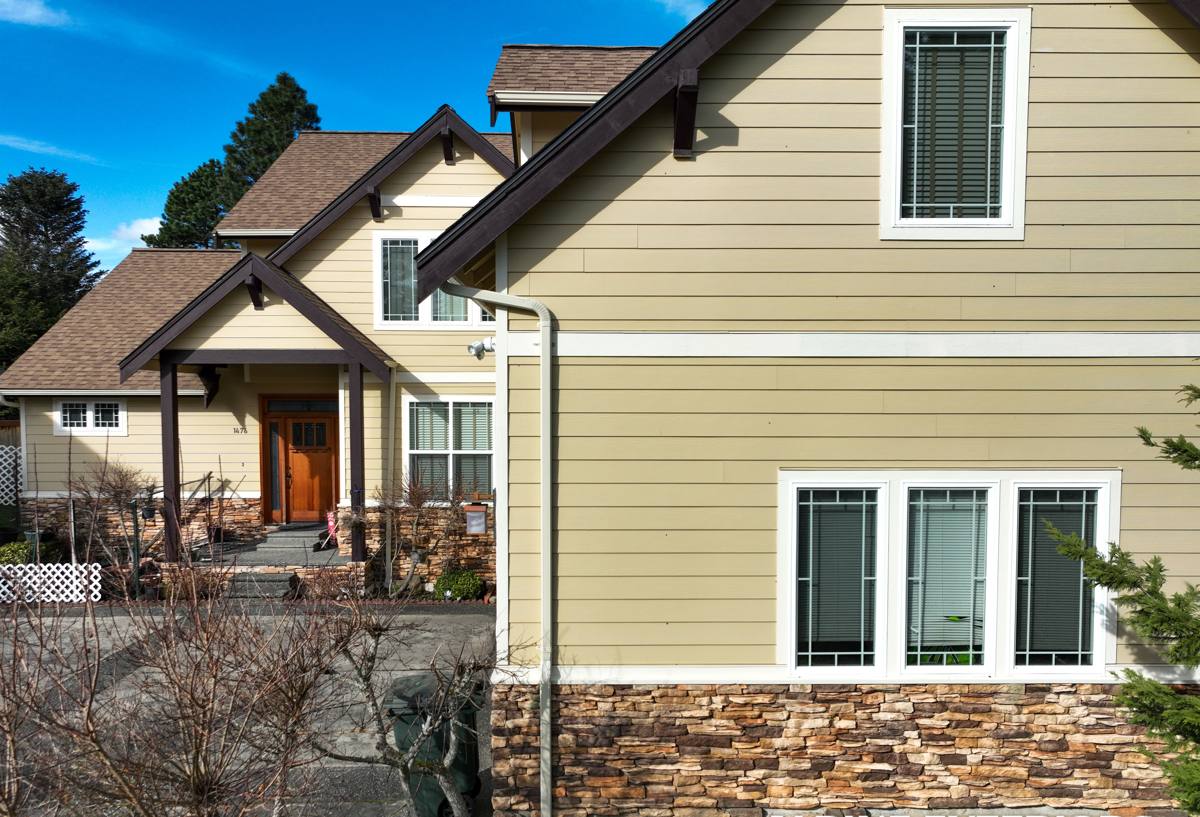
Custom windows aren't just non-standard sizes, though that's part of it. Older and remodeled homes in and around Nooksack often have rough openings that don't match today's stock sizes — a few inches off in either direction, out of square from decades of settling, or built for a window style nobody manufactures anymore. Custom work means:
- Openings measured and built to the actual dimensions of your house, not the nearest catalog size
- Frame material and glass package matched to the exposure of that specific wall — a west-facing wall that takes direct weather needs different specification than a sheltered north wall
- Flashing and sill details designed around your specific wall assembly (siding type, water-resistive barrier, sheathing) instead of a generic install sheet
- Trim and casing built or matched to the home's existing profile, especially on older houses where off-the-shelf trim doesn't line up
Skipping this and forcing a stock window into an irregular opening is one of the most common causes of early failure we see. Shims and extra caulk can make a wrong-size window fit visually, but they don't fix the water path underneath.
The Climate Factors That Should Drive Your Spec
Driving Rain and Wind-Driven Water
Whatcom County's winter storms regularly push rain horizontally, not just down. That means water hits the vertical face of a window and can work its way up and under trim if the flashing isn't lapped correctly — top piece over the side pieces, side pieces over the sill pan, always shedding downward like shingles. A window that would perform fine in a drier climate can leak here simply because the flashing sequence wasn't built for sideways rain.
Salt Air and Metal Components
Salt-laden air accelerates corrosion on any exposed metal — hardware, screws, and especially aluminum components that aren't specifically rated for coastal exposure. Standard mill-finish aluminum hardware can pit and corrode faster here than it would inland. This is one reason we pay attention to hardware finish and fastener material, not just frame material, when specifying for this area.
Moss and Algae on Sills and Trim
Long stretches of shade and dampness let moss and algae take hold on horizontal surfaces — window sills, sill trim, and mullions in particular. Beyond looking bad, moss holds moisture against wood and painted surfaces far longer than open air would, which speeds up rot and paint failure. Sill design (slope, drip edge, material) makes a real difference in how much moss actually takes hold.
Frame Material Comparison for This Climate
| Material | Moisture Performance | Maintenance | Typical Fit |
|---|---|---|---|
| Vinyl | Good — won't rot, doesn't corrode | Low; occasional cleaning | Cost-conscious replacements, most exposures |
| Fiberglass | Very good — dimensionally stable in wet/dry cycles | Low | High-exposure walls, larger custom sizes |
| Wood (clad exterior) | Good on the clad face; interior wood needs protection from condensation | Moderate — exterior cladding low-maintenance, interior finish needs upkeep | Homes where interior wood look matters |
| Bare wood | Requires diligent maintenance in this climate; failure risk if paint/finish lapses | High | Historic restoration only, with a maintenance plan |
| Aluminum (standard) | Prone to corrosion and condensation in coastal air unless thermally broken and properly finished | Moderate to high near salt exposure | Limited use; we spec coastal-rated hardware when used |
None of these is universally "best" — the right call depends on the wall's exposure, your budget, and how much upkeep you actually want to do. We'll walk through the trade-offs for your specific openings rather than pushing one material across the whole house.
What a Correct Installation Actually Involves
A lot of window problems trace back to installation shortcuts that aren't visible once the trim goes back on. Here's what should happen, in order, on a proper replacement or new install:
- Opening inspection — checking the existing sheathing, sill, and framing for hidden rot or prior water damage before anything new goes in. This step gets skipped more than any other, and it's the one that matters most in a wet climate.
- Sill pan flashing — a sloped, sealed pan at the bottom of the opening that catches any water that gets past the window and directs it back outside, rather than letting it sit on bare wood.
- Window setting and leveling — shimmed square and plumb, fastened per the manufacturer's schedule (not just "enough screws to hold it").
- Flashing tape sequence — sides taped first, then the top, so every layer overlaps the one below it like shingles. Reversing this order is a quiet but common mistake that lets water in behind the flashing.
- Insulation and air sealing — low-expansion foam or backer rod around the perimeter, sized so it doesn't bow the frame.
- Exterior sealant — a proper bead at the trim-to-siding joint, using sealant rated for this climate's temperature swings and UV exposure.
- Interior and exterior trim — matched or replicated to the home's existing profile, caulked and painted or finished to shed water off the sill.
Any one of these steps done carelessly can undo the benefit of an otherwise good window. This is also why a lower quote that skips sill pan flashing or air sealing isn't actually a deal — it's a smaller job wearing the same name.
Signs Your Current Windows Are Already Losing the Battle
- Fogging or condensation between the panes of a double- or triple-pane unit — a sign the seal has failed
- Soft or spongy trim, or paint that keeps bubbling in the same spot no matter how often it's repainted
- Visible moss or dark staining building up on sills faster than it can be cleaned off
- Drafts you can feel with a hand near the frame on a windy day
- Difficulty opening, closing, or latching — often a sign the frame has racked slightly out of square
- A musty smell in the room, especially near the floor below the window
Any of these on their own isn't necessarily an emergency, but a few together usually means the window or its installation has reached the end of useful service life.
Energy Performance in a Marine Climate
Whatcom County doesn't see the extreme cold of the inland Northwest, but the persistent damp and moderate temperature swings still make glass package and frame insulation worth getting right. Double-pane, low-E glass is the practical baseline for most homes here; triple-pane can make sense on north- and west-facing rooms that feel noticeably colder or draftier, but it adds weight and cost that isn't always justified on every opening. We'll size the glass package to the specific room and exposure rather than defaulting to the most expensive option across the board — that keeps your budget going toward the openings where it actually earns its keep.
Our Process for Nooksack Window Projects
We keep the process straightforward because window work doesn't need to be mysterious:
- On-site assessment — we measure every opening, check the condition of the existing sill and framing, and note the exposure (sun, wind, rain direction) for each window.
- Written proposal — material options, glass package, and a real price range, with the flashing and sealing details spelled out, not assumed.
- Scheduling around weather — we plan install days to keep openings closed up as short as possible, which matters in a climate where an open wall can catch rain on short notice.
- Installation — following the full sequence above, opening by opening, with cleanup as we go.
- Walkthrough — operating every window with you, checking locks and seals, and reviewing care basics like moss control on sills.
What to Check Before You Hire Anyone for Window Work
- Do they inspect the opening before quoting, or just measure the existing window from outside?
- Will they explain their flashing and sill pan approach, or does the quote just say "install window"?
- Are they licensed and insured to work in Washington, and can they show it without hesitation?
- Do they work in Whatcom County regularly, or is this a one-off trip from farther away?
- Does the warranty cover installation labor, or only the manufacturer's product warranty?
- Will they put the material spec (frame type, glass package, hardware finish) in writing?
A crew that already works in this area day to day has usually already made the mistakes that come with ignoring local exposure — and corrected for them. That's worth more than a slightly lower bid from someone unfamiliar with how Whatcom County weather actually treats a window over ten years.
Maintenance That Actually Extends Window Life Here
Even a well-installed window benefits from basic upkeep given how much moisture this area sees:
- Rinse and brush sills a few times a year to keep moss and algae from establishing — catching it early is much easier than removing an established patch
- Check exterior caulk joints annually, especially after a hard winter, and re-seal any joint that's cracked or pulled away
- Keep gutters and downspouts clear so overflow doesn't run down the wall directly above window openings
- Wipe condensation off interior glass promptly in cold snaps to protect sills and interior trim finish
None of this is difficult, but it's the kind of maintenance that gets skipped until a problem shows up — and by then it's often a trim repair instead of a five-minute cleaning task.
Getting Started
If you're dealing with drafty, fogged, or moss-stained windows on a Nooksack home, or you're planning a remodel that includes new openings, we're happy to take a look and give you a straight answer on what your home actually needs. We offer free, no-pressure estimates — use the form below to get one scheduled.