 Whatcom County
Siding Replacement Built for Nooksack, Not Just "Whatcom County" in General
Nooksack sits along the Nooksack River in the northeast part of Whatcom County, close enough to the foothills that homes here deal with a different mix of weather than a house near Bellingham Bay or out on Lummi Island. That doesn't mean the county's broader marine influence skips this area — moisture-laden air off the Sound still pushes inland through the valley — but the bigger day-to-day stress on siding in Nooksack comes from river-valley humidity, extended cloud cover, driving rain events, and a moss season that can run most of the year. A siding replacement here has to answer for all of that, not just look good on install day.
This page is specifically about replacing siding on homes in and around Nooksack. It's not a generic "siding replacement" page with the city name swapped in — the climate factors, the failure patterns we see, and the install details that matter are particular to this part of the county.
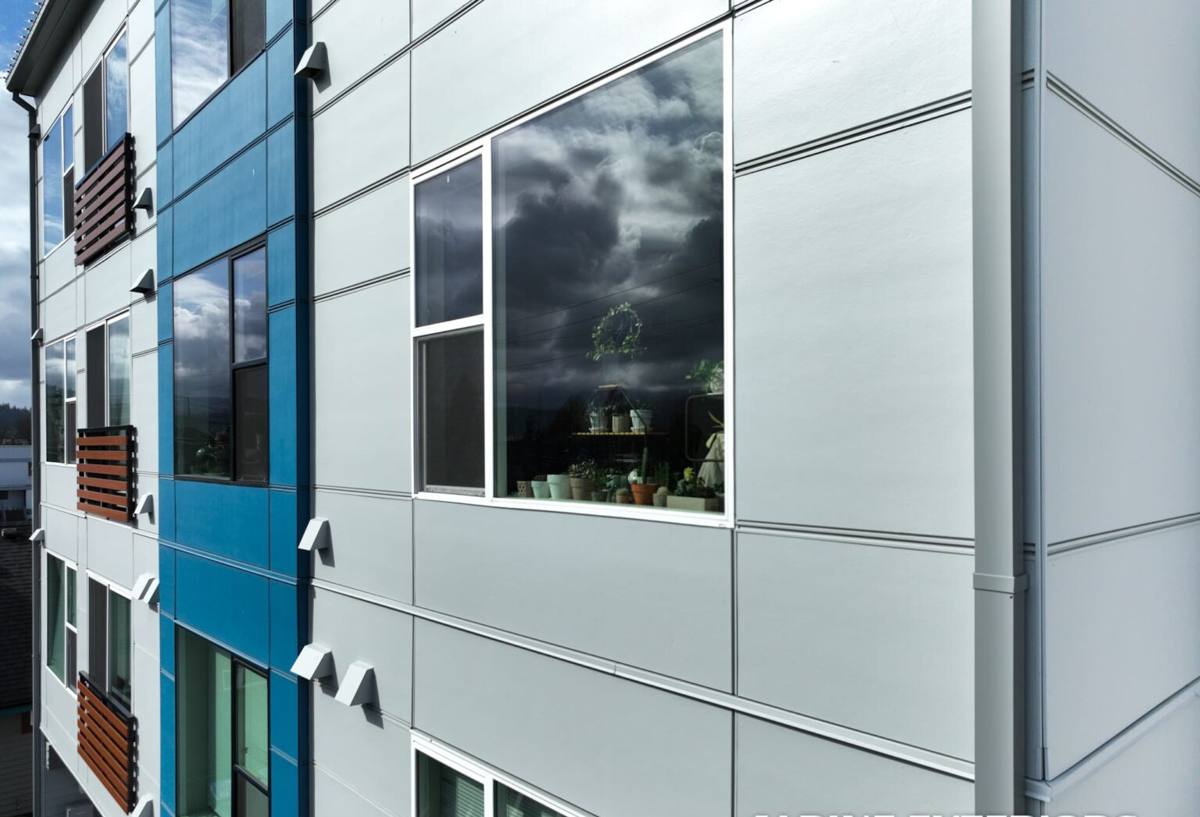
What Nooksack's Climate Actually Does to Siding
Three things drive most of the siding problems we see on homes in this area:
Persistent moisture and slow drying
River-valley locations tend to hold humidity and morning fog longer than more exposed or elevated parts of the county. Siding that can't dry out between rain events stays damp longer, and damp siding is what feeds rot, delamination, and moss growth. It's less about any single storm and more about how long a wall system stays wet after one.
Driving rain and wind-blown water intrusion
Fall and winter storms in Whatcom County regularly bring rain at an angle, not straight down. That matters more than most homeowners realize, because wind-driven rain finds every gap in flashing, every underdriven fastener, and every seam that wasn't lapped correctly. A siding job that looks fine in dry weather can still leak once the wind picks up.
A long moss and algae season
Shade from mature trees, north-facing walls, and the general lack of hard, dry stretches all add up to moss and green staining that can take hold on siding faster here than in drier inland climates. Moss holds moisture against the surface, which accelerates whatever damage is already happening underneath.
Signs a Nooksack Home Needs Siding Replacement, Not Another Patch
Homeowners often ask whether a repair, a pressure wash, or a full replacement is the right call. These are the signs we look for that usually mean it's time to replace rather than patch:
- Soft or spongy spots when you press on the siding, especially near the bottom courses or around window trim
- Visible warping, bowing, or buckling panels
- Paint that keeps failing within a couple of years no matter how it's prepped
- Moss or dark staining that returns within months of cleaning
- Gaps opening up at seams, corners, or where siding meets trim and flashing
- Soft trim boards or discoloration on interior walls that share an exterior wall with damaged siding
- Siding that's original to a home built more than 20-25 years ago and has never been replaced
One or two of these on their own might mean a repair is enough. Several at once, especially combined with soft sheathing underneath, usually means the wall assembly has been compromised and a full replacement is the more honest recommendation.
What a Correct Siding Replacement Actually Involves
Siding replacement isn't just removing old panels and nailing up new ones. On a Nooksack home dealing with this much moisture exposure, the parts you don't see matter more than the parts you do.
Tear-off and inspection
Once the old siding comes off, we inspect the sheathing underneath. This is the point where hidden rot, damaged framing, or failed old flashing gets found — and it needs to get fixed before anything new goes on the wall. Covering up bad sheathing with new siding just hides the problem for a few more years.
Water-resistive barrier and flashing
A correctly lapped weather-resistive barrier, properly integrated window and door flashing, and correct flashing at every horizontal trim transition are what actually keep water out — the siding itself is the second line of defense, not the only one. This is also where a lot of lower-quality jobs cut corners, because it's invisible once the siding goes up.
Fastening and installation to manufacturer spec
Fiber cement siding has specific fastening patterns, clearances, and gapping requirements. Installed correctly, it performs the way it's engineered to. Installed off-spec — wrong nail placement, panels butted too tight, insufficient clearance from grade or roofing — and you get premature failure regardless of how good the material is.
Trim, caulking, and paint system
The finish details are what stand up to the driving rain and moss conditions described above. Correct caulking at penetrations, proper trim board installation, and (for factory-finished products) not compromising the factory coating with field paint at cut edges all matter for long-term performance.
Why We Only Install James Hardie Fiber Cement
We get asked why we don't offer vinyl, LP SmartSide, or other fiber cement brands as options. It's a fair question, and the honest answer is that we standardized on one product because installing several well is harder than installing one exceptionally well, and because James Hardie's fiber cement performs the way homes in this climate need it to.
Vinyl siding is inexpensive and low-maintenance in the sense that it doesn't need painting, but it's a poor match for a climate with this much moisture cycling and moss pressure — it can warp with temperature swings, and seams and channels give moss and algae places to establish that are hard to clean without damaging the material. LP SmartSide and other engineered wood products use wood strand technology, which performs reasonably when installation and maintenance are followed precisely, but any wood-based product is more sensitive to sustained moisture exposure than fiber cement, and the margin for installation error is smaller. Other fiber cement brands exist, but James Hardie's ColorPlus factory finish, product engineering for Pacific Northwest conditions, and warranty structure are what we've found to be the most consistent when installed correctly — which is why we made it the only product we put on a wall.
Fiber Cement vs. Other Common Siding Materials in Nooksack's Climate
| Material | Moisture Behavior | Moss/Algae Resistance | Long-Term Maintenance |
|---|---|---|---|
| James Hardie fiber cement | Dimensionally stable, doesn't rot or absorb water like wood | Factory finish resists staining better than raw wood substrates | Occasional wash and caulk check; no repainting needed with ColorPlus |
| Vinyl | Doesn't rot, but can warp with heat and gap with cold | Seams and laps trap moisture and organic growth | Low but limited repair options if cracked or faded |
| LP SmartSide / engineered wood | Wood-strand core is more moisture-sensitive if coating is compromised | Moderate; depends heavily on correct field sealing at cuts | Requires diligent caulk and paint maintenance |
| Cedar / primed spruce | Natural wood, absorbs and releases moisture readily | Prone to moss and mildew without frequent treatment | Regular repainting/staining and moisture monitoring |
James Hardie Product Lines for This Region
James Hardie engineers its siding by climate zone, and Whatcom County falls into the HZ5 zone designed for regions with more moisture, freeze-thaw cycling, and moss/mildew pressure than the drier interior of the country sees. For a Nooksack home, that generally means:
- HardiePlank lap siding — the most common choice, available in several exposure widths and finish textures
- HardiePanel vertical siding — often used for board-and-batten style accents or full vertical applications
- HardieTrim boards — matched trim that holds up to the same moisture exposure as the field siding
- ColorPlus factory finish — baked-on color that resists fading and chipping better than field-applied paint, which matters when you're not repainting every few years in a climate that doesn't give you many dry weeks to do it in
The transferable, non-prorated warranty backing correctly installed Hardie products is also part of why we standardized on it — it protects the homeowner, not just the installer, and it stays intact as long as installation followed manufacturer specification.
Our Process, Start to Finish
For a Nooksack siding replacement, our process generally looks like this:
- On-site assessment of current siding, trim, and any visible moisture or moss damage
- Sheathing and structural check once old siding is removed, with any repairs addressed before new material goes on
- Installation of water-resistive barrier and correctly lapped, integrated flashing at every window, door, and horizontal transition
- James Hardie siding and trim installed to manufacturer fastening and clearance specifications
- Final caulking, touch-up, and a walk-through so you know exactly what was done and why
We plan around the weather where we can, but we also know that in this region you can't always wait for a perfectly dry week. Experienced crews sequence tear-off and dry-in work to limit how much of your wall assembly is exposed at any given time.
What Affects the Cost of a Nooksack Siding Replacement
| Factor | Why It Matters |
|---|---|
| Extent of hidden sheathing damage | Rot found during tear-off has to be repaired before new siding goes on; this is the most common source of cost variation |
| Home size and wall complexity | More corners, dormers, and trim transitions mean more labor and material detail work |
| Siding profile and accessories chosen | Lap width, trim style, and any vertical accent areas affect material cost |
| Access and site conditions | Tree cover, slope, and staging space around the home affect labor time |
| Existing moisture barrier condition | Reusable house wrap versus full barrier replacement changes scope |
We don't quote a number without seeing the home, because on older Nooksack properties the sheathing condition underneath the old siding is usually the single biggest variable — and it's not something you can accurately estimate from the street.
Why Hiring a Crew That Already Works in Nooksack Matters
Siding installation quality depends heavily on judgment calls that don't show up in a written spec sheet — how tight to gap panels given expected seasonal movement, how aggressively to flash a particular trim detail, where moss pressure on a shaded wall justifies extra attention to drainage. A crew that regularly works homes in this specific river-valley microclimate has already made those judgment calls dozens of times and knows which details actually matter here versus which are generic best practice. That local pattern recognition is the difference between a siding job that looks right on day one and one that's still performing correctly in year fifteen.
If your Nooksack home's siding is showing its age, or you're just trying to figure out whether repair or replacement makes sense, we're happy to take a look. Reach out for a free, no-pressure estimate using the form below.