 Whatcom County
 Storm Damage Roof Repair for Nooksack Homes
Nooksack sits in the river valley on the eastern side of Whatcom County, close enough to the foothills that storms coming off the Pacific don't just pass through — they get funneled and squeezed as they move up the valley. That means wind-driven rain hits roofs here at angles that a lot of roofing work simply isn't built to handle, and it means storm damage often shows up as a slow leak rather than a dramatic hole. We repair storm-damaged roofs in Nooksack on a regular basis, and the work is different from a generic patch job because the weather here is different from a lot of other places.
This page covers what storms actually do to roofs in this part of Whatcom County, what a correct repair looks like, and how we handle the job from the first call to the final walk-through.
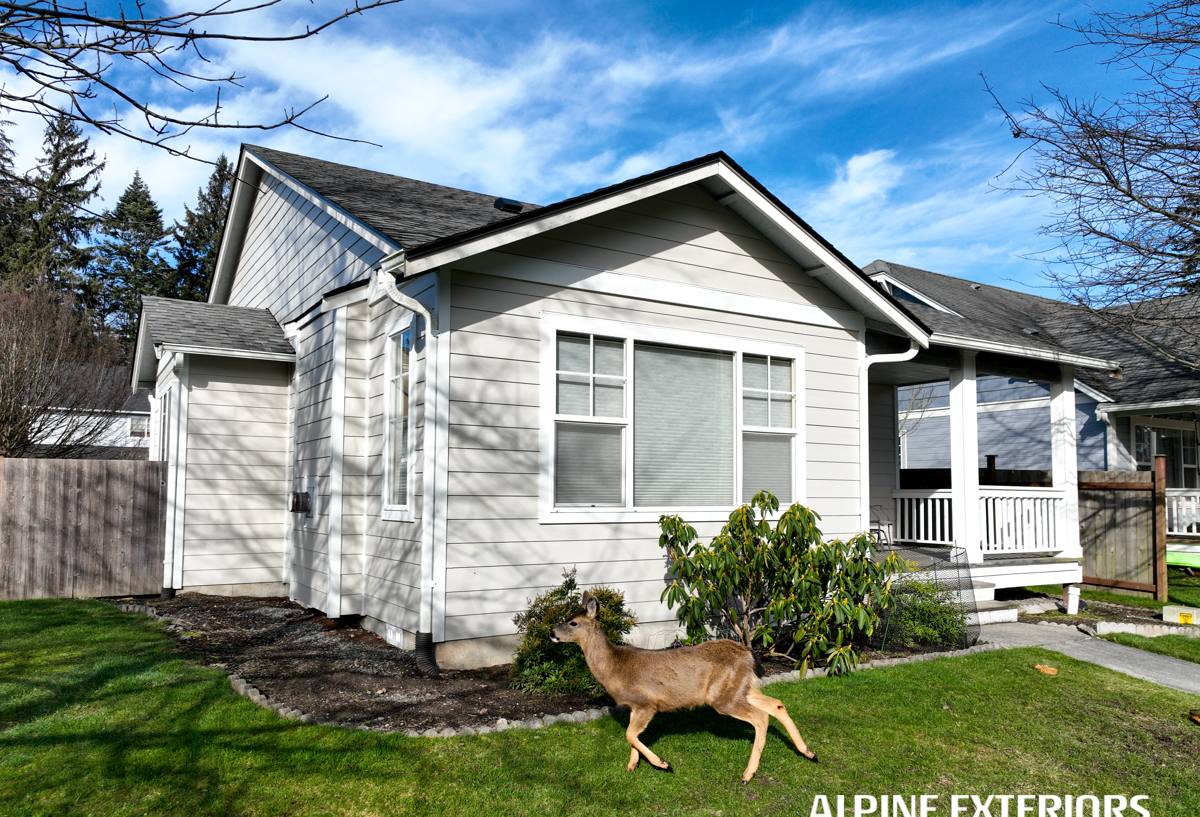
What Nooksack Storms Do to a Roof
Most of the storm damage we see out here isn't a single dramatic event — it's cumulative. A windstorm loosens a ridge cap or lifts a few shingle tabs. Nothing looks wrong from the ground. Then the next round of driving rain finds that opening and starts working moisture into the deck. By the time a stain shows up on a ceiling, the damage has usually been building for weeks or months.
Wind-Driven Rain and Flashing Failures
Flashing — the metal detail work around chimneys, skylights, dormers, and roof-to-wall joints — is the first thing to fail when wind pushes rain sideways instead of letting it run straight off the roof. Sealant that's done fine for years can suddenly leak once wind direction and rain volume line up during a bigger storm. This is one of the most common calls we get after a hard blow through the valley: no missing shingles, no obvious damage, just a leak that started during the last storm and won't stop.
Moss, Trapped Moisture, and Shortened Shingle Life
Whatcom County's long wet season keeps roofs damp for months at a stretch, and moss takes hold anywhere shade and moisture combine — north-facing slopes, areas under trees, valleys where two roof planes meet. Moss doesn't just look bad. It holds water against the shingle surface, lifts tabs as it grows under the edges, and works its way into any joint that isn't sealed tight. A roof that's already carrying moss going into storm season is a roof that's more likely to leak when wind and rain add stress on top of it. After a storm, we always check moss-heavy areas first, because that's usually where existing damage gets exposed.
Freeze-Thaw and Valley Wind
Nooksack doesn't see the coastal salt exposure that roofs closer to Bellingham Bay or Puget Sound deal with, but it gets its own version of hard weather: cold snaps that follow wet stretches, and wind that accelerates as storms move through the river valley. That combination stresses fasteners, sealant, and flashing in ways that a mild, consistent climate wouldn't. Roofing systems and repair details that hold up fine in a drier part of the state don't always hold up here.
Signs Your Nooksack Roof Has Storm Damage
Most storm damage isn't obvious from the ground. Here's what we tell homeowners to look for after a windstorm or a stretch of heavy rain:
- Granules collecting in gutters or downspouts, especially after wind — a sign shingles are wearing or were impacted
- Shingle tabs that look lifted, curled, or slightly out of line with the row around them
- Any new stain, discoloration, or soft spot on an interior ceiling or upper wall
- Visible gaps or bent sections in flashing around chimneys, skylights, or roof-to-wall joints
- Moss that's thickened noticeably or spread since the last time you looked
- Debris — branches, needles, siding pieces from elsewhere — caught on the roof after high wind
- Sagging or uneven roof lines, which can mean deck damage underneath, not just a surface issue
If you see any of these after a storm, it's worth getting a look before the next round of rain finds the opening.
What a Correct Storm Damage Repair Actually Involves
A storm damage repair isn't just replacing whatever's visibly broken. Done right, it's a diagnosis process first and a repair second.
Emergency Mitigation
If a storm has left your roof actively leaking or with an open section, the first priority is stopping water from getting further into the structure — tarping, temporary sealing, or covering exposed decking. This isn't the fix; it's buying time to do the fix correctly instead of rushing it in the middle of the next storm.
Full Diagnosis Before Any Repair
We check more than the spot that's obviously damaged. Wind and water rarely stay confined to one section — if one area of flashing failed, we check the others on the same roof, since they went through the same storm under the same conditions. We also check the decking underneath any damaged area for soft spots or rot before closing anything back up, because covering a wet or compromised deck with new shingles just hides a problem that will resurface.
Matching Materials and Correct Flashing Detail
A patch that doesn't match the surrounding roofing in material, color, or wear-in stands out and can also perform differently under the next storm — different expansion rates, different water-shedding behavior at the seams. We match materials where possible and rebuild flashing details properly rather than just re-sealing over the old failure point, since a bead of sealant over bent or improperly lapped flashing is a repair that fails again the next time the wind blows from a different direction.
Repair vs. Replacement: What Actually Drives the Decision
Not every storm-damaged roof needs full replacement, and not every roof is a good candidate for another round of patching. The right call depends on a handful of factors, not just how bad the current damage looks.
| Factor | Points Toward Repair | Points Toward Replacement |
|---|---|---|
| Age of existing roof | Roof is under 10–12 years old | Roof is near or past its expected lifespan |
| Extent of damage | Isolated to one section or detail | Damage spread across multiple slopes |
| Decking condition | Deck is dry and sound underneath | Deck shows rot or soft spots |
| Moss history | Minor, manageable moss growth | Heavy, longstanding moss with underlying material degradation |
| Prior repairs | First repair on this roof | Multiple past patches in different spots |
| Material availability | Existing shingle/material still produced and matchable | Discontinued material, poor color/style match |
We'll walk you through where your roof lands on each of these before recommending anything. A repair that's genuinely the right call for a sound, newer roof isn't the right call for a roof that's already near the end of its service life — and we'll tell you which situation you're in rather than defaulting to whichever job is bigger.
Our Process, Start to Finish
Inspection and Documentation
We start with a full inspection, not just a look at the spot you called about, and document everything — photos of damage, flashing condition, decking, moss coverage — both for our own repair plan and for your records if you're filing an insurance claim.
Insurance Coordination
Storm damage is often covered under homeowners' insurance, and clear documentation from the start makes that process smoother. We can provide the inspection findings and repair scope in a format that's useful for an adjuster, though the claim itself is between you and your insurer.
The Repair
Once we've agreed on scope, we do the work — mitigation if it hasn't already happened, removal of damaged material, deck repair if needed, and reinstallation with properly detailed flashing and matched materials.
Follow-Up
After the repair, we check back in, especially heading into the next stretch of wet weather, to confirm the fix is holding. A repair that looks fine on a dry day needs to actually perform the first time driving rain tests it.
Why a Crew That Already Works Nooksack Matters
Roofing crews that mostly work drier, milder parts of Washington don't always think about wind direction relative to valley terrain, or how much moss load a roof can carry before it starts trapping real moisture, or how a flashing detail that's fine elsewhere behaves differently under Whatcom County's wind-driven rain. We work this area regularly, which means we're not guessing at how local weather stresses a roof — we've seen the same failure patterns repeat across storm seasons and know which details are worth doing right the first time, and which shortcuts come back as leaks.
It also means faster response. After a significant windstorm moves through the county, timing matters — the sooner an opening gets covered, the less interior damage you're dealing with.
Maintenance That Reduces Storm Damage Before It Happens
A lot of storm damage is preventable, or at least less severe, on a roof that's been kept up between storms.
- Keep gutters and downspouts clear so wind-driven rain has somewhere to go instead of backing up under the roof edge
- Address moss while it's light — a soft wash and treatment is a much smaller job than dealing with moss that's already lifted shingles
- Trim back branches that overhang the roof, since falling limbs are one of the more common causes of impact damage in wind events
- Have flashing and sealant checked every couple of years, since these fail gradually and rarely announce themselves before a storm finds the gap
None of this eliminates storm risk in a valley climate like this one, but it narrows the gap between a minor repair and a major one.
Get a Straight Answer on Your Roof
If a recent storm has you wondering whether your roof took damage, or you've got a leak you can't place, we're glad to come take an honest look. We'll tell you what we find, what it actually needs, and what it doesn't — no pressure, no upsell. Reach out for a free estimate using the form below.