 Whatcom County
Window Replacement Built for Nooksack's Climate
Nooksack sits in the river valley on the north end of Whatcom County, close enough to the coast to catch the same marine weather pattern that soaks the rest of the county, but far enough inland that homes here deal with their own version of it: persistent valley humidity, fog that settles overnight and burns off slowly, and long stretches of driving rain that come off the Pacific and don't let up for days. Whatcom County as a whole deals with salt air near the water, driving rain everywhere, and a moss season that can run most of the year. In Nooksack specifically, it's less about salt and more about sustained dampness working on your windows year-round, which is just as hard on old frames and glass in a different way.
Old windows don't fail all at once. They fail one wet season at a time — a little more give in the frame, a little more fog between the panes, a little more moss creeping into the corners of the sill. If your windows are original to the house or original to a remodel that's now 15-20 years old, this is the climate that's been working on them the whole time.
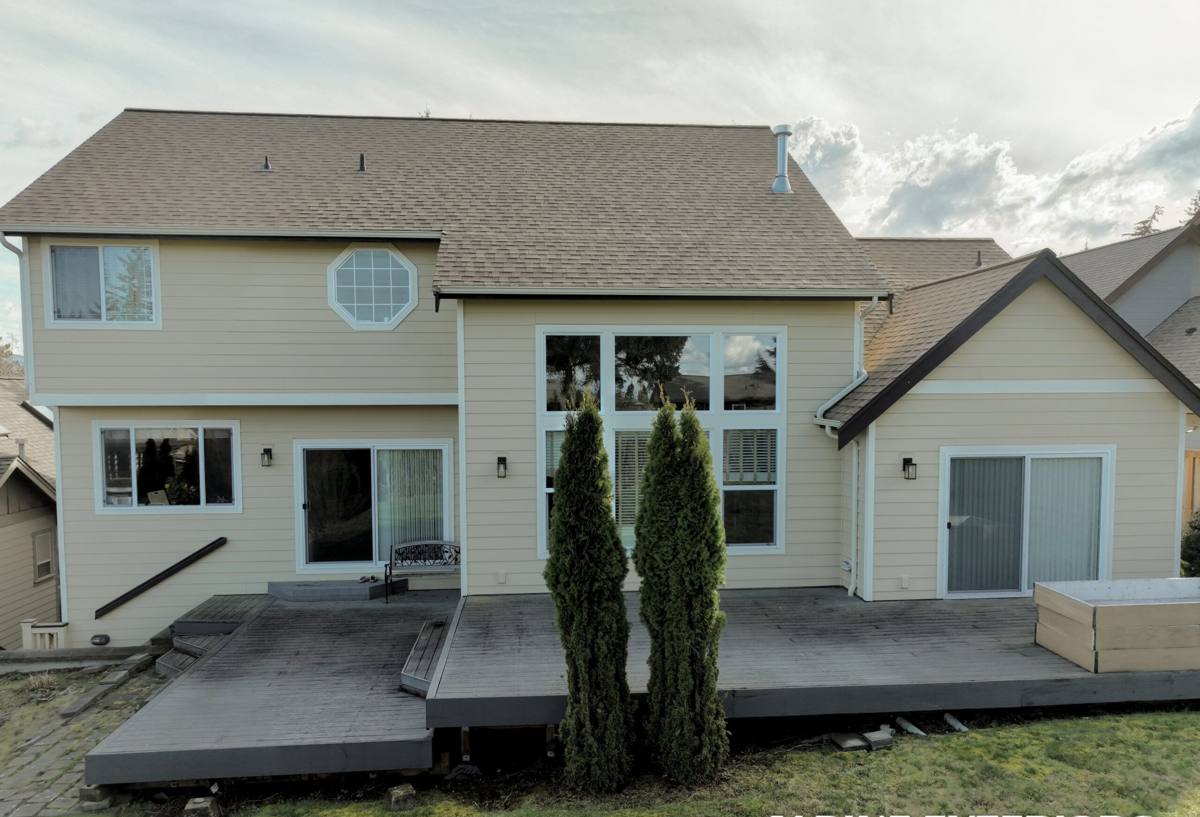
What Driving Rain and a Long Moss Season Do to Old Windows
Water Intrusion at the Frame
Wind-driven rain doesn't fall straight down — it gets pushed sideways into the wall, and the first thing it tests is the seal around your window frame. Old caulking shrinks and cracks. Original flashing, if it was even installed correctly to begin with, can fail silently behind the trim for years before you see a stain on the interior sill or drywall. By the time water shows up inside, it's usually already done damage you can't see.
Moss, Mildew, and Trapped Moisture
Moss doesn't just grow on roofs and siding in this part of the county — it takes hold anywhere moisture sits still, including window sills, the bottom corners of frames, and gaps in old exterior trim. Once moss and mildew get a foothold, they hold moisture against the wood or vinyl constantly, which speeds up rot and finish failure well beyond what the rain alone would cause.
Wood Rot and Sash Failure
Wood-framed and wood-clad windows are especially vulnerable. Once water gets past the finish and into the wood, rot spreads from the inside out, and by the time it's visible on the surface, the structural wood underneath is often already soft. Sashes that don't open smoothly, or feel spongy at the bottom rail, are usually further along than they look.
Signs a Nooksack Home Needs Window Replacement, Not Just Repair
Not every issue means full replacement — some problems are legitimately fixable with re-caulking, weatherstripping, or a hardware repair. But certain signs point to the frame and seal system being past the point where patching makes sense:
- Fog or moisture trapped between panes of double-pane glass (a failed seal, not fixable on its own)
- Soft, spongy, or visibly rotted wood at the sill or bottom corners of the frame
- Windows that are difficult to open, close, or lock, especially after damp weather
- Visible daylight or a noticeable draft around the frame when it's windy
- Paint or finish that keeps failing in the same spot no matter how often it's redone
- Moss or dark staining that returns to the same sill or corner year after year
- A noticeable rise in heating costs with no other explanation
What a Correct Window Replacement Job Actually Involves
Full-Frame vs. Insert Replacement
There are two basic approaches, and the right one depends on the condition of what's already in the wall — not just what's cheaper or faster.
| Approach | Best When | Trade-offs |
|---|---|---|
| Insert (pocket) replacement | Existing frame is square, dry, and structurally sound | Faster, less disruption to siding and trim, but any hidden rot or flashing problem stays hidden |
| Full-frame replacement | Frame shows rot, water damage, or the opening needs correction | More labor and cost, but lets us inspect and rebuild flashing and the water path correctly |
In a climate that pushes this much water at a wall, we don't default to the cheaper option without checking. If we open up a window and find soft wood or old flashing that was never installed right, we'll tell you honestly rather than covering it over with a new insert and hoping.
Flashing and Weatherproofing Details That Matter Here
The window itself is only part of the job. How it's flashed and sealed into the wall determines whether water gets managed or invited in. That means proper head flashing above the window, correctly lapped weather-resistive barrier around the rough opening, sill pan flashing so any water that does get past the frame drains back out instead of sitting on the sill, and sealant used only where it belongs — not as a substitute for correct flashing.
Glass and Frame Material Choices
For a valley climate like Nooksack's, low-E glass and a well-built double-pane unit handle the mild-but-wet weather here without needing to overspend on features built for a much colder or drier climate. Vinyl and fiberglass frames tolerate constant moisture and temperature swings better than bare wood, and they don't need repainting to hold up over time. Wood-clad windows can still be the right call for a specific look, but we'll walk you through the added maintenance that comes with that choice honestly rather than let you find out later.
Our Process for a Nooksack Window Replacement
- On-site assessment: We look at every window being considered, not just the ones that are obviously failing, and check the condition of the framing while we're there.
- Honest scope and options: You get a clear picture of what's insert-ready and what needs full-frame work, with the reasoning explained, not just a number.
- Material selection: We help you pick frame material, glass package, and style based on the exposure of each opening, not a one-size answer for the whole house.
- Correct installation: Proper flashing, sealing, and shimming at every window — the part that determines whether the window performs for the next 20 years or the next 5.
- Cleanup and walkthrough: We show you the finished work and how everything operates before we call the job done.
Cost Factors for Window Replacement in Nooksack
Every home is different, but the same handful of factors drive most of the cost variation we see on projects in this area:
| Factor | Why It Matters |
|---|---|
| Insert vs. full-frame | Full-frame costs more but is often necessary once rot or bad flashing is found |
| Frame material | Vinyl and fiberglass generally cost less over time than wood-clad options that need upkeep |
| Window size and count | Larger openings and full-house replacements bring per-unit pricing down somewhat |
| Glass package | Low-E and gas-filled units cost more upfront but perform better through wet, mild winters |
| Site access and trim work | Extra siding, trim repair, or hard-to-reach windows add labor time |
As a broad range, homeowners in this area typically see costs anywhere from several hundred to well over a thousand dollars per window installed, depending on the factors above. Anyone quoting you a firm number without looking at your actual windows first is guessing.
Why a Crew That Already Works Whatcom County Matters
A lot of window problems in this region aren't really window problems — they're water-management problems that show up at the window because that's the weak point in the wall. A crew that works Whatcom County regularly has already seen how driving rain, valley fog, and a long moss season find the gaps in a typical install, and knows what correct flashing and sealing needs to look like here specifically, not in a drier or milder market. That's not something you can fully substitute with a manufacturer's install manual alone.
Local experience also means realistic scheduling around this area's wet stretches, and knowing which manufacturers actually stand behind their product and warranty when a claim comes up, versus which ones make it difficult.
Living With New Windows Through the Wet Season
New windows lower the maintenance burden, but they're not maintenance-free. A short seasonal routine keeps them performing the way they're supposed to:
- Clear debris and moss buildup from sills and tracks before the wet season sets in
- Check exterior caulking annually for cracking or separation
- Make sure weep holes on the exterior sill stay clear so water can drain out
- Operate each window a few times through the year so hardware and seals don't seize up
- Watch for condensation between panes — it means a seal has failed, not that the glass is dirty
If you're weighing window replacement for a home in Nooksack, we're happy to take a look, tell you honestly what condition your current windows and framing are in, and lay out real options with no pressure to sign anything on the spot. Use the form below to request a free estimate.