 Whatcom County
Why Sehome's Climate Is Hard on Windows
Sehome sits close enough to Bellingham Bay that homes here deal with a specific mix of weather stress: wind-driven rain that comes in sideways off the water, long stretches of gray, damp months that never really let siding and trim dry out, and a low-grade salt content in the air that speeds up corrosion on anything metal. None of that is dramatic on its own, but stacked up year after year, it's exactly the kind of slow, steady exposure that finds every weak point in a window's seal, frame, or flashing.
Older housing stock in this neighborhood — much of it built well before modern window technology existed — was never designed for the sealed, high-performance glazing we install today. That's not a knock on the original builders; it's just a reality of what materials and methods were available at the time. When we go out to look at a window replacement job in Sehome, we're almost always working around decades of that gap.
Driving Rain and Failed Seals
Whatcom County doesn't get the heaviest rainfall totals in the state, but it gets a lot of low-intensity, wind-pushed rain, which is actually worse for windows than the occasional downpour. Wind-driven moisture works its way into gaps that a garden-hose test would never find — around old glazing putty, behind loose exterior trim, or through a sill that's lost its slope over time. Once water gets behind a window frame instead of running off it, rot starts quietly, often years before it shows up as a soft spot or a bubbled paint line.
Moss, Algae, and Trapped Moisture
The long moss season here isn't just a roof and siding problem. Moss and algae will happily colonize a window sill, the top of a frame, or any horizontal surface that stays damp and shaded, which describes a lot of window trim in a neighborhood with mature trees and closely spaced houses. Beyond the cosmetic issue, moss holds moisture against wood and painted surfaces far longer than open air would, which accelerates rot and paint failure right at the points where a window is most vulnerable.
Salt Air and Hardware Corrosion
Because Sehome isn't far from the water, hardware — hinges, cranks, locks, balance mechanisms — takes more abuse here than it would further inland. Cheaper mill-finish aluminum and unprotected steel components will pit and seize up faster in this air than manufacturers' generic specs usually account for. It's one of the reasons hardware quality matters as much as glass quality when you're choosing windows for this part of Whatcom County.
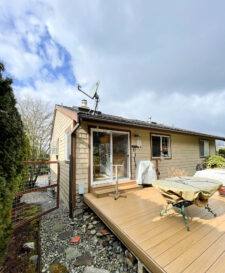
Signs a Sehome Home Needs New Custom Windows
Most homeowners don't wake up one day and decide they need new windows — they notice a handful of small annoyances that add up. Watch for:
- Drafts you can feel near the frame, even with the window latched shut
- Condensation building up between the panes of a double-pane window (a sign the seal has failed)
- Wood trim that's soft, discolored, or has visible moss or algae staining
- Windows that are difficult to open, close, or lock — often a sign the frame has shifted or swollen
- Paint that keeps failing on the same window no matter how often it's touched up
- Noticeably higher heating bills in a house where the windows haven't been touched in decades
Any one of these on its own might just need a repair. Several of them together, especially on a house with its original windows, usually means it's time to talk about replacement rather than another round of patching.
What "Custom" Actually Means Here
"Custom" doesn't mean expensive or fancy — it means the windows are made to fit your actual openings and your actual house, rather than pulled off a shelf in a standard size. On a lot of Sehome homes, especially older ones, openings are slightly out of square or sized to dimensions that predate today's standard window sizes. Custom manufacturing accounts for that instead of forcing a standard unit into a space it doesn't quite fit.
Full-Frame Replacement vs. Insert Replacement
There are two honest ways to replace a window, and which one is right depends on the condition of what's already there:
| Approach | What It Involves | Best For |
|---|---|---|
| Insert (retrofit) | New window unit installed inside the existing frame; original frame and trim stay in place | Frames that are still structurally sound, dry, and square |
| Full-frame replacement | Old window and frame removed down to the rough opening; new flashing, sill, and frame installed | Frames with rot, water damage, or out-of-square openings — common on older Sehome homes |
We'll tell you honestly which one your house needs after we've actually looked at the condition of the framing — not just the glass. Covering up a rotten frame with an insert window is a shortcut that causes problems a few years down the road, and it's not something we'll recommend just to save a day of labor.
Matching the Character of the House
A lot of homes in this part of Bellingham have real architectural character — proportioned window openings, divided-light patterns, trim profiles that are part of what makes the house look right. Custom sizing lets us keep those proportions and grille patterns instead of forcing a boxier standard-size unit into an opening that was never meant for it. That matters as much for resale value as it does for how the house looks from the sidewalk.
Materials That Actually Hold Up in This Climate
We don't chase every material trend — we install what performs well against salt air, constant damp, and moss growth, because that's what a Whatcom County window has to survive.
| Material | How It Handles This Climate | Trade-Offs |
|---|---|---|
| Vinyl | Won't rot or corrode; handles moisture well; low maintenance | Fewer color/finish options; can look less authentic on older, detailed homes |
| Fiberglass | Very stable in wet, temperature-swinging climates; strong, low-maintenance, takes paint well | Higher upfront cost than vinyl |
| Wood-clad | Preserves the traditional look of older Sehome homes; interior wood warmth | Exterior cladding must be well-sealed and maintained where it meets the frame, or moisture gets underneath it |
For homes where the original wood-sash look matters, wood-clad is a fine choice, but only with a manufacturer whose cladding is genuinely sealed against Pacific Northwest moisture and hardware built to resist the salt-air corrosion mentioned earlier. We'd rather steer a homeowner toward a slightly different look that will hold up for decades than install something that looks perfect on day one and needs attention again in five years.
What a Correct Installation Actually Involves
The window unit itself is maybe half the job. The other half — the part nobody sees once it's done — is what determines whether that window lasts fifteen years or forty in this climate.
Flashing and Drainage
Every opening needs flashing that directs water down and away from the framing, with a sill pan or sloped sill that gives any moisture that does get in a way back out. This is the single most common shortcut we see in past work around Sehome — window replaced, but flashing skipped or done wrong, so water quietly collects behind the new unit instead of shedding off it.
Sealing and Insulation
Gaps around the window frame need to be sealed with the right materials — not just caulk smeared around the exterior trim, but proper insulation and air-sealing in the rough opening itself. Done right, this is what actually stops the drafts and cuts the heating bill; done wrong, it just hides a gap that will let moisture and air through for years.
Fit and Function
A custom window should operate smoothly on day one and still operate smoothly years later. That comes down to precise measurement, a level and square installation, and hardware rated for coastal conditions — not just whatever ships standard with the unit.
How We Approach a Sehome Project
- On-site assessment — we look at every opening, check for rot or moisture damage in the framing, and measure for true custom fit
- Honest recommendation — insert or full-frame, material options, and a straightforward explanation of why, based on what we actually found
- Ordering and scheduling — custom units take time to manufacture; we'll give you a realistic timeline up front
- Installation — proper flashing, sealing, and finish work, with daily cleanup so the site is livable throughout
- Final walkthrough — every window operates correctly and is sealed properly before we consider the job done
Why a Crew That Already Works in Sehome Matters
A contractor who works this neighborhood regularly already knows the common building eras, the typical rough-opening quirks in older homes, and how quickly moss and moisture problems show up here compared to a drier inland climate. That's not a small thing — it means fewer surprises once a wall is opened up, and a realistic read on what your specific home's windows are dealing with, rather than a generic answer that might apply somewhere with a very different climate. It also means someone who's easy to reach later if a question comes up after the install, rather than a crew that was passing through for one job.
Maintaining Custom Windows in a Marine Climate
Even a well-installed window benefits from a little seasonal attention here. A few minutes twice a year will keep new windows performing the way they should:
- Wipe down and inspect sills for early moss or algae growth, especially on shaded, north-facing windows
- Clear weep holes on vinyl and fiberglass frames so water can drain instead of pooling
- Lubricate hinges, cranks, and locks once a year to fight the effects of salt air
- Check exterior caulking annually and touch up any spots that have cracked or pulled away
- Look at interior sills after heavy storms for any sign of moisture intrusion
None of this is heavy maintenance — it's the kind of upkeep that takes an afternoon and adds years to the life of the investment.
What Affects the Cost of a Custom Window Project
| Factor | Why It Matters |
|---|---|
| Insert vs. full-frame | Full-frame costs more but is often required where old framing has moisture damage |
| Material choice | Vinyl, fiberglass, and wood-clad carry different price points and long-term maintenance needs |
| Glass package | Double-pane vs. triple-pane, and any coatings for energy performance |
| Number and size of openings | More or larger windows increase material and labor costs proportionally |
| Trim and finish work | Matching existing exterior trim or interior casings can add labor time |
Costs for a custom window project vary widely based on those factors, and anyone who quotes a firm number before actually measuring your openings and checking the condition of the framing is guessing. We'd rather come look at the house and give you real numbers.
If you're weighing window replacement for a Sehome home, we're happy to come take a look and give you a straightforward, no-pressure estimate — just fill out the form below to get started.