 Whatcom County
Why Blaine's Coastal Climate Wears Out Roofs Faster
Blaine sits at the northwest edge of Whatcom County, right up against open water and close enough to the Canadian border that marine weather is a daily fact of life, not an occasional storm. That location is part of what makes the town what it is, but it's hard on a roof. Salt-laden air, wind-driven rain off the water, and a moss season that runs longer than it does just a few miles inland all shorten the working life of roofing materials that were never built with that combination in mind. A roof replacement here has to account for all three, not just whichever one happens to be causing the visible problem.
Salt Air and Metal Fatigue
Airborne salt accelerates corrosion on anything metal: flashing, fasteners, gutter hangers, even the exposed heads of nails. Galvanized fasteners that would hold up fine on an inland roof can start rusting and staining shingles years before they should. Once a fastener corrodes, it loses grip, and once flashing pits and thins, it stops shedding water the way it's supposed to. That's often the real story behind a roof that starts leaking well before it's reached its expected age.
Driving Rain and Wind Off the Water
Storms coming off the water don't fall straight down here — they come in sideways. Wind-driven rain can work its way up under shingle tabs, around chimney and vent flashing, and into any gap that a calmer climate would let slide. That means fastening patterns, sealed laps, and flashing details all matter more in Blaine than they would on a roof that only has to deal with vertical rainfall.
A Long, Damp Moss Season
Between the tree cover common on many Whatcom County lots and the extended stretch of wet weather from fall through spring, conditions stay favorable for moss and algae for a good part of the year. Moss doesn't just look bad — it holds moisture directly against the shingle and roof deck, works its way under shingle edges, and keeps that section of roof wet long after the rest has dried out. Left alone, it shortens the life of an otherwise sound roof.
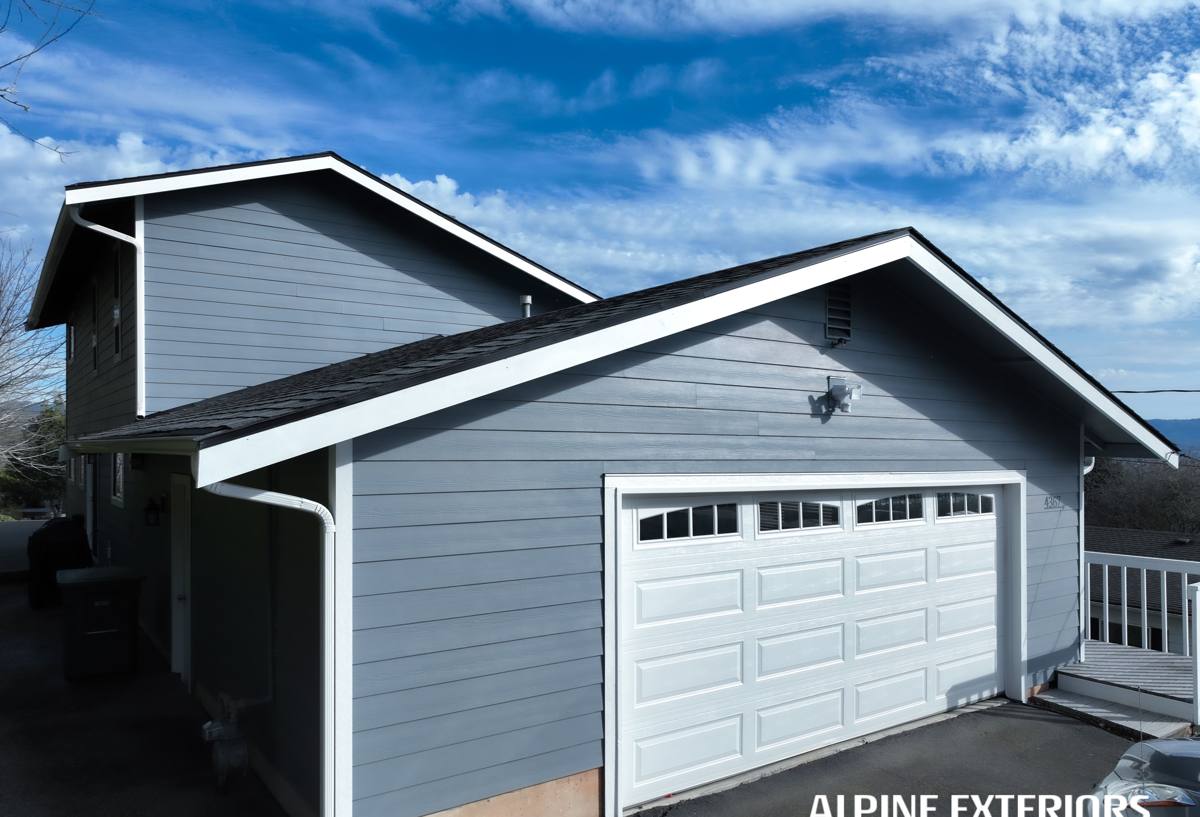
Signs a Blaine Roof Needs Replacement, Not Just Repair
Not every roof problem calls for a full replacement, but there's a point where patching stops making sense and starts costing more than it saves. In our experience working on homes in this area, these are the signals worth taking seriously:
- Granule loss down to bare asphalt, especially in valleys or on wind-exposed slopes
- Shingles that are cupping, cracking, or lifting at the edges rather than lying flat
- Moss established at the ridge or across shaded slopes, not just surface staining from algae
- Soft or spongy decking felt underfoot or found during an attic inspection
- Daylight visible through the roof boards from inside the attic
- The same leak returning near a penetration or valley despite prior patch repairs
- A roof at or past the manufacturer's expected service life for a coastal climate
- Gutters that fill with granules or moss debris every season regardless of cleaning
Any one of these on its own might still be repairable. Several at once, especially on a roof that's already been patched a few times, usually means the underlying material and underlayment have reached the end of their useful life.
What a Correct Roof Replacement Involves
A roof replacement is more than swapping old shingles for new ones. In a climate like Blaine's, the details underneath the visible surface are what determine whether the new roof actually outperforms the old one.
Full Tear-Off and Deck Inspection
We tear off down to bare decking rather than installing over existing layers. That's the only way to find rot or soft spots before they're sealed under a new roof for another twenty-plus years. Eaves and valleys — the areas where moss and standing moisture do the most damage over time — get the closest look, and any damaged sheathing gets replaced rather than covered.
Underlayment and Water Barrier Placement
We install synthetic underlayment across the full roof deck, with self-adhered ice-and-water membrane at eaves, valleys, and around penetrations. Those are exactly the spots where wind-driven rain reaches first, so they get the extra layer of protection rather than relying on the field underlayment alone.
Flashing Done Right, Not Reused
New flashing goes in at every valley, chimney, sidewall, and vent penetration. Reusing old flashing to save time is a common shortcut, and it's usually the first thing to fail in a salt-air environment since it's already partway through its corrosion cycle. We use corrosion-resistant flashing materials, which matter more here than they would on a roof set back from the water.
Ventilation That Actually Balances
Balanced intake and exhaust ventilation keeps the underside of the deck dry, which matters as much as what's happening on top. In a moss-prone, high-moisture climate, trapped attic moisture can rot a deck from underneath even when the shingle surface looks fine, so we check and correct ventilation as part of every replacement rather than treating it as an afterthought.
Choosing Materials for Blaine's Coastal Exposure
Material choice matters more here than it does in a drier, more sheltered part of the county. The table below reflects how the common options actually perform under salt air, moss pressure, and driving rain, not just their price tag.
| Material | Salt Air & Moss Performance | Maintenance | Typical Lifespan | Our Take for Blaine |
|---|---|---|---|---|
| Architectural asphalt shingle | Algae-resistant granules help resist staining; needs corrosion-rated fasteners and flashing | Periodic moss removal, gutter clearing | 25–30 years | Our most common recommendation — solid balance of cost and coastal performance |
| 3-tab asphalt shingle | Thinner profile, less wind resistance, shows moisture wear sooner | Same as above, but more frequent | 15–20 years | We generally advise against it on wind-exposed coastal roofs; offered only as a budget option on sheltered structures |
| Standing seam metal | Sheds moss and moisture well if fasteners and trim are marine-grade | Occasional check of fasteners and sealant points | 40–50+ years | Strong option for exposed sites where the higher upfront cost fits the budget |
| Cedar shake | Attractive but holds moisture and feeds moss/rot without diligent upkeep | Frequent treatment and moss removal | 20–30 years with upkeep | We're upfront that the maintenance burden is high in this moisture; better suited to sun-exposed, well-ventilated roofs than shaded lots |
None of these are wrong choices in every case — it depends on how exposed the specific roof is, how much shade it gets, and how much upkeep the homeowner wants to take on. We'll walk through the trade-offs for your actual roof rather than defaulting to one product.
Our Roof Replacement Process in Blaine
Inspection and Written Estimate
We start by walking the roof, checking the deck condition where accessible, and looking at attic ventilation from inside. You get a written scope of work and a straightforward estimate — no pressure to decide on the spot, and no vague line items.
Scheduling Around Marine Weather
Coastal weather windows can be unpredictable, so we plan installation around realistic dry stretches rather than committing to a date and hoping. If a tear-off can't be fully closed in before rain moves in, the exposed section gets properly tarped and secured overnight — we don't leave a deck open to the weather.
Installation
Tear-off, deck repair where needed, underlayment, flashing, ventilation corrections, and the new roofing material go in following manufacturer specifications, with fastening patterns set for wind exposure rather than a generic inland standard.
Cleanup and Final Walkthrough
We run a magnetic sweep for stray nails, haul away all tear-off debris, and walk the finished roof with you against the original written scope before calling the job complete.
Keeping a New Roof Sound Through Blaine's Moss Season
A properly installed roof still benefits from a little seasonal attention in this climate. Zinc or copper strips near the ridge can help slow moss regrowth over time as rain carries trace metal down the slope. Gutters need clearing more than once a year here, since moss debris and needle buildup happen faster under tree cover. When moss does establish, it should be removed gently — soft brushing or low-pressure rinsing — rather than pressure-washed, which strips granules and shortens shingle life faster than the moss itself would. Trimming back overhanging branches to let more sun and airflow reach shaded slopes also goes a long way toward slowing regrowth.
Why a Crew That Already Works in Blaine Matters
A contractor who works this specific stretch of coastline regularly has already seen which roof orientations hold moss longest, which older flashing and fastener types tend to fail first in salt air, and how local permitting and inspection actually work in practice — not just in theory. That familiarity shows up in fewer surprises mid-project: fewer unexpected deck repairs discovered too late, fewer material choices that look fine on paper but don't hold up a few winters in. It also tends to mean steadier communication and follow-through, since a crew invested in the area has a reputation here worth protecting.
Permits and Practical Considerations
Most full roof replacements in Whatcom County require a building permit, and pulling it correctly — along with scheduling any required inspections — is part of doing the job right rather than an optional extra step. If your property is part of an HOA or a planned coastal development, there may be additional guidelines on roofing color or material that are worth checking before materials are ordered. We handle the permit process as part of the project so you're not left tracking down paperwork on your own.
If your roof is showing wear, moss buildup, or recurring leaks, we're happy to take a look and put together a straightforward, no-pressure estimate. Use the form below to get started.