 Whatcom County
 Edgemoor's Windows Work Harder Than Most
Edgemoor sits right on the water, and that location cuts both ways. The bluff-top and waterfront homes here get some of the best views in Whatcom County, but their windows also take a beating that inland Bellingham neighborhoods rarely see. Salt-laden air off Bellingham Bay accelerates corrosion on hardware and fasteners. Wind-driven rain finds any gap in flashing or sealant and pushes water sideways into the wall rather than letting it run harmlessly down the glass. And the long, wet moss season here keeps siding, trim, and window sills damp for weeks at a stretch, which is exactly the kind of environment rot and mildew need to take hold.
None of that means window installation in Edgemoor has to be complicated. It means it has to be done correctly the first time, with materials and techniques matched to this specific exposure, not a generic install pulled from a drier climate.
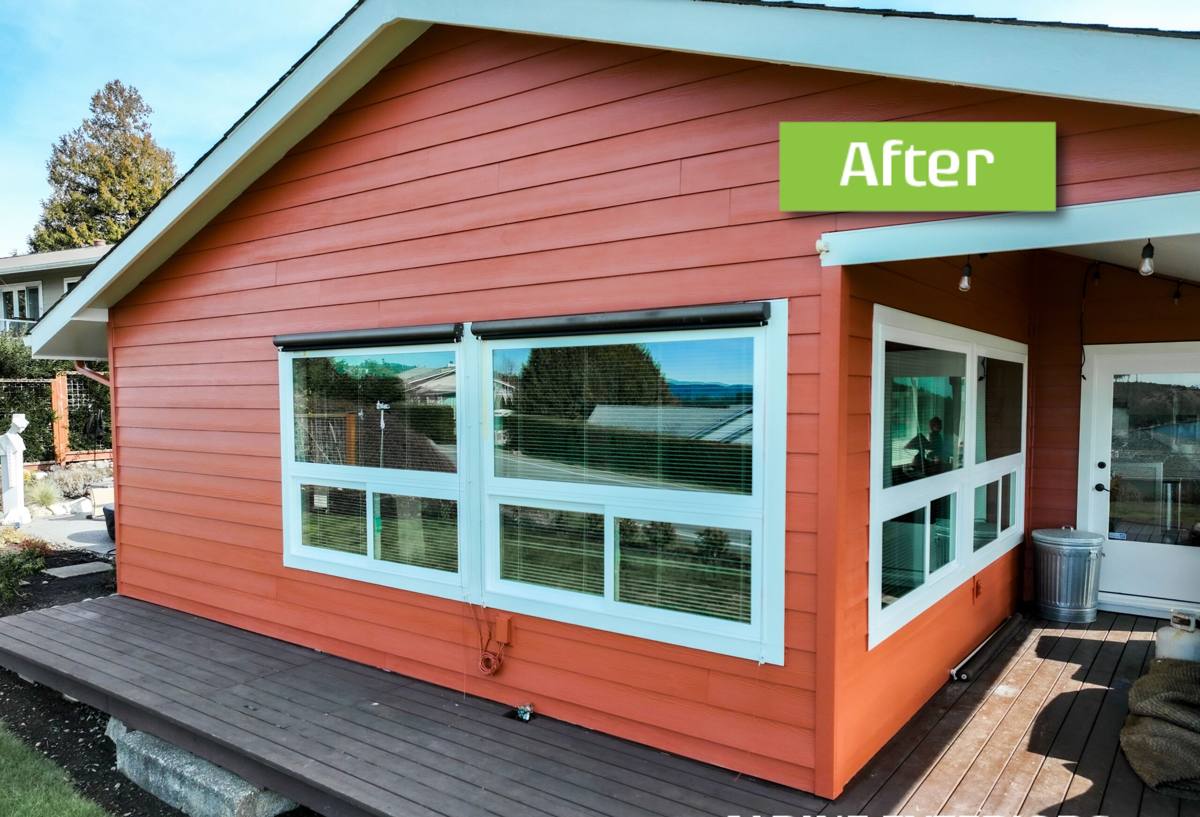
What "Correct" Actually Means in a Job Like This
A window installation can look fine from the curb and still fail behind the wall. The parts that matter most in Edgemoor's climate are the parts you can't see once the trim goes back on.
Flashing and Water Management
Every window opening needs a sill pan and properly lapped flashing so that any water that gets past the glass and frame drains back out, not into the framing. On a bluff-facing wall taking direct wind-driven rain, this step is not optional trim work — it is the difference between a window that lasts decades and one that causes hidden rot within a few wet seasons.
Sealing Without Trapping Moisture
Sealant matters, but so does knowing where not to seal. A window assembly needs to shed bulk water outward while still allowing any moisture that does get in to dry out. Fully caulking a window shut on all sides, including the bottom, is a common mistake that traps water instead of letting it escape.
Fasteners and Hardware
Standard fasteners corrode faster this close to salt water. Using hardware rated for coastal exposure costs a little more up front and avoids streaking, staining, and weakened attachment points a few years down the road.
Insulation Around the Frame
Gaps around a new window frame need to be filled with a low-expansion foam or backer rod and sealant, not stuffed with fiberglass batting that can settle and leave cold spots or air leaks.
Signs an Edgemoor Home Needs New Windows
Homeowners often wait longer than they should because window problems are gradual. Here's what tends to show up first in this area:
- Fogging or a hazy film between panes of double-glazed windows, meaning the seal has failed
- Soft or discolored wood at the sill or bottom corners of the frame, a sign moisture has been sitting there
- Windows that are noticeably harder to open, close, or lock than they used to be
- Noticeable draft near the frame on a windy day, especially on walls that face the water
- Paint or finish that keeps failing in the same spot no matter how often it's touched up
- Visible moss or persistent green staining on the sill or exterior trim below the window
- Higher heating bills without any other clear explanation
Any one of these is worth a look. Several at once usually means the window and possibly the surrounding wall assembly need attention, not just a caulk touch-up.
Frame Materials: What Holds Up Near the Water
There's no single "best" window material for every home — it depends on the home's age, style, and budget. But some materials handle coastal exposure and Whatcom County's wet winters better than others.
| Material | Coastal Performance | Maintenance | Typical Fit |
|---|---|---|---|
| Vinyl | Good — won't rust or rot, handles moisture well | Low — occasional cleaning | Most homes, budget-conscious replacements |
| Fiberglass | Very good — dimensionally stable, resists warping in temperature swings | Low | Larger openings, view windows, higher-end remodels |
| Wood | Fair — needs consistent upkeep to resist rot in this climate | High — regular refinishing | Historic or character homes where original look matters |
| Wood-clad (wood interior, metal or vinyl exterior) | Good — exterior shell protects the wood from weather | Moderate | Homes wanting a wood interior look with better exterior durability |
| Aluminum | Poor to fair near salt air unless properly coated — prone to corrosion and thermal loss | Moderate | Generally not our first recommendation this close to the bay |
We'll walk through the trade-offs for your specific home rather than pushing one product line. A bluff-facing window taking direct salt spray has different needs than a sheltered window on the lee side of the same house.
Our Installation Process
Every job follows the same core steps, adjusted for the specific window and wall condition:
- Assessment — we check the existing frame, sill, and surrounding wall for hidden water damage before quoting anything
- Measurement and product selection — exact opening measurements, then matching frame material, glazing, and hardware to that wall's exposure
- Removal — careful removal of the old unit with attention to what's underneath, since this is where rot or bad prior flashing usually shows up
- Repair if needed — any soft framing or compromised sheathing gets fixed before the new window goes in, not covered over
- Sill pan and flashing installation — built to shed water outward and downward, lapped correctly with the house wrap or building paper
- Setting and shimming the window — plumb, level, and square, with proper clearance for the insulation layer
- Insulating and sealing — low-expansion foam or backer rod around the frame, sealant applied at the right points, not everywhere
- Trim and finish work — interior and exterior trim reset or replaced to match the home
- Final check — operation, seal, and cleanup before we call the job done
What Affects the Cost
Window installation pricing varies a lot based on the specifics of the job. Broadly, a straightforward replacement in an existing opening costs less than a new-construction-style install that involves resizing the opening or repairing damaged framing.
| Factor | Why It Matters |
|---|---|
| Number and size of windows | More openings and larger picture or bay windows increase material and labor cost |
| Frame material | Vinyl is typically the most budget-friendly; fiberglass and wood-clad cost more upfront |
| Existing wall condition | Rot or water damage found during removal adds repair work before the new window can go in |
| Access and height | Bluff-side or upper-story windows with limited access take more time and equipment |
| Standard vs. custom sizes | Non-standard openings, common in older Edgemoor homes, often require custom-order windows |
| Glazing and coatings | Low-E coatings and upgraded glass packages add cost but improve comfort and efficiency |
We give straight numbers up front, and we'll tell you honestly if a lower-cost option is a reasonable fit for a particular window or if it's the wrong call for that spot on the house.
Why a Crew That Already Works This Neighborhood Matters
Window installation isn't just about the product — it's about knowing how a specific house and site behave. A crew that's worked in Edgemoor before already understands how exposed a given wall orientation is to wind-driven rain off the bay, what kind of wall assemblies show up in homes of different eras in this part of Whatcom County, and how much moss and moisture buildup to expect on north- and west-facing walls during our wet months. That experience shows up in fewer surprises during removal, flashing details that actually match the conditions, and a finished job that holds up through multiple wet seasons instead of just looking good on install day.
It also means straightforward logistics — no learning curve on access for bluff-top lots, narrow drives, or homes where careful staging matters to protect landscaping and views.
Permits, Codes, and Energy Considerations
Window replacement projects in Whatcom County may require a permit depending on the scope of work, particularly if the opening size is changing or structural framing is involved. Egress requirements apply to bedroom windows, and energy code minimums affect what glazing and U-factor ratings are acceptable for replacement windows in this climate zone. We handle the permit question as part of quoting the job so there are no surprises mid-project, and we make sure whatever goes in meets current code, not just what was there before.
After Installation: Keeping Windows Performing
New windows are close to maintenance-free compared to old, failing ones, but a few habits extend their life in this climate:
- Rinse salt residue and grime off exterior glass and frames a couple of times a year, more often on water-facing walls
- Keep gutters and downspouts clear so runoff isn't sheeting down across window heads
- Clear moss or organic buildup off sills and trim before it holds moisture against the frame
- Check and re-lubricate hardware annually if operation starts to feel stiff
- Inspect exterior caulk lines once a year and touch up any that have cracked or pulled away
If you're weighing whether it's time to replace windows on an Edgemoor home, or you just want a straight answer about what a correct installation involves for your specific walls, we're glad to take a look. The estimate is free, there's no pressure, and you'll get a clear explanation of what we'd do and why — just fill out the form below.