 Whatcom County
Board & Batten Siding Built for Fairhaven's Conditions
Fairhaven sits close to the water, and that changes what a siding job needs to survive. Between the salt-laden air off Bellingham Bay, the driving rain that comes sideways off Whatcom County storms, and the long stretch of shaded, damp months that feed moss and mildew, vertical board and batten siding in this neighborhood has to do more than look good. It has to shed water at every seam, resist corrosion at every fastener, and keep moisture from working its way behind the cladding where it can't dry out.
Board and batten has real appeal here. The strong vertical lines suit Fairhaven's mix of historic-district character and newer construction, and it pairs well with the porches, gables, and mixed-material facades common in the neighborhood. But the same design that makes it attractive — narrow battens over wide boards, more seams per square foot than horizontal lap siding — also makes it less forgiving of a rushed or generic installation. This page is about what that job actually requires when it's done for a Fairhaven home, not a generic description of the siding style.
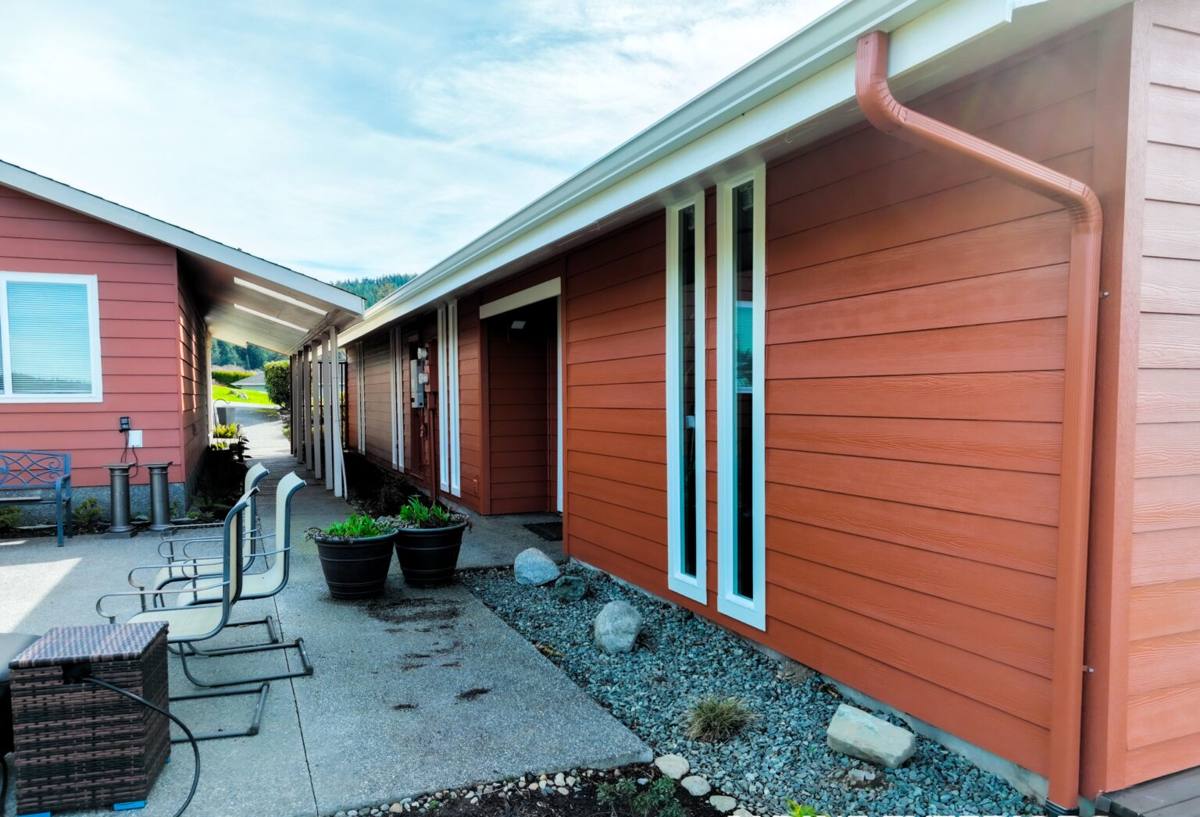
What Fairhaven's Climate Actually Demands From Vertical Siding
Salt Air and Coastal Exposure
Homes closer to Bellingham Bay deal with airborne salt that accelerates corrosion on exposed metal — fasteners, flashing, and trim caps included. Over years, corroding fasteners loosen boards, streak the finish, and create small gaps where water gets a foothold. Material choice and fastener choice both matter more here than they would twenty miles inland.
Driving Rain and Wind-Driven Moisture
Whatcom County storms don't just drop rain straight down — wind pushes it sideways into wall assemblies, and board and batten's vertical seams give water a direct path down the wall if they're not lapped, caulked, and flashed correctly. A batten that's simply nailed over a butt joint without proper overlap or sealant is a slow leak waiting to happen.
Moss, Shade, and Slow-Drying Walls
Fairhaven's tree cover and marine-layer cloud pattern mean some wall faces stay damp for days after a storm. Moss and algae take hold fastest on siding that can't dry — tight-to-the-wall installations, clogged weep paths, and boards installed without an air gap behind them. A wall that dries quickly after rain is a wall that doesn't grow moss.
What a Correct Board & Batten Job Involves
Rainscreen and Drainage Plane
Board and batten should never be nailed flat against the weather-resistive barrier with no space behind it. A proper installation includes a drainage plane — furring strips or a purpose-built rainscreen mat — that lets any water that gets past the cladding drain and lets the wall assembly dry from both sides. This is one of the most common shortcuts we see skipped on rushed jobs, and it's the single biggest factor in whether a wall stays dry over a Whatcom County winter.
Batten Spacing and Fastening
Battens need consistent spacing over the underlying boards, fastened into structural framing or solid sheathing — not just into the boards themselves — so the whole assembly moves together instead of working loose. Fastener pattern, length, and corrosion resistance all need to match the exposure the wall actually sees, which in a coastal-influenced neighborhood like Fairhaven usually means stainless or hot-dip galvanized fasteners rather than standard coated ones.
Joints, Corners, and Flashing
Every horizontal butt joint in a board and batten wall is a potential water entry point. Joints need to be staggered, backed, and sealed — not just butted and caulked over. Window and door openings need proper head flashing with a drip edge, and outside corners need a detail that sheds water outward instead of funneling it into the joint. None of this is visible once the job is finished, which is exactly why it's worth asking a contractor to walk you through it before they start.
Why We Install James Hardie for Board & Batten — and Not the Alternatives
We install James Hardie fiber cement exclusively. We don't install LP SmartSide, vinyl, Cemplank, Allura, primed spruce, or cedar board and batten, and in a climate like Fairhaven's, that's a deliberate standard rather than a brand preference.
Cedar board and batten looks excellent when it's new, but real wood in a salt-air, high-moisture environment needs recurring refinishing, is vulnerable to cupping and checking as it absorbs and releases moisture, and gives insects and rot a foothold if maintenance slips even one season. Engineered wood products like LP SmartSide use resin-treated strand board that resists moisture better than raw wood but is still an engineered wood product — edge and cut-end sealing has to be done correctly and maintained, or moisture intrusion becomes a real risk over time. Vinyl board and batten is low-maintenance and inexpensive, but it's a thinner, more flexible material that can warp in temperature swings, fade under UV exposure, and doesn't hold up structurally the way a rigid cement-based board does — and it isn't the fire-resistant, class-A option some homeowners specifically want for a coastal or wooded lot.
James Hardie fiber cement is non-combustible, dimensionally stable in wet-dry cycling, and doesn't feed insects or rot the way wood-based products can. Hardie's ColorPlus factory finish is baked on under controlled conditions rather than field-applied, which matters in a climate where a site-painted finish has fewer good drying days to cure properly. For homes with more direct exposure to wind and salt, Hardie's climate-engineered HZ5 product line is formulated for exactly that kind of moisture and freeze-thaw exposure. It's also backed by a strong transferable warranty when installed to Hardie's specifications — which is the other half of the equation, because a great product installed wrong still fails.
Comparing Board & Batten Material Options for a Fairhaven Home
| Material | Moisture/Salt Performance | Maintenance | Fire Resistance | Finish Durability |
|---|---|---|---|---|
| James Hardie fiber cement | Engineered for wet-dry and coastal exposure (HZ5) | Low — occasional wash, no refinishing cycle | Non-combustible | Factory-baked ColorPlus finish, long warranty |
| Cedar | Absorbs moisture, cups/checks over time | High — recurring refinishing, sealing cut ends | Combustible | Field-applied finish, shorter recoat cycle |
| LP SmartSide / engineered wood | Moisture-resistant if edges stay sealed | Moderate — edge sealing upkeep matters | Combustible (treated) | Factory or field finish depending on product |
| Vinyl | Doesn't rot, but can warp/deflect over time | Low, but limited repair options if damaged | Combustible, softens under heat | Color molded through, can fade/chalk with UV |
This isn't a claim that the alternatives are poor products — each has a role. It's why, after years of installing exterior siding in Whatcom County's climate, we standardized on one material system and stopped installing the others.
Our Process for a Fairhaven Board & Batten Project
- On-site assessment — we look at wall orientation, existing sheathing and moisture barrier condition, drainage patterns, and how exposed each elevation is to wind-driven rain and salt air.
- Scope and product selection — we spec the appropriate Hardie board and batten profile and HZ line for the home's specific exposure, along with corrosion-resistant fastener and flashing details.
- Tear-off and substrate check — old siding comes off, sheathing gets inspected for hidden rot or moisture damage before anything new goes up.
- Weather barrier and rainscreen installation — the drainage plane goes in before a single batten is hung, so the wall can shed and dry as designed.
- Board and batten installation — boards and battens go up to Hardie's fastening and clearance specifications, with staggered, sealed joints and proper flashing at every opening.
- Final detailing and walkthrough — trim, corners, and caulking get checked, and we walk the finished job with the homeowner before calling it done.
Maintaining Board & Batten Siding in a Marine Climate
Hardie fiber cement is low-maintenance, not no-maintenance. In a moss-prone, salt-exposed neighborhood like Fairhaven, a short annual routine keeps a correctly installed wall performing the way it should for decades.
- Rinse siding annually with a garden hose to clear salt residue and organic buildup before it feeds moss or algae growth.
- Check and clear gutters and downspouts each fall so overflow doesn't run down the wall face behind battens.
- Inspect caulking at joints, corners, and window trim yearly, and re-seal any cracked or shrunk beads promptly.
- Keep vegetation and mulch beds pulled back from the base of the wall to maintain airflow and drainage clearance.
- Watch shaded, north-facing walls for early moss growth — it's easier to address at the first sign than after it's established.
Why a Crew That Already Works Fairhaven Matters
Board and batten done wrong doesn't usually fail in the first year — it fails three to five years in, after a few wet winters have found the shortcuts. A crew that already works Fairhaven and the surrounding Whatcom County coastline has seen what happens when a rainscreen gets skipped or a joint gets sealed instead of properly flashed, because they're the ones who get called back to fix it. That experience shows up in the details that don't get photographed: fastener choice at a salt-exposed elevation, flashing at a window head that faces prevailing wind, batten spacing that accounts for how this specific wall dries.
It also means knowing the practical side of working in this neighborhood — narrower lots, mixed older and newer construction, and the general permitting and code expectations that apply to exterior work in the area. None of that replaces a solid installation, but it does mean fewer surprises during the job.
If you're considering board and batten siding for a home in Fairhaven, we're happy to take a look and give you a straightforward, no-pressure estimate — what your walls actually need, what it would cost, and why. Use the form below to get started.