 Whatcom County
 Storm Damage Roof Repair for Happy Valley Homes
Happy Valley sits close enough to the water and the hills around it that its homes take a particular kind of weather beating — salt-tinged wind off the bay, driving rain that comes in sideways during winter fronts, and windthrow from the mature trees that give the neighborhood its character. When a storm rolls through Whatcom County, Happy Valley roofs often show damage that's easy to miss from the ground: lifted shingle tabs, a cracked ridge cap, a skylight flashing that got pried open half an inch. We work storm damage repairs in this neighborhood regularly, and this page covers what that actually looks like — not a generic "we fix roofs" pitch, but what a proper storm repair involves here.
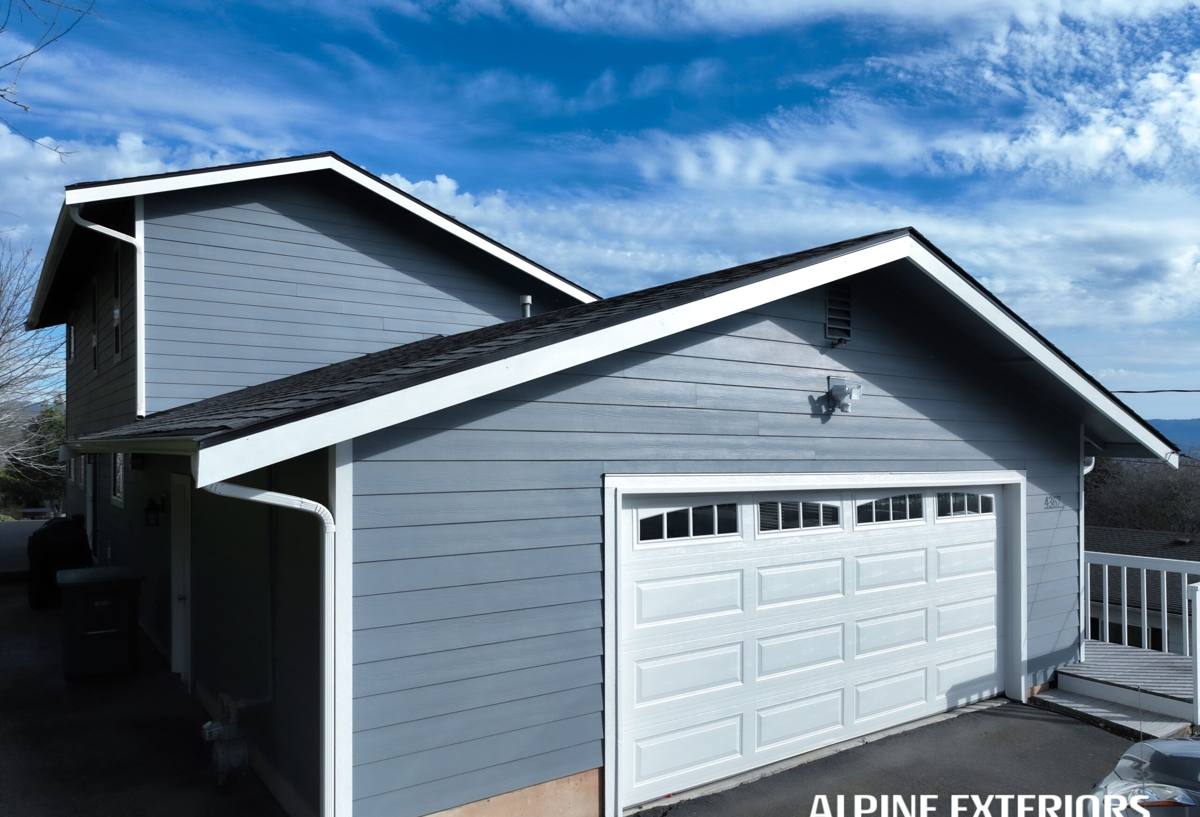
What Whatcom County Storms Actually Do to a Roof
Not all storm damage looks like a missing shingle. In our experience working Whatcom County roofs, the damage that causes the most trouble is the damage nobody sees right away.
Wind
Gusts off the water don't need to hit hurricane speeds to cause problems. Sustained wind loosens shingle adhesive seals and works nails backward out of the deck over repeated storms — one storm rarely tears a roof apart, but three or four storms in a season can leave a roof loose enough that the next one does real damage. Ridge caps and hip lines take the worst of it because they catch wind from more directions.
Wind-Driven Rain
This is the one that does the most hidden damage. Rain that's moving horizontally doesn't just run down a roof — it gets pushed sideways and upward under shingle edges, around flashing, and into any gap that a calm-weather roof would shed water past just fine. A roof that's held up fine for years can start leaking the first time a storm pushes rain at it from an unusual angle.
Trees and Debris
Happy Valley has enough tree cover that falling limbs and needle/cone debris are a regular part of storm cleanup. Branch strikes can crack shingles, dent metal flashing, or in worse cases puncture the deck. Even smaller debris matters — needles and small branches pile up in valleys and behind chimneys, holding moisture against the roofing material long after the storm has passed.
Moss, Made Worse by Storms
Whatcom County's long wet season keeps moss and moisture pressure on roofs almost year-round. A storm that lifts shingle tabs or knocks granules loose gives moss a foothold it wouldn't have had on an intact roof. Storm damage and moss problems tend to compound each other — a roof that takes wind damage in October is often the same roof with visible moss growth by spring if the damage isn't addressed.
Why "Wait and See" Costs More Here
The instinct after a storm is often to check for obvious problems — a missing shingle, a stain on the ceiling — and if nothing's visible, move on. In this climate that's a risky call. Salt air accelerates corrosion on exposed nail heads and metal flashing once a shingle's protective layer is compromised. Ongoing rain finds any opening a storm created and keeps enlarging it. And moss doesn't wait for you to notice — it establishes itself in weeks, not months, in damaged areas. A repair that would take an afternoon right after the storm can turn into a deck replacement if water gets underneath the roofing system and sits there through a wet Whatcom County winter.
Our Storm Damage Repair Process
1. Prompt Inspection
We look at the whole roof system, not just the spot you're worried about — decking, flashing, ridge and hip lines, valleys, penetrations (vents, skylights, chimneys), and the gutter line. Storm damage is often in more than one place, and a repair that only addresses the visible symptom tends to leave a second leak waiting to happen.
2. Emergency Tarping, When Needed
If there's an active leak or exposed decking, our first priority is stopping water intrusion — a properly secured tarp buys time without causing additional damage to the roofing around it. This isn't the fix; it's the step that protects your home while the real repair gets scheduled and done right.
3. Honest Damage Assessment
We tell you what we actually see: what's storm damage versus what's pre-existing wear, what's a straightforward shingle or flashing repair, and what points to a bigger underlying issue (soft decking, a chronically undersized ridge vent, moss that's been established for a while). If insurance is involved, we document what we find in a way that's useful for a claim — clear photos, plain descriptions, no guessing at cause.
4. The Repair Itself
Depending on what the storm did, this might mean replacing damaged shingles and re-sealing tabs, repairing or replacing flashing around penetrations, resetting or replacing a ridge cap, or patching decking that got exposed. We match materials to what's already on the roof where possible so a repair doesn't stand out or create a mismatched weak point.
5. A Post-Repair Look at the Whole Roof
Since we're already up there, we'll flag anything else worth knowing about — moss starting to establish, a gutter that's not draining, a vent boot that's aging out — so you can decide what to do about it on your own timeline, not as a surprise later.
What a Correct Storm Repair Involves
- Matching shingle type, color, and exposure to the existing roof so the repair blends in and sheds water the same way the surrounding material does
- Re-securing or replacing flashing with proper overlap and fastening — not just caulk over a gap
- Checking decking underneath damaged areas for soft spots or moisture before covering it back up
- Clearing debris from valleys and behind roof penetrations as part of the job, not as an afterthought
- Confirming nail patterns and sealing meet the manufacturer's wind-resistance specs, since a repair done with shortcuts can fail again in the next storm
- Checking gutters and downspouts near the repair area, since clogged drainage after a storm often makes roof damage worse
Repair vs. Replacement: How We Think Through It
| Factor | Points Toward Repair | Points Toward Replacement |
|---|---|---|
| Extent of damage | Isolated to one area (a slope, a valley, around one penetration) | Scattered across multiple slopes or repeated storm damage over several seasons |
| Roof age | Roof is well within its expected service life | Roof is already near the end of its typical lifespan and storm damage is accelerating the timeline |
| Decking condition | Decking is sound underneath the damaged area | Decking shows rot or soft spots from prolonged moisture exposure |
| Moss/moisture history | No significant prior moss or leak history | Chronic moss growth or previous leaks suggest the roof has been compromised for a while |
| Material availability | Matching shingles or materials are still readily available | Existing roofing is old enough that matching material is difficult, making a blended repair impractical |
Most storm calls we get in Happy Valley are legitimate repairs, not replacements — but we'll say so plainly either way. We're not going to recommend a full roof when a targeted repair will hold up, and we're not going to patch something that's genuinely past the point of a reasonable fix.
Insurance and Storm Claims
If your homeowner's policy covers storm damage, our inspection documentation is written to support that process — clear description of what happened, what we found, and what it takes to correct it. We're not a public adjuster and we won't promise a specific claim outcome, but we'll give your insurer accurate information and won't inflate or downplay what we see on your roof.
Why a Crew That Knows Happy Valley Matters
Storm damage repair isn't just about knowing how to nail a shingle — it's about knowing what this specific stretch of Whatcom County throws at a roof. A crew that works Happy Valley regularly already has a feel for which slopes take the worst wind exposure, how fast moss establishes on shaded north-facing roofs here, and what flashing details tend to fail first when salt air and driving rain work on a roof year after year. That local pattern recognition is what turns a repair from "good enough" into one that actually holds through the next storm season.
Get an Estimate
If a recent storm left you wondering about your roof — or you just want a second set of eyes before a small problem becomes a big one — we're glad to take a look. Reach out for a free, no-pressure estimate using the form below, and we'll give you a straight answer about what your roof needs.