 Whatcom County
Why Roofs in Lynden Wear Differently Than Roofs Inland
Lynden sits in one of the wetter, greener corners of Whatcom County, and that's exactly why roofs here fail in patterns that homeowners further inland rarely deal with. The marine air that moves in off the Salish Sea carries a fine load of salt, and even though Lynden isn't on the water, that air still reaches the farmland and residential streets around town. Salt-tinged moisture speeds up corrosion on exposed metal — flashing, fasteners, gutter hardware — well before it would rust out in a drier climate.
Add in driving rain that comes sideways off Pacific storm systems, and you get water forced up under shingle laps and into valleys instead of simply running downhill the way roofs are designed to shed it. Then there's moss. Whatcom County's long, mild, wet stretch from fall through spring gives moss months to establish itself on any roof section that gets shade — tree-lined lots, north-facing slopes, low-pitch sections. Once moss takes hold, it holds water against the roofing material almost continuously, which is a very different stress than an occasional hard rain.
None of this means Lynden roofs are doomed — it means repairs here have to account for moisture, corrosion, and moss as ongoing conditions, not one-time events.
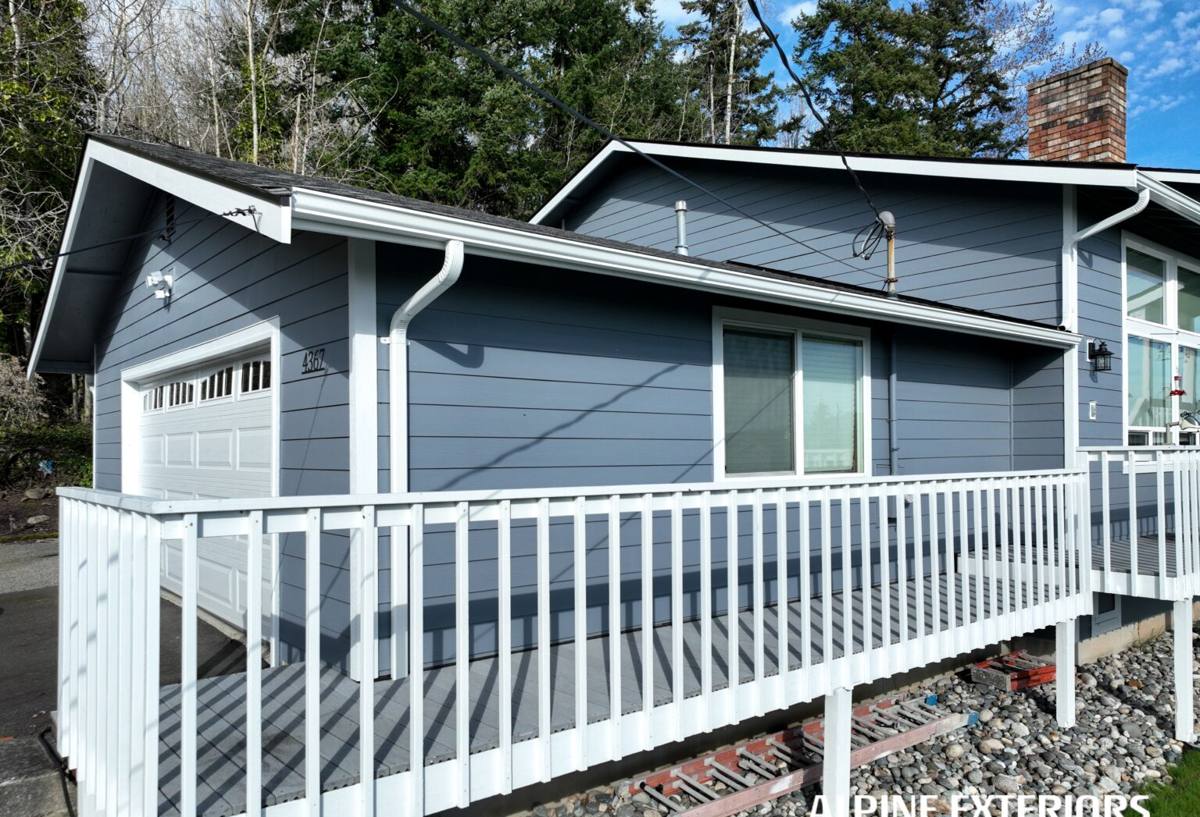
Signs a Lynden Roof Needs Repair, Not Just Watching
Roof damage in this climate rarely announces itself with a dramatic leak on day one. It usually shows up as small signs that get written off until they aren't small anymore. Homeowners in Lynden should treat any of the following as a reason to get a repair estimate rather than wait for the next dry spell:
- Water stains or discoloration on interior ceilings, especially near exterior walls or chimneys
- Shingles that are curling, cracked, or visibly missing after a windstorm
- Granules collecting in gutters or at downspout outlets — a sign shingles are losing their protective surface
- Thick moss mats, especially on shaded or low-slope sections
- Sagging in the roof deck when viewed from the ground or the attic
- Daylight visible through the roof boards from inside the attic
- Rust streaks running down from flashing around chimneys, skylights, or vent pipes
- Ice or frost damage after a cold snap, particularly at eaves where ice can dam behind the gutter line
Any one of these on its own might be minor. Several together usually mean water has been getting past the roofing material for longer than it looks like from the ground.
The Repair Problems We See Most Often Around Lynden
Moss-Related Shingle Damage
Moss doesn't just look bad — it lifts shingle edges as it grows, creating a channel for water to wick underneath. By the time moss is thick enough to see easily from the street, the shingles beneath it have often been sitting damp for one or more full wet seasons.
Flashing Failure
Flashing around chimneys, skylights, and roof valleys is where most leaks actually originate, even when the visible damage shows up somewhere else in the house. In this climate, flashing corrodes and its sealant dries out faster than in drier regions, and a gap that's invisible from the ground can be letting water in every time it rains.
Valley and Debris-Related Leaks
Roof valleys collect runoff from two roof planes at once, plus needles, leaves, and moss debris from nearby trees. When that debris dams the valley during a heavy rain, water backs up under the shingles instead of draining off the roof.
Fastener and Nail Pop Issues
Corroded or improperly seated fasteners work loose over time, especially with the freeze-thaw cycles and wind exposure typical of Whatcom County winters. A popped nail creates a small hole directly through the roofing material.
Cedar Shake Maintenance Needs
Lynden has a mix of home ages, and older properties with cedar shake or shingle roofs need a different repair approach than asphalt — shakes need individual splitting and replacement, careful attention to butt spacing, and closer moss management since wood holds moisture differently than composition shingles.
What a Correct Roof Repair Actually Involves
A repair that just covers the spot where a stain appeared on the ceiling often misses the real entry point, since water can travel sideways along the roof deck before it drips through drywall. A repair worth paying for starts with tracing the leak to its actual source, which sometimes means checking flashing, underlayment, and adjacent shingle courses well beyond where the damage shows up indoors.
From there, a proper repair typically includes:
- Removing damaged shingles or shakes rather than layering new material over compromised ones
- Inspecting the underlayment and roof deck underneath for rot or soft spots before closing the roof back up
- Replacing flashing rather than just re-sealing it, when corrosion or gaps are found
- Matching new material to existing shingles or shakes as closely as possible for both appearance and proper water-shedding overlap
- Checking attic ventilation, since poor airflow contributes to both moisture buildup and premature moss growth from below
Skipping any of these steps tends to produce a repair that looks fine for a season or two and then fails again in the same spot, often after the original moisture damage has spread further into the deck.
Repair or Replace? How We Help You Decide
Not every roof problem in Lynden calls for a full replacement, and not every leak should be patched indefinitely. The right call usually comes down to the roof's age, how widespread the damage is, and how many times it's already been patched.
| Factor | Repair Usually Makes Sense | Replacement Usually Makes Sense |
|---|---|---|
| Roof age | Under 15-20 years, depending on material | Approaching or past expected material lifespan |
| Damage extent | Isolated to one section, flashing point, or valley | Spread across multiple roof planes |
| Repair history | First or second repair in that area | Same spot has been patched more than twice |
| Underlayment condition | Dry and intact where inspected | Saturated, rotted, or failing in multiple areas |
| Ownership plans | Selling soon or budgeting for replacement later | Planning to stay long-term and want to stop recurring costs |
We'll always give you a straight answer on which category your roof falls into, including when a repair is genuinely the smarter near-term move rather than pushing you toward a bigger job.
Our Repair Process, Start to Finish
We walk the roof and the attic when access allows, not just a look from the ground, because a lot of the damage that matters is only visible up close or from underneath. That inspection tells us whether we're dealing with a contained flashing or shingle issue or something that's spread into the decking.
After the inspection, we put together a written estimate that explains what we found, what needs to happen to fix it correctly, and what it will cost — before any work starts. Given how much of the wet season stretches through fall, winter, and spring here, we also work with you on timing the repair around weather windows so materials go down dry and seal properly.
Once the repair is scheduled, we remove and replace only what needs it, match materials where the existing roof is still in good shape, and confirm flashing and seams are properly integrated rather than just caulked over. We clean up the site, including checking gutters and the ground below for stray nails and debris, and walk you through what was done before we consider the job finished.
Materials and Methods We Rely On
For asphalt shingle repairs, we match the existing shingle profile and color as closely as the available product line allows, since a mismatched patch is both a cosmetic and a functional issue if the profiles don't overlap correctly. For flashing, we use corrosion-resistant metal and proper step-and-counter detailing at chimneys and walls rather than relying on sealant alone to do the job — sealant degrades faster than metal in this climate and shouldn't be the primary line of defense.
On moss, we handle removal by hand or soft-wash methods rather than aggressive pressure washing, which can strip granules and shorten the life of the shingles it's meant to protect. Where it fits the roof design, we'll discuss options like zinc or copper control strips, which release trace metals that discourage regrowth over time — we're upfront that these reduce moss, they don't eliminate the need for periodic cleaning in a climate this wet.
For cedar shake repairs, we split and replace individual shakes to match existing coursing rather than patching over deteriorated wood, since cedar's performance depends on proper spacing and exposure that a mismatched patch can throw off.
A Note on Repair Longevity
No repair — ours or anyone else's — makes a roof immune to Whatcom County's climate going forward. What a correct repair does is remove the current point of failure and restore the roof's ability to shed water and resist moss the way it was designed to. Ongoing exposure means ongoing maintenance is still part of owning a roof here.
Why Hiring a Crew That Already Works in Lynden Matters
A roofing crew that works Lynden regularly already knows what to expect from the local building stock — the mix of older farmhouses, mid-century homes, and newer construction, and how each tends to age under this climate. That familiarity shortens the inspection process because we're not guessing at what's typical for the area, and it means we're realistic with you about what a given roof's damage pattern usually means before we've even pulled a single shingle.
Being local also means we're not driving in from out of the area to handle a callback if something needs a second look after the repair. Roofing problems in Whatcom County rarely wait for convenient weather, and having a crew that's genuinely close by matters when you need someone back on the roof before the next storm system rolls through.
Maintenance That Extends a Repair's Life
A good repair is only half the equation — how the roof is maintained afterward determines how long that repair actually holds up in this climate. A few habits go a long way:
- Keep gutters and valleys clear of leaves and needles, especially before the fall rains set in
- Have moss addressed before it builds into thick mats, not after
- Trim back overhanging branches that keep roof sections shaded and damp
- Check the attic occasionally for signs of moisture, especially after a hard storm
- Schedule a roof check-up every year or two rather than waiting for a visible leak
If you're dealing with a leak, missing shingles, moss buildup, or flashing that's seen better days, we're happy to take a look and give you a straightforward, no-pressure estimate on what it will take to fix it right. Fill out the form below to get started.