 Whatcom County
 Roofing in Sehome Isn't a Generic Job
Sehome sits close enough to Bellingham Bay that salt-laden air is part of daily life on a roof here, not an occasional visitor. Add in the long stretch of driving rain that comes off the Strait of Georgia most winters, and a moss season that can run eight months or longer in shaded, tree-covered lots, and you've got a roofing environment that's genuinely harder on asphalt shingles than most manufacturers' spec sheets assume. A roof that would coast along fine in a dry inland climate can start showing granule loss, soft decking, or moss intrusion years early here if it wasn't built for these conditions from the start.
That's the difference between a roofing crew that shows up with a truck full of shingles and one that actually understands what Whatcom County weather does to a roof over a decade or two. This page covers what that means in practice for asphalt shingle roofing on a Sehome home — what the job should include, what it costs, and how to tell whether a roof is aging normally or aging badly.
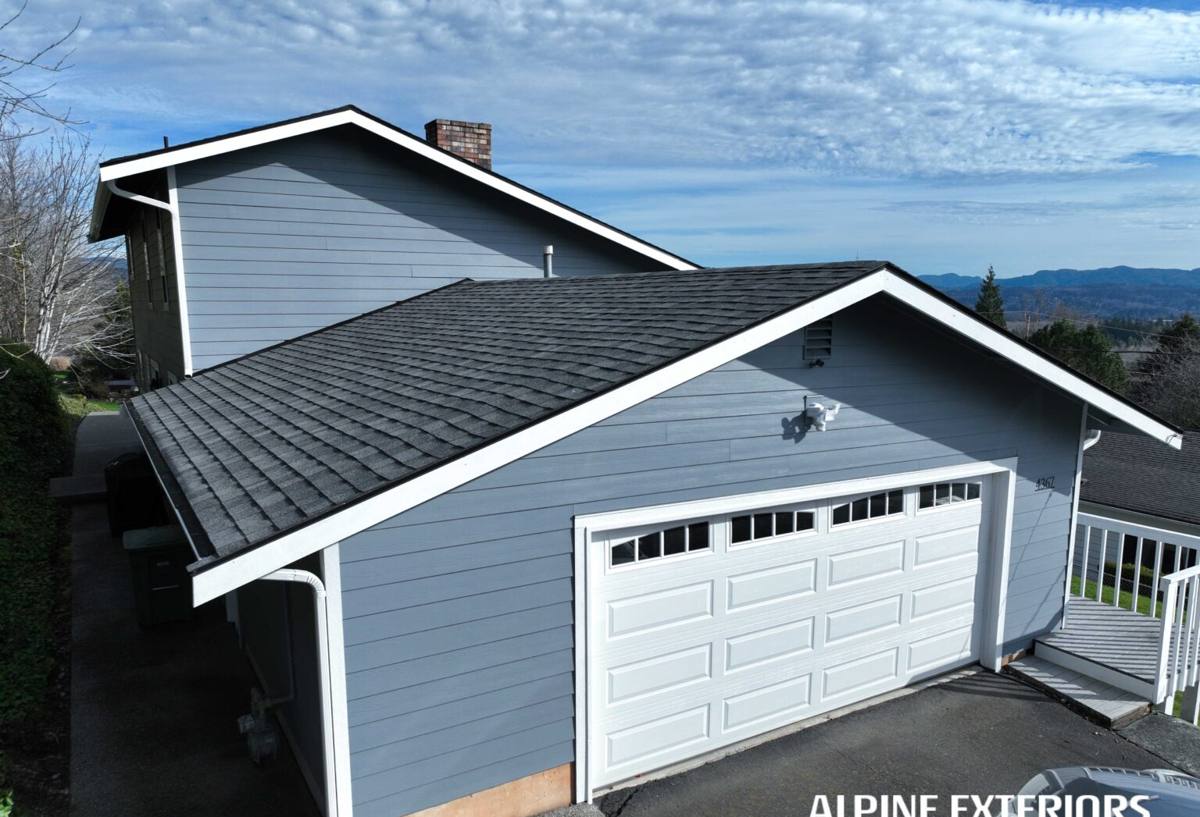
What Salt Air, Rain, and Moss Actually Do to a Roof
Salt Air
Airborne salt accelerates corrosion on exposed metal — roofing nails, flashing, vent stacks, and gutter hardware. Fasteners that aren't rated for coastal exposure can start losing holding strength years before the shingles themselves wear out, which is a quiet failure point because you can't see it from the ground.
Driving Rain
Wind-driven rain doesn't just fall straight down — it gets pushed sideways and upward under shingle tabs, around chimney flashing, and into any gap in the underlayment. A roof detailed for a drier, calmer climate often has underlayment coverage and flashing laps that are technically code-minimum but not built for water that's actively being pushed uphill by wind.
Moss and Sustained Moisture
Whatcom County's moss season isn't a cosmetic issue. Moss holds moisture against the shingle surface long after a dry-climate roof would have shed and dried out, which shortens shingle life, lifts tabs, and — on north-facing slopes and shaded lots common around Sehome — can work its way under the shingle edge over time.
What a Correctly Built Asphalt Shingle Roof Includes Here
A shingle roof is a system, not a single product. In this climate, every layer matters more than it does somewhere drier.
- Ice-and-water shield at eaves, valleys, and around every penetration — not just the code-minimum strip, given how much sideways-driven rain this area sees.
- Synthetic underlayment rated for extended UV and moisture exposure, since re-roofing timelines can get pushed by weather windows.
- Corrosion-resistant fasteners and flashing — stainless or hot-dip galvanized rather than standard electro-galvanized, given the salt-air exposure.
- Balanced attic ventilation (intake at the eaves, exhaust at the ridge) so moisture from inside the house doesn't condense against the underside of the deck.
- Proper nailing pattern per the shingle manufacturer's wind rating — under-nailing is one of the most common causes of early tab lift in windy coastal conditions.
- Algae-resistant shingle granules on shaded or north-facing sections, to slow the black streaking that comes from airborne algae in persistently damp climates.
Skip any one of these and the roof will likely still pass a casual inspection — it just won't hold up as long as it should.
Signs Your Roof Needs a Look
Most roofing failures in this climate don't show up as a sudden leak. They show up gradually, and homeowners often don't connect the dots until there's water damage inside.
- Granules collecting in gutters or at downspout outlets
- Moss or dark streaking concentrated on shaded slopes
- Shingle tabs that look curled, cupped, or lifted at the edges
- Soft or spongy spots when the roof is walked (a sign of deck moisture underneath)
- Rusty streaking near nail heads or flashing
- Daylight visible through the attic roof deck, or damp insulation below it
- A roof approaching or past 20 years old that hasn't had a full inspection recently
Our Process for a Sehome Roof Replacement
1. Inspection and Honest Assessment
We start on the roof, not with a sales pitch. That means checking the deck condition, current ventilation setup, flashing details, and how much of the roof's wear is age versus a fixable installation issue. If a repair genuinely makes more sense than a full replacement, we'll say so.
2. Tear-Off and Deck Check
We remove the old roofing down to the deck rather than layering over it — layering traps moisture and hides deck damage, which is a bad trade-off in a climate this wet. Any soft or rotted decking gets replaced before anything new goes down.
3. Underlayment and Flashing First
This is where most of the long-term water resistance actually comes from, well before the shingles go on. We install ice-and-water shield at vulnerable areas and new flashing at every penetration, chimney, and valley rather than reusing old flashing that's already lived through years of salt exposure.
4. Ventilation Correction
If the existing attic ventilation is undersized or unbalanced — extremely common on older Sehome homes — we correct it as part of the job. A new roof over bad ventilation just means the same moisture problems return sooner.
5. Shingle Installation to Spec
Nailing pattern, exposure, and starter course all follow the manufacturer's published requirements for the wind rating, not a shortcut version. This is also what keeps the manufacturer's warranty valid if you ever need it.
6. Final Walkthrough
We walk the finished roof and the site with you, cover what maintenance (if any) it'll need, and make sure gutters and downspouts are clear and functioning before we consider the job done.
Shingle Options: What's Actually Different Between Them
Not every asphalt shingle performs the same way in a wet, mossy, salt-air climate. Here's how the common tiers compare for a home in this area.
| Shingle Type | Typical Lifespan Here | Wind Rating | Best Fit |
|---|---|---|---|
| 3-Tab (economy) | 15–20 years | Lower | Budget-driven projects, secondary structures |
| Architectural / Dimensional | 25–30 years | Higher, better in driving rain | Most Sehome homes — the standard recommendation |
| Algae-Resistant Architectural | 25–30 years | Higher | Shaded lots, north-facing roofs, moss-prone yards |
| Impact-Rated / Premium | 30+ years | Highest | Exposed sites, homeowners planning to stay long-term |
For most homes in Sehome, we recommend at minimum an architectural shingle with algae-resistant granules. The upfront cost difference over a 3-tab shingle is modest, and it directly addresses the two biggest local wear factors: wind-driven rain and moss growth.
What Drives the Cost
Every roof is different, so treat this as a way to understand the estimate rather than a quote. We'll give you real numbers after we've actually looked at the roof.
| Factor | Why It Matters |
|---|---|
| Roof size and pitch | Steeper roofs take longer and require more safety setup |
| Number of layers to remove | Tear-off of multiple old layers adds labor and disposal cost |
| Deck condition | Rotted or soft decking needs replacement before new roofing goes down |
| Shingle tier chosen | Architectural and algae-resistant shingles cost more than 3-tab but last longer |
| Ventilation upgrades | Correcting undersized or unbalanced attic ventilation adds scope but prevents repeat problems |
| Roof complexity | Valleys, chimneys, skylights, and multiple planes all add flashing and labor time |
Why It Matters That We Already Work in Whatcom County
A roofing crew that only occasionally works this far north can miss things that are obvious to a local outfit: which fastener grades hold up near the bay, how much ice-and-water coverage actually makes sense given typical wind-driven rain patterns, and how aggressively moss needs to be addressed based on tree cover and sun exposure on a given lot. We also know the local permitting process and building department expectations for Whatcom County, which keeps a roof replacement from stalling on paperwork.
There's also a practical scheduling advantage. Roofing needs a dry weather window, and those windows can be tighter here than in drier parts of the state. A crew based locally can move quickly when a good stretch of weather opens up, rather than losing days to travel or juggling jobs across a wider region.
After Installation: What Upkeep Actually Looks Like
A correctly installed shingle roof in this climate isn't maintenance-free, but it also shouldn't need constant attention. What actually helps:
- Clearing gutters and downspouts at least twice a year so water doesn't back up under the shingle edge
- Keeping overhanging branches trimmed back to reduce shade, debris, and moss pressure
- Having moss physically removed (not just chemically treated) if it establishes on shaded slopes
- A visual check after major windstorms for lifted or missing shingles
- A professional inspection every few years, especially once the roof passes the 15-year mark
None of this requires a large time investment, but skipping it is how a well-built roof still ends up wearing out early.
Get a Straight Answer on Your Roof
If you're not sure whether your Sehome home needs a repair, a partial re-roof, or a full replacement, we'll tell you honestly after we've actually looked at it. Reach out for a free, no-pressure estimate using the form below.