 Whatcom County
 Why Bellingham Siding Wears Out Faster Than Homeowners Expect
Bellingham sits in a spot that's tough on exterior building materials. You've got Puget Sound salt air working on anything metal or porous, driving rain off the water that finds every gap in a wall assembly, and a wet season that stretches long enough to grow a steady coat of moss and algae on north-facing walls and anything shaded by trees. None of that is dramatic on its own, but it adds up year after year, and siding is the first line of defense taking the hit.
Homes here don't usually fail because of one big storm. They fail slowly — a corner trim board that stays damp two extra weeks every winter, a caulk joint that dries and cracks a little more each freeze-thaw cycle, moss holding moisture against a wall that never gets a chance to fully dry between rains. By the time paint is visibly peeling or boards are soft to the touch, the damage is usually already behind the surface.
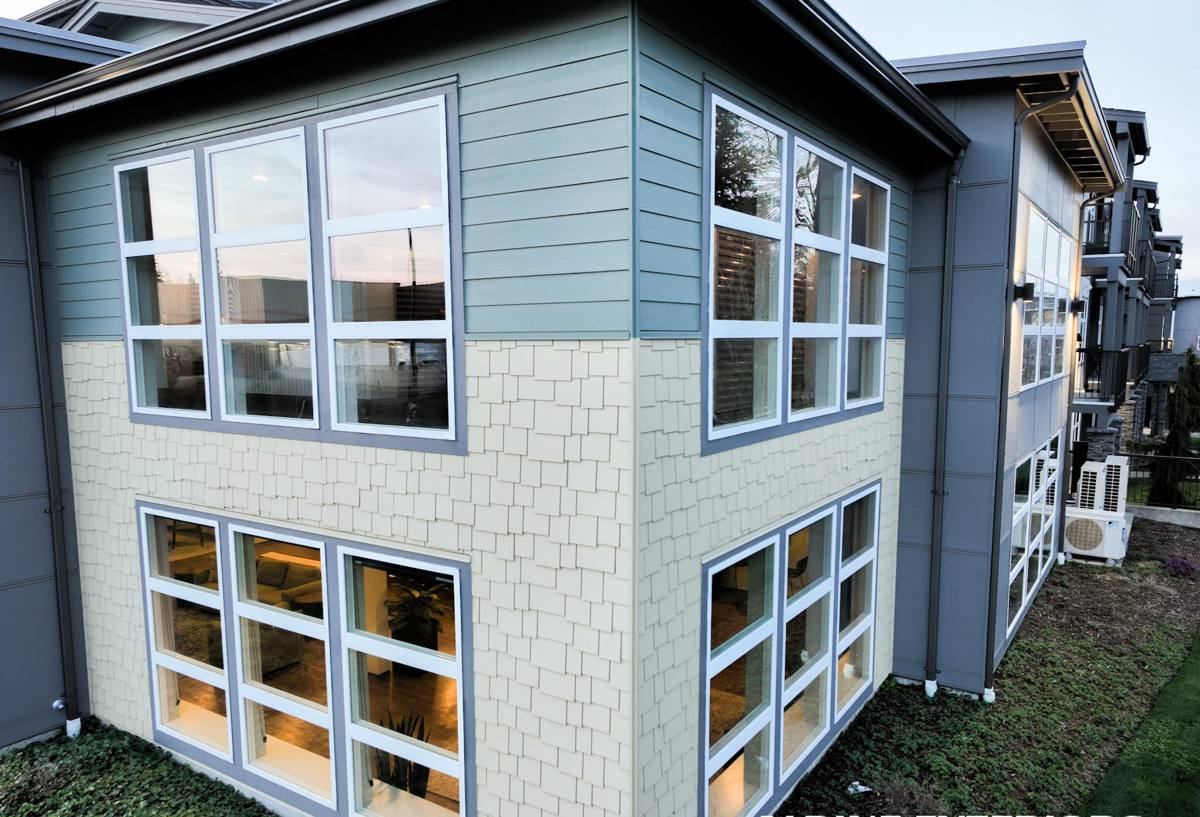
Signs a Bellingham Home Needs Replacement, Not Just Repair
Not every siding problem calls for a full tear-off. But in this climate, patch jobs on aging siding tend to buy less time than homeowners hope for. Here's how to tell which situation you're actually in.
- Soft or spongy spots when you press on the siding, especially near the bottom courses and around window sills
- Paint that keeps failing within a year or two of repainting, even with a decent product and prep
- Persistent moss or dark streaking that comes back within a season of cleaning
- Visible gaps, warping, or cupped boards, particularly on the north and west-facing walls that catch the most weather
- Rising energy bills with no other explanation, which often points to a compromised weather barrier behind the siding
- Siding that's original to a home built more than 20-25 years ago, especially older cedar, spruce, or first-generation composite products
If it's one or two boards showing wear, targeted repair can make sense. If the pattern is showing up across multiple walls, or the underlying sheathing is already involved, replacement is usually the more honest recommendation — and the more cost-effective one over a 10-year horizon.
What a Correct Siding Replacement Actually Involves
Siding replacement is not just pulling old boards off and nailing new ones on. In a climate like Whatcom County's, the work that happens underneath the visible siding matters as much as the siding itself.
Tear-Off and Inspection
Once the old siding comes off, the sheathing underneath gets a real inspection — not a glance. Water finds its way behind siding long before it's visible from the outside, and any soft, delaminated, or rotted sheathing needs to be identified and replaced before anything new goes up. Skipping this step is the single most common reason a siding job looks fine for a year or two and then fails.
Weather-Resistive Barrier and Flashing
A correctly installed weather barrier, properly lapped and taped, gives the wall a second line of defense if any water does get past the siding. Flashing around windows, doors, and any wall penetrations needs to direct water out and down, not let it pool or wick inward. In a region with as much sustained rain as Bellingham gets, this detail work is where a lot of the long-term performance actually comes from.
Installation to Manufacturer Spec
Proper fastener spacing, correct nail penetration, appropriate gaps at butt joints and corners, and clearance from grade, decks, and roof lines all affect how the siding handles moisture and movement over time. Rushed installation is one of the most common reasons a siding product underperforms its warranty — the material gets blamed for what was actually an installation shortcut.
Why We Install Only James Hardie Fiber Cement
We standardized on James Hardie fiber cement siding and don't install vinyl, LP SmartSide, or other composite and wood-based products. That's a deliberate call based on how those materials tend to perform over time in a climate like ours, not a marketing position.
Fiber cement is non-combustible, holds paint and factory finish far longer than wood-based alternatives, and doesn't swell, rot, or feed moss the way organic materials can when they stay damp for extended stretches. James Hardie's ColorPlus factory finish is baked on and warranted separately from the substrate, which matters in a region where UV exposure is lower but moisture exposure is high. Hardie also makes climate-specific HZ product lines engineered for regions with heavy moisture exposure — which is exactly the profile Whatcom County fits.
We're not going to tell you every other siding product is a bad choice everywhere. But for what this climate does to a wall over 20-30 years, and for the installation consistency we want to stand behind, fiber cement is what we put our name on.
Comparing Siding Options for a Marine Climate
| Factor | James Hardie Fiber Cement | Vinyl | Wood / Engineered Wood |
|---|---|---|---|
| Moisture resistance | Engineered for wet climates (HZ lines) | Doesn't absorb, but seams and gaps trap moisture | Absorbs moisture, prone to rot without diligent upkeep |
| Moss/algae resistance | Non-organic, holds finish well | Resists growth but shows staining | Organic surface feeds growth in shade |
| Salt air exposure | Stable, factory-finished | Can become brittle over decades | Finish degrades faster near the Sound |
| Fire resistance | Non-combustible | Combustible | Combustible |
| Typical repaint interval | 15+ years (factory finish) | Doesn't repaint well if faded | 5-8 years |
| Expected lifespan installed to spec | 30-50 years | 20-30 years | 15-25 years with upkeep |
These are general performance patterns, not guarantees for any individual product line or install — but they're consistent enough with what we see on Whatcom County homes that they've shaped how we do business.
Our Bellingham Siding Replacement Process
- On-site assessment — we walk the exterior, check sheathing condition where accessible, and identify problem areas before quoting anything
- Written estimate — clear scope, product selection, and pricing, no vague allowances
- Tear-off and sheathing repair — old siding removed, damaged sheathing replaced, structure inspected
- Weather barrier and flashing — installed and lapped correctly around every window, door, and penetration
- James Hardie installation — installed to manufacturer spec for fastening, clearances, and joint treatment
- Final walkthrough — we review the finished work with you before calling the job done
What to Ask a Bellingham Siding Contractor Before Hiring
- Are you licensed and insured to do exterior work in Washington state, and can you show it?
- Will you inspect and address damaged sheathing, or just install over what's there?
- What weather barrier and flashing details do you use, specifically, around windows and doors?
- Do you install to the manufacturer's published specifications, and will that be in writing?
- How many jobs have you done in Whatcom County, and can the work hold up to our rain and moss conditions?
- What does the manufacturer's warranty actually cover, and what does your own workmanship warranty cover separately?
A contractor who answers these plainly, without dodging the sheathing and flashing questions, is usually one worth trusting with the job.
Cost Factors for Siding Replacement
Every home is different, so we won't quote a number without seeing the house, but the main cost drivers on most Bellingham projects are consistent: total square footage of wall area, the amount of sheathing repair needed (which often isn't known until tear-off begins), the complexity of the roofline and trim detail, and the number of windows and doors requiring flashing and trim work. Homes closer to the water or with heavy tree cover tend to need more moisture-related sheathing repair, which is worth budgeting a contingency for rather than being surprised by later.
Why a Crew That Already Works in Bellingham Matters
Siding installation isn't identical everywhere. A crew that's done this work across Whatcom County knows which details actually matter here — how far up a wall moss tends to climb, which orientations take the worst of the driving rain, how much clearance to leave near grade given our rainfall totals, and where salt air exposure from the Sound changes what fastener and flashing choices make sense. That local pattern recognition is what keeps a siding job performing well in year fifteen, not just at the final walkthrough.
If your Bellingham home's siding is showing its age, we're happy to take a look and give you a straight assessment — no pressure, no upsell, just an honest read on what your home actually needs. Request a free estimate below and we'll get you scheduled.