 Whatcom County
 Installation Is What Actually Determines How Long Blaine Siding Lasts
Two houses in Blaine can have the exact same siding product on the wall and age completely differently over the next fifteen years. The difference almost always traces back to how it went on, not what it's made of. That's true in any climate, but it matters more here than in most inland Whatcom County towns, because Blaine sits close enough to open water that salt air, wind-driven rain, and a moss season that barely lets up all put pressure on installation shortcuts faster than a drier, more sheltered town would.
This page is specifically about installing siding on a Blaine home — new work, a full tear-off re-side, or a repaneling project — and what a correct job requires from the crew doing it. We install James Hardie fiber cement exclusively, so everything below describes what a correct Hardie installation looks like in this climate, not a generic overview of siding installation in general.
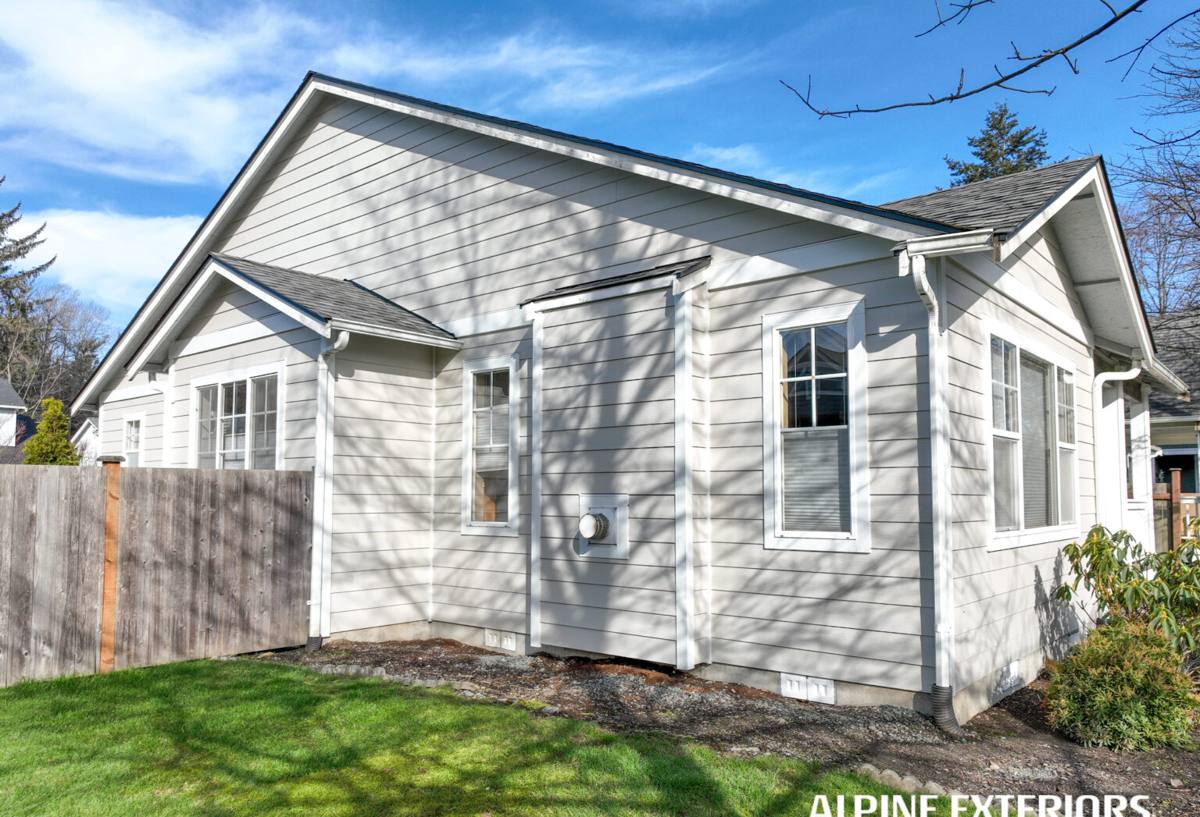
What a Blaine Installation Has to Hold Up Against
Salt Air on Every Fastener and Piece of Trim
Homes in Blaine take on salt-laden air as a routine condition, not an occasional weather event, and that exposure is heaviest on anything metal. Fasteners, flashing, and trim hardware corrode faster here than they would twenty miles inland, and an installation that uses standard-grade hardware because it's cheaper or easier to source is setting up a problem that won't show up until rust streaking and loosened trim appear a few winters later.
Wind-Driven Rain That Doesn't Fall Straight Down
Storms coming off the water push rain sideways into panel joints, window flashing, and the seams where trim meets field siding, instead of letting it run harmlessly down the wall. That kind of load exposes weak flashing and gaps in the weather barrier that a calmer climate might never test. The water-resistive barrier underneath the siding — how it's lapped, how it's taped at penetrations — ends up mattering as much as the siding material itself.
A Moss Season That Rewards Airflow, Not Just Cleaning
Mild, wet conditions for most of the year mean any wall surface that stays damp becomes a growth surface eventually, especially on shaded or north-facing elevations. Installation detail affects that directly — proper clearance at the base of the wall, a working drainage gap behind the siding, and panels that aren't jammed tight against trim or flashing all give a wall a chance to actually dry out between wet stretches instead of staying damp continuously.
The Installation Details That Separate a Correct Job From One That Just Looks Finished
None of what follows is unusual or proprietary — it's James Hardie's own published installation specification, applied consistently rather than treated as optional on the parts nobody checks after the crew leaves.
| Installation Element | What the Spec Requires | Why It Matters on a Blaine Wall |
|---|---|---|
| Fastener type and spacing | Corrosion-resistant fasteners, placed per Hardie's published pattern for the product line and exposure | Standard-grade fasteners lose holding power faster in salt air, loosening panels over time |
| Clearance above grade, decks, and roofing | Minimum gaps specified between the bottom of the siding and any horizontal surface | Keeps the lowest courses out of standing water and splash-back, a common failure point |
| Weather-resistive barrier | Continuous coverage, properly lapped and taped at every seam and penetration | Sheds wind-driven rain before it reaches the sheathing rather than giving it a path in |
| Rainscreen or drainage gap | A small cavity behind the siding that allows drainage and airflow | Lets any moisture that does get past the surface drain and dry instead of sitting against the wall |
| Field-cut edges | Sealed or primed per Hardie's spec at the time of the cut, not at the end of the day | Unsealed cuts are one of the more common places fiber cement actually takes on water |
| Flashing at penetrations | Properly lapped and integrated at every window, door, vent, and fixture | Each penetration is a place wind-driven moisture can get behind the cladding if it's rushed |
How We Approach an Installation, Start to Finish
- Exposure walk-through. Before pricing anything, we look at how each wall of the house is actually exposed — which faces take direct wind off the water, which sit under tree cover, and where existing moss buildup or past water staining points to a chronic moisture problem rather than a one-time issue.
- Tear-off and substrate check. On a re-side, old siding comes off and the sheathing underneath gets inspected before anything new goes up. Covering damaged sheathing with new siding just hides the problem for a few more years; we'd rather find soft spots now, even if it adds a step to the schedule.
- Weather barrier and flashing package. The water-resistive barrier and flashing go on as a coordinated system, with overlaps and seams sequenced so water is always directed outward and down, before any siding covers the layer.
- Panel and trim installation to spec. Fastening, spacing, and clearances follow Hardie's published requirements as the baseline, not as something to hit "close enough." Field cuts get sealed as they're made.
- Finish detailing. Trim transitions, caulking, and touch-up on any cut edges get finished before the crew calls the job done, not left as a punch list for later.
- Final walkthrough. We walk the completed exterior with the homeowner, confirm the work matches the estimate, and cover what basic upkeep looks like on a home this exposed to salt air and moisture.
New Siding on New Framing vs. a Full Re-Side
Installing siding on new construction and re-siding an existing Blaine home follow the same manufacturer spec, but they start from different points. New construction means building onto fresh sheathing and a new weather barrier, with no unknowns hiding behind the wall — the sequencing still matters, but there's no guesswork about what came before. A re-side adds a discovery phase: an honest look at what the original construction left behind, and often correcting older detailing — missing clearance, a barrier that was never lapped correctly, flashing that was taped over instead of properly integrated — before new siding can go up correctly. Homeowners planning a re-side should expect that discovery phase to occasionally add scope once old siding comes off, rather than treating the original estimate as a number that can't move.
What Actually Drives Timeline and Cost on a Blaine Job
| Factor | Impact on a Blaine Installation |
|---|---|
| Square footage and number of stories | More wall area and height mean more labor hours and, on taller sections, more staging and access equipment |
| Trim and roofline complexity | Dormers, multiple roof transitions, and a high window count all add flashing and cutting time |
| Sheathing condition found during tear-off | Rot or water damage under old siding adds repair scope before new panels can go up |
| Wind and water exposure of the site | Walls facing open water typically warrant more careful flashing and drainage detail than sheltered elevations |
| Product line and ColorPlus selection | James Hardie offers multiple panel styles, textures, and factory finishes at different price points |
| Weather windows during the project | Wind off the water can shut down safe staging and panel handling on days that would be workable further inland |
We build some flexibility into every schedule rather than promising a fixed completion date that one bad weather stretch is likely to break. It's a more honest way to set expectations than a date that sounds good in the estimate meeting and doesn't survive the first storm system.
Questions Worth Settling Before Installation Day
Whether you're comparing our estimate against another contractor's, these are reasonable things to nail down before work starts, not after:
- Is the fastener type and spacing spelled out in writing, matched to the specific Hardie product line being installed?
- Does the estimate distinguish between a straightforward install and one that includes tear-off and substrate repair if needed?
- Who inspects the sheathing once old siding comes off, and what happens if damage is found?
- Is the rainscreen or drainage detail specified, or just assumed?
- What's the plan if a stretch of wind or heavy rain hits mid-project?
- Is the workmanship covered by a separate warranty from the manufacturer's material warranty, and for how long?
Why We Install Only James Hardie for This Work
James Hardie's warranty is tied directly to installation following their published spec, which is one reason we don't mix in other siding brands or materials on installation jobs — a crew that has to keep multiple manufacturers' fastening and clearance requirements straight is more likely to blur them together. The HZ5 formulation Hardie engineers for regions with sustained moisture and freeze-thaw cycling matches Blaine's climate well, and the factory-applied ColorPlus finish means the crew isn't relying on field-applied paint to hold up against salt air and constant humidity — only cut edges need touch-up, using Hardie's matched touch-up product, not a can of exterior paint mixed to look close.
We don't install LP SmartSide, vinyl siding, Cemplank, Allura, primed spruce, or cedar. Each has homeowners who are satisfied with it, and each has its own installation requirements that a crew focused on it would need to learn well. We made the call to specialize in one fiber cement system we can install to spec on every job, rather than switching installation standards from house to house depending on what a homeowner priced out online.
Why It Matters That This Crew Already Works in Blaine
Installation quality on paper and installation quality on an actual wall aren't always the same thing, and the gap shows up fastest in a demanding coastal climate. A crew that installs siding across Whatcom County regularly, including homes exposed to Blaine's salt air and wind-driven rain, makes different calls on install day than one working here occasionally between jobs elsewhere — where extra flashing attention is worth the time, which elevations need the most conservative fastener choice, and which details genuinely can't be shortcut regardless of schedule pressure. That judgment comes from doing this work repeatedly in this specific place, not from applying a generic installation checklist the same way everywhere.
If you're planning new siding for a Blaine home, or a full re-side of an aging exterior, we're glad to walk the property and give you a straightforward estimate. Reach out using the form below for a free, no-pressure look at what the job would actually involve.