 Whatcom County
 Roofing in a County That Doesn't Get a Break From the Weather
Everson sits in a part of Whatcom County where roofs rarely get a long dry stretch to recover. Rain moves through steadily for months at a time, moisture-heavy marine air pushes inland from the Puget Sound and Georgia Strait system, and shaded lots hold dampness long after a storm has passed. None of that is unusual for this corner of Washington, but it does mean an asphalt shingle roof here works harder, and ages differently, than the same roof would in a drier climate. A roof that's installed correctly for this environment can go the distance. One that's installed generically — with shortcuts on ventilation, flashing, or underlayment — tends to show problems years before it should.
This page is about one thing: asphalt shingle roofing for homes in and around Everson, and what it actually takes to get it right given the conditions this area sees year-round.
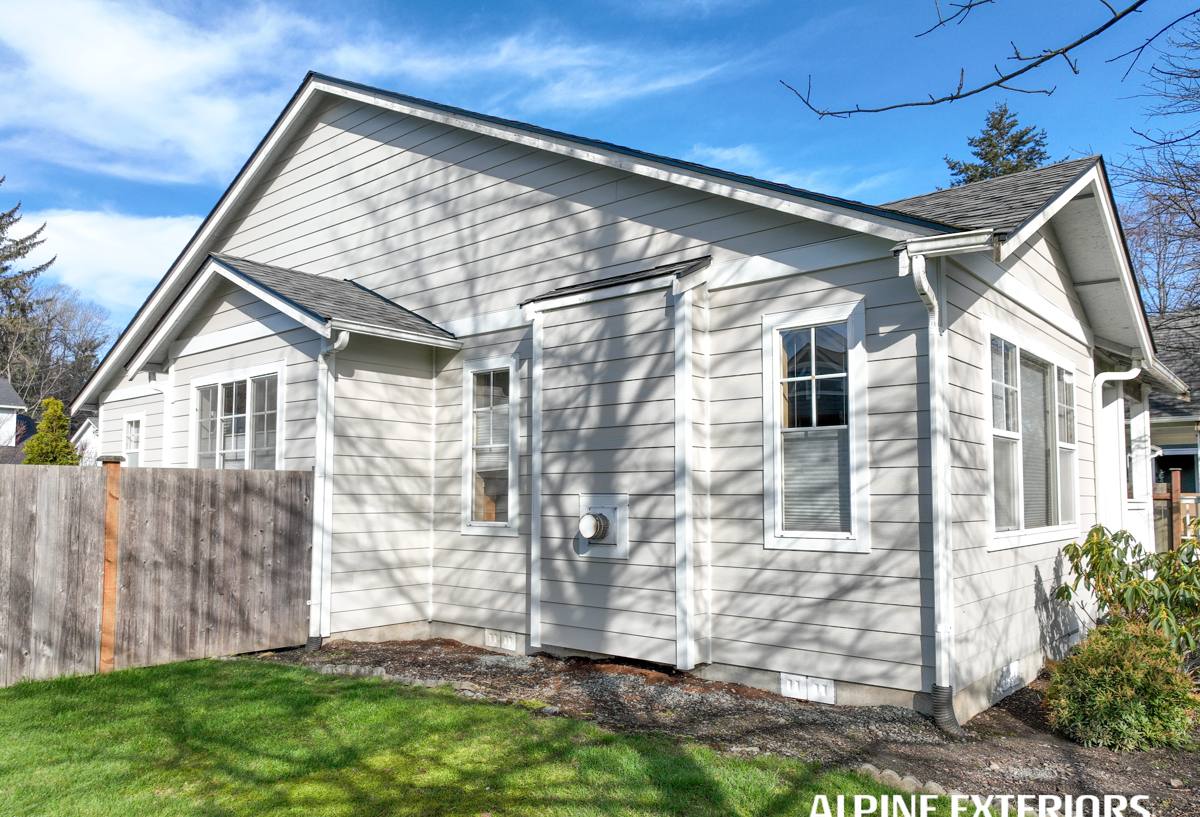
What Everson Roofs Are Actually Up Against
Moss and Algae Growth
Whatcom County's long moss season is one of the biggest practical threats to a shingle roof's lifespan out here. Moss doesn't just sit on top of shingles looking bad — its root structure works into the granule surface and shingle mat, lifting edges and holding water against the roof deck. Once moss gets established on a north-facing slope or a shaded section of roof, it spreads, and it accelerates wear in exactly the spots that already get the least sun to dry out.
Driving Rain and Wind-Driven Water
Storms that come through with sideways, wind-driven rain test every seam, flashing point, and nail line on a roof. Water doesn't just run down a shingle roof in these conditions — it gets pushed up under tabs and around penetrations if those details weren't installed with that in mind. This is where the difference between a roof that leaks in year three and one that's still tight in year twenty usually comes down to flashing and underlayment work that nobody sees once the shingles are on.
Freeze-Thaw and Temperature Swings
Whatcom County doesn't get brutal winters, but it does get repeated freeze-thaw cycles combined with near-constant dampness. That combination is harder on roofing materials than a single hard freeze, because it keeps expanding and contracting joints, fasteners, and sealants that are already saturated. A roof built for a drier, milder climate elsewhere in the country isn't necessarily built for this cycle.
What a Correctly Installed Asphalt Shingle Roof Includes
A shingle roof is a system, not a single layer of material. In a climate like this one, every layer of that system matters more than it would somewhere drier.
- Ice-and-water shield at eaves, valleys, and around penetrations — the areas most likely to see water backed up under the shingles
- Synthetic underlayment across the full roof deck as a secondary water barrier beneath the shingles
- Properly lapped drip edge at eaves and rakes so water sheds off the roof instead of behind the fascia
- New step and counter-flashing at chimneys, walls, and skylights rather than reusing old flashing
- Correct nailing pattern — the right number of nails, placed in the manufacturer's nailing zone, not high or low on the shingle
- Balanced ventilation between intake at the eaves and exhaust at the ridge
- Starter strip and ridge cap matched to the field shingle, not generic filler pieces
Ventilation Matters More Here Than People Think
A lot of roof problems that look like a shingle failure are actually a ventilation failure. Without balanced intake and exhaust, warm, moist attic air condenses against the underside of the roof deck. In a climate that's already damp outside, that trapped moisture has nowhere to go, and it can rot decking and shorten shingle life from underneath — long before the shingles themselves would have worn out. Getting airflow right is as much a part of a correct shingle roof as the shingles themselves.
Choosing a Shingle for This Climate
Not every asphalt shingle product handles a wet, moss-prone climate the same way. The table below covers the main categories homeowners in Whatcom County choose between.
| Shingle Type | Typical Lifespan | Moss/Algae Resistance | Best Fit |
|---|---|---|---|
| 3-tab | 15-20 years | Standard, no built-in resistance | Budget-focused projects, secondary structures |
| Architectural / laminate | 25-30 years | Standard unless algae-resistant granules specified | Most primary residences |
| Algae-resistant (AR) laminate | 25-30 years | Copper-infused granules resist algae/moss staining and growth | Shaded roofs, north-facing slopes, tree-heavy lots |
| Impact-resistant (Class 4) | 25-30+ years | Same as AR when specified with AR granules | Homeowners prioritizing durability and possible insurance discounts |
For most homes in and around Everson, we lean toward algae-resistant laminate shingles as the practical baseline, not an upgrade. Given how long the moss season runs here, a shingle without that built-in resistance is starting the fight already behind — especially on any slope that doesn't get much direct sun.
Signs Your Everson Roof Needs Attention
Most shingle roof failures don't happen suddenly. They show warning signs first, and catching them early is usually the difference between a repair and a full replacement.
- Moss visible on the roof surface, especially on shaded or north-facing sections
- Granules collecting in gutters or at the base of downspouts
- Shingle edges curling, cupping, or lifting
- Dark streaking that doesn't wash off with rain
- Soft spots or sagging when walking the roof (or visible from the ground)
- Daylight visible through the roof deck from inside the attic
- Water stains on interior ceilings, especially near chimneys, valleys, or skylights
- Flashing that's visibly rusted, lifted, or gapped
If you're seeing more than one of these, it's worth having someone take a real look rather than waiting for a leak to show up inside the house.
Our Process From Estimate to Cleanup
- On-site inspection — we walk the roof (or use a ground/ladder assessment where the roof isn't safely walkable) and check the deck, flashing, ventilation, and shingle condition, not just the surface
- Straightforward estimate — a written scope covering materials, tear-off, deck repair allowances, and ventilation work, so there are no surprises mid-project
- Tear-off and deck inspection — old shingles and underlayment come off completely so we can see the actual condition of the plywood or sheathing underneath
- Deck repair as needed — any soft, rotted, or delaminated sections get replaced before anything new goes down
- Underlayment and flashing installation — ice-and-water shield, synthetic underlayment, drip edge, and new flashing at every penetration and wall intersection
- Shingle installation — installed to manufacturer nailing specs, with proper ventilation components integrated at the ridge and eaves
- Cleanup and magnetic sweep — job site and yard cleared of debris and stray fasteners before we consider the job finished
What Drives the Cost of a Shingle Roof Here
Every roof is priced based on its own specifics, but the same handful of factors move the number most on jobs in this area.
| Factor | Why It Matters |
|---|---|
| Roof size and pitch | Steeper roofs take longer to work safely and use more material for the same footprint |
| Number of existing layers | Tear-off of multiple old layers adds labor and disposal cost versus a single-layer roof |
| Deck condition | Rotted or soft sheathing found during tear-off requires repair before shingles go down |
| Roof complexity | Valleys, dormers, chimneys, and skylights all add flashing detail and labor time |
| Shingle grade selected | 3-tab, standard laminate, and algae-resistant/impact-resistant products carry different material costs |
| Ventilation upgrades | Adding or correcting intake/exhaust ventilation is a smaller add-on when done during a full replacement |
We'd rather walk a roof and give an honest number than throw out a broad range that doesn't hold up once we're actually up there. That's part of why we always start with a real inspection, not a drive-by quote.
Why Hiring a Crew That Already Works This Area Matters
A roofing crew that regularly works Whatcom County knows things that don't show up in a generic install: how much ventilation a roof in a shaded, moss-prone lot actually needs, which flashing details tend to fail first under this area's wind-driven rain, and how to sequence a tear-off around a weather window instead of getting caught mid-job when a system moves through. That local pattern recognition is part of what you're paying for when you hire a crew based here rather than a traveling or out-of-area contractor unfamiliar with how buildings age in this specific climate.
It also matters for accountability. A local crew is still around next season if a question comes up, and has a track record in the community that's easy to check.
Ready for a Straightforward Look at Your Roof?
If your Everson home's roof is showing moss, granule loss, or you're just not sure how much life it has left, we're happy to come take an honest look. Fill out the form below for a free, no-pressure estimate — we'll tell you what we actually see, not just what sounds good.