 Whatcom County
 Why Everson Roofs Need to Be Built Differently Than a Catalog Install
Everson sits in the Nooksack River valley, surrounded by farmland, mature trees, and the kind of year-round moisture that defines Whatcom County. That combination means a roof here isn't just protecting against rain — it's fighting standing dampness, shade-driven moss growth, and the freeze-thaw swings that come with a river valley's cold pockets in winter. A metal roof that's installed correctly can handle all of that for decades. One that's installed with shortcuts — wrong fastener pattern, skipped underlayment, poor flashing at valleys and penetrations — will show problems within a few wet seasons, no matter how good the panel itself is.
This page is about metal roofing specifically for Everson homes: what the local climate actually does to a roof, what a correct installation involves, and how our process works from first estimate to final walk-through.
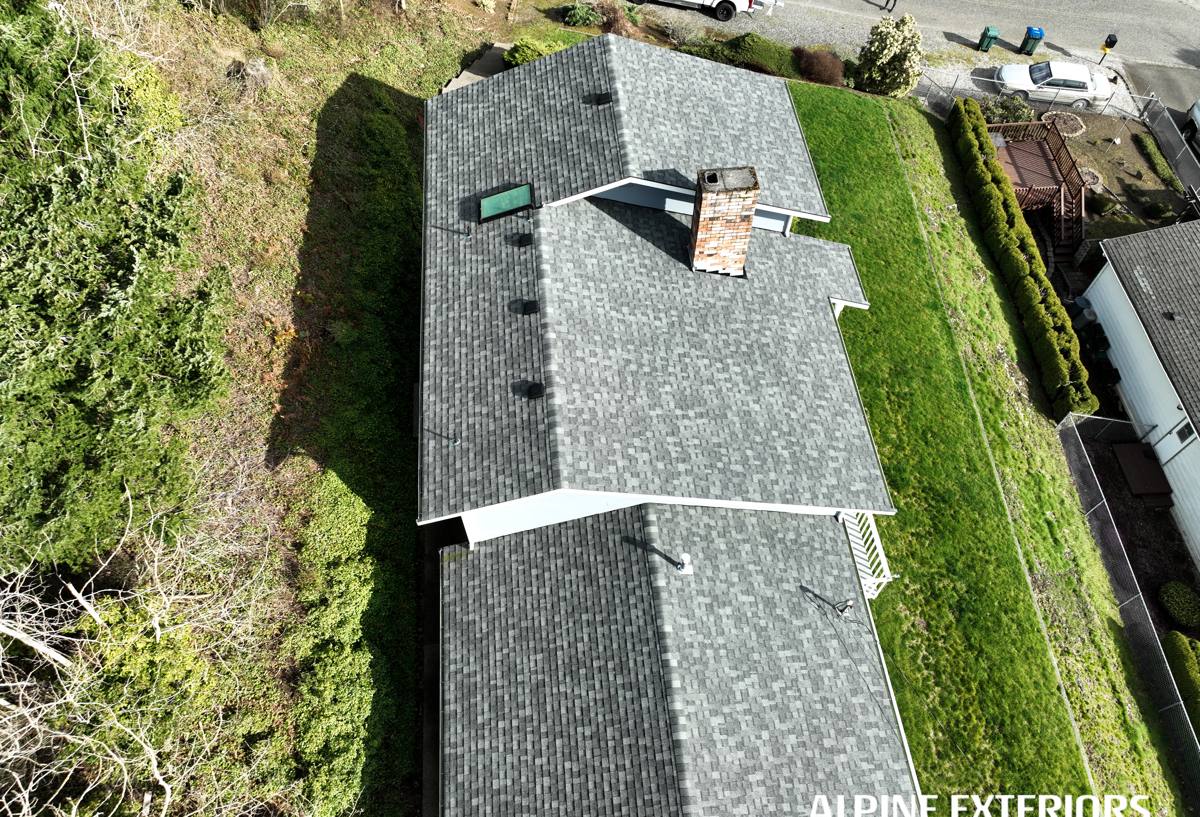
What Whatcom County's Climate Actually Does to a Roof
Everson doesn't get the harshest coastal salt exposure you'd see right on Bellingham Bay or out toward Blaine, but the same marine-influenced weather pattern moves through the whole county, and it still matters here. A few specific things wear on Everson roofs year after year:
- Driving rain — Pacific storms push rain sideways as often as straight down, which means flashing, seams, and fastener placement matter more than they would in a drier climate. A roof that only sheds water well from directly overhead isn't good enough.
- Long moss season — Everson's tree cover and farmland shade keep roofs damp for extended stretches, especially on north-facing slopes. Moss doesn't just look bad; it holds moisture against the roof surface and works into any seam or fastener gap it can find.
- Freeze-thaw cycling — river valley cold pockets mean occasional hard frosts followed by quick thaws. Water that's found its way under a panel or into a seam can freeze, expand, and widen the problem.
- Salt-tinged marine air — lighter here than right on the water, but still present enough over the life of a roof that fastener and flashing material choice isn't something to guess at.
None of these are dramatic on their own. The problem is that they're constant. A roof in Everson doesn't get a dry season to recover in — it's dealing with some combination of moisture, shade, and temperature swing almost year-round.
Why Metal Roofing Fits This Climate Well
Metal isn't the right roofing material for every home or every budget, but for Everson's conditions specifically, it solves several problems at once:
- Moss resistance — a smooth metal surface with no exposed granules gives moss and lichen almost nothing to grab onto, compared to the texture of asphalt shingles. It won't stop growth entirely on a heavily shaded roof, but it dramatically slows it.
- Water shedding — a correctly lapped standing seam or exposed-fastener panel sheds driving rain far more reliably than a shingle system, especially at moderate to steep pitches.
- Longevity against repeated wetting — metal doesn't absorb water the way organic shingle mat does, so it isn't degrading from the inside on every damp week.
- Fire consideration — with agricultural land and dry-season burn risk nearby, a Class A fire-rated metal roof is a real, practical advantage for rural and semi-rural Everson properties.
- Snow and ice shedding — the valley gets occasional snow load; metal's slick surface sheds it faster than shingles, reducing the weight sitting on the structure.
The trade-off is upfront cost and installation sensitivity — metal roofing punishes a rushed or poorly detailed install more than shingles do, because there are fewer forgiving layers. That's exactly why the installation details below matter as much as the material choice itself.
Panel Types We Install
| Panel Type | Best For | Trade-offs |
|---|---|---|
| Standing seam | Main roofs, visible street-facing slopes, homes wanting a clean modern look | Higher cost, concealed fasteners, longest service life with correct install |
| Exposed fastener (screw-down) | Outbuildings, shops, budget-conscious main roofs | Lower cost, but fastener gaskets age and need periodic checking |
| Stone-coated steel | Homes wanting a shingle or shake look with metal's durability | Higher cost, more installation labor, heavier than standard panel |
What a Correct Metal Roof Installation Actually Involves
Tear-Off and Deck Inspection
We don't install new metal over a deck we haven't inspected. Everson's damp climate means we specifically check for soft spots, delaminated sheathing, and old water staining around chimneys, vents, and valleys — the places recurring dampness tends to show up first. Any compromised decking gets replaced before anything else happens; installing a premium panel over bad decking just hides the problem.
Underlayment and Ice-and-Water Barrier
Given the amount of driving rain and occasional freeze-thaw the area sees, we use a synthetic underlayment across the full roof and a self-adhering ice-and-water barrier at the eaves, valleys, and around every penetration — chimneys, vents, skylights. This is the layer that actually stops a leak if wind-driven rain gets under a seam; it's not optional in this climate, no matter which panel is chosen.
Flashing and Penetrations
Most metal roof failures we get called out to inspect trace back to flashing, not the panels themselves. Valleys, sidewalls, chimneys, and any roof penetration need flashing that's both correctly lapped with the underlayment and compatible with the metal panel to avoid galvanic reaction between dissimilar metals. This is detail work that takes time to do right, and it's where corners get cut on rushed jobs.
Fastening Pattern and Panel Layout
Panel spacing, screw pattern, and expansion allowance all have to account for the fact that metal expands and contracts with temperature swings. Fasteners set too tight or in the wrong pattern will eventually work loose or crack the panel finish, giving moisture a way in. Layout also needs to account for prevailing wind direction on the property so seams and laps face away from the driving rain, not into it.
Our Process, Start to Finish
- Free on-site estimate — we walk the roof and attic where accessible, check current decking and ventilation condition, and talk through panel options that fit the home and budget.
- Written scope and quote — a clear breakdown of tear-off, decking repair if needed, underlayment, flashing, and panel installation, with no vague allowances.
- Scheduling around weather — in a climate like this, we plan tear-off in windows where the deck won't sit exposed to rain overnight any longer than necessary.
- Tear-off and deck repair — old roofing removed, deck inspected and repaired as scoped.
- Underlayment, flashing, and panel installation — done in the sequence above, with attention to valleys and penetrations first.
- Cleanup and walk-through — magnetic sweep for stray fasteners, full site cleanup, and a walk-through so you know what was done and what maintenance, if any, to expect.
Cost Factors for a Metal Roof in Everson
We don't quote firm prices without seeing the roof, but the main variables that move cost on an Everson job are consistent:
| Factor | Why It Matters |
|---|---|
| Panel type | Standing seam costs more than exposed-fastener panel due to material and labor for concealed fastening |
| Roof pitch and complexity | Steep pitches, multiple valleys, and dormers add labor time and flashing detail |
| Deck condition | Rot or soft decking found during tear-off adds repair cost not visible from the ground |
| Tear-off vs. overlay | Full tear-off costs more upfront but is what we recommend given how much damage hidden moisture can already cause |
| Access and site conditions | Tree cover, driveway access, and staging space on rural or wooded Everson lots can affect labor time |
Maintenance That Actually Matters in This Climate
Metal roofing is low-maintenance, not no-maintenance. In Everson's climate, a short annual check catches the small things before they become expensive ones:
- Clear debris and organic buildup from valleys and around penetrations — this is where moss gets a foothold first
- Check fastener heads and gaskets on exposed-fastener panels for wear, especially after a hard winter
- Inspect flashing at chimneys, vents, and sidewalls for gaps or lifted edges
- Confirm gutters and downspouts are clear so water isn't backing up under the eave edge
- Look for any denting or panel damage after significant windstorms or falling branches
Why a Crew That Already Works Everson Is Worth Choosing
A lot of the decisions above — underlayment coverage, flashing detail, panel layout relative to wind direction, how much deck repair to expect on a given lot — come down to knowing how homes in this specific area actually age. A crew that regularly works Everson and the surrounding Whatcom County valley isn't guessing at how much moss pressure a shaded north slope will see, or how much driving rain a given roof orientation takes in a typical winter. That local pattern recognition is what keeps a metal roof performing for its full service life instead of needing early repairs.
If you're weighing a metal roof for a home in Everson, we're glad to walk the roof with you, look at what your specific property is dealing with, and give you a straightforward, no-pressure estimate — use the form below to get started.