 Whatcom County
 Windows in Happy Valley Face a Different Set of Problems
Happy Valley sits close enough to the water and the marine weather patterns that move through Whatcom County that window installation here isn't quite the same job as it is further inland. Salt-laden air corrodes hardware and fasteners faster than it does in drier climates. Driving rain, pushed sideways by wind off the water, tests every seal and flashing detail a window has. And the long stretch of gray, wet months each year keeps humidity high against exterior walls for weeks at a time, which is exactly the condition moss and mildew need to take hold around frames and trim.
None of that makes window replacement complicated, but it does make the details matter more. A window that's a perfectly good product, installed with a shortcut or two, will show it here faster than it would in a dry climate. That's really the whole story behind this page: what Happy Valley homes need from a window installation, and what a correct job actually looks like.
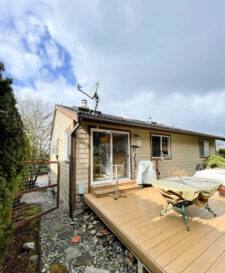
Signs a Happy Valley Home Needs New Windows
Whether your home is an older build or something more recent, the warning signs tend to show up in the same places. Worth checking before you decide whether you need a full replacement or just some maintenance:
- Fogging or a permanent haze between panes — the seal on the insulated glass unit has failed
- Soft, spongy, or discolored wood at the sill or bottom corners of the frame
- Windows that are hard to open, close, or lock, or that have visibly sagged in the frame
- Visible moss, algae, or black staining collecting on the sill or lower trim
- Noticeable draft or cold spot near the window even when it's fully closed
- Condensation forming on the inside of the glass regularly during cold, wet weeks
Any one of these on its own might just mean a repair or a re-caulk. Several of them together, especially rot at the sill combined with a failed seal, usually means the window has been letting moisture in for a while and replacement is the more honest answer.
What a Correct Window Installation Actually Involves
It's Mostly About What You Can't See
The window unit itself gets most of the attention, but the parts that decide whether it holds up through a Whatcom County winter are the ones that get covered up: the flashing, the weather-resistive barrier, the sealant, and how the rough opening was prepped before the window ever went in.
The Details That Matter Here
- Flashing sequenced correctly — sill pan flashing first, then side flashing, then head flashing, each lapped so water sheds outward and down, never trapped behind the next layer
- A proper sill pan — a sloped, dammed pan under the window so any water that does get past the sash has somewhere to go besides the framing
- Continuous sealant at the right joints — not everywhere; some joints need to stay open to let incidental moisture drain and dry
- Correct shimming and fastening — a window that's out of square or bowed under fastener pressure will bind, leak, or fail its seal early
- Insulation in the gap between frame and rough opening — without it you get a cold ring around every window and condensation to match
Skip or rush any one of these and the window can look fine for a year or two before the problem shows up as rot, staining, or a draft that wasn't there when it was new.
Choosing the Right Window for This Climate
There isn't one "correct" window material for every home, but there are real trade-offs worth understanding before you decide, especially with the amount of driving rain and humidity Happy Valley sees.
| Frame Material | How It Handles This Climate | Maintenance |
|---|---|---|
| Vinyl | Won't rot or corrode from salt air; performs well against moisture | Low — occasional cleaning, no painting or sealing |
| Fiberglass | Very stable in wet, temperature-swinging conditions; strong seal retention | Low — durable finish, rarely needs attention |
| Wood (clad exterior) | Warm appearance, but the exterior cladding is what's protecting the wood underneath from rain and humidity | Moderate — interior wood may still need periodic attention |
| Aluminum | Conducts cold and can corrode faster in salt-influenced air unless properly finished | Moderate to high |
As a general standard, we lean toward vinyl and fiberglass for this area because they hold up to sustained moisture exposure with the least ongoing upkeep. That's a maintenance and moisture-performance call, not a knock on wood or aluminum windows — both can work fine in the right application, they just ask more of the homeowner over time in a climate this wet.
Glass Package Matters Too
Double-pane, low-E glass with an argon fill is the baseline we'd recommend for this area. It cuts down on the condensation risk that comes with cold glass meeting humid indoor air, and it keeps heating costs more reasonable through the long wet season. Triple-pane is worth discussing for north-facing rooms or homes that run cold, but it's not a must for every window on every house.
How We Handle a Window Installation Job
- On-site assessment — we look at each window opening individually, not just the house as a whole, since sun exposure, wind direction, and existing damage can vary window to window
- Measurement and product selection — accurate measurements and a frame/glass package that fits the home's exposure
- Removal of the old window — including a check of the rough opening and sill for hidden rot or moisture damage before anything new goes in
- Repair of any damaged framing — we don't install a new window over a compromised sill or stud; that just hides a problem behind a new product
- Installation with correct flashing and sealant sequencing — the process described above, done the same way on every window
- Interior and exterior finish work — trim, caulking, and insulation completed to match the rest of the home
- Final walkthrough — every window operated, checked, and confirmed sealed before we call the job done
Why Local Installation Experience Matters in Happy Valley
A crew that works Whatcom County regularly has already seen what this specific combination of salt air, wind-driven rain, and moss season does to window installations over time — which sills fail first, which orientations take the worst weather, and which shortcuts show up as callbacks two winters later. That's not something you can fully substitute with a general install manual. It also means we're working within Whatcom County's permitting and inspection expectations as a matter of course, not figuring them out for the first time on your project.
There's also a simple accountability piece to it: a contractor based in the area is still around and reachable if a question comes up after the job is finished, not a crew that worked through once and left the county.
What Window Replacement Typically Costs
Pricing depends on the window size, material, glass package, and how much repair work the opening needs once the old window is out — so any number before an on-site look is a rough range, not a quote. The factors below are the ones that move the price the most.
| Cost Factor | Why It Matters |
|---|---|
| Frame material (vinyl vs. fiberglass vs. wood-clad) | Material and finish cost vary; fiberglass and clad wood typically run higher than vinyl |
| Window size and configuration | Larger units, bay windows, and custom shapes cost more than standard single or double-hung sizes |
| Glass package | Triple-pane and specialty coatings add cost over a standard double-pane low-E unit |
| Condition of the existing opening | Rot or water damage found during removal adds repair time before the new window can go in |
| Number of windows | Whole-house projects generally bring a better per-window cost than one-off replacements |
As a general guideline, a straightforward single window replacement in a standard vinyl or fiberglass unit tends to fall in the low-to-mid thousands, with larger or custom units and full-house projects running higher. We'll always give you an exact number after seeing the actual openings, not a guess over the phone.
Keeping New Windows Performing Through the Wet Season
A properly installed window shouldn't need much, but a little seasonal attention goes a long way in this climate:
- Rinse sills and tracks periodically to keep moss and algae from establishing, especially on shaded, north-facing windows
- Check that exterior caulking stays intact — hairline gaps are easier to catch and reseal early than after they've let water in
- Keep gutters and downspouts clear so runoff isn't sheeting directly down over window heads
- Trim back vegetation that keeps a window in constant shade and dampness
- Operate each window a few times a year, even in winter, so hardware doesn't seize up from disuse
If you're weighing a repair against a replacement, or just want an honest read on how your current windows are holding up, we're glad to take a look. The form below gets you a free, no-pressure estimate for your Happy Valley home.