 Whatcom County
 Why Siding Choice Matters More in Bellingham Than Most Places
Bellingham sits in a spot that's hard on exterior building materials. You've got marine air coming off Bellingham Bay and the Salish Sea carrying salt that corrodes fasteners and finishes, driving rain that comes in sideways during winter storms, and a wet season that stretches long enough for moss and algae to get a real foothold on north-facing walls and anything shaded by mature trees. Whatcom County averages well over 100 rainy days a year, and Bellingham's proximity to saltwater adds a corrosion factor that inland Washington towns don't deal with as much. Siding here isn't just cosmetic — it's the first line of defense against a climate that's actively working to break it down.
That's the lens we use on every Bellingham siding job: not "what looks good," but "what will still look good and still be doing its job in twenty years under these specific conditions." That's also why we only install James Hardie fiber cement siding. We'll explain what that means for your home specifically.
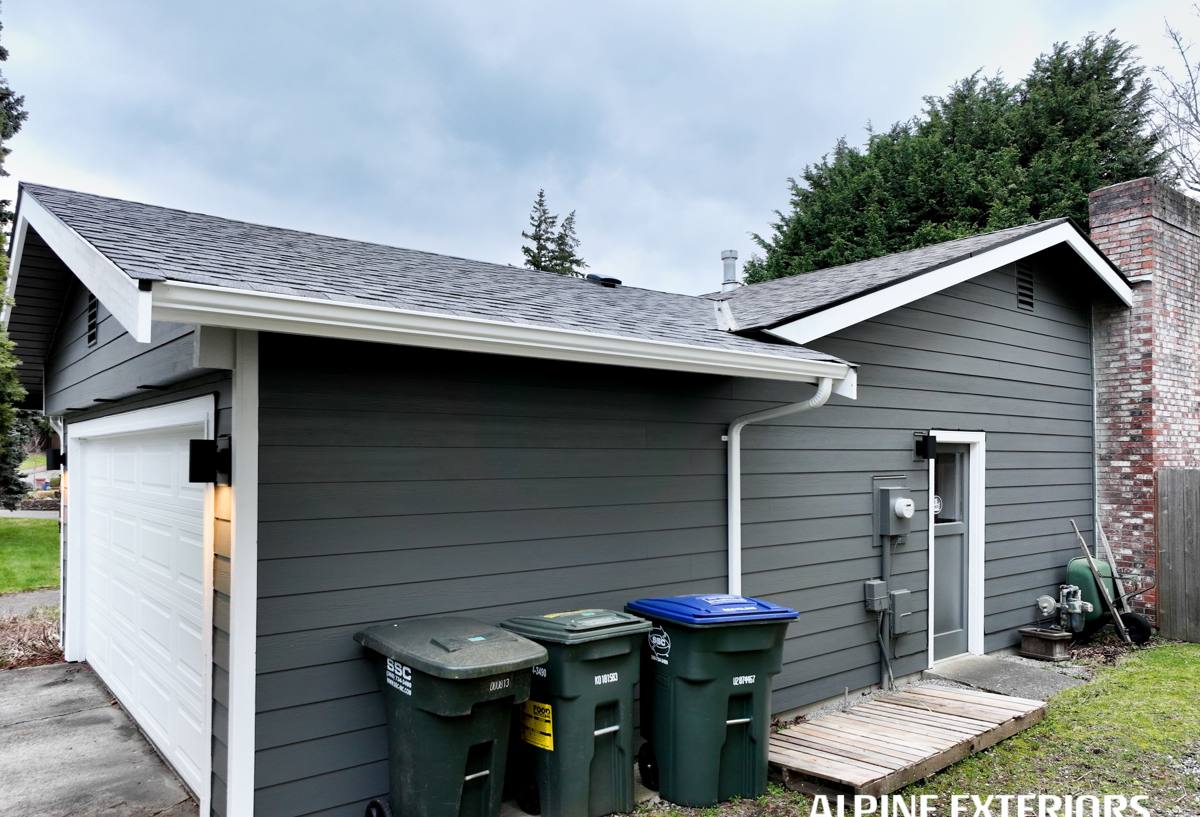
What Bellingham's Climate Actually Does to Siding
Salt Air and Corrosion
Homes within a few miles of the water take on airborne salt that settles on exterior surfaces and accelerates corrosion of fasteners, trim, and any metal components in a siding system. Cheaper or improperly fastened siding systems show this first — streaking, staining, and premature fastener failure around the coastal parts of the county.
Driving Rain and Moisture Intrusion
Storms off the Pacific push rain horizontally, which means water gets tested against every seam, joint, and penetration in your siding — not just the face of the wall. Siding that isn't dimensionally stable, or that wasn't installed with proper flashing and clearances, lets that moisture find a way behind the cladding. Once water gets behind siding in a climate this wet, it rarely dries out fast enough between storms to avoid rot in the sheathing and framing underneath.
Moss, Algae, and the Long Wet Season
Bellingham's wet season runs long, and shaded or north-facing walls stay damp for weeks at a stretch. That's ideal growing conditions for moss and algae, which hold moisture against the siding surface and, over years, degrade paint and finish coatings that weren't built to resist biological growth.
Why We Install Only James Hardie — Not Vinyl, Not Wood, Not LP
We get asked regularly why we don't offer vinyl, LP SmartSide, cedar, or primed spruce alongside Hardie. The honest answer is that in a climate like Bellingham's, those products carry real trade-offs we're not willing to put our name behind:
- Vinyl expands and contracts with temperature swings, can warp or crack in wind-driven rain events, and its seams are a common entry point for moisture over time.
- Wood-based composite siding (like LP SmartSide) uses an engineered wood substrate that, however well-treated, is still wood — and wood-based products are more sensitive to sustained moisture exposure than fiber cement.
- Cedar and primed spruce can look great new, but they require an ongoing maintenance commitment — re-staining or re-painting on a cycle — that most Bellingham homeowners underestimate given how much rain the finish has to survive each year.
James Hardie fiber cement is non-combustible, dimensionally stable across temperature and humidity swings, and doesn't rot, swell, or delaminate the way wood-based products can. It's engineered specifically for climate zones like ours through Hardie's HZ10 product line, which is formulated for the Pacific Northwest's moisture exposure. That's the whole reason we standardized on one product line instead of offering several — we'd rather do one thing right than offer options we know will underperform here.
What "Correct" James Hardie Installation Looks Like
James Hardie siding performs the way it's rated to perform only when it's installed to spec. A huge share of the siding failures we get called out to inspect in Whatcom County aren't product failures — they're installation failures. Correct installation in a climate like Bellingham's includes:
Weather-Resistive Barrier and Drainage Plane
A properly lapped weather-resistive barrier goes on before any siding, and in high-rain areas we build in a drainage gap so bulk water that does get behind the cladding has somewhere to go instead of sitting against the sheathing.
Flashing at Every Penetration
Windows, doors, hose bibs, light fixtures, vents — every penetration through the siding plane is a potential leak point. Flashing has to be installed and lapped correctly, not just caulked, because caulk is a maintenance item, not a permanent seal.
Fastener Placement and Clearances
Hardie specifies exact nailing patterns, fastener types, and minimum clearances from grade, roofing, and other transitions. Fasteners that are overdriven, underdriven, or placed too close to panel edges compromise the whole system, even though the panel itself is correctly rated for the climate.
Caulking and Sealant at Joints
Butt joints and trim transitions need the right sealant, applied correctly, to shed driving rain without trapping moisture behind the joint.
Painting and ColorPlus Finish Handling
If you go with factory-applied ColorPlus finish, field cuts need to be sealed with Hardie's touch-up products to maintain the warranty and the moisture resistance at cut edges — a step that's easy to skip and hard to catch after the fact.
Comparing Siding Options for a Bellingham Home
| Factor | James Hardie Fiber Cement | Vinyl | Wood / Wood Composite |
|---|---|---|---|
| Salt air resistance | Strong — non-metallic, engineered for coastal exposure | Moderate — fasteners and trim can corrode | Weak to moderate — finish degrades faster near salt air |
| Driving rain performance | Strong when installed to spec, dimensionally stable | Moderate — seams and warping are risk points | Weak — moisture-sensitive substrate |
| Moss/algae resistance | Good — factory finish resists biological growth | Moderate — surface can host growth in shaded areas | Weak — organic material, needs regular treatment |
| Maintenance cycle | Repaint/recaulk only, ColorPlus can run 15+ years before repaint | Low, but limited repair options when damaged | Re-stain/re-paint every few years |
| Fire resistance | Non-combustible | Combustible, can melt/warp near heat | Combustible |
Our Process for a Bellingham James Hardie Job
- On-site assessment — we walk the exterior, check existing siding and sheathing condition, note moisture-prone areas (shaded walls, roof/wall intersections, grade clearance issues) common in Bellingham's layout of homes near tree cover and water.
- Removal and sheathing inspection — old siding comes off and we inspect the sheathing underneath for rot or existing moisture damage before anything new goes on. This step matters more here than in drier climates, since hidden water damage is common under aging siding.
- Weather barrier and drainage plane installation — house wrap or building paper, lapped correctly, with a drainage gap where conditions call for it.
- Flashing at all penetrations — windows, doors, and any wall penetrations get flashed before siding installation begins.
- Hardie panel/plank installation — installed to Hardie's fastening and clearance specifications, factory-caulked joints treated correctly, cut edges sealed.
- Final inspection and cleanup — we walk the finished job checking fastener lines, caulk joints, and trim details before we consider it done.
Choosing the Right Hardie Product Line and Finish
James Hardie makes several plank and panel profiles, and the right one depends on your home's architecture and how much of the coastal exposure it takes on directly. Lap siding is the most common choice for traditional Bellingham home styles, while panel systems suit more modern designs. ColorPlus factory finish is worth strong consideration here specifically because it's baked on under controlled conditions and holds color and resists fading and moss staining better than field-applied paint over the long, wet Whatcom County season. We'll walk you through the specific profile and finish options during your estimate rather than guessing at what fits your home sight unseen.
What to Check Before Hiring Anyone for Siding Work in Whatcom County
- Are they a certified or experienced James Hardie installer, not just someone who's "installed it before"?
- Do they carry current liability insurance and Washington contractor licensing?
- Will they show you the flashing and weather-barrier plan before siding goes on, not just talk about the finished look?
- Do they have experience specifically with coastal/marine exposure conditions, not just general siding work?
- Is the warranty they're offering backed by both the manufacturer and their own workmanship guarantee?
Why Local Experience with Bellingham's Conditions Matters
A crew that's worked siding jobs across Whatcom County knows which walls in this area take the worst of the driving rain, where moss builds up fastest, and how salt exposure near the bay changes fastener and flashing choices compared to an inland job. That's not something you get from a general contractor doing their first coastal Washington siding job — it comes from having done this specific work, in this specific climate, repeatedly. We install Hardie exclusively because we've seen what holds up here and what doesn't, and we'd rather build a track record on one product done right than spread that experience thin across five product lines.
If you're considering new siding for a Bellingham home, we're happy to walk the exterior with you, look at what your current siding and sheathing are telling us, and give you a straightforward, no-pressure estimate for a correctly installed James Hardie system. Fill out the form below to get started.