 Whatcom County
 Roof Repair Built for Everson's Weather
Everson sits inland from the coast, but it doesn't escape what makes roofing tough anywhere in Whatcom County: long stretches of rain, heavy moss pressure, and temperature swings that open up small problems before anyone notices them from the ground. A roof here rarely fails all at once. It fails one soft spot, one lifted shingle, one clogged valley at a time, and by the time water shows up on a ceiling, the leak has usually been running for a while.
We do roof repair work across Whatcom County, and Everson is part of our regular route. That matters more than it sounds like it should — a crew that already knows how moss builds up on north-facing slopes in this area, how driving rain finds its way under poorly lapped flashing, and how a long wet season stresses roofs differently than a dry one, is going to diagnose a problem faster and fix it right the first time.
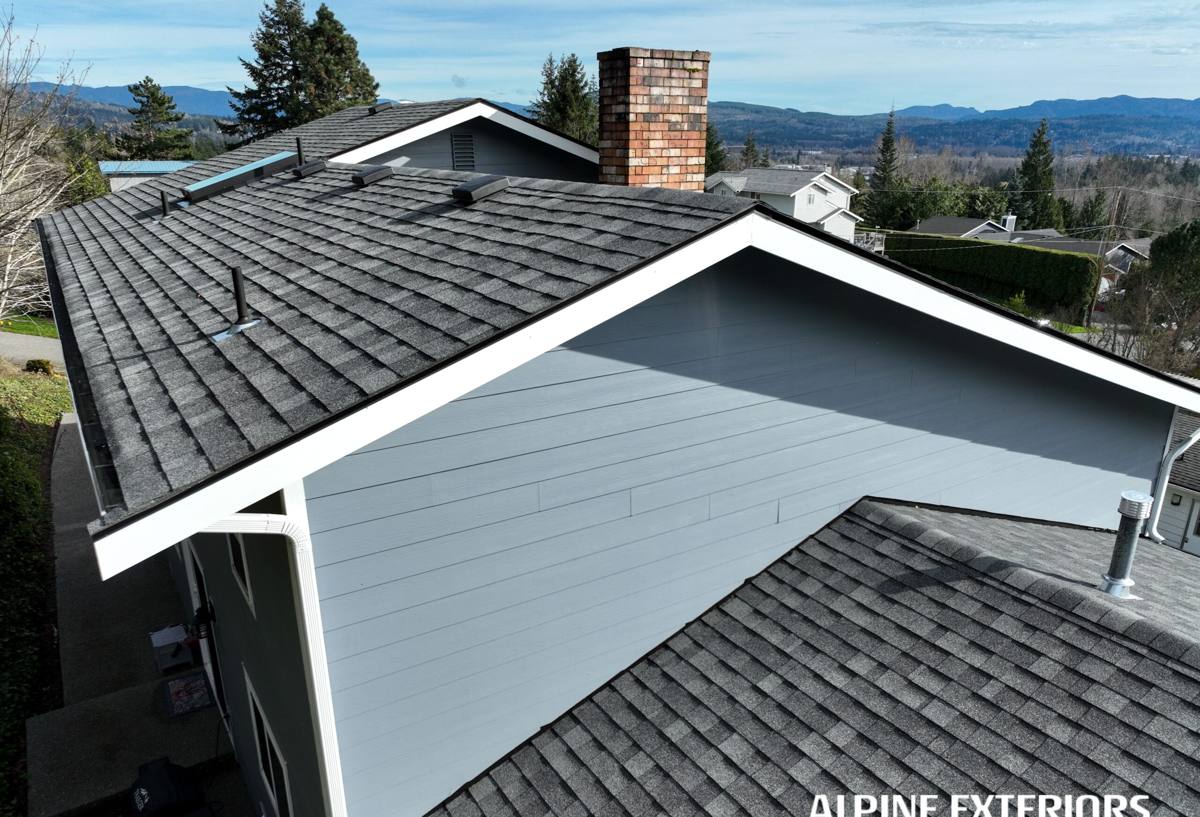
What Whatcom County Weather Does to a Roof
Roof repair isn't generic. The failure patterns we see on Everson roofs are shaped directly by the local climate:
- Moss and organic growth — shaded slopes, tree cover, and a long damp season let moss take hold on shingles, shakes, and even metal roofing. Moss holds moisture against the roofing material and works its way under shingle edges, lifting them over time.
- Driving rain — wind-driven rain doesn't just fall straight down; it pushes sideways under flashing, up under shingle tabs, and into any gap that a calm-weather roof might tolerate. Poorly sealed penetrations (vents, chimneys, skylights) are where this shows up first.
- Salt air influence — even away from the immediate shoreline, salt-laden air moving through the county accelerates corrosion on exposed fasteners, flashing, and metal roofing components. Galvanized nails and unprotected metal edges rust faster here than in a dry inland climate.
- Freeze-thaw cycling — Whatcom County winters aren't extreme, but they're not stable either. Repeated freezing and thawing of trapped moisture in a compromised roof deck or underlayment widens small cracks and loosens fastener holds.
None of this means a roof is doomed — it means repairs have to account for moisture, not just patch what's visible on the surface.
Common Roof Repair Needs We See in Everson
Moss and Debris Removal with Damage Assessment
Moss removal alone isn't a repair — it's a starting point. Once moss and accumulated debris are cleared, we can actually see the condition of the shingles or shakes underneath: whether they're just stained, or whether the moss has been lifting edges and letting water underneath for months or years. Treating the surface without checking underneath just hides the problem for another season.
Flashing Repair and Replacement
Flashing around chimneys, skylights, vent pipes, and roof-to-wall transitions is the single most common point of failure we find. It's a small amount of material doing a disproportionate amount of work, and in a climate with sustained wind-driven rain, flashing that's slightly undersized, poorly lapped, or corroded will leak long before the field of the roof does.
Shingle and Shake Repair
Wind lift, impact damage, and age all show up as missing, cracked, or curling shingles. Isolated damage can usually be repaired without a full roof replacement — but the repair has to match the existing material's exposure and fastening pattern, or the patched area becomes its own weak point.
Valley and Gutter-Line Repair
Valleys carry a huge volume of water during heavy Whatcom County rain events. Debris buildup, worn valley metal, or ice-damaged edges here can send water sideways under adjacent shingles rather than down and off the roof. Gutter-line and drip-edge issues often get blamed for "roof leaks" that are actually water being pushed back up under the eaves.
Deck and Sheathing Repair
When a leak has been running long enough, the plywood or board sheathing underneath the roofing material starts to soften. This is the point where a simple patch stops being enough — soft decking needs to be cut out and replaced before new roofing goes down over it, or the repair won't hold.
Signs an Everson Roof Needs Attention
| What You Notice | Likely Cause | Urgency |
|---|---|---|
| Dark streaks or green growth on shingles | Moss/algae holding moisture against roofing | Moderate — treat before it lifts edges |
| Water stains on ceiling or attic sheathing | Active leak, often at flashing or a valley | High — inspect promptly |
| Granules collecting in gutters | Shingle wear from age or weather exposure | Moderate — depends on shingle age |
| Lifted or missing shingles after a windstorm | Wind damage, weakened fastening | High — exposed decking risks fast water intrusion |
| Rusty streaks near vents or chimney flashing | Corroding metal flashing or fasteners | Moderate to high — corrosion accelerates leaks |
| Sagging in a roof plane | Possible sheathing or structural moisture damage | High — needs inspection soon |
Our Roof Repair Process
We approach roof repair as a diagnosis-first job, not a patch-and-go visit:
- Inspection. We look at the whole roof system — shingles or shakes, flashing, valleys, penetrations, and where visible, the attic side — not just the spot where a leak showed up inside.
- Honest scope. We tell you what's actually needed: a targeted repair, a larger section replacement, or in some cases an honest conversation about whether repair still makes sense versus planning for replacement down the road.
- Repair matched to material. Whatever the existing roofing is, the repair is done with compatible materials and fastening methods so the patched section performs and weathers the same as the rest of the roof.
- Flashing and moisture details first. We don't just replace what's visibly broken — we check the flashing and underlayment tied to that area, since that's usually where the real vulnerability is.
- Cleanup and check. Debris and old material removed, work area cleaned, and a final look to confirm the repair is watertight before we call it done.
Repair or Replace? A Straight Answer
Not every roof problem in Everson needs a full replacement, and we're not going to sell you one you don't need. Repair generally makes sense when:
- Damage is isolated to one area — a section of shingles, one flashing detail, one valley
- The roofing material is still within a reasonable portion of its expected lifespan
- The decking underneath is sound once the damaged area is opened up
Replacement becomes the more honest recommendation when:
- Multiple areas are failing independently — a sign of age-related wear across the whole roof, not one bad spot
- Moss and moisture damage have spread widely enough that patching one area just shifts the problem
- Sheathing damage is extensive rather than localized
We'll tell you which situation you're in and why, with real reasoning you can check for yourself — not a pressure pitch.
Why Local Experience Matters for This Job
A roof repair crew that mostly works dry-climate jobs will treat a Whatcom County roof the same way they'd treat one in a place with a short rainy season — and that's how repairs come back a year later. Understanding how moss actually behaves through a full Pacific Northwest wet season, how salt air affects fastener and flashing longevity here versus further inland, and how driving rain finds the gaps a calmer climate wouldn't expose, changes what "done right" looks like on the roof itself. Working in Everson and the surrounding Whatcom County communities regularly is what keeps that knowledge current instead of theoretical.
Roof Repair Maintenance Checklist
Between full inspections, these habits catch problems in Everson's climate before they become expensive:
- Clear moss and debris from shaded roof areas at least once a year, more often under heavy tree cover
- Keep gutters and valleys free of needles, leaves, and moss clumps so water has a clear path off the roof
- Look for granule buildup in gutters after storms — a sign of accelerating shingle wear
- Check attic spaces for damp insulation, staining, or daylight showing through the deck
- Have flashing around chimneys, skylights, and vents inspected every couple of years, since it fails quietly
- After any significant windstorm, do a visual check from the ground for lifted or missing shingles
Get a Free Roof Repair Estimate in Everson
If you're seeing signs of a roof problem — or just want an honest read on where your roof stands before the wet season sets in — we're glad to take a look. We'll give you a straightforward assessment, a clear explanation of what's going on, and a repair plan sized to what your roof actually needs. Reach out for a free, no-pressure estimate using the form below.