 Whatcom County
Asphalt Shingle Roofing Built for Lynden's Climate
Lynden sits inland from the coast but still gets the full package of Whatcom County weather: long stretches of driving rain off the Pacific, salt-tinged air carried up the valley, and a wet season that stretches from fall through spring. Add in the shade from mature trees on many established lots, and you get near-perfect conditions for moss, algae, and slow moisture damage to take hold on a roof that isn't built or maintained correctly. Asphalt shingle roofing remains one of the most practical, cost-effective options for homes in this area, but only when it's installed with this specific climate in mind, not a generic install pulled from a warmer, drier region.
We work on homes throughout Whatcom County, and Lynden roofs see a particular combination of stress: heavy seasonal rainfall, humidity that never really lets up in winter, and moss growth that can start within a year or two of a poor installation. A shingle roof that's done right in this environment can last decades. One that's done wrong shows problems fast — curling edges, granule loss, and soft spots around valleys and penetrations within the first five to seven years.
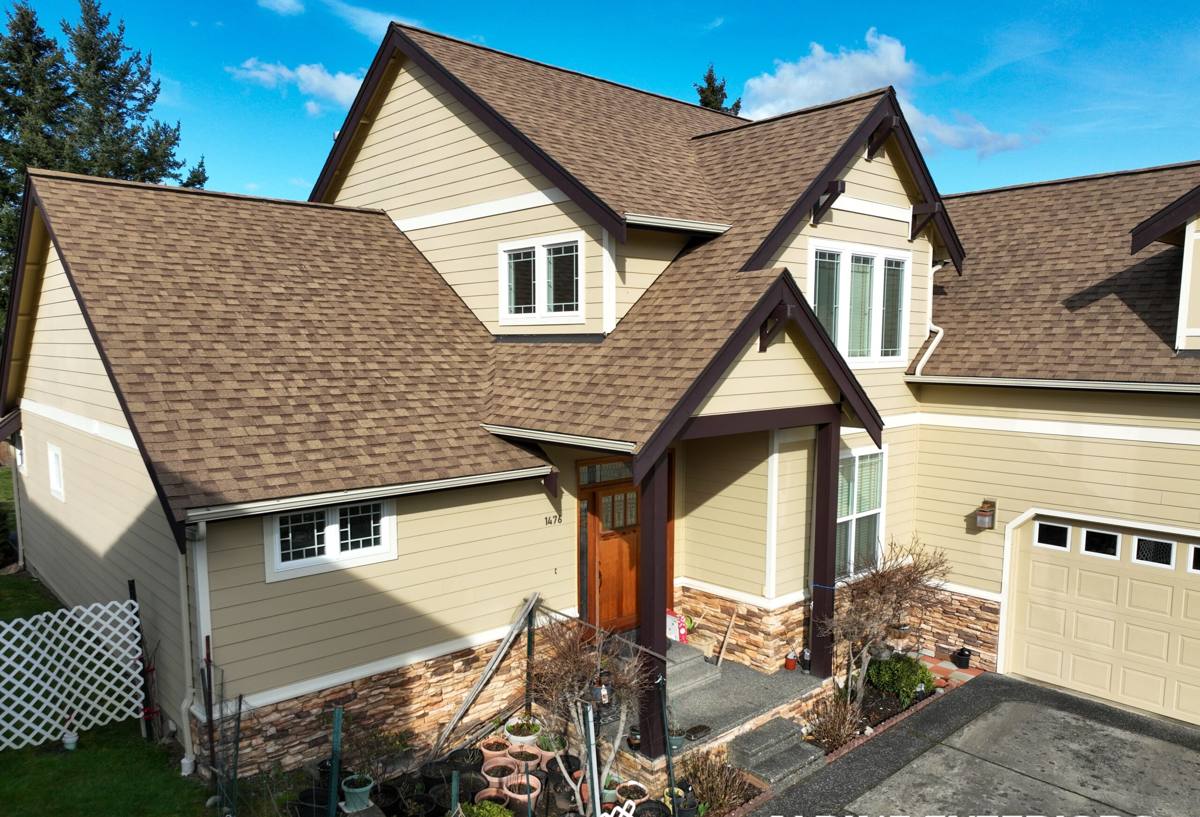
What Local Homes Actually Need From a Shingle Roof
Homeowners often assume asphalt shingle roofing is simple: pick a color, nail it down, done. In Whatcom County's wet climate, the details matter far more than the shingle brand. A correct installation here has to account for a few things a dry-climate roof never has to worry about.
Moisture Management First
Underlayment quality, proper overlap, and correct nailing patterns determine whether water actually sheds off the roof or finds a way underneath the shingles during a sideways rainstorm. Driving rain off Bellingham Bay and the Salish Sea doesn't always fall straight down — it can push under improperly lapped shingles, especially at eaves and rakes.
Moss and Algae Resistance
Lynden's tree cover and consistent moisture create ideal conditions for moss to establish on north-facing slopes and shaded valleys. Moss holds water against the shingle surface, which accelerates granule loss and can lift shingle edges over time, giving wind and rain an entry point.
Ventilation That Matches the Climate
A roof deck that can't breathe traps moisture from the inside out. In a climate with cool, damp winters, poor attic ventilation leads to condensation, which rots decking and shortens shingle life from underneath — a failure mode that has nothing to do with the shingles themselves and everything to do with how the roof system was designed.
What a Correct Asphalt Shingle Roofing Job Involves
A proper roof isn't just shingles nailed to plywood. Here's what we consider non-negotiable on every job in this region:
- Full tear-off and deck inspection — never layering new shingles over old, which traps moisture and hides deck rot
- Ice-and-water shield or high-quality synthetic underlayment at eaves, valleys, and penetrations, where driving rain is most likely to intrude
- Proper starter strip and drip edge at eaves and rakes to stop wind-driven rain from working backward under the first course
- Correct nailing pattern and nail placement — high-nailing is a common shortcut that voids manufacturer warranties and loosens shingles in wind
- Balanced intake and exhaust ventilation sized to the attic, not a single ridge vent installed out of habit
- Properly flashed valleys, chimneys, skylights, and wall intersections — the majority of leaks we find on older Lynden roofs trace back to flashing, not the shingle field
- Algae-resistant (AR) shingle lines where moss and staining are a known issue on the property or neighboring roofs
Repair, Maintenance, or Full Replacement?
Not every roof problem in Lynden means a full tear-off. We assess each roof honestly and tell homeowners what actually needs to happen, not what's easiest to sell.
| Situation | Likely Fix | Why |
|---|---|---|
| Isolated moss patches, roof under 10-12 years old | Cleaning and treatment, spot repair | Shingles underneath are often still sound once moss and debris are cleared |
| Granule loss concentrated on south/west slopes | Monitor, plan for replacement in coming years | Sun and weathering wear faster on exposed slopes; early sign of aging shingles |
| Soft decking, sagging valleys, or interior water stains | Full replacement, deck repair likely needed | Water has already reached the structure; patching won't stop ongoing decay |
| Roof is 20+ years old with widespread curling | Full replacement | Shingles at end of service life lose their ability to seal and shed water |
| Single leak, otherwise sound roof | Targeted flashing or shingle repair | Most single leaks trace to flashing or a localized shingle failure, not the whole roof |
Our Process on Lynden Roofing Projects
1. On-Site Inspection
We walk the roof (or inspect from the ground and attic when the roof isn't safely walkable) to check shingle condition, flashing, ventilation, and any signs of moisture intrusion at the deck level. We also look at tree coverage and drainage patterns around the home, since both affect long-term moss and debris buildup.
2. Honest Assessment and Written Estimate
You get a clear explanation of what we found, what your options are, and a written estimate before any work begins. If a repair will genuinely hold for several more years, we'll say so instead of pushing a full replacement.
3. Tear-Off and Deck Prep
Old roofing comes off completely so we can inspect the deck itself. Any soft or rotted plywood gets replaced before new underlayment goes down — installing new shingles over a compromised deck just hides the problem.
4. Underlayment, Flashing, and Shingle Installation
We install underlayment and flashing sized for this climate's rain volume, then lay shingles per manufacturer specification for nailing pattern and exposure. Valleys, chimneys, and skylights get extra attention since they're the most common leak points on the roofs we service.
5. Ventilation Check and Final Walkthrough
We confirm intake and exhaust ventilation are balanced, clean up the site thoroughly, and walk the finished roof with you so you know exactly what was done and what to watch for going forward.
Cost Factors for Shingle Roofing in Whatcom County
Every roof is different, and we won't quote a number without seeing the property, but a few factors consistently move the price on Lynden jobs:
| Factor | Impact on Cost |
|---|---|
| Roof pitch and accessibility | Steeper or harder-to-access roofs require more labor and safety setup |
| Number of layers to remove | Tear-off of multiple existing layers adds labor and disposal cost |
| Deck condition | Rotted or soft plywood found during tear-off requires repair before shingles go down |
| Roof complexity | Valleys, dormers, chimneys, and skylights each add flashing work and time |
| Shingle grade selected | Standard three-tab, architectural, and premium AR shingles carry different material costs |
| Ventilation upgrades needed | Adding or correcting intake/exhaust vents affects labor and materials |
We'd rather walk a homeowner through these factors in person than throw out a ballpark number that doesn't hold up once we're actually on the roof.
Maintenance That Extends Roof Life in This Climate
A well-installed shingle roof in Lynden can go decades with minimal issues, but a little seasonal attention goes a long way given the amount of moisture and organic debris this area sees.
- Clear gutters and downspouts before the fall rains start — clogged gutters back water up under the roof edge
- Remove overhanging branches and leaf litter that hold moisture against the roof surface
- Have moss treated early, before it spreads and lifts shingle edges
- Check attic ventilation annually, especially before winter, since condensation issues show up fastest in cold, damp months
- Schedule a professional inspection after any major windstorm to catch lifted or damaged shingles before the next rain event
Why Hiring a Crew That Already Works in Lynden Matters
Roofing crews who mostly work drier, milder climates tend to install to a generic standard — adequate for their home region, but not built for the volume of rain and moss pressure Whatcom County sees year after year. A crew that regularly works Lynden and the surrounding communities already knows which shingle lines hold up against local moss growth, how much ventilation a typical attic here actually needs, and which flashing details fail first when driving rain hits from the wrong direction. That local knowledge shows up in fewer callbacks and a roof that performs the way it's supposed to for its full expected lifespan, not just the first few dry summers.
We also know the practical side of working in this area — permitting expectations, typical roof pitches and styles found on Lynden homes, and how to schedule around the wetter months so work isn't rushed between rain windows in a way that compromises the install.
Get a Free, No-Pressure Estimate
If your roof is showing moss, granule loss, or you're just not sure how much life it has left, we're happy to take a look and give you a straight answer. Fill out the form below to schedule a free estimate for your Lynden home — no pressure, no upsell, just an honest assessment of what your roof actually needs.