 Whatcom County
Board & Batten Siding Built for Barkley's Climate, Not Just Its Look
Barkley is one of the more visible planned neighborhoods in the Bellingham area, and board & batten siding shows up often here because of the clean, vertical lines it gives to both traditional and modern home designs. It's a strong choice architecturally. But Barkley sits close enough to Bellingham Bay, and within the same weather pattern as the rest of Whatcom County, that the siding on these homes takes on more moisture stress over a year than the style alone would suggest. Board & batten isn't a "set it and forget it" siding profile. Done right, it holds up beautifully in this climate. Done wrong — or installed with a product that wasn't built for it — it becomes one of the higher-maintenance choices a homeowner can make.
This page covers what board & batten siding actually needs to succeed in Barkley specifically: the climate stress it's under, what correct installation looks like, why we install it exclusively in James Hardie fiber cement, and what our process looks like from first estimate to final walkthrough.
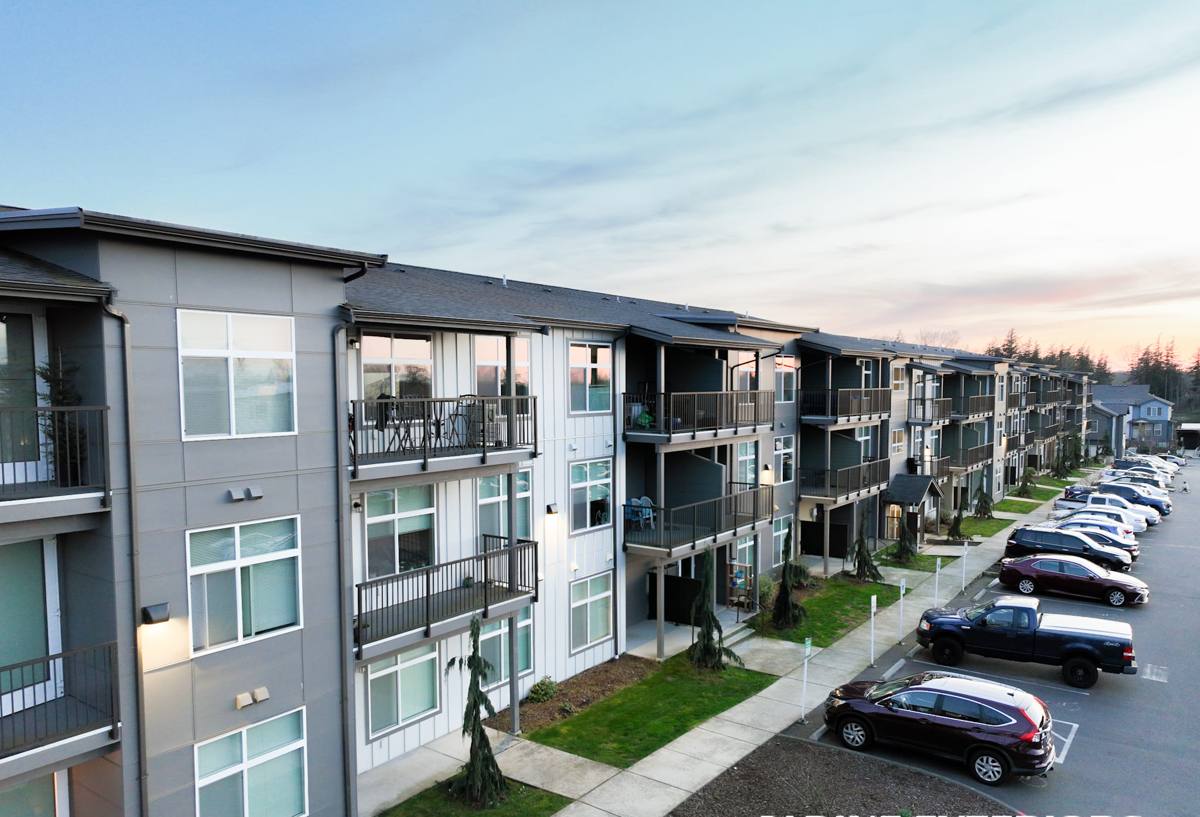
What Salt Air, Driving Rain, and Moss Season Do to Board & Batten Siding
Board & batten relies on vertical boards with raised battens covering the seams. That profile is more exposed to certain failure modes than horizontal lap siding, and Whatcom County's climate makes those failure modes more likely if the installation or the material isn't right for the job.
Salt Air
Homes in and around Bellingham, including Barkley, get some exposure to salt-laden air off the Bay, even at a distance inland. Salt air accelerates corrosion on exposed fasteners and metal flashing, and it degrades lower-grade paint finishes faster than an inland climate would. Board & batten has more vertical seams and more exposed fastener lines than lap siding, which means more places for that corrosion to start if the wrong fasteners or an unsealed finish were used.
Driving Rain
Wind-driven rain off the Sound and Bay pushes water sideways into siding, not just straight down. Vertical board & batten seams, if not detailed correctly at the battens and the flashing, give wind-driven rain a more direct path behind the cladding than a well-lapped horizontal profile does. Once water gets behind board & batten and can't drain or dry out, it's usually the sheathing and framing underneath that suffer first — long before the siding itself shows visible damage.
Moss and Prolonged Dampness
Whatcom County's moss season runs long — many months of the year stay damp enough that moss, algae, and mildew get a real foothold on any siding surface that holds moisture or sits in shade. Board & batten's vertical battens create horizontal ledges and shadow lines that can trap organic growth if the finish isn't dense and factory-sealed. Over years, that constant damp exposure is what breaks down lower-quality substrates, even when the siding "looks fine" from the curb.
Why We Install Only James Hardie Board & Batten
We don't install vinyl board & batten, LP SmartSide, Cemplank, Allura, primed spruce, or cedar board & batten — on any home, Barkley included. That's a deliberate standard, not a sales pitch, and it's worth explaining honestly.
- Vinyl board & batten can look the part from the street, but it flexes, expands and contracts with temperature swings, and its seams and fastening system aren't built to resist the kind of wind-driven rain intrusion this region sees over decades.
- LP SmartSide and other engineered wood products perform well in many climates, but they're wood-based, which means their long-term durability depends heavily on unbroken paint film and perfect field cuts staying sealed — a hard standard to guarantee in a climate this consistently damp.
- Cedar and primed spruce board & batten are beautiful, traditional choices, but real wood requires ongoing refinishing, and in a long moss season it's fighting moisture and organic growth every year of its life.
- Other fiber cement brands (Cemplank, Allura) are legitimate fiber cement products, but we've standardized on one manufacturer so our crews install one system to one spec, every time, with one warranty structure to stand behind.
James Hardie fiber cement is non-combustible, dimensionally stable, and comes with a factory-applied ColorPlus finish that's baked on rather than field-painted — which matters directly for the salt air and moss concerns above, since the finish is what keeps water and organic growth from ever reaching the substrate. Hardie also engineers its siding by climate zone (HZ5 for our region), so the product specified for Whatcom County is built for exactly this rain and moisture load, not a generic national spec.
What a Correct Board & Batten Installation Actually Involves
The siding material is only half the equation. Board & batten fails or succeeds based on details most homeowners never see once the job is done.
Rainscreen and Furring
Board & batten should be installed over a drainage gap — typically vertical furring strips — that lets any water that does get behind the boards drain out and lets the wall assembly dry. Installing board & batten flat against the weather-resistive barrier with no gap is a common shortcut that traps moisture exactly where you don't want it, especially in a climate as consistently wet as this one.
Fastening
Fasteners need to be corrosion-resistant (stainless or hot-dip galvanized, per manufacturer spec) and driven at the correct depth and spacing — not overdriven, which crushes the fiber cement and opens a path for water at the fastener head. Given the salt air exposure in the Barkley area, this is not a place to use whatever fastener happens to be on the truck.
Flashing and Joints
Every horizontal joint, window head, door head, and roofline intersection needs proper flashing and correct shingle-lap sequencing so water is always directed out and down, never into the wall. Batten spacing and butt joints need to follow manufacturer clearance specs so the boards can move seasonally without cracking the caulk line or the finish.
Sealant and Gaps
Board & batten needs the right clearance at the foundation, roofline, and trim — gaps that are too tight trap water; gaps that are too wide invite pests and wind-driven rain. Manufacturer-rated sealant, applied only where specified, is what keeps those transitions weathertight for the long run.
Board & Batten Siding Options: A Straight Comparison
| Material | Moisture Performance in This Climate | Maintenance Over 15+ Years | Finish Durability |
|---|---|---|---|
| James Hardie Fiber Cement | Engineered for HZ5 rain exposure; non-combustible | Occasional wash; no refinishing on ColorPlus | Factory-baked finish, long warranty |
| Vinyl | Seams and panels can allow water intrusion behind cladding | Low labor, but cracks/fades and can't be refinished cleanly | Fades with UV; brittle in cold |
| LP SmartSide / Engineered Wood | Performs if finish stays intact; vulnerable at cut edges | Requires vigilant caulk/paint upkeep | Depends entirely on unbroken paint film |
| Cedar / Primed Spruce | Absorbs moisture; prone to moss and rot in shaded, damp areas | Refinishing every few years | Natural wood, highest upkeep |
Our Process for Barkley Board & Batten Projects
- On-site assessment: we look at your home's actual exposure — shade, prevailing wind direction, roofline drainage, and any current moisture or moss issues — not just square footage.
- Product and layout plan: we spec the correct Hardie board width, batten spacing, and HZ5 product for your home's design and exposure.
- Tear-off and inspection: removing the old siding lets us actually see the sheathing and framing underneath and catch any hidden moisture damage before it's covered up again.
- Rainscreen, flashing, and install: furring strips, correct flashing at every penetration, and fastening to manufacturer spec — the details that determine whether this lasts 10 years or 40.
- Final walkthrough: we go over the finished work with you directly, including care and warranty registration.
Why a Crew That Already Works Barkley Matters
Barkley's homes share a lot of common ground — similar builds, similar exposure patterns, and the same weather moving in off the Bay. A crew that's worked in this specific neighborhood already knows which elevations tend to hold moisture longest, where moss shows up first, and how the local wind and rain patterns actually behave against a wall — not just what a general Pacific Northwest spec sheet says. That local pattern recognition is what turns a technically correct install into one that's actually tuned to your home's real conditions.
It also means faster response if you ever need a warranty check or a question answered — we're not driving in from another county to look at a batten seam.
Simple Checklist Before You Hire Anyone for Board & Batten
- Do they install over a proper rainscreen/furring gap, or flat against the wall?
- What fastener type do they use, and is it corrosion-rated for this climate?
- Is the product factory-finished (like ColorPlus) or field-painted on site?
- Do they tear off old siding and inspect sheathing, or install over existing cladding?
- Can they explain their flashing detail at windows, doors, and rooflines without hesitating?
- What does the warranty actually cover, and is it transferable if you sell the home?
What This Costs to Think About Honestly
Board & batten pricing depends on your home's size, current siding condition, number of stories, and how much trim and detail work is involved — there's no honest flat number without seeing the home. What we can tell you is that the real cost difference between a correct install and a shortcut install isn't visible on day one. It shows up five, ten, or fifteen years later in trapped moisture, failed fasteners, or a finish that needed repainting far sooner than it should have. Paying for the rainscreen gap, the correct fasteners, and a factory-sealed finish up front is what avoids that second, much larger bill down the road.
If you're considering board & batten siding for a home in Barkley or elsewhere in Whatcom County, we're happy to come take a look and give you a straight, no-pressure estimate — just fill out the form below.