 Whatcom County
 Why Decks in Barkley Wear Out Faster Than Homeowners Expect
A deck in Barkley works harder than a deck almost anywhere inland. Whatcom County's marine climate means moisture isn't an occasional problem — it's a constant. Salt-tinged air off the water accelerates corrosion on fasteners and hardware, driving rain gets pushed sideways into joints and ledger connections that were never meant to handle standing water, and a moss season that can run from early fall well into spring keeps wood and composite surfaces damp for months at a stretch. None of this means a deck is doomed. It means a deck built or repaired without that climate in mind will fail years before it should.
We work on decks throughout Whatcom County, and the pattern in Barkley is consistent: the damage almost never starts where homeowners notice it first. By the time a board feels soft underfoot or a railing wiggles, the real problem — usually moisture trapped somewhere it shouldn't be — has often been active for a season or two already.
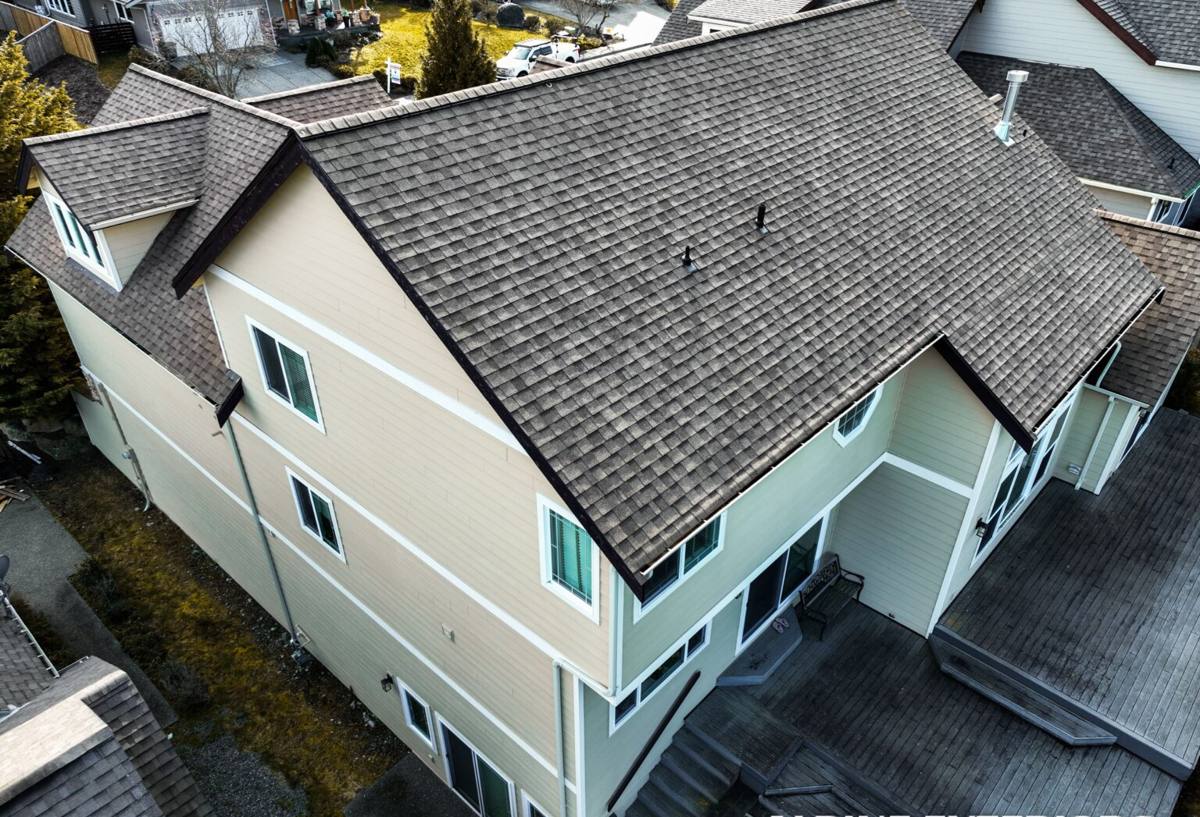
Common Deck Problems We See in Barkley
Rot at the Ledger Board and Framing
The ledger board — where the deck attaches to the house — is the single most common failure point we find. If the flashing behind it was installed poorly, or wasn't installed at all, water works its way behind the board and into the rim joist. This is a structural issue, not a cosmetic one, and it's usually invisible until you pull back decking or siding to look.
Corroded Fasteners and Hardware
Nails, screws, and joist hangers that aren't rated for coastal-adjacent, high-moisture conditions rust faster here than they would in a drier climate. Rust stains bleeding through decking boards are usually the first visible sign — but by the time you see staining, the fastener has often already lost meaningful holding strength.
Moss, Algae, and Slippery Surfaces
A long moss season means anything shaded or slow to dry — under railings, near the house, in corners with poor airflow — grows a film of moss or algae that holds moisture against the wood and turns the deck surface slick and dangerous in wet weather.
Failing or Discolored Decking Boards
Cupping, splitting, and graying on wood decking, along with fading or surface delamination on some composite products, are usually a sign that the boards have been sitting wet longer than they were designed to.
What a Proper Deck Repair Actually Involves
A correct repair starts with figuring out how far the damage actually goes, not just patching what's visible. That means:
- A structural check of ledger board, rim joist, beams, and posts — not just the decking surface
- Probing suspect wood with an awl or moisture meter rather than guessing from appearance
- Checking flashing at the house connection, since this is where most water intrusion originates
- Inspecting joist hangers and fasteners for rust and loss of holding strength
- Confirming railings and stair connections still meet basic structural and code expectations
- Looking at drainage and airflow underneath the deck, since poor ventilation keeps framing wet longer after every rain
Repairs that skip the structural check and only replace the boards you can see tend to look fine for a season or two, then reveal the same underlying rot in a new spot. We treat the framing and connections as the actual job and the decking as the visible finish on top of it.
Repair or Replace? How We Help You Decide
Not every deck problem calls for a full rebuild, and not every deck is worth patching indefinitely. The honest answer usually comes down to a handful of factors:
| Factor | Leans Toward Repair | Leans Toward Replacement |
|---|---|---|
| Structural framing (ledger, joists, posts) | Sound, isolated soft spots | Widespread rot or repeated failures |
| Age of the deck | Under 10-15 years, built to a reasonable standard | Original construction is old or undersized for current code |
| Fasteners and hardware | Localized rust, easily swapped | Hardware failing throughout, hangers no longer gripping |
| Decking surface | A few boards cupped, split, or stained | Most boards showing wear at the same time |
| Railings and stairs | Tighten, reinforce, or replace individual sections | Structurally loose or below current safety expectations |
We'll walk you through where your deck actually falls on this spectrum rather than defaulting to whichever option costs more. A well-targeted repair on sound framing can add years of service life for a fraction of replacement cost. A deck with compromised framing usually isn't worth repairing piecemeal — you'd be paying to patch a problem that will keep resurfacing.
Our Deck Repair Process in Barkley
1. On-Site Inspection
We look at the whole system — framing, connections, hardware, and surface — not just the spot you called about. We'll point out anything else we find, even if it's outside the original scope.
2. Moisture and Damage Assessment
Where rot is suspected, we probe the wood directly rather than estimating from the surface. This tells us whether we're dealing with a board-level fix or something that reaches into the framing.
3. A Clear, Written Scope
You get a plain-language explanation of what's damaged, why, and what it takes to fix it correctly — including whether the fix is structural, cosmetic, or both.
4. The Repair Itself
We replace damaged framing and decking, upgrade fasteners and flashing where the originals were inadequate for this climate, and correct drainage or ventilation issues so the same failure doesn't happen again in the same spot.
5. Cleanup and Walkthrough
We clear debris and walk the finished repair with you so you know exactly what was done and what, if anything, to keep an eye on going forward.
Materials and Hardware Standards We Hold To
In a climate like Whatcom County's, the fasteners and flashing matter as much as the lumber. Standard interior-grade hardware corrodes quickly once it's exposed to salt-tinged, damp air year-round, so we use hot-dip galvanized or stainless fasteners and hangers rated for exterior, moisture-heavy conditions rather than whatever is cheapest off the shelf. Flashing at the ledger connection gets treated as non-negotiable — it's the single most common source of hidden rot, and cutting a corner there just delays the next repair call.
On decking material itself, both quality pressure-treated wood and composite boards have a place, and the right choice depends on your budget, how the deck is used, and how much maintenance you want to do. Wood costs less up front but needs regular sealing or staining to hold up through a long wet season. Composite costs more initially but handles moisture with less upkeep, provided it's installed with proper spacing and airflow underneath — composite installed tight against a damp substrate can trap moisture just as easily as wood. We'll talk through the tradeoffs honestly rather than pushing whichever product has the better margin.
Keeping Your Repaired Deck in Good Shape
A good repair buys you years, but a little seasonal attention buys you more. Between visits, this is worth doing yourself:
- Sweep leaves and debris out of corners and against the house before they trap moisture
- Rinse off moss and algae buildup as soon as you notice it, rather than waiting until it's established
- Check that gaps between boards are still clear so water can drain instead of pooling
- Look underneath once or twice a year for standing water, soft framing, or new rust staining
- Re-seal or re-stain wood decking on the schedule the product calls for — this matters more here than in a drier climate
- Tighten or flag any wobbly railings or stair treads before they become a safety issue
Why a Crew That Already Works Barkley Matters
Deck repair isn't generic carpentry — the right fix depends on understanding how a specific climate attacks a specific structure over time. A crew that works regularly in Whatcom County already knows which fastener grades hold up here, where ledger flashing tends to fail in this kind of weather, and how long moss and moisture exposure actually run in a given year versus a drier region's assumptions. That local pattern recognition is what separates a repair that lasts from one that looks fine until the next wet season exposes the same weak point.
Since we also do siding work, we pay close attention to how a deck's ledger connection interacts with the house's water management as a whole — a detail that's easy to miss if a deck is treated as an isolated project instead of part of the building envelope.
If you're noticing soft spots, rust stains, persistent moss, or a railing that doesn't feel as solid as it used to, we're happy to take a look. Fill out the form below for a free, no-pressure estimate on your Barkley deck.