 Whatcom County
Why Barkley Homes Need a Different Approach to Windows
Barkley sits inside a stretch of Whatcom County that gets the full package: marine air off the Salish Sea, long stretches of driving rain in the fall and winter, and a moss season that seems to run longer every year. None of that is unusual for this part of Washington, but it does mean windows here work harder than windows in a drier, inland climate. A window that's rated "energy-efficient" on a spec sheet in a showroom still has to prove itself against wind-driven rain hitting a west-facing wall and salt-laden air slowly working on hardware and seals.
When we talk about energy-efficient windows for a Barkley home, we're not just talking about lower heating bills, though that's real. We're talking about a window assembly — frame, glass, flashing, and installation — that keeps moisture out, holds its seal through wet winters, and doesn't demand constant upkeep to stay that way.
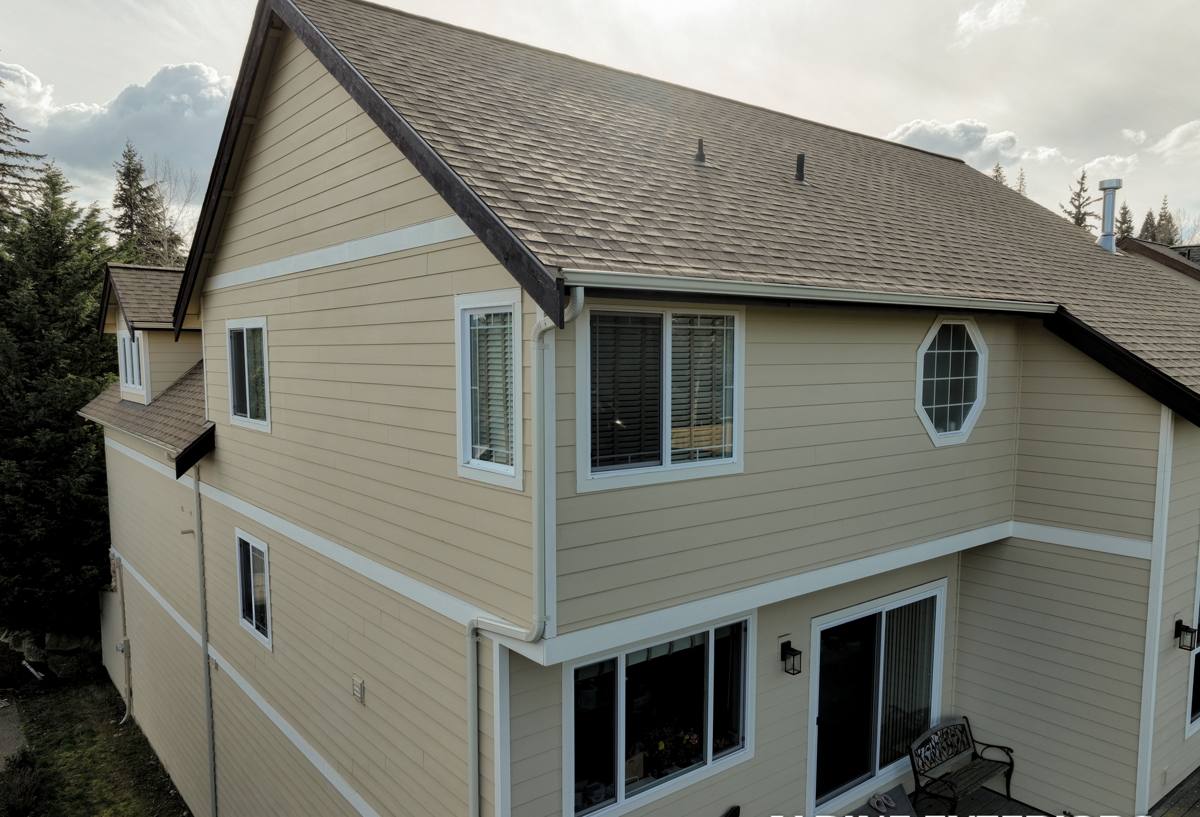
What "Energy-Efficient" Actually Means Here
Manufacturers list a handful of numbers on every window's energy label. In a climate like ours, three of them matter more than the rest:
- U-factor — how well the window resists heat loss. Lower is better. This is the number that most directly affects your winter heating costs.
- Solar Heat Gain Coefficient (SHGC) — how much solar heat passes through the glass. In Whatcom County's mild, often overcast climate, this matters less than it would in a sunnier region, but it still affects comfort in south- and west-facing rooms.
- Air Leakage — how much air passes through the window assembly when it's closed. This one is directly tied to driving rain performance, since a window that leaks air under pressure is also a window that's more likely to let wind-driven rain find a way in.
A window can have an excellent U-factor and still perform poorly on a house near Barkley if the installation doesn't account for wind-driven rain loading on exposed walls. Efficiency on paper and efficiency in the wall are two different things, and the gap between them is almost always in the installation, not the window itself.
Why Installation Matters as Much as the Window
We've replaced windows in Whatcom County homes where the unit itself was a perfectly good product, but the original installer skipped proper flashing integration with the house wrap, or caulked over a gap instead of correcting it. In a drier climate that mistake might go unnoticed for years. Here, with sustained wet seasons, it shows up as staining, soft trim, or a musty smell inside of two or three winters.
Common Problems We See on Barkley Windows
Salt Air and Hardware Fatigue
Homes with any exposure toward the water deal with a slow, steady corrosive effect on window hardware — locks, hinges, and cranks — even at a few miles' distance. Cheaper hardware finishes wear faster and can start to bind or stick well before the glass or frame shows any wear.
Moss and Trapped Moisture
Whatcom County's long moss season isn't just a roof and siding issue. Moss and organic buildup on sills, trim, and the top of window frames hold moisture against wood and painted surfaces far longer than they would in a drier climate, which accelerates rot at exactly the points where a window is most vulnerable — the sill and the lower corners of the frame.
Driving Rain Intrusion
Wind-driven rain doesn't just fall on a window, it pushes against it. Older windows, or newer ones installed without proper sill pans and flashing laps, can pass water at the frame-to-wall joint long before the sash itself ever leaks. This is the single most common failure point we find on service calls in this area.
Frame Materials: What Actually Holds Up Here
There's no single "correct" frame material for every home, but each option behaves differently in a wet, salt-influenced climate. Here's how the common choices compare for Barkley conditions specifically:
| Frame Material | Moisture Behavior | Maintenance | Notes for This Climate |
|---|---|---|---|
| Vinyl | Doesn't rot or corrode; seams can be a weak point if welds are poor | Low | Good value; check weld quality and reinforcement on larger units |
| Fiberglass | Very stable, minimal expansion/contraction, resists moisture well | Low | Strong long-term choice for wet, wind-exposed walls |
| Aluminum-clad wood | Wood core needs the cladding and seals to stay intact | Moderate | Attractive option but sensitive to installation quality near sills |
| Bare wood | Requires diligent finish maintenance to resist moisture | High | We're cautious recommending this on exposed or shaded, moss-prone walls |
We're not going to tell you one material is "bad" — each has a legitimate place. Our professional standard is matching the material to the wall's actual exposure: a north-facing wall under overhanging trees that stays damp most of the year is a different install than a sheltered, sun-exposed wall on the same house.
Glass Packages Worth Considering
Double-pane glass with a low-E coating and argon gas fill is the practical baseline for this region. Triple-pane glass offers a modest additional efficiency gain but adds weight and cost — worth it for a north-facing bedroom wall or a home right along a windy corridor, less necessary on a sheltered, south-facing addition. Warm-edge spacer systems (as opposed to older aluminum spacers) also matter more here than in a dry climate, since they reduce condensation at the edge of the glass, which is where we most often see moisture and mold complaints in older Whatcom County homes.
Our Process for a Barkley Window Job
- On-site assessment — we look at each wall's actual exposure to wind, rain, and moss growth, not just the window opening itself.
- Product recommendation — frame and glass matched to that wall's conditions and your budget, not a one-size answer for the whole house.
- Removal and inspection — once the old window is out, we check the sill, header, and surrounding framing for hidden rot or past water intrusion before anything new goes in.
- Flashing and sill pan installation — this is the step that determines whether the window sheds driving rain for the next twenty years or fails in five.
- Window installation and shimming — set plumb, level, and square, with air sealing done correctly rather than just caulked over.
- Exterior trim and finish — sealed and detailed to shed water away from the frame, not toward it.
- Final walkthrough — operation check on every unit, hardware function, and a look at the interior seal from inside the home.
What Affects the Cost of a Window Project
| Factor | Why It Matters |
|---|---|
| Number of openings | More windows means more material and labor, but often a lower per-unit cost |
| Frame material | Fiberglass and higher-end vinyl typically cost more upfront than basic vinyl |
| Glass package | Triple-pane and specialty coatings add cost over standard double-pane low-E |
| Existing damage | Rotted framing or sills discovered during removal adds repair time |
| Wall exposure and access | Second-story or hard-to-access windows on exposed walls take more time to flash correctly |
| Trim and finish work | Matching existing exterior trim profiles can add labor beyond the window itself |
We give straightforward, itemized estimates so you can see where the money is going, rather than a single lump number that hides what you're actually paying for.
Signs Your Barkley Home's Windows Need Attention
- Condensation forming between the panes (a sign the seal has failed)
- Drafts you can feel near the frame on a windy day
- Soft or discolored trim and sill wood, especially on shaded or moss-prone walls
- Windows that are difficult to open, close, or lock — often a sign of hardware corrosion or frame movement
- Visible moss or organic growth building up on sills or upper trim
- Noticeably higher heating bills without another obvious cause
- Water staining on interior walls or sills after heavy driving rain
Why a Crew That Already Works in Barkley Makes a Difference
A window installer who mostly works drier, inland regions may do fine work in general but won't necessarily build in the extra margin that Whatcom County's driving rain and moss season demand — the sill pan detail, the flashing lap sequence, the hardware finish choice. A crew that regularly works homes in and around Barkley has already seen how salt air, wind exposure, and prolonged wet seasons affect windows over years, not just at installation. That's the difference between a window that looks right on install day and one that's still performing correctly five wet winters later.
If you're weighing whether your current windows need repair, replacement, or just better maintenance, we're happy to take a look and give you a straightforward, no-pressure assessment. Reach out for a free estimate using the form below — we'll walk the exterior with you, explain what we see, and give you honest options for your home in Barkley.