 Whatcom County
Barkley's Siding Has to Work Harder Than People Think
Barkley sits close enough to the water and the weather patterns that roll off Bellingham Bay that its siding takes a different kind of beating than siding fifty miles inland. Homeowners here often assume the climate is "mild" because Whatcom County doesn't see hurricanes or hailstorms. What it does see, almost year-round, is moisture — low-intensity, long-duration, relentless moisture, combined with salt-tinged air and a moss season that can run eight or nine months out of twelve. That combination doesn't destroy siding quickly. It destroys siding slowly, from the inside, in ways that aren't obvious until paint is peeling, boards are soft, or a contractor pulls a piece off during a repair and finds rot underneath.
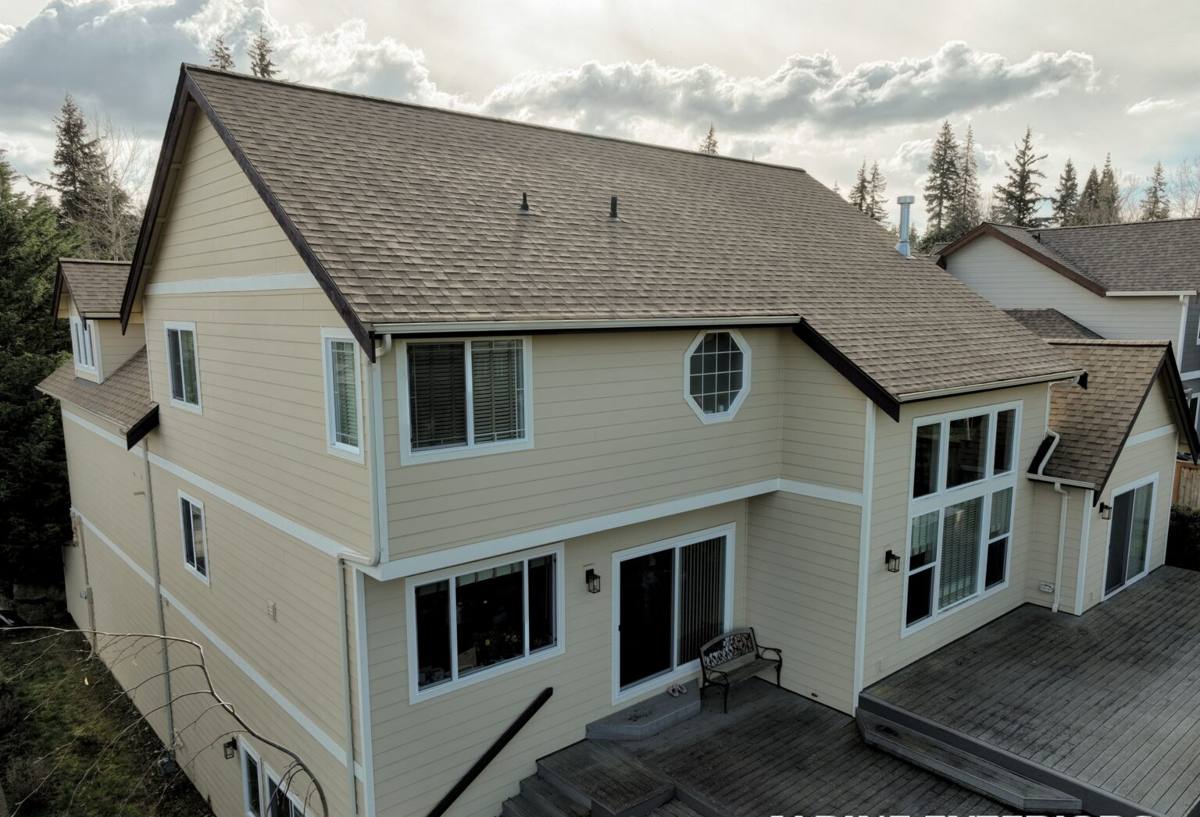
This page is about one product, in one place: James Hardie fiber cement siding, installed on homes in Barkley. Not a generic overview of siding in general — the specific job of putting the right material on Barkley homes correctly, given exactly what this stretch of Whatcom County throws at a house.
What the Local Climate Actually Does to Siding
Salt Air
Proximity to Puget Sound and Bellingham Bay means airborne salt is a constant, low-level presence. Salt is hygroscopic — it pulls moisture out of the air and holds it against whatever surface it lands on. On wood-based siding products, that means the surface stays damp longer than it would inland, which accelerates fungal growth and slows drying cycles. On metal fasteners and flashing, it accelerates corrosion. Fiber cement itself is inorganic and doesn't feed mold or rot the way wood fiber can, but the fasteners, flashing, and finish system around it still need to be chosen and installed with salt exposure in mind.
Driving Rain
Whatcom County doesn't get flash-flood downpours very often, but it gets wind-driven rain that comes in at an angle, not straight down. That matters enormously for siding performance because most siding failures aren't caused by rain hitting a wall — they're caused by rain getting behind a wall through a gap, a bad seam, or a missing flashing detail, and then having nowhere to drain or dry out. A house near Barkley needs a water-management system behind the siding, not just a water-resistant surface on top of it.
Moss and Prolonged Dampness
Moss doesn't just grow on roofs here — it colonizes anything that stays damp and shaded for extended periods, including siding in tree-covered yards or on north-facing walls that never get direct sun. Moss holds moisture against a surface indefinitely, which is a problem for any siding material that can absorb water or support organic growth. It's less of a structural threat to fiber cement than to wood or wood-composite products, but it still needs to be accounted for in the finish and in how the siding is detailed around landscaping and drainage.
Why Fiber Cement Fits This Specific Job
Fiber cement is a mix of cement, sand, and cellulose fibers, fired and cured into a rigid board. It doesn't rot, it isn't a food source for mold or moss, and it doesn't expand and contract with moisture the way wood does. For a Barkley home dealing with salt air, driving rain, and a long wet season, those properties solve the two biggest long-term problems: organic decay and moisture-driven movement that cracks paint and opens seams.
We install James Hardie fiber cement exclusively. We don't install LP SmartSide, vinyl, Cemplank, Allura, primed spruce, or cedar, and we're upfront about why: those products each carry trade-offs — moisture sensitivity, maintenance burden, installation tolerances, or finish durability — that we've decided aren't worth building into a home in this climate. Hardie's ColorPlus factory finish, its HZ5 product engineering for the Pacific Northwest's moisture and freeze-thaw pattern, and its transferable warranty structure are the specific reasons we standardized on it. That's a professional standard we hold across every job, not a sales pitch for this page alone.
How Fiber Cement Compares to Other Siding Options
| Material | Moisture Behavior | Salt Air / Coastal Fit | Maintenance Burden |
|---|---|---|---|
| James Hardie Fiber Cement | Does not absorb and swell; inorganic, won't rot | Strong — inert to salt, factory-cured finish resists fading | Occasional wash; repaint not required with ColorPlus for years |
| Vinyl | Sheds water but can trap moisture behind panels if not detailed correctly | Can become brittle and fade faster under coastal UV and salt cycling | Low, but cracks and warps are not repairable — full panel replacement |
| Cedar | Absorbs moisture; prone to swelling, cupping, checking | Salt accelerates weathering of raw or lightly finished wood | High — regular refinishing, sealing, and rot inspection |
| Primed Spruce / Engineered Wood | Vulnerable at cut edges and fastener penetrations if seal is broken | Moisture uptake at compromised edges accelerates in salt air | Moderate to high — edge sealing and paint maintenance are critical |
What a Correct Fiber Cement Installation Actually Involves
Fiber cement siding is only as good as the installation behind it. The board itself resists moisture and decay, but the assembly around it — the water-resistive barrier, the flashing, the fastening pattern, the gaps — is what determines whether the wall stays dry for thirty years or develops hidden problems in five.
Water-Resistive Barrier and Drainage Plane
Every Hardie installation starts with a continuous water-resistive barrier behind the siding, lapped correctly so water sheds downward and outward rather than pooling behind seams. In a driving-rain environment like Barkley's, this layer is doing as much work as the siding itself.
Flashing at Every Penetration
Windows, doors, hose bibs, light fixtures, and any other wall penetration need proper flashing that directs water back out and away from the sheathing. This is the single most common place we find water damage on older homes we're re-siding — not because the previous siding failed outright, but because a window or door was never flashed correctly and years of driving rain found the gap.
Fastener Pattern and Corrosion Resistance
Given the salt exposure in this area, fastener selection matters more here than in an inland install. Hardie specifies fastener types and placement for a reason — correct nailing prevents blow-through, cracking at the fastener line, and long-term corrosion staining.
Gapping and Caulking
Fiber cement needs deliberate gaps at butt joints, trim, and penetrations, sealed with the correct sealant rather than caulked tight against every surface. Too little gap and the assembly can't handle seasonal movement; too much unsealed gap and water finds its way behind the board.
Finish and Touch-Up
ColorPlus factory finish is baked on and far more UV- and moisture-stable than field-applied paint, but cut edges exposed during installation need factory-matched touch-up product, not generic exterior paint, to maintain that same protection.
Our Process for a Barkley Siding Job
- On-site assessment — we walk the exterior, check for existing moisture damage, evaluate sun/shade exposure and moss patterns, and identify any structural or sheathing issues that need addressing before new siding goes on.
- Scope and product selection — we recommend the specific Hardie product line and profile suited to the home's exposure, and walk through color and finish options.
- Written estimate — a clear breakdown of materials, labor, and any sheathing or flashing repair work identified during assessment.
- Tear-off and inspection — removing the old siding gives us a direct look at the sheathing and framing underneath, which is often the first time hidden moisture damage becomes visible.
- Barrier and flashing work — installing or correcting the water-resistive barrier and flashing details before a single piece of new siding goes up.
- Installation to spec — fastening, gapping, and finishing per Hardie's installation requirements, not shortcuts.
- Final walkthrough — reviewing the completed job with the homeowner and covering basic care going forward.
Signs a Barkley Home May Need New Siding Soon
- Paint that's peeling, bubbling, or chalking, especially on north-facing or shaded walls
- Soft or spongy spots when pressed, particularly near the bottom of walls or under windows
- Persistent moss or dark streaking that returns quickly after cleaning
- Visible gaps, warping, or cupping in existing boards or panels
- Rising energy bills that may point to compromised insulation behind failing siding
- Cracking or staining concentrated around window and door trim — a common sign of flashing failure
Maintenance in a Whatcom County Climate
Fiber cement siding is low-maintenance, not no-maintenance. In an area with this much moss pressure and dampness, a home benefits from an occasional gentle wash to keep organic growth from establishing on the surface, especially on shaded elevations. Keeping gutters clear and downspouts directing water away from the foundation reduces splash-back moisture at the base of the walls, which is where we most often see long-term staining develop. Trimming back vegetation that keeps a wall in constant shade also helps, since that's the setting where moss and mildew take hold fastest, even on a material that doesn't feed them the way wood does.
What Drives the Cost of a Siding Job Here
| Factor | Why It Matters in Barkley |
|---|---|
| Extent of hidden damage found at tear-off | Older homes near the water more often show sheathing or framing damage from years of undetected moisture intrusion |
| Home size and wall complexity | More corners, dormers, and trim details mean more flashing and cutting labor |
| Product line and profile chosen | Lap width, texture, and trim style all affect material cost |
| Access and site conditions | Tree cover, slope, and tight lot lines common in established Barkley neighborhoods can affect labor time |
| Existing flashing and barrier condition | Correcting prior installation shortcuts adds scope but prevents repeat failures |
We give a full written estimate after the on-site assessment rather than a rough number over the phone, because the hidden condition behind the old siding is genuinely the biggest cost variable on most re-sides in this area.
Why It Matters That We Already Work This Area
A crew that regularly works in and around Barkley already knows the moisture patterns specific to this part of Whatcom County — which elevations hold moss longest, which older subdivisions tend to have thinner original flashing details, and how the local wind-driven rain behaves against typical wall orientations here. That local pattern recognition shows up in small decisions during a job: where to add extra flashing attention, which walls need a closer look at the sheathing before closing it up, and how to detail an installation so it holds up specifically to this climate rather than a generic one. It's the difference between an installation that meets code and one that's actually built for the conditions it will face for the next several decades.
If your Barkley home's siding is showing wear, or you're planning ahead for a replacement, we're happy to come take a look and walk you through what we find — no pressure, no obligation, just a straight assessment and a written estimate you can take your time with.