 Whatcom County
Why Roofs in Barkley Wear Differently Than Roofs Inland
Barkley sits close enough to the Puget Sound and Bellingham Bay that salt-laden air is a real factor in how roofing materials age here, not just a talking point. Combine that with Whatcom County's long, wet fall-through-spring stretch of driving rain off the water, and you've got a roofing environment that's noticeably harder on a house than the same roof would face in a dry inland climate. Add a moss season that can run eight months or more some years, and it's easy to see why roofs in this part of Whatcom County often need attention sooner than their rated lifespan would suggest.
None of this means a roof in Barkley is doomed to fail early. It means the materials, ventilation, and installation details matter more here than they would in a milder climate, and a replacement done without those local realities in mind is a replacement that will underperform.
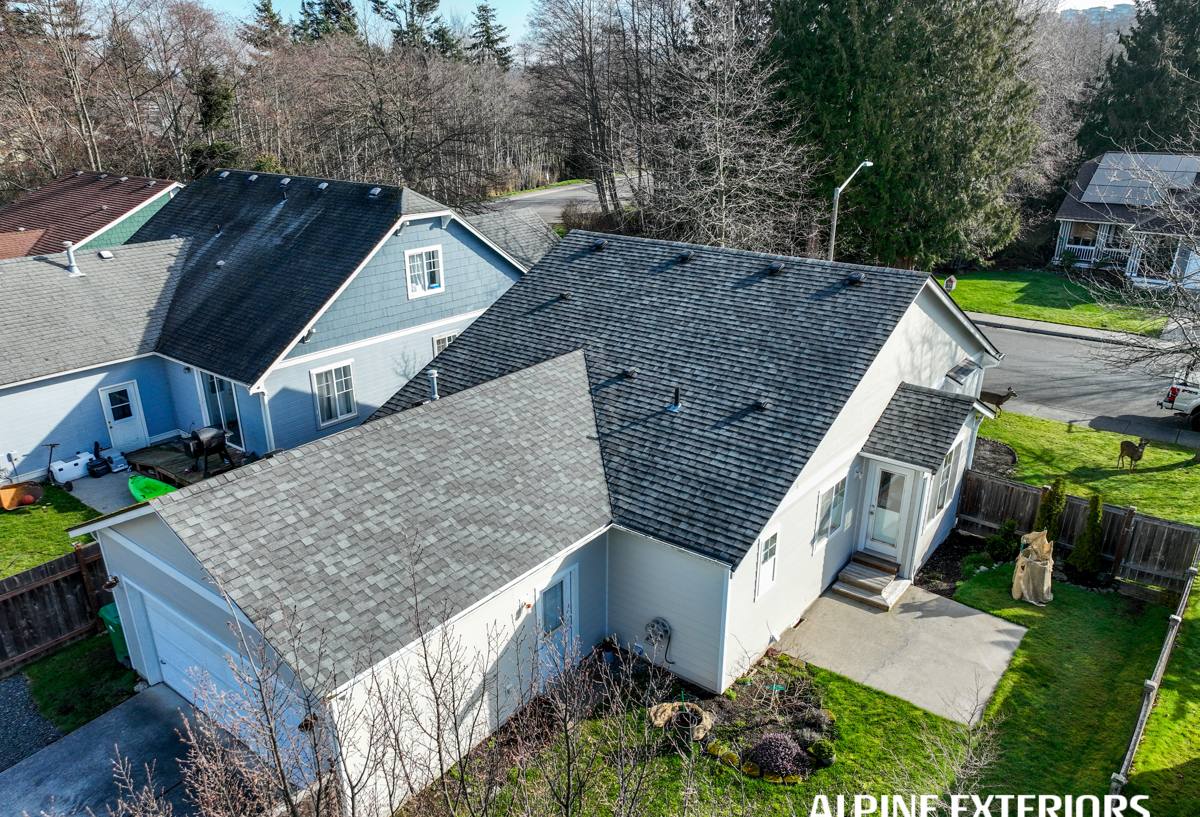
What Salt Air, Rain, and Moss Actually Do to a Roof
Each of these three factors attacks a roof in a different way, and understanding the mechanism helps explain why certain materials and details matter.
Salt Air
Airborne salt accelerates corrosion on exposed metal fasteners, flashing, and vent components. It also breaks down some sealants faster than a landlocked climate would. This doesn't rule out metal roofing or metal flashing near the water, but it does mean fastener grade and flashing material need to be chosen with corrosion resistance in mind, not just cost.
Driving Rain
Wind-driven rain off the Sound doesn't just fall on a roof, it gets pushed sideways and upward under shingle tabs, around chimneys, and into any gap in flashing or underlayment. A roof that would shed straight-down rain fine can still leak under sideways rain if the underlayment, flashing laps, and ridge details weren't built for it.
Moss
Moss doesn't just look bad. It holds moisture against the roofing surface for weeks at a time, works its way under shingle edges, and lifts tabs as it grows, which opens the door to water intrusion. On shaded, north-facing slopes, which are common on wooded Barkley lots, moss can take hold within a couple of years of a new roof if the roof wasn't set up to discourage it.
Signs a Barkley Roof Needs Replacement, Not Another Repair
Roof repair has a place, but there's a point where patching stops making sense and a full replacement is the more honest recommendation. Watch for:
- Granule loss heavy enough that you can see bare, shiny patches on asphalt shingles
- Moss or algae that keeps coming back within a year or two of cleaning
- Curling, cupping, or cracked shingles across more than one slope
- Soft spots in the decking when walked on, or visible sagging
- Water stains on interior ceilings, especially near chimneys, skylights, or valleys
- A roof that's 20+ years old and has never had underlayment or ventilation upgraded
- Flashing that's rusted, lifted, or was never properly stepped at walls and chimneys
If you're seeing two or more of these, it's worth getting an honest look before spending more money chasing leaks one at a time.
What a Correct Roof Replacement Actually Involves
A roof replacement is more than swapping old shingles for new ones. In a climate like Whatcom County's, the parts you don't see matter as much as the parts you do.
Full Tear-Off
We remove existing roofing down to the deck rather than layering over it. Layering hides the condition of the decking and underlayment, and it traps moisture that's already worked its way in from years of coastal rain.
Decking Inspection and Repair
Once the deck is exposed, any soft, delaminated, or water-damaged sheathing gets replaced before anything new goes down. Skipping this step is one of the most common shortcuts in cheap roof jobs, and it's the one most likely to cause problems within a few years.
Underlayment Built for Wind-Driven Rain
Given how often rain in this area comes in sideways, we pay close attention to underlayment overlap, ice-and-water shield placement at eaves and valleys, and sealing around every penetration. This is the layer that saves a roof when wind gets under a shingle edge.
Flashing Done Right
Chimneys, skylights, sidewalls, and valleys are where most leaks start, not the open field of the roof. Correct step flashing, counter-flashing, and valley metal, installed with corrosion-resistant fasteners given the salt air, are non-negotiable.
Ventilation
Balanced intake and exhaust ventilation keeps the attic and roof deck temperature closer to outdoor conditions, which reduces condensation and slows moss growth on shaded slopes. A roof replacement that doesn't address ventilation is leaving performance on the table.
Material Options for Barkley Homes
There isn't one right material for every house, but here's how the common options stack up against Whatcom County's specific conditions.
| Material | How It Handles Salt Air & Rain | Moss Resistance | Typical Lifespan Here |
|---|---|---|---|
| Architectural asphalt shingle | Good, with proper flashing and underlayment | Moderate; benefits from zinc/copper strips | 20-30 years |
| Standing seam metal | Very good with marine-grade fasteners and coatings | High; sheds moisture quickly | 40-50+ years |
| Cedar shake | Requires diligent maintenance; salt and moisture speed decay | Low without regular treatment | 20-25 years with upkeep |
| Synthetic/composite shingle | Good; resists corrosion since it's not metal-fastened at the surface | Moderate to high depending on product | 30-50 years |
We're generally cautious about cedar shake this close to the water and under tree cover, not because it can't work, but because it demands a maintenance schedule most homeowners underestimate. If low-maintenance, long-term performance in this climate is the priority, asphalt architectural shingle or standing seam metal are usually the more honest recommendation.
Our Roof Replacement Process
- On-site inspection. We look at the roof, attic ventilation, decking condition, and any problem areas like valleys or chimney flashing before quoting anything.
- Written estimate. You get a clear scope of work: tear-off, decking allowance, underlayment type, flashing plan, material, and ventilation changes, with no vague line items.
- Material selection. We walk through the trade-offs above so you're choosing based on how the roof will actually perform on your lot, not just upfront price.
- Tear-off and deck repair. Old roofing comes off, decking is inspected and repaired as needed, and the job site is protected throughout.
- Underlayment, flashing, and ventilation installation. This is where the climate-specific work happens, built for driving rain and long wet seasons.
- Final roofing installation. Shingles, metal panels, or your chosen material go on to manufacturer specification.
- Cleanup and walkthrough. Magnetic sweep for debris, full walkthrough of the finished roof, and warranty paperwork.
Cost Factors Homeowners Should Understand
Every roof is priced individually after inspection, but the main variables that move the number are consistent.
| Factor | Why It Matters |
|---|---|
| Roof size and complexity | More valleys, dormers, and slopes mean more flashing detail and labor time |
| Decking condition | Rot or water damage found during tear-off adds material and labor to replace sheathing |
| Material choice | Asphalt, metal, and composite products span a wide price range and installation labor |
| Ventilation upgrades | Adding proper intake/exhaust venting where none existed is an added but worthwhile cost |
| Access and pitch | Steep roofs or difficult access add safety equipment and labor time |
We'd rather walk you through these variables honestly during the estimate than quote a number over the phone that doesn't hold up once we're on the roof.
Why Hiring a Crew That Already Works Barkley Matters
A roof replacement isn't just a product installed to spec, it's a product installed to fit local conditions. A crew that regularly works Whatcom County's coastal neighborhoods already knows which slopes tend to hold moss, how far up a wall step flashing needs to run given typical wind-driven rain here, and which fastener grades hold up against salt air over the long run. That local pattern recognition is hard to replicate for a crew that doesn't usually work this close to the water.
Before hiring anyone for a roof replacement in Barkley or elsewhere in Whatcom County, it's worth checking a few things:
- Current Washington state contractor license and liability insurance, verifiable through L&I
- Manufacturer certification for the material you're choosing, especially for extended warranties
- A written estimate that specifies underlayment type, flashing plan, and ventilation approach, not just "new roof installed"
- Local references or completed work in Whatcom County you can ask about directly
- A clear tear-off and decking-repair policy, not a vague allowance buried in fine print
Caring for a New Roof in a Wet, Mossy Climate
A correctly installed roof still benefits from basic upkeep in this climate. Keeping gutters clear so water doesn't back up under the eave line, trimming back branches that shade slopes and feed moss growth, and having the roof looked at every couple of years rather than only after a leak shows up all extend the life of the investment. If zinc or copper control strips were installed to slow moss regrowth, they typically don't need replacing, but it's worth confirming they're still doing their job during a periodic check.
If you're weighing a roof replacement for a home in Barkley or anywhere else in Whatcom County, we're glad to take a look and give you a straight, no-pressure estimate. There's no obligation, just a clear picture of what your roof needs and what it would take to do the job right.