 Whatcom County
Barkley sits close enough to the water and the weather patterns that move through Whatcom County that a roof here rarely fails the way people picture storm damage happening — a dramatic blowoff in a single violent gust. More often it's a slower process: driving rain finding a weak seam, salt air working on exposed metal, and a moss season that never fully lets up giving a storm an easier opening than it would have on a cleaner roof. This page focuses specifically on storm damage roof repair for Barkley: how local weather actually causes the damage, what a correct repair involves, and how our process runs from the first look to the final walk-through.
How Local Weather Actually Damages a Roof
The systems that move through this part of Washington tend to bring sustained wind and rain over a day or two rather than a short, violent event. That pattern stresses a roof differently than a single sharp storm does, and it's worth understanding before talking about repair.
Wind-Driven Rain
Rain pushed sideways by wind off the water finds its way into laps, seams, and flashing details that shed a normal vertical downpour without any issue. A roof that's performed fine for years under ordinary rain can still develop a leak during a wind-driven event, simply because water is hitting it at an angle the original installation was never tested against at every point.
Salt Air and Corrosion
Barkley's proximity to Puget Sound and the Strait of Georgia means fasteners, flashing, and exposed metal age faster here than they would further inland. A nail or flashing strip that would hold up for years in a drier, inland climate can start corroding within a shorter window near the water, and a corroded fastener is a common quiet cause of a leak that shows up during a storm but actually started developing months earlier.
A Moss Season That Doesn't Fully Stop
Whatcom County's moss season runs long compared to drier parts of the state, and a roof heading into storm season with moss already established is at a real disadvantage. Moss holds moisture against the roofing material and can lift shingle edges on its own, so when a storm brings wind-driven rain, it has an existing point of entry rather than having to create one.
Debris From Tree Cover
Barkley's tree cover means wind events regularly bring branches and debris down onto roofs. That can crack shingles, dent metal, or knock granules loose in ways that aren't always visible from the ground, and it's a routine part of storm damage in this area rather than an unusual occurrence.
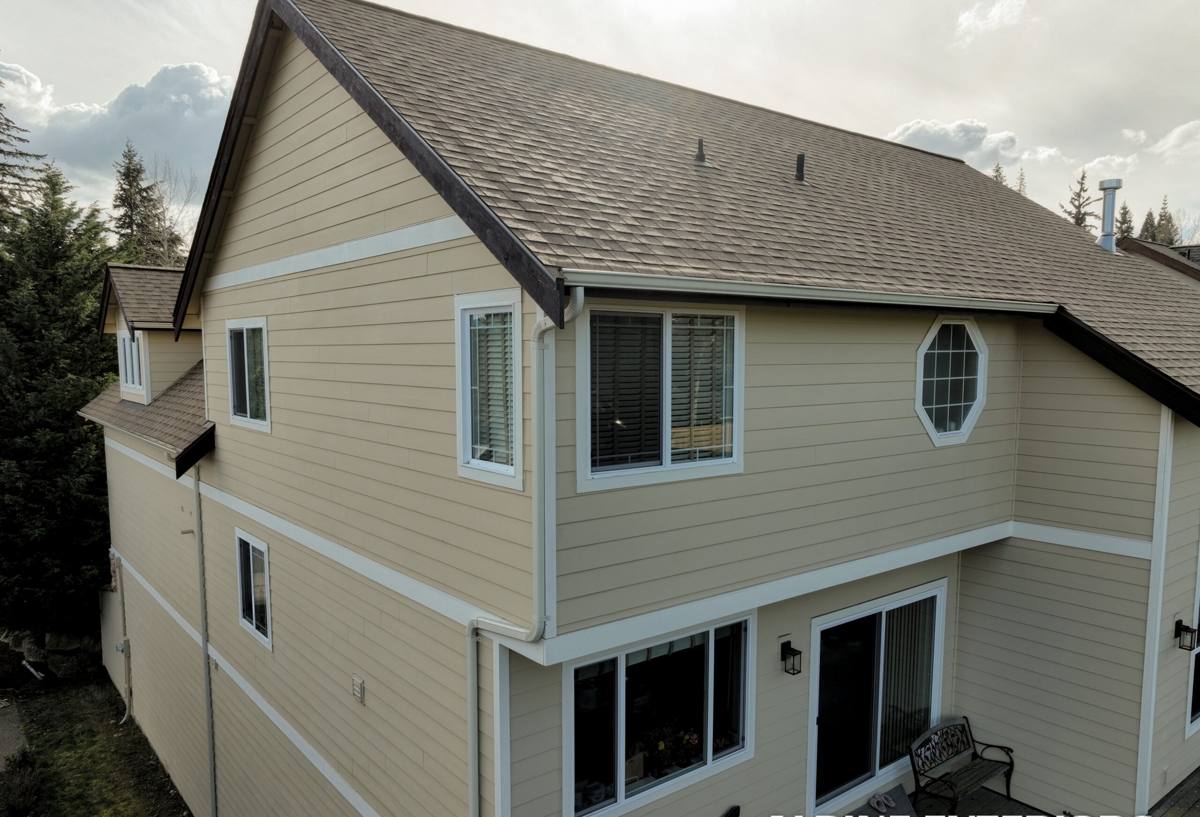
Signs a Barkley Roof Has Storm Damage
Some damage is obvious from the ground. A lot of it isn't, and the following are worth checking after any significant wind or rain event:
- Shingles that are lifted, cracked, creased, or missing
- Granules building up in gutters or downspout outlets beyond normal shedding
- Dented or loosened metal panels, ridge caps, or flashing
- New or spreading water stains on ceilings or upper interior walls
- A musty smell, damp insulation, or visible moisture in the attic
- Debris still sitting on the roof, especially collected in valleys
- Flashing pulled away from chimneys, vents, or roof-to-wall junctions
- Soft or spongy-feeling roof areas when walked (leave the walking to a professional)
What a Correct Storm Damage Repair Involves
A repair that only addresses the reported spot often misses the actual cause, and that's especially true with wind-driven damage, where water can travel well beyond the point it eventually shows up as a stain.
Checking the Whole Roof, Not Just the Reported Spot
Wind rarely stresses only one location. A storm strong enough to lift one shingle edge or loosen one panel seam usually put comparable stress on nearby areas that haven't failed yet but are now more vulnerable to the next event. We check the full roof, not just where the leak was reported.
Tracing the Water, Not Just Sealing the Symptom
Water entering at a lifted shingle or damaged flashing point doesn't necessarily drip straight down from there. It can travel along the underlayment or decking before it finds a path inside, which means the interior stain and the actual entry point are often in different places. A correct repair traces that path back rather than sealing wherever the damage happened to appear indoors.
Inspecting the Deck Before Closing It Back Up
Water that's been getting in for any length of time can soften or rot the decking underneath the roofing material. Patching the surface over compromised decking doesn't hold, so we check for soft spots and replace damaged sheathing before any new material goes back down.
Matching Materials Honestly
Roofing material weathers and fades over time, so new material patched next to older material can stand out visually and, more importantly, may not seal as tightly if the profile or thickness isn't a close match. We match as closely as the existing roof allows and say so plainly when an exact match isn't realistic, rather than forcing a mismatch onto the roof.
Fasteners and Flashing Built for This Exposure
Given the salt air common around Barkley, we use fasteners and flashing rated for that exposure instead of standard hardware that corrodes faster here than it would inland. A repair done with the wrong hardware can look fine for a season or two before corrosion reopens the same leak.
Repair or Replacement After Storm Damage
Not every storm-damaged roof needs full replacement, and it isn't always obvious from the ground which situation applies. The table below is a general guide — the actual call depends on what an inspection turns up.
| Factor | Usually Points to Repair | Usually Points to Replacement |
|---|---|---|
| Extent of damage | Isolated to one or two areas | Spread across multiple slopes |
| Roof age | Well within its expected service life | At or past its rated lifespan |
| Deck condition | Solid, no rot underneath | Soft spots or rot found under the damage |
| Condition before the storm | Roof was in good shape already | Storm damage adds to existing moss or wear problems |
| Material match | Existing material is still available | Discontinued material forces a broader re-cover |
We'll give a straight answer on which side of that line a given roof falls on, including telling you when a repair is the right call even though a full replacement would be the bigger job for us.
Our Storm Damage Repair Process
- Inspection: A full walk of the roof and, where accessible, the attic — not just the reported problem area.
- Documentation: Photos and clear notes on what we found, useful if you're pursuing an insurance claim.
- Honest assessment: A plain explanation of what's actually needed — spot repair, partial re-cover, or full replacement.
- Temporary protection if needed: If the roof is actively leaking and full repair can't happen right away, we address the urgent exposure first.
- The repair itself: Deck repair where needed, correct flashing and underlayment detail, matched roofing material.
- Final walk-through: A review of the completed work and what's worth keeping an eye on going forward.
Insurance and Storm Claims
Many storm-related roof repairs are eligible under a homeowner's insurance policy, though coverage and deductibles vary. We document damage clearly enough to support a claim, but the claim itself is handled between the homeowner and the insurer — we can't guarantee coverage or an outcome, and we'd rather say that plainly than promise something we don't control.
Why a Crew That Already Works Barkley Matters
A crew that handles storm damage regularly in this part of Whatcom County has a practical feel for how wind-driven rain moves across the roof styles common here, which shortens the time it takes to find the real entry point instead of guessing. That familiarity extends to moss, too — knowing which shaded slopes and valleys around Barkley tend to hold moisture longer means checking those spots even if they weren't the area originally reported.
Response time matters after a storm that's affected several homes in the area at once. A contractor with an actual local base can typically reach a Barkley property faster than one dispatching from outside the county, and that gap matters when water is actively getting into a home.
Reducing the Odds of Repeat Damage
Once a repair is done, a few habits go a long way toward keeping the next storm from causing the same problem:
- Keep gutters and downspouts clear so water isn't backing up under roof edges during heavy rain
- Deal with moss before it spreads, since it weakens shingle edges over time
- Trim tree limbs that overhang the roof or could drop debris in wind
- Have flashing points, especially around chimneys and roof-to-wall transitions, checked periodically
- Don't wait on a small leak between storms — it's almost always cheaper to fix early
If a recent storm has left your Barkley home with a leak, missing shingles, or damage you're not sure how to read, we're happy to take a look and give you a straight answer on what's actually needed. Reach out for a free, no-pressure estimate using the form below.