 Whatcom County
Bellingham's Marine Climate Is Hard on Decks
Bellingham sits right on the water, and that location shapes everything about how a deck ages here. Salt-laden air off Bellingham Bay accelerates corrosion on fasteners and hardware, driving rain gets pushed sideways into ledger boards and railing posts, and the long gray stretch from fall through spring keeps every horizontal surface damp for days at a time. Add the moss and algae that thrive in Whatcom County's shade and moisture, and you have a climate that punishes decks built to a generic, one-size-fits-all spec. A deck that would hold up fine in a dry inland climate can start showing rot, fastener staining, or slick moss growth within a couple of seasons here if it wasn't built with this specific environment in mind.
None of this means a deck can't last decades in Bellingham. It means the material choice, the fasteners, the substructure, and the drainage details all have to be selected for a wet, salt-exposed environment rather than copied from a stock plan.
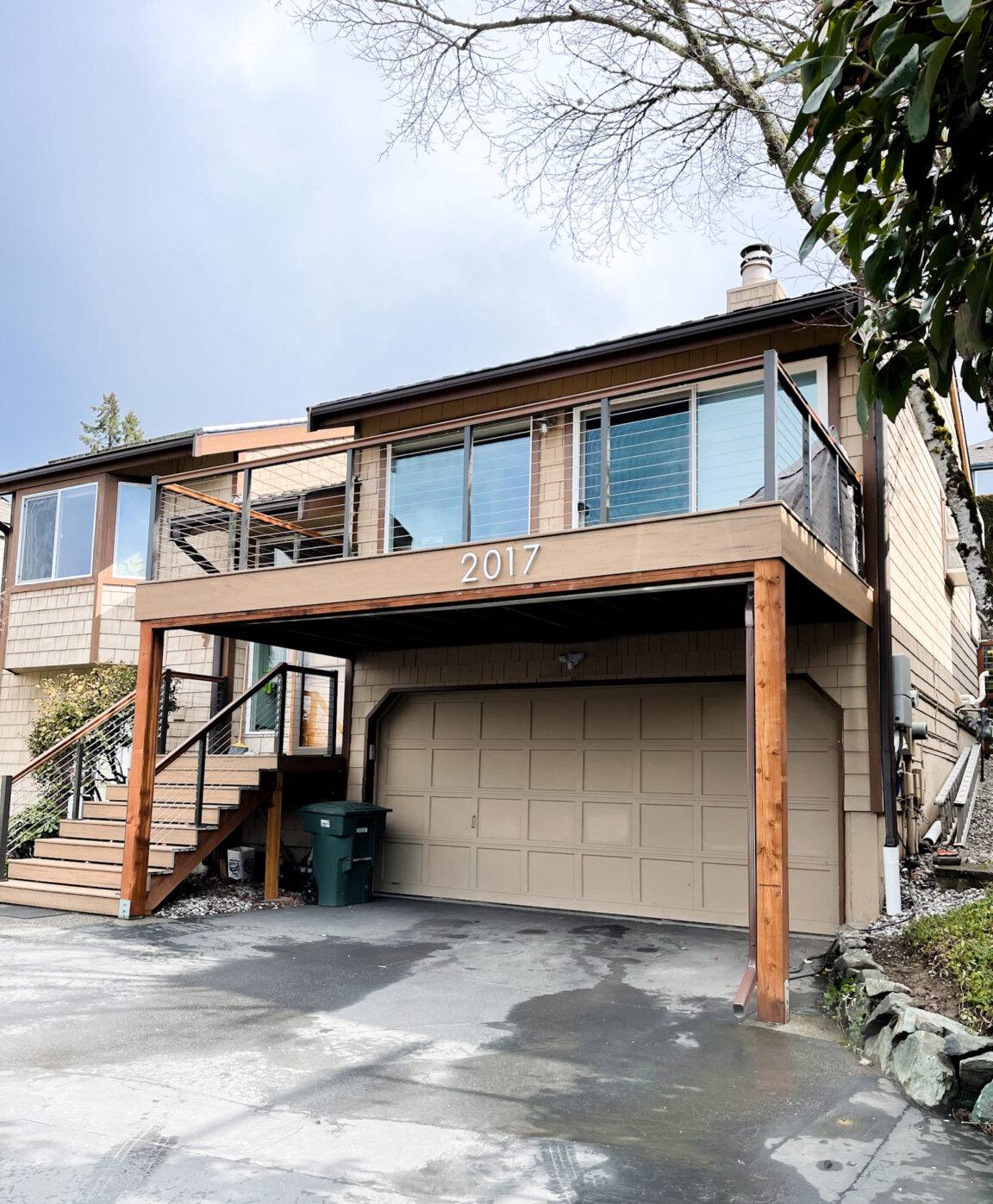
Why Composite Decking Makes Sense Here
Composite decking is a blend of wood fiber and plastic, capped or coated so the surface doesn't absorb water the way solid wood does. For a Bellingham home, that resistance to moisture absorption is the whole point. Wood decking exposed to our rain and humidity swells, checks, and eventually rots at the board ends and around fasteners — usually starting in the spots that never fully dry out between storms. Composite doesn't rot, doesn't need annual staining or sealing, and holds up better against the freeze-thaw cycles we get through the winter months.
That doesn't make composite maintenance-free, and we won't tell you it is. It still needs to be cleaned to stay ahead of moss and algae, it still needs a substructure built to shed water properly, and cheaper composite products can fade, stain, or flex differently than premium ones. The honest pitch is this: composite trades the recurring labor of wood upkeep for a smaller, more predictable set of cleaning tasks — a fair trade for most Bellingham homeowners, but worth understanding before you commit.
Composite Decking Board Types: What's the Difference
Not all composite decking is built the same way, and the differences matter more in a wet coastal climate than they would somewhere dry. The main distinction is between capped and uncapped composite boards, and secondarily between composite and PVC (which is plastic-only, no wood fiber).
| Type | Moisture Behavior | Best For | Trade-Offs |
|---|---|---|---|
| Uncapped composite | Can absorb some moisture at cut ends; more prone to staining and mold in constant damp | Budget-conscious projects, covered areas | Needs more diligent cleaning here; shorter practical lifespan near the water |
| Capped composite | Polymer shell resists moisture, staining, and fading | Most Bellingham decks — full sun or shade, exposed or covered | Higher upfront cost than uncapped; still needs cut-end sealing |
| PVC decking | No wood fiber, essentially immune to moisture damage | Waterfront or heavy-splash locations, hot tubs | Can feel and flex differently underfoot; typically the highest cost tier |
For most Bellingham homes we recommend capped composite as the baseline — it strikes the right balance of moisture resistance and cost for our rain totals and humidity. We'll walk through where PVC earns its premium (decks under hot tubs, low decks close to grade, or waterfront exposure) versus where standard capped composite does the job just as well.
Manufacturer and Warranty Considerations
We work with established composite manufacturers rather than off-brand or discontinued product lines, specifically because warranty support and color-matched replacement boards matter if something is ever damaged years down the road. A warranty is only as good as the company standing behind it, so we walk clients through the real warranty terms — what's covered, what voids it (often improper fastening or blocked drainage), and how claims actually get handled — rather than just quoting the marketing number.
What a Correct Substructure Looks Like
The decking boards get all the attention, but the framing underneath is what determines whether a Bellingham deck lasts 10 years or 30. Composite boards are heavier than wood in some product lines and behave differently under load and thermal movement, so joist spacing has to match the manufacturer's spec for our climate zone — not just whatever spacing was used on the last job.
Ledger and Flashing
Most rot failures we see on older decks start at the ledger board — where the deck attaches to the house — because water gets behind it and has nowhere to go. Correct flashing (metal flashing plus a water-resistant membrane, properly lapped with the house's siding or building paper) is non-negotiable in a climate that sees as much driving rain as Whatcom County does. This is also where a lot of shortcut installations fail years later, quietly, behind the decking boards where nobody sees it until there's a soft spot.
Fasteners and Hardware
Salt air corrodes standard fasteners faster than most homeowners expect. We use hardware rated for coastal or ACQ-treated lumber contact (stainless or heavily coated structural screws and joist hardware) rather than the cheapest fasteners on the shelf, because a corroded joist hanger is a structural problem, not a cosmetic one.
Drainage, Ventilation, and Moss Control
A composite deck that traps moisture underneath will grow moss and mildew on the surface no matter how good the boards are. Bellingham's long wet season means airflow under the deck isn't optional — it's part of what keeps the top side usable.
- Grade and slope the ground under the deck so water drains away from the house rather than pooling under the structure
- Leave proper gapping between boards for water to pass through instead of sitting on the surface
- Keep skirting vented rather than sealed tight, so air can move underneath year-round
- Position boards to shed toward the yard, not toward the house or a low corner
- Avoid burying the bottom rows of skirting in soil, mulch, or landscaping that holds moisture against the structure
Moss in particular needs shade, moisture, and organic debris to get started. A deck with good airflow and drainage will still see some moss growth in a Whatcom County winter, especially under trees, but it will be far easier to clean off a properly built deck than one where water and debris are sitting trapped against the boards.
Our Installation Process
- On-site assessment of the existing structure (if replacing a deck), grade, drainage path, and sun/shade exposure specific to your lot
- Board and hardware selection based on your budget, the deck's exposure to weather, and how you actually use the space
- Permitting and structural planning, including ledger attachment and footing requirements per current code
- Demo of the old deck (if applicable) and inspection of the ledger area and framing for hidden rot before anything new goes up
- Framing and substructure build-out with coastal-rated fasteners and correct joist spacing for the chosen composite product
- Flashing and waterproofing at every point the deck meets the house
- Composite board installation with hidden or approved fastening systems and proper expansion gaps
- Railings, stairs, fascia, and finish trim
- Final walkthrough covering drainage, care, and what to expect from the product through its first Bellingham winter
Railings, Stairs, and Finish Details
The details around the edges of a deck are where a lot of long-term problems start, and where cutting corners is easiest to hide at handoff. Railing posts need solid blocking and correct attachment to resist both wind load and the leverage people put on them — a loose railing post is a safety issue, not just a cosmetic one. Stair stringers exposed to weather need the same attention to fastener quality and water shedding as the deck frame itself. Fascia boards, especially composite fascia hiding the structural rim joist, need to be installed with a gap or drainage path behind them so moisture doesn't get trapped between the fascia and the framing — a common spot for hidden rot on decks that look fine from the yard.
Maintenance: What Bellingham Composite Decks Actually Need
Composite is lower-maintenance than wood, not maintenance-free. In our climate, a realistic care routine looks like this:
- Sweep off leaves, needles, and organic debris regularly, especially in fall — trapped debris holds moisture and feeds moss growth
- Wash the deck surface once or twice a year with a soft-bristle brush and a cleaner made for composite (avoid pressure washers on close settings, which can damage the cap surface)
- Check and clear any drainage gaps between boards that have collected dirt or debris
- Inspect railings and stair connections annually for any looseness
- Keep gutters and downspouts near the deck clear so overflow isn't dumping extra water onto or under the structure
- Treat any early moss or algae spots promptly rather than letting them spread through a wet winter
Why Hire a Crew That Already Works in Whatcom County
A lot of deck problems we get called to fix started with an out-of-town crew or a generic install that didn't account for what Bellingham weather actually does to a structure over time. Knowing the difference between what works in a drier climate and what actually holds up here — the flashing details, the fastener grade, the drainage slope, the board selection — comes from building and repairing decks in this specific environment, season after season. When you're comparing bids, it's worth asking any contractor directly how they handle ledger flashing, what fasteners they use, and how they design for drainage under the deck. Those answers tell you more about the long-term quality of the work than the price on the estimate does.
If you're planning a new composite deck or replacing an aging one, we're happy to take a look at your property and put together a straightforward estimate — no pressure, no hard sell, just a clear picture of what your home needs and what it will cost to do right. The form below is the fastest way to get that conversation started.