 Whatcom County
Why Decks Fail Faster in Bellingham
A deck in Bellingham lives a harder life than the same deck built inland. Bellingham Bay puts a steady dose of salt-laden air onto anything outdoors, and that salt works its way into fastener heads, joist hangers, and any exposed end-grain. Combine that with Whatcom County's long stretch of driving rain from fall through spring, and you get wood that rarely gets a full chance to dry out between storms. Add a shaded yard or a deck under trees, and moss and algae move in on the decking boards themselves, turning them slick and starting to hold moisture against the wood surface.
None of this means decks here are doomed — it means they need to be built and finished with this specific climate in mind, not with a generic build that would hold up fine in a drier part of the state. Most of the deck failures we see in this area trace back to the same handful of issues: hidden ledger board rot, undersized or corroding fasteners, poor drainage under the deck, and decking material that was never really suited to constant damp exposure.
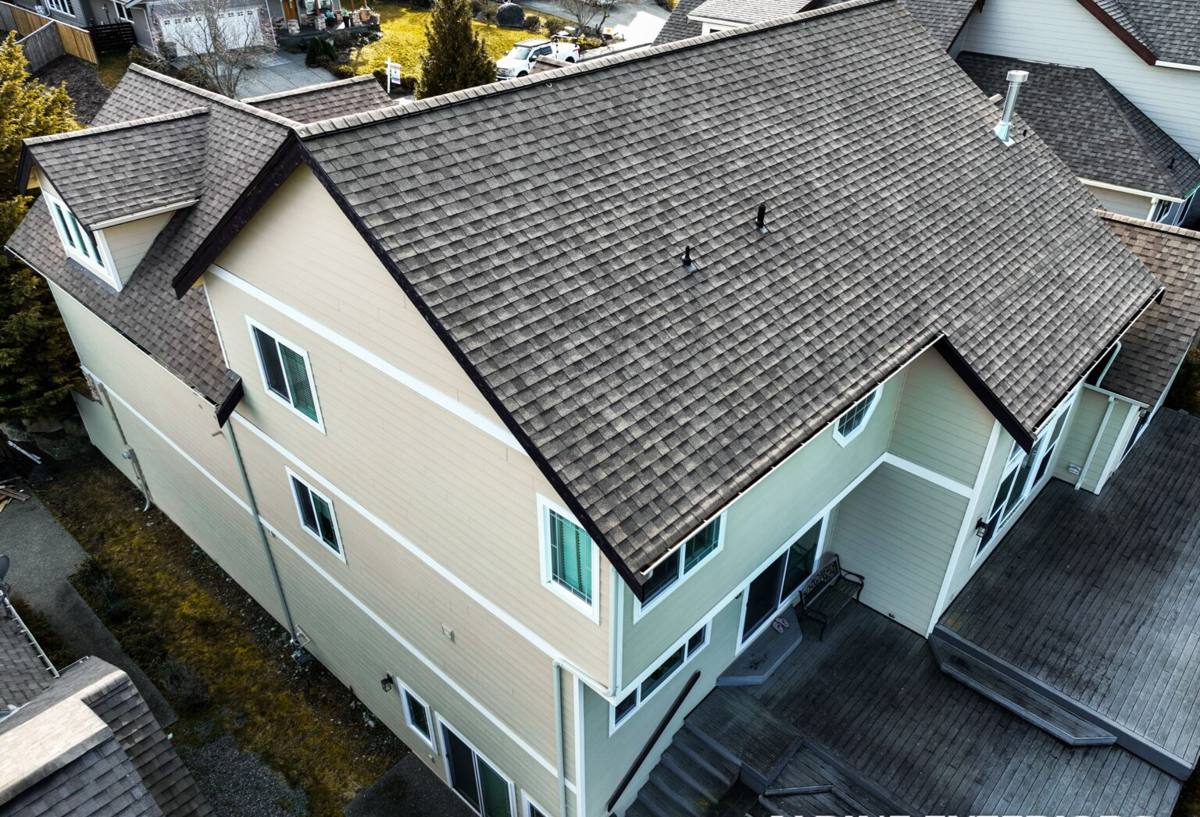
Signs You Need Replacement, Not Just Repair
Homeowners often ask whether a deck can be patched instead of replaced. Sometimes it can — a handful of split boards or a wobbly railing doesn't mean starting over. But there are signs that point to a structural problem rather than a cosmetic one:
- Soft or spongy spots in the decking, especially near the house or at board ends
- Rust streaking or corrosion around joist hangers and fastener heads
- Any gap, staining, or soft wood where the deck ledger meets the house siding — this is the single most common serious failure point in our region
- Posts that have shifted, or footings that look like they're heaving or settling unevenly
- Persistent moss or algae film that keeps returning within weeks of cleaning
- A deck older than 15-20 years that has never had its structural framing inspected
If the framing underneath is sound, refinishing or replacing surface boards can extend the life of a deck for a reasonable cost. If the ledger, joists, or footings are compromised, replacement is the honest recommendation — patching over a structural problem just delays a bigger repair later and creates a safety risk in the meantime.
The Ledger Board: The Part Nobody Sees Until It's a Problem
The ledger board — the piece that bolts the deck to the house — is where most Bellingham-area deck failures start. Water gets behind it through a poorly flashed connection, and because it's tucked against the siding, the rot can run for years before anyone notices. Given how much rain this region gets over a typical winter, a ledger without proper flashing and a drainage gap is on borrowed time. Any deck replacement here has to treat this connection as the highest-priority detail, not an afterthought.
What a Correct Deck Replacement Actually Involves
A deck replacement done right isn't just tearing off old boards and screwing down new ones. It's a structural project with a few non-negotiable steps:
- Full framing inspection. Every joist, beam, post, and footing gets checked, not just the visible decking.
- Ledger flashing done correctly. A properly installed ledger uses flashing that directs water away from the house structure, with a gap or drainage plane behind it — not caulk alone, which fails over time.
- Corrosion-resistant fasteners and hardware throughout. In a coastal, high-moisture area like Whatcom County, this isn't optional upgrade — it's the baseline standard.
- Proper joist spacing and blocking for the decking material chosen, since composite and wood products often have different span requirements.
- Footings sized and set to local frost and soil conditions, with post bases that keep wood off standing water.
- Airflow underneath the deck. Poor ventilation under a low deck traps moisture and accelerates rot — something we specifically account for during framing.
- Permitting and inspection through the applicable local building department, which most Whatcom County jurisdictions require for structural deck work.
Choosing the Right Decking Material for This Climate
There's no single "best" decking material — there's a best fit for your budget, your maintenance appetite, and how much sun or shade your deck gets. Here's how the common options actually perform in a wet, coastal, moss-prone environment:
| Material | How It Handles Our Climate | Maintenance | Typical Lifespan |
|---|---|---|---|
| Pressure-treated lumber | Good rot resistance when properly sealed; needs re-sealing to shed rain | Annual cleaning and periodic sealing | 15-25 years with upkeep |
| Western red cedar | Naturally rot- and insect-resistant, popular regional choice, but still needs finish maintenance in constant rain | Re-staining every 2-3 years | 20-25 years with upkeep |
| Composite decking | Doesn't absorb water like wood, resists rot; some early-generation boards had moisture and mold issues in shaded, damp spots | Periodic washing to prevent surface algae film | 25-30+ years, warranty-backed |
| PVC/synthetic decking | Fully moisture-resistant, best option for shaded or low-airflow decks prone to moss | Occasional washing | 25-30+ years, warranty-backed |
We're honest with homeowners about trade-offs rather than pushing one product line. Composite and PVC decking cost more up front but make sense on shaded lots or decks near the water where moss and algae are a constant fight. Wood costs less initially but only performs as promised if the homeowner keeps up with sealing and cleaning on a real schedule — something worth being clear-eyed about before committing.
Railings, Fasteners, and the Details That Get Skipped
A deck is only as good as its hardware. We use stainless or coated fasteners rated for ground contact and coastal exposure rather than standard interior-grade hardware, and we match railing systems to the decking material so thermal movement and moisture don't work joints loose over a few seasons.
Our Process for a Bellingham Deck Replacement
We keep the process straightforward and communicate at each stage:
- On-site assessment. We inspect the existing deck's framing, ledger, footings, and drainage, and tell you honestly whether repair or full replacement makes sense.
- Written estimate. A clear scope of work and pricing, with material options laid out so you can decide what fits your budget.
- Permitting. We handle the paperwork with the applicable local jurisdiction for structural work, since most deck rebuilds in the area require it.
- Demo and disposal. Old material removed and hauled off, with the site protected during teardown.
- Rebuild. Framing first, inspected before decking goes down, then decking, railings, and stairs.
- Final walkthrough. We go over the finished deck with you, including what maintenance it needs going forward.
What Drives the Cost of a Deck Replacement
| Factor | Why It Matters |
|---|---|
| Deck size and shape | Square footage and complexity (multiple levels, angles, built-in seating) drive labor and material |
| Decking material | Wood costs less upfront; composite/PVC cost more but reduce long-term maintenance |
| Framing condition | Rotted joists, ledger, or footings add repair scope beyond surface replacement |
| Height and access | Elevated decks need additional structural support and often stairs and taller railings |
| Permitting requirements | Structural changes typically require permits and inspections, which add time but ensure the work is done to code |
We don't quote broad ranges without seeing the actual deck — a straightforward ground-level rebuild and a large elevated deck with extensive rot are very different projects. What we can promise is a clear, itemized estimate before any work starts, with no surprise add-ons for work that was visible during the initial inspection.
Maintaining Your New Deck in Whatcom County
Whatever material you choose, a few habits go a long way toward getting the full lifespan out of a new deck in this climate:
- Sweep debris off the deck regularly — trapped leaves and needles hold moisture and feed moss growth
- Rinse or lightly scrub decking a couple times a year to interrupt algae before it takes hold
- Check that gaps between boards stay clear so water can drain through rather than pool
- Reseal or re-stain wood decking on the schedule the product calls for — don't wait until it looks obviously weathered
- Keep gutters and downspouts near the deck clear so runoff isn't dumping directly onto or under it
- Have the structure looked at every few years, especially the ledger connection, even if the surface looks fine
Why a Local Crew Matters for This Job
Deck building looks similar everywhere on paper, but building for Whatcom County's rainfall pattern, salt exposure near the bay, and moss pressure is a different job than building the same deck in a dry inland climate. A crew that works in Bellingham regularly knows which ledger flashing details actually hold up here, which decking products handle shaded, damp yards without turning into a moss farm, and which local permitting offices need to sign off before framing starts. That local familiarity shows up in fewer callbacks and a deck that's still solid well past the point where a poorly built one would be showing rot.
If your deck is showing soft spots, rust streaks, or a ledger connection you're not sure about, we're happy to take a look and give you a straightforward assessment — no pressure, no upsell. Reach out for a free estimate using the form below.