 Whatcom County
Why Decks in Blaine Take More of a Beating
Blaine sits right at the edge of Whatcom County where the marine air comes off the water and doesn't let up for most of the year. That combination of salt-laden air, near-constant driving rain in the fall and winter, and a moss season that can stretch from October into May puts more stress on an outdoor deck here than almost anywhere else in the county. A deck that would hold up fine forty miles inland can start showing problems within a couple of years in Blaine if it wasn't built with this specific climate in mind.
Salt air is the part homeowners underestimate most. It doesn't just affect boats and metal railings down by the water — it settles into wood fibers, accelerates corrosion on fasteners and hardware, and works its way into any gap in a coating or sealant. Add in near-daily moisture for months at a stretch and you have the two biggest enemies of an outdoor structure working together instead of separately.
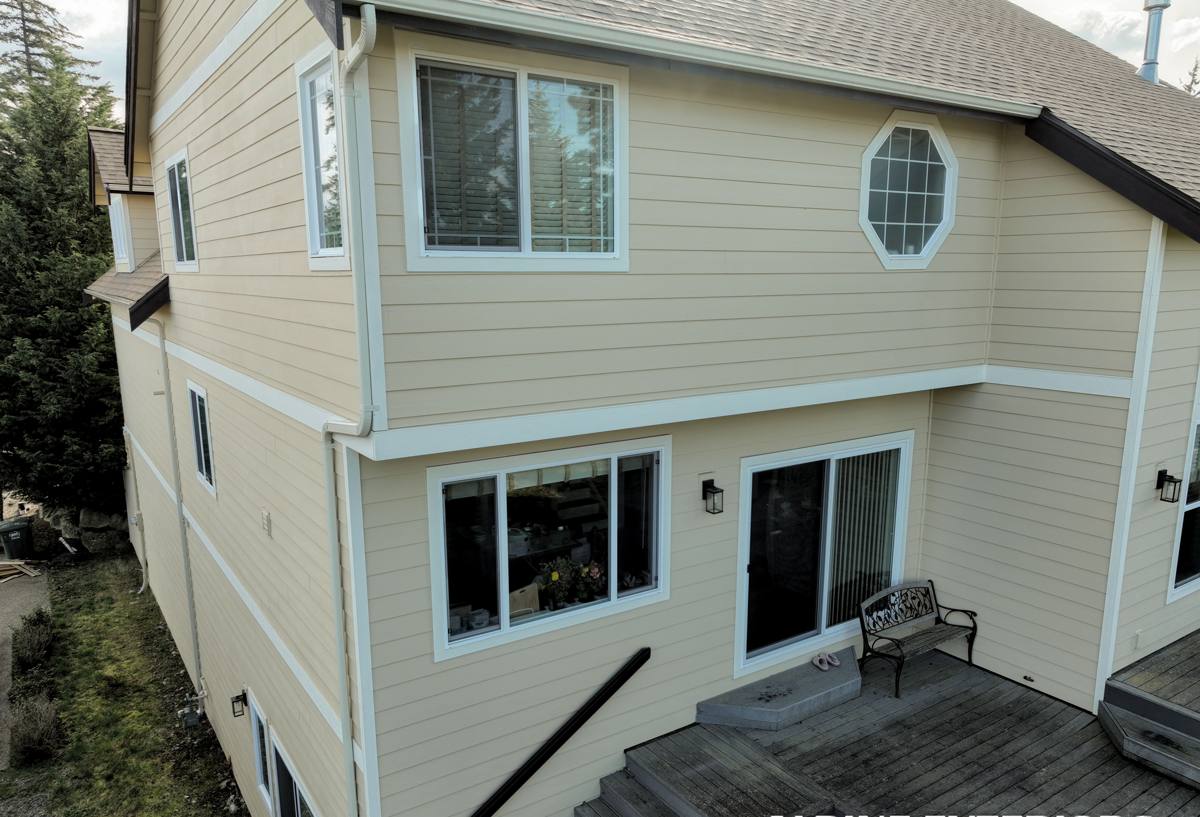
What Composite Decking Is (and Why It Makes Sense Here)
Composite decking is a manufactured board made from a blend of wood fibers and recycled or virgin plastic, usually with a protective outer shell (often called a "cap") that resists moisture absorption, staining, and fading. Unlike solid wood, it doesn't need annual staining or sealing to keep water out, and it doesn't swell and shrink with every wet-dry cycle the way untreated lumber does.
That last point matters a lot in Blaine. Wood decking here goes through repeated soak-and-dry cycles almost every week for half the year. Each cycle opens the wood grain slightly, which is exactly where moss spores, algae, and rot organisms get their foothold. A quality capped composite board resists that cycle far better, which is the main reason we lean toward it for waterfront and near-waterfront properties in this area.
Not All Composite Is the Same
There's a real difference between older uncapped composite boards (common in early-2000s builds) and modern fully-capped composite. Uncapped boards can still absorb moisture at the edges and are more prone to mold staining in a climate like this one. When we quote composite decking in Blaine, we specify fully-capped boards on all four sides, not just the top surface — the extra cost up front is worth it given how much moisture this area sees.
What a Correct Composite Deck Build Actually Involves
The decking boards themselves get most of the attention, but they're the last thing installed, not the most important thing. A composite deck is only as good as what's underneath it, and this is where we see the most corner-cutting in past installs around the county.
Substructure and Framing
Composite boards are heavier than wood and behave differently under load and temperature swings, so joist spacing has to match the manufacturer's specifications exactly — this is usually tighter than standard wood-deck spacing, especially for boards installed at an angle or on stairs. We use joist tape or an equivalent moisture barrier on top of every joist. It's a small material cost that prevents the single most common failure point we see: rot starting in the joist itself, hidden under the decking, while the decking on top looks fine.
Ledger Attachment and Flashing
Where a deck attaches to the house, the ledger board and its flashing have to shed water away from the wall assembly, not just resist it. In a climate with this much driving rain, a poorly flashed ledger is a slow leak that can damage siding, sheathing, and framing for years before anyone notices — often not until the composite decking is pulled up for another reason.
Fasteners and Hardware
Salt air corrodes standard fasteners faster than people expect, even a mile or two inland from the water. We use stainless steel or coated fasteners rated for coastal exposure on every Blaine project, along with hidden fastener systems designed for the specific composite brand being installed — mixing fastener systems between brands is a common cause of boards working loose or squeaking within a few seasons.
Airflow Underneath the Deck
Moss and algae need moisture and low airflow to establish themselves, and the underside of a poorly ventilated deck is a perfect environment for both. Proper joist spacing, gap sizing between boards, and skirting that still allows airflow all matter more here than in a drier climate.
Composite vs. Other Decking Materials in This Climate
We get asked often why we steer most Blaine clients toward composite over pressure-treated wood or cedar. It's not that wood decking can't work here — it's that it demands a maintenance commitment that most homeowners underestimate when they're comparing upfront costs.
| Material | Moisture Behavior | Moss/Algae Resistance | Maintenance Burden |
|---|---|---|---|
| Composite (capped) | Minimal absorption, stable | Good; surface can be power-washed | Low — periodic cleaning only |
| Pressure-treated wood | Absorbs and releases moisture constantly | Moderate; needs regular treatment | High — annual stain/seal recommended |
| Cedar | Absorbs moisture, prone to cupping | Poor without upkeep | High — sealing and cleaning yearly |
| Uncapped composite (older style) | Edge absorption possible | Fair; can stain over time | Moderate |
Composite costs more per board than pressure-treated lumber, but the maintenance savings over a 15-20 year span usually close that gap for homeowners who don't want to be out there staining a deck every summer.
Moss, Algae, and Salt Residue: What Ongoing Care Actually Looks Like
Even the best composite decking isn't maintenance-free — it's low-maintenance, which is a different thing. In Whatcom County's moss season, a build-up of organic debris (fallen leaves, needles, pollen) sitting on any decking surface will eventually support moss growth on top of the board, not inside it. The fix is straightforward but needs to happen on a schedule:
- Sweep or blow off debris regularly during fall, when moss spores are most active
- Rinse salt residue off at least seasonally if the deck is exposed to direct sea breeze
- Use a soft-bristle brush and a composite-safe cleaner for any visible moss or algae — avoid pressure washing directly into board seams
- Keep gutters and downspouts near the deck clear so runoff isn't concentrating water onto one section
- Check railing posts and stair stringers annually, since hardware there is more exposed to wind-driven rain than flat decking
How Our Process Works, Start to Finish
We keep the process the same for every Blaine deck project because skipping steps is where problems start.
- On-site assessment: We look at drainage patterns around the house, existing structure if it's a replacement, sun/shade exposure, and proximity to salt air to determine fastener and flashing specs.
- Design and material selection: We walk through composite brand and color options, and explain the real trade-offs between board profiles (grooved for hidden fasteners vs. square-edge) for the specific layout.
- Permitting: Deck projects in Whatcom County often require a permit depending on size and height — we handle that process rather than leaving it to the homeowner to sort out.
- Demo (if replacing an old deck): We inspect the framing underneath once old decking is removed, since this is often the first real look at hidden rot or corrosion.
- Framing and flashing: Ledger, joists, and flashing get installed to the standards described above before any composite board goes down.
- Decking installation: Boards, hidden fasteners, and trim are installed per manufacturer spec, including proper gapping for drainage and expansion.
- Final walkthrough: We go over care instructions specific to composite decking in a coastal climate, not generic manufacturer paperwork.
Cost Factors Homeowners Should Actually Weigh
Every deck is different, so we won't put a flat number here, but the real cost drivers on a Blaine composite deck project are worth understanding before you start comparing quotes:
| Factor | Why It Moves the Price |
|---|---|
| Deck size and shape | Angles, curves, and multi-level decks require more cutting and framing labor |
| Substructure condition | Replacing rotted framing costs more but is not optional if found |
| Composite brand and board tier | Fully-capped, higher-tier boards cost more per foot but last longer in salt air |
| Railing system | Composite or metal railing systems vary widely in material cost |
| Height and stairs | Elevated decks need additional structural support and code compliance |
| Site access | Waterfront or hillside lots can add labor time for material staging |
We give itemized estimates so homeowners can see where the money is going, rather than a single lump number that hides what's driving the cost.
Mistakes We See on Older Blaine Decks
Because we work in this area regularly, we end up inspecting a lot of decks that were built or repaired by out-of-area crews unfamiliar with what this climate does over time. The recurring issues are consistent:
- Standard (non-coastal-rated) fasteners that corroded and stained the decking within a few years
- Ledger boards flashed for a drier climate, leading to hidden water damage at the house connection
- Joists installed without a moisture barrier, rotting from underneath while the top surface still looked fine
- Boards installed with tight or inconsistent gapping, trapping debris and moisture between them
- Skirting installed without adequate airflow, creating a damp, low-light space ideal for moss and mold
None of these show up on day one. They show up two, five, or eight years later — which is exactly why the build quality matters more than the brand of decking chosen.
Why a Local Crew Matters for This Job
Composite decking installation isn't exotic work, but building it correctly for Whatcom County's coastal exposure is a different job than building the same deck in a drier inland climate. A crew that already works in Blaine knows to spec coastal-rated fasteners as standard, not as an upsell; knows which flashing details actually hold up to this area's driving rain; and has already seen what happens to decks built without those details in mind. That local track record is the difference between a deck that looks right at handoff and one that still looks right in year ten.
If you're planning a new composite deck or replacing one that's showing its age, we're happy to take a look and walk you through what your specific property needs. Reach out for a free, no-pressure estimate — there's a form below to get started.