 Whatcom County
 Blaine's Climate Asks More of Siding Than Most Places
Blaine sits right where Puget Sound weather meets the open water near the Canadian border, and that combination is tougher on a home's exterior than homeowners moving in from inland areas usually expect. You've got salt-laden air coming off the water, driving rain pushed sideways by wind off the Strait, and a moss season that can stretch for most of the year in shaded, north-facing spots. Any one of those is manageable. All three, working on the same wall day after day, wear down siding that wasn't built for it a lot faster than a spec sheet would suggest.
We work on homes throughout Whatcom County, and the ones closest to the water — Blaine included — consistently show the same failure patterns: corroded fasteners, paint that's chalked or lifted at the salt-exposed elevations, trim that's gone soft at the bottom edge, and moss creeping up from the grade line on the shaded side of the house. None of that is a mystery once you understand what the material is up against. It's also almost entirely preventable with the right siding, installed correctly, from the start.
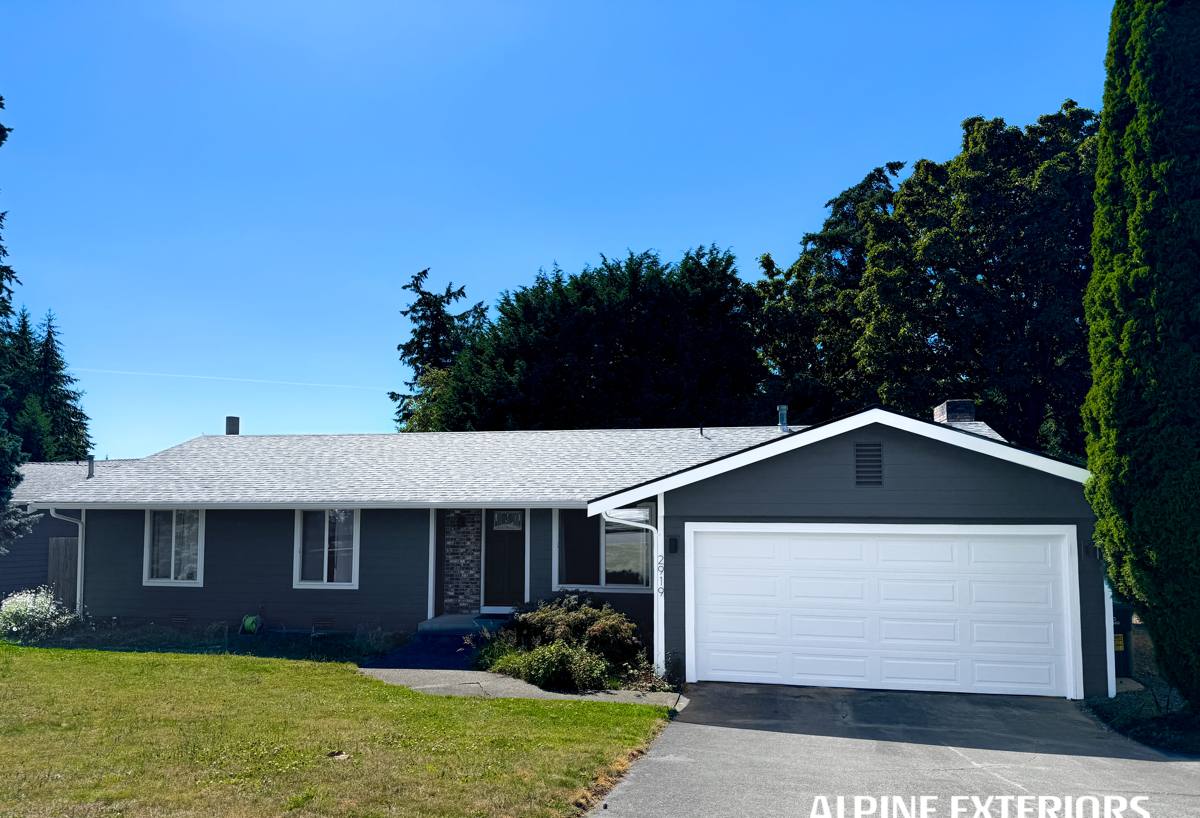
What a Blaine Home Actually Needs From Its Siding
Strip away the marketing and a house near Blaine needs siding that does four things well:
- Resists moisture absorption — driving rain hits siding sideways here more often than it falls straight down, and any product that wicks or swells with water is starting from behind.
- Holds paint and finish under salt exposure — airborne salt accelerates finish breakdown on anything with a weak factory coating or a job-site paint job.
- Doesn't feed moss and algae — organic growth needs a surface it can grip and moisture it can hold; some materials give it both.
- Stays dimensionally stable — swings between damp winters and drier summer stretches shouldn't cause boards to cup, crack, or open up at the joints.
That's the bar. It's not exotic, but it rules out a fair number of common siding products once you're honest about how they perform over ten or twenty years in this specific environment rather than in a showroom.
Why We Install Only James Hardie Fiber Cement
Whatcom County Siding installs James Hardie fiber cement exclusively — not vinyl, not LP SmartSide, not primed wood, not other fiber cement brands. That's a deliberate standard, not a sales preference. Fiber cement is non-combustible and dimensionally stable in a way wood-based and vinyl products can't match, and Hardie's ColorPlus factory finish is baked on and warranted against fading and peeling, which matters directly here — a job-site paint job is the first thing salt air and UV go after. Hardie also engineers separate product lines by climate zone (their HZ5 line is built for the Pacific Northwest's wet, cooler conditions), which is exactly the kind of climate-specific engineering a coastal Whatcom County home benefits from. We'll go into more depth on Hardie's product lines and warranty on our dedicated Hardie pages, but the short version for Blaine homeowners is: this is the one product we've found holds up to this exact climate without asking for constant upkeep.
What Correct Fiber Cement Installation Involves
Fiber cement siding fails early almost exclusively because of installation mistakes, not because the material itself gave out. It's a forgiving product when installed to spec and an unforgiving one when it isn't. A correct job includes:
- A water-resistive barrier (house wrap) installed shingle-style over the sheathing, with all seams and penetrations properly taped and sealed before any siding goes up.
- Correct fastener type, length, and spacing — stainless or hot-dip galvanized fasteners in a salt-exposed area like Blaine, driven per Hardie's fastening schedule, not "close enough."
- Proper clearance between the bottom of the siding and grade, decks, patios, and roof lines, so water has somewhere to go instead of wicking into the board's cut edge.
- Factory-cut edges kept sealed or field-primed at every cut, since an exposed cut edge is the one place fiber cement can take on moisture.
- Flashing at every window, door, and roof intersection — installed so water is directed out and away, not just caulked over and hoped for.
- Joints and butt seams treated per manufacturer spec, with the right gap and sealant, not tight-butted or over-caulked.
Every one of those details is inspectable after the fact, and every one of them is also easy to skip if a crew is moving fast. Skipped flashing or a wrong fastener won't show up as a problem in year one — it shows up in year seven as a soft spot behind the siding that nobody sees until the wall gets opened up.
How Our Process Works
From First Look to Finished Wall
- On-site assessment — we walk the home, check current siding and trim condition, note moisture and moss patterns specific to that lot's sun and wind exposure, and measure.
- Product and color selection — we help you pick the right Hardie plank profile and ColorPlus color, factoring in how each elevation actually faces the weather.
- Tear-off and sheathing check — old siding comes off and we inspect the sheathing underneath for any rot or damage before covering it back up.
- Water-resistive barrier and flashing — house wrap and flashing go in first, correctly lapped, before a single piece of siding is hung.
- Siding installation — planks, fasteners, and joint treatment installed to Hardie's published specifications, not shortcuts.
- Trim, caulking, and detail work — corners, window and door trim, and transitions get finished so water sheds away from the wall assembly.
- Cleanup and walkthrough — site cleaned, and we walk the finished job with you before calling it done.
We don't skip steps to save a day on the schedule. A siding job you can't see behind the wall is the part that determines whether it lasts fifteen years or fifty.
Cost Factors on a Blaine Fiber Cement Project
Every home is different, but the same handful of factors drive most of the cost variation we see on siding jobs in this area:
| Factor | Why It Matters Here |
|---|---|
| Existing siding removal | Tear-off of old wood, vinyl, or damaged siding adds labor and disposal time before the new siding can start. |
| Sheathing repair | Coastal moisture exposure sometimes means hidden rot behind old siding, which needs fixing before re-siding. |
| Home size and wall complexity | Dormers, multiple gables, and cut-up wall lines take more trim work and cutting than a simple rectangular elevation. |
| Trim and accessory scope | Full trim replacement, soffit, and fascia work alongside the siding adds scope but gives a more finished, longer-lasting result. |
| Plank profile and color | Some ColorPlus colors and profiles carry different material costs than others. |
| Site access | Waterfront lots, steep grades, and tight setbacks affect staging, scaffolding, and how quickly a crew can work. |
We'll walk through which of these apply to your specific home during the estimate — there's no reason to guess at a number before we've actually seen the walls.
Why a Crew That Already Works Blaine Matters
Fiber cement installation isn't exotic work, but installing it well in a coastal Whatcom County microclimate is different from installing it in a dry inland region, and a crew that hasn't worked this specific kind of exposure doesn't always know where to pay extra attention. A crew that already works Blaine and the surrounding coastline knows to check for moss buildup and trapped moisture on north- and west-facing walls before the tear-off even starts, knows which fastener and flashing choices actually hold up once salt air gets involved, and doesn't need to relearn how wind-driven rain behaves against a wall on this stretch of coast. That familiarity shows up in the details — the ones you can't see once the job's finished, but that determine whether it stays finished.
It also means faster, more accurate estimates. When a crew has already priced and installed jobs in the same weather conditions and against the same kind of housing stock found around Blaine, there's less guesswork and fewer surprises once the walls are opened up.
Living With Fiber Cement Siding in Blaine: A Maintenance Checklist
Correctly installed Hardie siding is genuinely low-maintenance compared to wood or vinyl, but "low-maintenance" isn't "no-maintenance," especially this close to the water. A short annual routine goes a long way:
- Rinse salt residue off the siding once or twice a year, especially on elevations that face open water or take the brunt of onshore wind.
- Keep gutters clear so water isn't overflowing and running down the siding face during heavy rain events.
- Watch shaded, north-facing walls and anywhere tree cover limits sun exposure for early moss or algae growth, and clean it off before it spreads.
- Check caulking at trim joints, window and door surrounds, and butt seams every year or two, and re-caulk anything that's cracked or pulled away.
- Trim back vegetation and shrubs that hold moisture against the wall or block airflow and sun.
- Do a visual check after major windstorms for any loose trim, popped fasteners, or damaged corners.
None of this is heavy work, but skipping it for years at a stretch is how a well-installed siding job starts showing problems earlier than it should.
What We Won't Do, and Why
We get asked from time to time about vinyl or engineered wood siding, usually because it's less expensive up front. We don't install either, and it's worth being straightforward about why: vinyl expands and contracts significantly with temperature swings and can crack or warp under sustained UV and salt exposure, and engineered wood products are more sensitive to sustained moisture exposure than fiber cement, which matters a lot in a place that gets as much driving rain as Blaine does. Both can be reasonable products in the right setting. We've simply found that for this specific coastline, with this specific combination of salt, rain, and moss, James Hardie fiber cement is the product that holds up with the least ongoing trouble — so it's the only one we put our name behind.
Get a Straight Answer on Your Blaine Home
If you're dealing with siding that's showing its age — chalking paint, soft trim, moss creeping up from the ground, or just a home that's due — we're happy to take a look and give you an honest read on what's going on and what it would take to fix it right. Reach out for a free, no-pressure estimate using the form below, and we'll walk the property with you before anything is decided.