 Whatcom County
Building New in Blaine? Get the Windows Right the First Time
New construction is the one chance to install windows correctly from the studs out. Once siding, trim, and interior finish work are in place, fixing a bad window installation means tearing into finished walls. If you're framing a new home or an addition in Blaine, this is the stage where flashing details, fastening patterns, and sealant choices get locked in for the next several decades. Get it right now, and you won't think about your windows again except to open them.
We install new-construction windows on homes throughout Blaine and the rest of Whatcom County, working directly with builders, framers, and homeowners acting as their own general contractor. We show up understanding the county's permit expectations, the way local framers typically rough openings, and the weather these windows will actually face once the crew moves on to the next job.
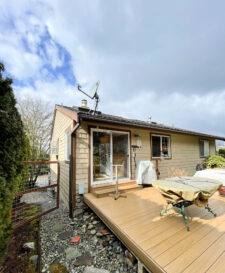
What Blaine's Climate Actually Does to Windows
Blaine sits right on the water at the top of Puget Sound, close enough to the Strait of Georgia that salt air is a daily fact of life, not an occasional coastal breeze. Combine that with Whatcom County's driving rain — wind-driven, coming in sideways off the water rather than falling straight down — and a long moss season that keeps north and west-facing surfaces damp for months at a time, and you get a set of conditions that punishes any weak point in a window installation.
Salt Air and Hardware
Salt-laden air accelerates corrosion on exposed fasteners, hinges, and lower-quality cladding. This is a specification issue more than an installation issue — it means choosing hardware and finishes rated for coastal exposure, not just standard inland-grade components.
Driving Rain and Water Management
Wind-driven rain doesn't just hit a window — it gets pushed up under trim, into gaps around the nailing fin, and behind poorly lapped house wrap. A window that would perform fine in a calmer climate can leak here if the flashing sequence isn't built to shed water downward and outward at every layer.
Moss Season and Sustained Moisture
Whatcom County's wet months aren't just about rainfall totals — it's the duration. Surfaces around window openings can stay damp for weeks, which is exactly the condition moss, algae, and eventually rot need to take hold if sheathing or trim isn't properly sealed and ventilated.
New Construction vs. Replacement: Why the Method Is Different
New-construction windows have a nailing fin and get installed into an open, unfinished wall assembly, before siding and often before house wrap is fully dressed in around the opening. That's a real advantage: it lets us build a proper flashing system in the correct order, rather than working around existing siding the way a replacement job requires.
The trade-off is that new-construction installs demand more coordination with the framing and siding crews. If the rough opening is off, if house wrap isn't lapped correctly before the window goes in, or if the siding crew doesn't understand how the window's flashing needs to integrate with theirs, problems get built into the wall before anyone notices.
What a Correct Installation Actually Involves
A window that looks fine from the outside can still be installed wrong. The parts that matter most are the ones you can't see once the siding is on.
- Rough opening checked for square, level, and correct sizing before the window ever gets set
- Sill pan flashing installed to catch and direct any water that gets past the window back outside, not into the wall cavity
- House wrap integrated with the window flashing in proper shingle-lap order — upper layers over lower layers, always
- Nailing fin fastened per the manufacturer's schedule, not just "enough nails to hold it"
- Backer rod and sealant at the interior and exterior gaps, sized and placed correctly rather than just caulked over
- Head flashing or drip cap detailed to shed water away from the top of the frame, which matters more here than in drier climates
- Window checked for square and proper reveal after fastening, before insulation and trim close it in
Skip or rush any one of these steps and the window itself doesn't matter — a premium unit installed with a sloppy flashing sequence will leak here just as fast as a cheap one.
Choosing Materials for a Salt-Air, High-Rain Climate
Material choice matters more in Blaine than it does further inland. Here's how the common options hold up under sustained coastal moisture and salt exposure:
| Frame Material | Coastal Durability | Maintenance | Typical Trade-Off |
|---|---|---|---|
| Vinyl | Good — won't rust or rot | Low; occasional cleaning | Frame can expand/contract more with temperature swings; quality varies widely by manufacturer |
| Fiberglass | Very good — stable and corrosion-resistant | Low | Higher upfront cost than vinyl |
| Wood-Clad | Fair — clad exterior helps, but any breach exposes wood core | Higher; joints and finish need monitoring | Best interior look, but least forgiving of installation or sealant failure in this climate |
| Aluminum | Poor without marine-grade finish | Moderate | Prone to condensation and corrosion near salt air unless properly specified |
Glass matters too. Low-E coatings help with energy performance year-round, and in a climate with this much cloud cover and diffuse light, the difference between a good and mediocre glass package shows up mostly in comfort near the window — less cold radiating off the glass on a January evening — rather than in dramatic energy bills.
Hardware and Finish Details Worth Specifying Up Front
On new construction, you're making these decisions once, so it's worth doing it deliberately rather than defaulting to whatever's standard.
- Ask about corrosion-resistant fasteners and hardware finishes for any window on the water side of the home or within a mile or two of the shoreline
- Confirm the sealants and flashing tapes being used are rated for the temperature range and UV exposure they'll actually see
- Match trim material to the same durability standard as the window — a great window with rot-prone trim just moves the problem a few inches over
Our Process From Rough Opening to Final Trim
We coordinate directly with your framer or general contractor so window installation happens at the right point in the build sequence — not too early, before house wrap is ready, and not so late that it holds up siding. On site, we verify every rough opening before we set anything, build the flashing sequence in the correct shingle-lap order, set and fasten each unit to the manufacturer's specification, and seal the interior and exterior per the window's warranty requirements. Before we leave, every opening gets checked for square, level, and proper drainage path — the kind of check that's easy to skip and expensive to have skipped later.
We also flag anything that looks off in the framing or house wrap before it becomes our problem or yours down the line. Catching a bad rough opening or a house wrap lapped backward is a five-minute conversation on site; it's a warranty dispute a year later.
Mistakes We See on Local New Builds
The same handful of issues show up repeatedly on new construction in this area, usually from crews unfamiliar with how aggressively this climate tests a wall assembly.
House Wrap Lapped the Wrong Way
Water needs to shed downward over every layer. Even one course of house wrap tucked under the layer below instead of over it gives driving rain a path straight into the wall.
Sealant Used as a Substitute for Flashing
Caulk is a backup layer, not the water management system. Relying on sealant alone at the nailing fin instead of proper flashing tape or pan flashing is a common shortcut that fails first in a climate this wet.
Skipping the Sill Pan
Sill pan flashing is the cheapest insurance in the whole install, and it's the step most often skipped when a crew is trying to move fast.
Why a Crew That Already Works Blaine Matters
Local experience here isn't a marketing line — it changes real decisions on site. A crew that's installed windows on other Blaine builds knows which orientations take the worst of the wind-driven rain, understands what Whatcom County inspectors expect to see at rough-in and final, and has already seen what happens to the wrong flashing detail two winters later. That's the difference between a window that performs quietly for decades and one that becomes a callback.
If you're planning a new build or an addition in Blaine, we're happy to walk the site, review your window schedule, and put together a free, no-pressure estimate — just fill out the form below.