 Whatcom County
Blaine's Roofs Work Harder Than Most
Blaine sits right where the Strait of Georgia meets Boundary Bay, which means roofs here deal with a combination most inland Whatcom County homes never see: salt-laden air off the water, wind-driven rain that comes in sideways instead of straight down, and a moss season that can run eight or nine months out of the year. None of that is dramatic on its own. It's the combination, applied year after year, that wears a roof down faster than the manufacturer's warranty label would suggest.
A roof repair in Blaine has to account for all three factors at once. Patch a leak without addressing the moss that caused it, or use standard fasteners in a spot that gets constant salt spray, and the "fix" becomes a callback within a year or two. Our approach starts from the climate, not just the symptom.
What "Roof Repair" Actually Covers
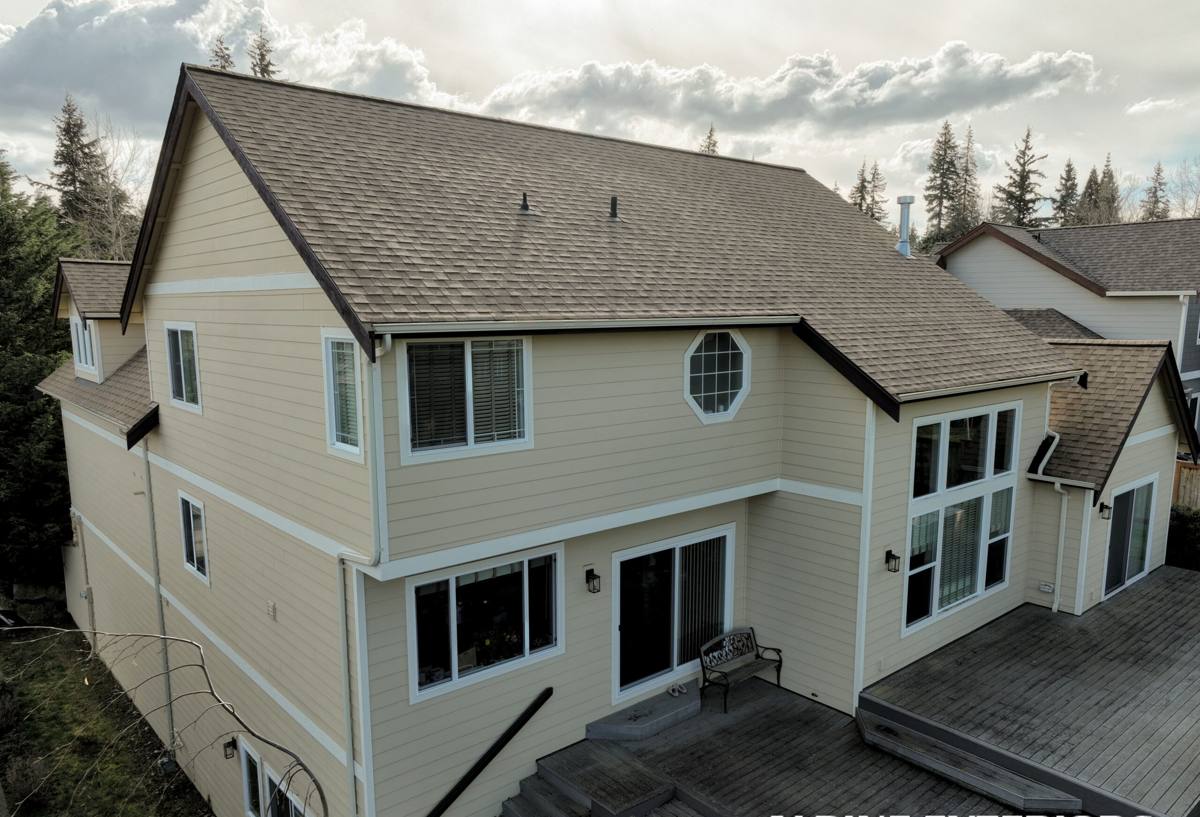
Roof repair is targeted work: fixing flashing, replacing damaged shingles or sections, resealing penetrations, clearing and treating moss, and stopping active leaks — without tearing off and replacing the whole roof system. It's the right call when the roof deck and the majority of the roofing material are still sound and the problem is localized.
When Repair Makes Sense
If your roof is under 15-20 years old, has isolated damage (a storm-torn section, a failed flashing detail, one or two problem valleys), and the decking underneath is dry and solid, repair is almost always the more sensible move — both for your budget and for not disturbing material that's still doing its job.
When Repair Isn't the Honest Answer
Sometimes a homeowner calls about "a leak" and what we find is widespread granule loss, soft decking in multiple spots, or shingles that are simply at the end of their service life. In those cases, we'll say so directly. Patching a roof that's failing broadly just delays a bigger problem and spends money that would be better put toward replacement. We'd rather lose a small repair job than let you pay for one that won't hold.
The Blaine-Specific Problems We See Most
Moss and Organic Growth
Whatcom County's damp, mild climate is close to ideal for moss, and Blaine's proximity to the water keeps humidity and moisture on the roof surface longer than in drier inland spots. Moss isn't just cosmetic — it holds water against the roofing material, lifts shingle edges, and works its way under flashing over time. Left alone through a full moss season, it can turn a small leak point into a structural repair.
Wind-Driven Rain and Flashing Failure
Blaine gets direct exposure to weather coming off the Strait, and wind-driven rain doesn't behave like a normal downpour. It pushes water sideways and upward under laps and flashing that would otherwise shed water fine. Most of the "mystery leaks" we're called out for in Blaine trace back to flashing around chimneys, skylights, and roof-to-wall transitions — not the field of the roof itself.
Salt Air and Metal Corrosion
Salt air accelerates corrosion on any exposed metal — fasteners, flashing, vents, gutter hardware. A fastener or flashing detail that would last decades a few miles inland can start failing noticeably sooner this close to the water. We factor that into what materials and fastener types we use for repairs here, not just for new installs.
Valleys and Debris Buildup
Roof valleys collect needles, leaves, and moss debris faster in this climate, and a clogged valley redirects water instead of channeling it off the roof. It's one of the most common, and most preventable, causes of a Blaine roof leak.
Our Repair Process
- Inspection first. We look at the whole roof, not just the spot you called about — a leak often shows up in one place but originates somewhere else.
- Honest diagnosis. We explain what's actually wrong, in plain terms, before we talk about fixing it.
- Written scope and estimate. You know what's being done and roughly what it costs before work starts.
- Repair work. Removing damaged material, addressing the underlying cause (not just the visible symptom), and rebuilding the affected section to match the surrounding roof.
- Moss and debris treatment where relevant, so the repair isn't undone by the same growth that caused the original problem.
- Final check. We confirm the repair sheds water correctly and walk you through what we found and fixed.
Repair vs. Replacement: How We Help You Decide
| Factor | Points Toward Repair | Points Toward Replacement |
|---|---|---|
| Roof age | Under ~15 years | Nearing or past expected lifespan |
| Damage extent | Localized (one section, one leak point) | Spread across multiple areas |
| Decking condition | Dry, solid underneath | Soft, stained, or rotted in multiple spots |
| Shingle condition elsewhere | Granules intact, laying flat | Widespread granule loss, curling, brittleness |
| History of repairs | First or second repair call | Repeated repairs in different spots each year |
No single factor decides it alone — we look at the whole picture and tell you where your roof actually falls.
Cost Factors for a Blaine Roof Repair
| Factor | Why It Matters Here |
|---|---|
| Roof pitch and access | Steeper or harder-to-reach sections take more time and care to work on safely |
| Extent of moss removal needed | Heavy moss buildup adds cleaning and treatment time before repair work can start |
| Flashing complexity | Chimneys, skylights, and multiple roof planes mean more detail work than a simple field repair |
| Material matching | Matching existing shingle style, color, or metal finish can affect sourcing time |
| Underlying deck damage | If moisture has reached the decking, that section needs to be replaced before re-roofing over it |
We don't quote a roof repair over the phone — every job above is different enough that a real number requires actually seeing the roof. What we can promise is a written estimate before any work begins, with no surprise line items added afterward.
Materials and Methods Built for This Climate
For repairs in Blaine, we lean toward corrosion-resistant fasteners and flashing metals in areas with direct salt-air exposure, and we're careful about sealant choice — some sealants perform well short-term but break down faster under constant damp/salt cycling than others. Where a repair involves flashing, we prioritize mechanical water-shedding (proper laps, correct flashing geometry) over relying on sealant alone, since sealant is a maintenance item and lapped metal is not.
We also treat moss removal as part of the repair, not an optional add-on, when moss is contributing to the failure. Scraping moss without treating the surface just means it grows back and causes the same problem again within a season or two.
Signs Your Blaine Roof Needs a Repair Call
- Water stains on ceilings or upper walls, especially after a windy rainstorm
- Visible moss buildup on the roof surface, particularly on north-facing or shaded slopes
- Shingles that look lifted, curled, or are missing granules in patches
- Rust streaks or corrosion around metal flashing, vents, or fasteners
- Debris collecting in valleys instead of washing off
- A leak that only shows up during storms with strong wind, not steady rain
- Sagging or soft-feeling spots when walking the attic above the roof deck
If any of these sound familiar, it's worth having someone look before the next storm season adds to it — most of these are inexpensive to address early and expensive to ignore.
Why a Crew That Already Works Blaine Matters
A roofer who works Whatcom County regularly already knows which details fail first in this climate — which flashing spots leak, how aggressive moss gets by late summer, and how much salt exposure actually matters at different distances from the water. That's not something you can fully substitute with a general roofing checklist. It also means faster response: a local crew can get to a Blaine roof leak without routing a truck across the county, which matters when water is actively getting into your home.
We also stand behind repair work with a straightforward warranty on our labor, and we're not going anywhere — if a repair doesn't hold the way it should, you're calling a crew that's still local and still reachable, not chasing down a company that worked the area for one season and moved on.
Getting Started
If you've got a leak, moss buildup, or storm damage on a Blaine roof, we're happy to come take a look and give you a straight answer — repair, replace, or in some cases, nothing urgent at all yet. The estimate is free, there's no pressure attached to it, and you'll get a written scope of what we'd actually do before any work starts. Fill out the form below to get on the schedule.