 Whatcom County
Why Blaine's Climate Is Hard on Windows
Blaine sits right on Semiahmoo Bay, at the very top of Whatcom County, which means homes here deal with a combination of weather stresses that inland houses simply don't face. Salt-laden air off the water accelerates corrosion on hardware, fasteners, and unprotected metal components. Driving rain, pushed sideways by wind off the Strait, tests every seam and joint in a window assembly far harder than a straight-down rainfall would. And the long, damp moss season that stretches through much of the fall, winter, and spring keeps wood trim, sills, and surrounding siding wet for extended stretches, which is exactly the environment where minor installation flaws turn into rot.
None of this means windows fail quickly in Blaine. It means the margin for error during installation is smaller. A flashing detail that would get away with being "close enough" in a drier climate can let water track behind the window over a few wet seasons here. That's the standard we install to: not just a window that looks right the day it goes in, but an assembly that sheds water correctly for the next twenty-plus years of Whatcom County weather.
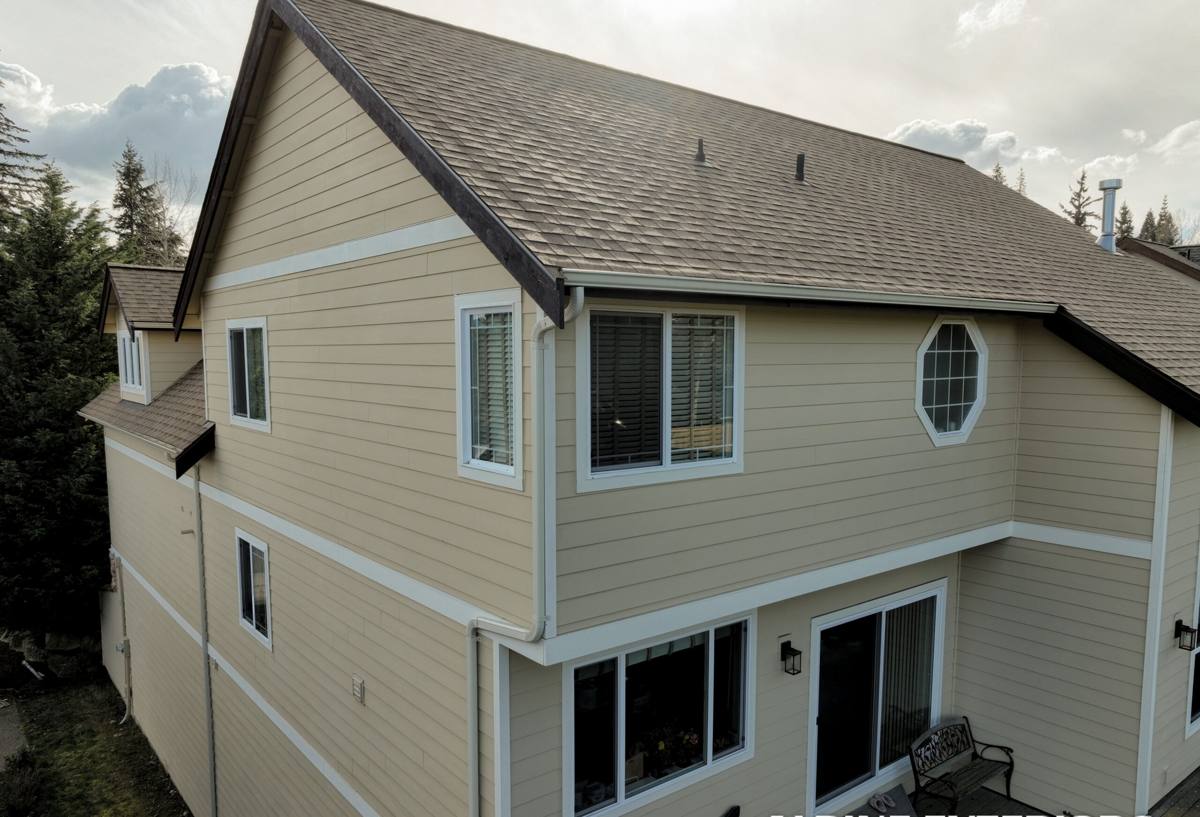
Signs a Blaine Home Needs New Windows
Homeowners usually call us for one of a few reasons. Recognizing which one applies to your house helps set expectations for the job.
- Fogging or moisture between panes — the seal on a double-pane unit has failed. The glass itself isn't fixable at that point; the sash or full unit needs replacing.
- Soft or discolored trim around the window — often a sign water has been getting behind the frame, which is common on older installations that weren't flashed correctly to begin with.
- Drafts you can feel on a windy day — original wood windows from decades past, or aluminum-frame units from the 70s and 80s, rarely seal as tightly as current construction.
- Windows that are difficult to open, close, or lock — settling, swollen wood, or worn balance mechanisms.
- Rising heating bills with no other explanation — single-pane or poorly sealed windows are a common culprit in older Blaine homes.
If you're only seeing one of these symptoms on one or two windows, a targeted repair or replacement of just those units may be all you need — we'll tell you honestly if that's the case rather than pushing a whole-house job.
What Correct Window Installation Actually Involves
Window installation looks simple from the outside: old window comes out, new window goes in. The part that determines whether it lasts happens in between, and it's mostly invisible once the job is done.
The Opening, Not Just the Window
Every installation starts with the rough opening, not the window itself. Before a new unit ever goes in, we check that the opening is square, that the sill slopes slightly outward to shed water, and that the sheathing and framing underneath are dry and sound. If there's hidden rot from a prior installation — which we do find in older homes on the water side of town — it gets addressed before anything new goes in. Installing a good window into a bad opening just hides the problem for a while.
Flashing and Water Management
This is the part that matters most in a climate like Blaine's. Correct flashing means water that reaches the window — and in driving rain, water will reach the window — has a defined path to drain back out, not into the wall cavity. That means flashing tape or pan flashing at the sill, proper layering with the house wrap (upper flashing over the wrap, side and sill flashing under it, shingle-style, so gravity always moves water outward and down), and a weep path that isn't blocked by sealant or trim.
Air Sealing and Insulation
The gap between the window frame and the rough opening needs to be filled with a low-expansion foam or backer rod and sealant — not packed tight with standard spray foam, which can bow the frame and cause the window to bind or operate poorly. Done right, this gap sealing is a major factor in draft elimination and energy performance, often more so than the window's glass package alone.
Exterior Sealing
The exterior perimeter gets sealed with a quality, paintable sealant rated for the siding material involved, leaving weep holes clear. In a salt-air environment, we also pay attention to fastener selection — corrosion-resistant screws and flashing components hold up substantially better here than standard hardware over a 15-20 year span.
Choosing the Right Window for a Blaine Home
Frame material matters more on the coast than it does further inland, because salt air and constant moisture cycling are harder on some materials than others.
| Frame Material | Coastal Performance | Maintenance | Typical Trade-Off |
|---|---|---|---|
| Vinyl | Good — won't corrode or rot, handles moisture well | Low — occasional cleaning | Limited color options; frame can flex on very large units |
| Fiberglass | Very good — dimensionally stable, resists moisture and salt exposure | Low | Higher upfront cost than vinyl |
| Wood (clad exterior) | Depends heavily on cladding integrity — exposed wood is a poor fit this close to the water | Higher — exterior cladding and interior wood both need upkeep | Best look for some homes, but more sensitive to installation quality |
| Aluminum | Poor without thermal breaks — conducts cold, prone to condensation, and older units corrode in salt air | Moderate | Common in older Blaine homes; usually a replacement candidate |
For homes on or near the water in Blaine, we generally steer customers toward vinyl or fiberglass frames for the areas most exposed to salt spray and wind-driven rain, and reserve wood-clad options for more sheltered elevations where the homeowner specifically wants that look. This isn't a knock on wood windows as a product — it's about matching material to exposure, and being honest that a west- or north-facing wall catching bay wind is a tougher environment than a protected side yard.
Our Installation Process
- On-site assessment. We look at each window opening individually, not just the house as a whole — orientation, exposure, and existing condition all vary window to window.
- Measurement and ordering. Windows are measured for the specific opening, accounting for any squaring or repair work needed first.
- Removal. Old units come out carefully to avoid unnecessary damage to surrounding siding and trim.
- Opening inspection and repair. Sheathing, framing, and sill condition are checked before anything new goes in.
- Flashing installation. Sill pan, side, and head flashing installed in the correct shingle-lap order.
- Window setting and shimming. The unit is set level, plumb, and square, then shimmed and fastened per manufacturer specification.
- Insulation and air sealing. Low-expansion foam or backer rod fills the perimeter gap without distorting the frame.
- Exterior trim and sealant. Trim is reinstalled or replaced, and sealant is applied at appropriate joints only, keeping weep paths clear.
- Operation check. Every window is opened, closed, and locked to confirm smooth operation before we consider the job finished.
Mistakes We See From Past Installations
A fair amount of our work in Blaine is diagnosing and correcting problems left behind by a previous installation — sometimes DIY, sometimes a rushed contractor job. The recurring issues:
- Sealant applied around the entire perimeter with no weep path, trapping water instead of releasing it.
- Missing or reversed flashing order, so water is funneled behind the house wrap instead of over it.
- Rough openings never checked for square, leaving windows that operate stiffly or won't latch fully.
- Standard spray foam packed into the perimeter gap, bowing the frame inward.
- Fasteners and hardware not rated for coastal exposure, showing rust within a few years.
Every one of these is preventable with the right sequence and materials — none of it is exotic or expensive to do correctly, it just has to be done in order.
Cost Factors for Window Installation
Every home and every window is different, so we don't quote sight-unseen, but these are the main variables that move the price:
| Factor | Why It Matters |
|---|---|
| Frame material chosen | Vinyl, fiberglass, and clad-wood units carry different material costs |
| Window size and configuration | Larger units, bays, and multi-panel configurations take more labor and structural consideration |
| Condition of the existing opening | Hidden rot or out-of-square framing adds repair time before the new window goes in |
| Number of windows in one visit | Doing several windows in one trip is generally more efficient per unit than one at a time |
| Exterior finish work | Matching existing trim or siding around the opening can add scope |
We provide a written, itemized estimate before any work starts, so you know exactly what's included and why.
Maintenance for Blaine's Climate
A correctly installed window still benefits from basic upkeep in this environment. A short annual routine goes a long way:
- Rinse salt residue off frames and glass a few times a year, especially on water-facing elevations.
- Check and clear weep holes at the bottom of the frame so drainage paths stay open.
- Inspect exterior sealant joints yearly for cracking or separation, and touch up before the wet season sets in.
- Keep moss and organic debris cleared from nearby trim and sills — moss holds moisture against surfaces.
- Test locks and operating hardware periodically; a light lubricant on tracks and hinges prevents corrosion-related sticking.
Why a Crew That Already Works Blaine Matters
Window installation isn't unique to any one town, but the judgment calls made on-site are shaped by what a crew has seen locally. A crew that regularly works Blaine and the surrounding Whatcom County coastline knows to check for salt-air corrosion on existing hardware before it's asked to, knows which elevations on a typical Blaine lot take the worst of the wind-driven rain, and doesn't need to relearn the moss-season moisture patterns that affect sill and trim condition here. That familiarity shows up in fewer surprises during the job and a finished installation that's built for the actual conditions your house faces, not a generic climate assumption.
If you're weighing whether it's time to replace a window or two, or you want a straight answer on what a previous installation got wrong, we're glad to take a look. Reach out for a free, no-pressure estimate using the form below — we'll walk the openings with you and tell you plainly what we see.