 Whatcom County
 Board & Batten Siding: A Natural Fit for Bellingham's Look and Climate
Board and batten has become one of the most requested siding profiles in Bellingham, and it's easy to see why. The vertical lines read as clean and modern on a newer build, or right at home on a craftsman or farmhouse-style property, and the strong shadow lines the battens create give a house real depth instead of a flat wall. But in Whatcom County, a siding profile isn't just a look — it's a system that has to hold up against salt air off Bellingham Bay, driving rain that comes in sideways off the water, and a moss season that runs longer here than almost anywhere else in the state. A board and batten job that looks sharp on day one but wasn't built for this climate will show it within a few wet seasons.
This page covers what board and batten siding needs to do in Bellingham specifically, what a correct installation actually involves, and why we only install it in James Hardie fiber cement rather than wood, vinyl, or engineered wood panel systems.
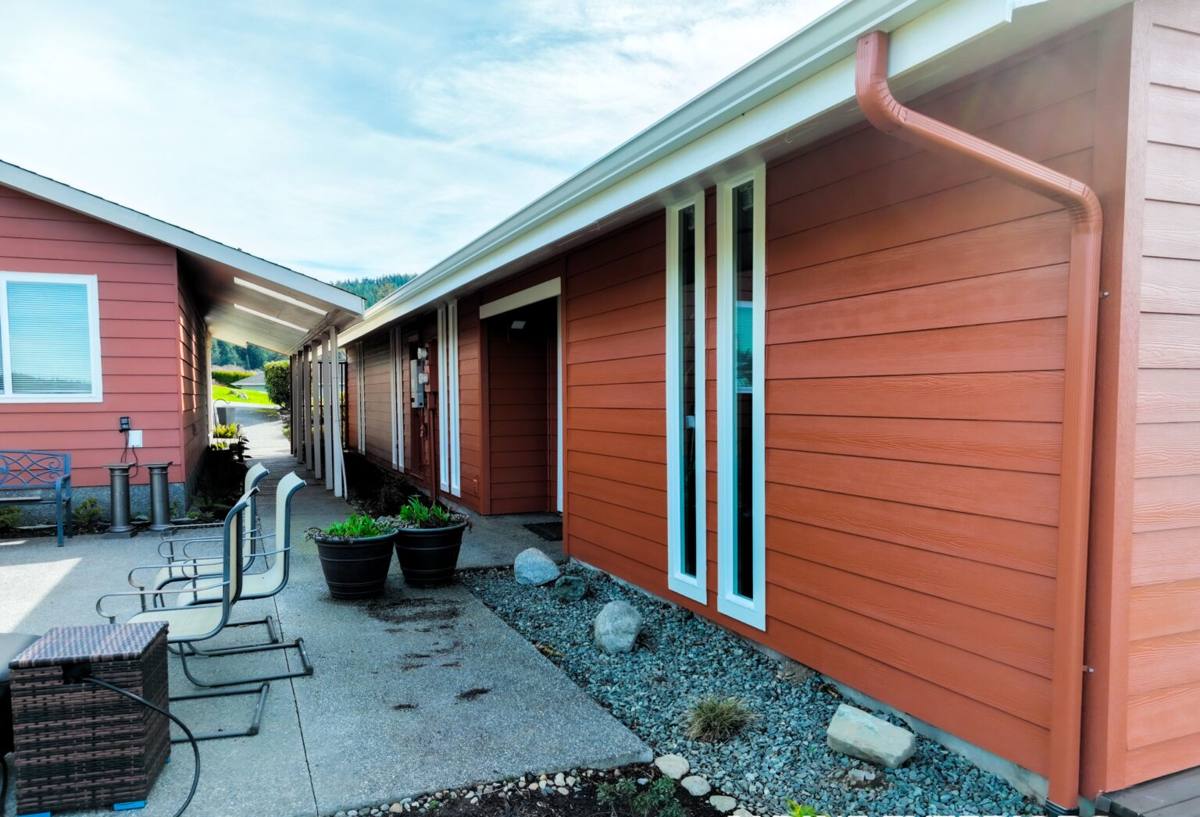
What Whatcom County Weather Does to Vertical Siding Over Time
Salt Air and Corrosion
Bellingham sits directly on Bellingham Bay, and salt-laden air moves off the water year-round. Salt air accelerates corrosion in exposed fasteners, degrades lower-grade paint films faster than inland climates, and can leave a chalky residue on porous or poorly sealed materials. On a board and batten wall, the battens themselves create dozens of extra fastener lines and lap joints compared to standard lap siding — every one of those needs a material and a finish that can take ongoing salt exposure without breaking down.
Driving Rain and Moisture Intrusion
Wind-driven rain off the Sound doesn't fall straight down — it hits walls at an angle, and vertical siding profiles are more exposed to that kind of lateral water pressure than horizontal lap siding. Board and batten relies on the seams between boards and battens to shed water correctly. If those laps, the flashing behind them, and the drainage plane underneath aren't detailed correctly, water finds its way behind the siding and into the wall assembly, where it does damage long before anyone notices a problem from the outside.
Moss, Shade, and the Long Wet Season
A lot of Whatcom County properties sit under partial conifer canopy or get filtered, indirect light for much of the year, and our wet season stretches across most of the calendar. Moss and algae need moisture and shade to take hold, and they will colonize any siding surface that stays damp for long stretches, especially on north-facing walls or lower courses near grade. The texture and finish of the siding material make a real difference in how much moss and mildew actually take hold, and how easy the surface is to clean without damaging it.
Why We Install Board & Batten Only in James Hardie Fiber Cement
Why Not Wood Board & Batten
Real wood board and batten, especially cedar, has a genuine appeal — the grain and warmth are hard to fully replicate. But wood is an ongoing maintenance commitment in a climate this wet: it needs periodic recoating or repainting, caulking at joints has to be checked and renewed, and end grain and lower courses are the first places rot and insect damage show up if moisture gets in and stays. Over a couple of decades in Whatcom County's climate, that upkeep adds up in both cost and attention, and skipping a cycle of maintenance is exactly when problems start.
Why Not Vinyl or Engineered Wood Panel Systems
Vinyl board and batten panels are inexpensive and go up fast, which is a real advantage in the right situation. But vinyl is thin, it expands and contracts significantly with temperature swings, and the vertical seams at each batten are literal water-entry points if the installation isn't precise — over time those panels can warp, fade, or rattle loose in strong wind off the water. Engineered wood panel products like LP SmartSide use a factory-sealed strand board core, which works well until an edge gets cut, nicked, or left unsealed on site — once moisture reaches that exposed core in a climate this wet, swelling and delamination can follow. James Hardie fiber cement doesn't have either weakness: it's dimensionally stable across temperature and moisture swings, it's non-combustible, and its ColorPlus factory finish is baked on and cured before it ever reaches the jobsite, so the finish isn't depending on field-applied paint or caulk to stay sealed. That's why board and batten, on every home we install it on, goes up in Hardie.
What a Correct Board & Batten Installation Involves
Rainscreen and Drainage Plane
In a climate like ours, siding shouldn't sit flush against the wall's water-resistive barrier. A correct install uses a rainscreen gap — typically furring strips behind the panels — so any moisture that does get past the siding has a way to drain and the wall can dry out instead of staying damp against the sheathing. This one detail does more for long-term performance in Bellingham's rain than almost anything else in the installation.
Fastening and Batten Spacing
Battens need to be spaced and fastened to manufacturer spec, hitting solid framing with the correct fastener type and depth. Overdriven or underdriven fasteners are a common source of early failures — they either crack the board or leave it loose enough to work in the wind. Batten spacing also has to account for the panel's expansion and contraction; crowding boards too tight is a mistake that shows up later as buckling or cracked caulk lines.
Flashing, Caulking, and Trim Details
Every window head, door top, and horizontal joint needs proper flashing — not just a bead of sealant. Kickout flashing where a roofline meets a wall, Z-flashing at horizontal breaks, and correctly lapped house wrap all matter more on a vertical profile than people expect, because water is being intentionally directed down and out at each of those transitions. Caulk has a place, but it should be a backup to good flashing, never the only line of defense.
Design Choices for Bellingham Homes
Reveal and Batten Spacing
Batten spacing is typically set somewhere between 12 and 24 inches on center, and that spacing changes the whole feel of the wall — tighter spacing reads more traditional and formal, wider spacing gives a more modern, minimal look. It's worth deciding this alongside window and trim placement so the pattern lines up cleanly across the elevation.
Color and ColorPlus Technology
James Hardie's ColorPlus finish is a factory-applied, oven-cured finish that resists fading and chipping far better than field-applied paint, and it comes backed by a real finish warranty. Against Whatcom County's typically gray skies and evergreen backdrop, darker charcoals, deep greens, and cool grays tend to read particularly well on board and batten, though the full ColorPlus palette gives homeowners a lot of room to work with.
Mixing Board & Batten With Other Siding Profiles
Board and batten doesn't have to cover an entire house. A common approach is using it as an accent on gables, dormers, or a second story, paired with Hardie lap siding on the main body, or bringing in Hardie shingle-style siding for a small accent area. That mix adds visual interest without requiring the added detailing that a full board and batten exterior needs at every wall.
Material and Cost Factors
| Material | How It Handles Bellingham's Wet, Salty Climate | Maintenance Burden | Longevity When Installed to Spec |
|---|---|---|---|
| James Hardie fiber cement | Non-combustible, dimensionally stable, factory-cured finish resists salt air and moisture | Occasional rinsing, no repainting cycle | Decades, backed by a strong transferable warranty |
| Cedar / wood | Attractive but absorbs moisture; end grain and low courses are vulnerable | Recurring recoating, caulk checks, rot inspection | Shorter without diligent, ongoing upkeep |
| Vinyl | Thin, expands/contracts with temperature; seams are moisture risk points | Low, but limited repair options once damaged | Variable; can warp or fade over time |
| Engineered wood (LP SmartSide) | Factory-sealed, but vulnerable once edges are cut or nicked on site | Moderate; edge sealing and caulk maintenance | Depends heavily on installation precision |
Board and batten in fiber cement generally costs more upfront than vinyl and can run comparable to or above quality wood siding, largely because of the extra material (battens plus base panels) and the additional flashing and fastening detail the profile requires. That upfront cost buys a system that isn't relying on a repainting or recaulking schedule to keep performing.
Our Board & Batten Process in Bellingham
- On-site assessment of the walls, existing siding condition, and any moisture or rot already present behind the current cladding.
- Removal of old siding and inspection of the sheathing and framing before anything new goes up — problems get fixed here, not covered over.
- Installation of the water-resistive barrier, flashing, and rainscreen furring strips to set up correct drainage behind the siding.
- Installation of James Hardie panels and battens to manufacturer spacing and fastening specifications.
- Final trim, flashing, and sealant detailing at all windows, doors, and roof transitions.
- Walkthrough with the homeowner before we consider the job finished.
A Maintenance Checklist for Board & Batten in a Wet Climate
- Rinse siding a couple of times a year to clear salt film and airborne debris, especially on walls facing the water.
- Keep gutters and downspouts clear so water isn't overflowing directly onto siding below.
- Trim back vegetation and tree limbs that keep a wall shaded and damp, which encourages moss growth.
- Walk the exterior once a year and check caulk lines at trim, windows, and penetrations for cracking or gaps.
- Look closely at lower courses near grade and any north-facing walls, where moss and mildew tend to start first.
- Address any splash-back from hardscaping or sprinklers hitting the lower siding courses directly.
Why Local Whatcom County Experience Matters
Board and batten done wrong doesn't usually fail in the first year — it fails quietly over several wet seasons, which is exactly why the installation details matter more here than in a drier climate. A crew that already works in Bellingham and across Whatcom County knows how much rainscreen gap this weather actually calls for, how local building departments expect flashing details handled, and where moss and moisture problems tend to start on homes in this area. That local track record is worth more than a low bid from a crew that's installing this profile for the first time in a marine climate.
If you're weighing board and batten for a home in Bellingham, we're glad to take a look and walk you through what it would take for your specific walls and exposure. Reach out for a free, no-pressure estimate using the form below.