 Whatcom County
Why Board & Batten Fits Blaine's Coastline So Well
Board and batten has become one of the most requested siding styles in Blaine, and it's not just about looks. The vertical lines read as clean, modern, and a little coastal — a natural fit for homes sitting close to the water in Washington's northwest corner. But the reason we recommend it as strongly as we do has less to do with style and more to do with how the profile actually performs against Blaine's weather.
Blaine sits at the very top of Whatcom County, right on the water and right on the border, which means homes here take a steady diet of salt-laden air, wind-driven rain coming off the Strait, and a moss season that can run most of the year on shaded or north-facing walls. Board and batten's wide, flat boards and raised battens shed water differently than lap siding — when it's detailed correctly, the vertical channels move rain down and off the wall quickly instead of letting it pool along horizontal seams. That matters in a place where "a little rain" is often sideways rain.
The Blaine Climate Factor
Three things define siding performance in this part of Whatcom County: salt exposure, wind-driven rain, and persistent moisture that feeds moss and algae. Salt air accelerates corrosion on fasteners and metal trim, driving rain finds every gap in a weather barrier that wasn't lapped correctly, and shaded exterior walls near mature trees or close to the water stay damp long enough for moss to take hold on the wrong siding material. None of this is unique to Blaine within Whatcom County, but homes this close to the shoreline get a more concentrated version of it than inland neighborhoods do.
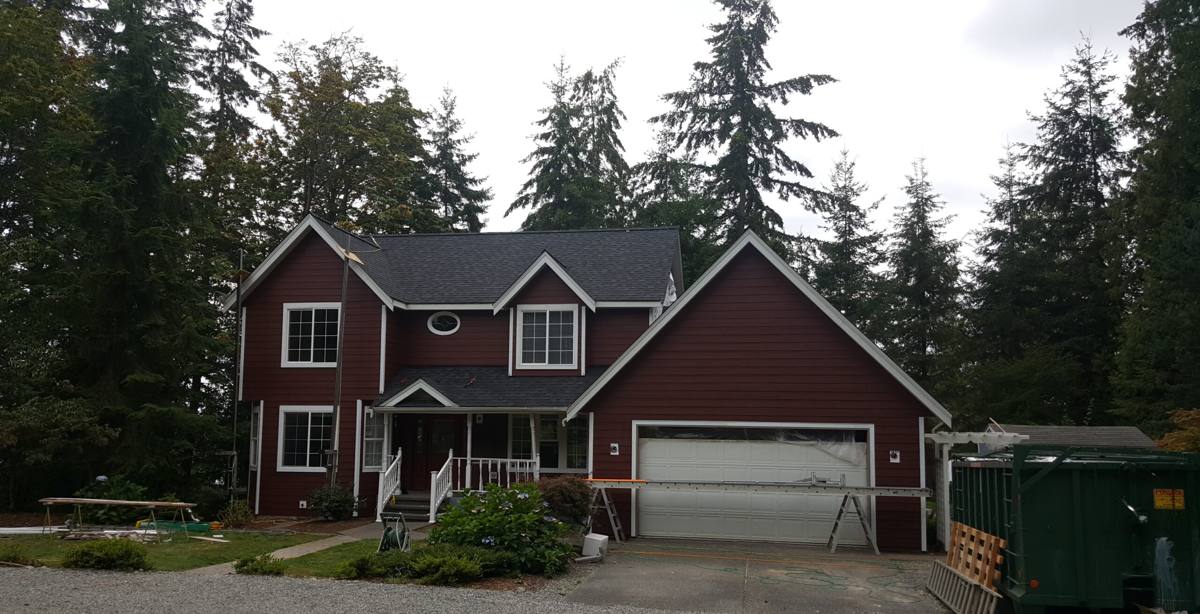
What Correct Board & Batten Installation Actually Involves
Board and batten looks simple from the street — flat panels, vertical strips, done. In practice it's less forgiving than lap siding if any step gets skipped, because there are more vertical joints and more fastener penetrations for water to find. A correct installation is built in layers, and every layer has to do its job.
Weather-Resistive Barrier and Flashing
Everything starts behind the siding. A continuous weather-resistive barrier goes over the sheathing first, with all seams lapped shingle-style so water moving down the wall never runs behind a seam. Flashing goes over every window, door, and horizontal trim transition, integrated into the barrier the same way. This layer is invisible once the job is done, which is exactly why it's the step that gets shortcut on lower-bid jobs — and exactly why it's the step that determines whether the wall stays dry for the next 30 years.
Batten Spacing and Fastening
Battens need consistent spacing over the seams of the underlying panel, fastened into studs (not just sheathing) at the intervals the manufacturer specifies. Fastener choice matters more in Blaine than in drier parts of the state — corrosion-resistant fasteners are worth the small extra cost when the alternative is streaking and loosening battens a decade in.
Clearance and Drainage
Board and batten needs a gap at the bottom — proper clearance from grade, decks, patios, and roof lines — so the siding never wicks up standing water. On homes near the water table or with limited grade slope, this clearance is one of the first things we check, because it's one of the most common corners cut on older installs we see when we're called out to fix a failing wall.
Why We Install Only James Hardie Fiber Cement for This Look
Board and batten can be built from several materials — vinyl, engineered wood, primed spruce, cedar — and each has a real fan base. We don't install any of them. Every board and batten job we do uses James Hardie fiber cement, and that's a standard we hold company-wide, not just for this style.
The reason comes back to the same climate factors above. Fiber cement doesn't swell, cup, or rot the way wood-based products can when they take on repeated moisture. It's non-combustible, which matters more every wildfire season across Washington. And it holds a factory-applied ColorPlus finish that's engineered to resist the fading and chalking that salt air and UV exposure cause on field-painted materials. For a style built around crisp, flat panels and sharp batten shadow lines, a material that stays dimensionally stable is what keeps those lines looking sharp instead of wavy after a few wet winters.
HardiePanel and Vertical Siding Systems
For board and batten specifically, we work with James Hardie's engineered panel and vertical siding lines, matched to a batten layout sized and spaced to the home's elevations. Hardie's HZ5 product line is engineered for the kind of wet, moderate Pacific Northwest climate Blaine sits in, which is part of why we don't substitute in a generic or off-brand fiber cement panel — the climate engineering and the factory finish are part of what you're paying for.
Board & Batten Compared to Other Siding Styles
| Siding Style | How It Handles Blaine's Rain & Salt Air | Typical Maintenance |
|---|---|---|
| Board & Batten (Hardie fiber cement) | Vertical drainage path, factory finish resists salt/UV fading | Occasional wash; repaint not required for decades |
| Lap Siding (Hardie fiber cement) | Excellent, more horizontal seams to detail but proven system | Occasional wash; repaint not required for decades |
| Vinyl vertical/board-look | Can warp or fade under sun and temperature swings; seams loosen over time | Low, but replacement rather than repair once damaged |
| Primed spruce or cedar board & batten | Attractive but absorbs moisture at joints; needs a maintained paint film to hold up to salt air | Repainting/staining on a recurring cycle; caulk joints need monitoring |
None of these materials are "bad" outright — wood board and batten has real curb appeal, and vinyl has its place on a budget. But when a homeowner asks us to install something we know won't hold up to a Blaine winter the way we'd want our own name attached to, we say so and explain why, rather than just doing the job.
Our Process for Blaine Board & Batten Projects
- Walkthrough and measurement — we assess elevations, existing siding condition, moss/moisture staining, and clearance issues before quoting anything.
- Design and layout — batten spacing and panel layout are planned per elevation so lines land evenly around windows, corners, and trim.
- Tear-off and sheathing check — old siding comes off and sheathing is inspected for rot or water damage before anything new goes up.
- Weather barrier and flashing — installed and lapped correctly around every penetration, inspected before siding covers it.
- Panel and batten installation — fastened to Hardie spec with corrosion-resistant fasteners, proper clearances maintained at grade and roof lines.
- Trim, caulking, and final inspection — joints sealed, touch-up finish applied where needed, walkthrough with the homeowner.
Cost Factors for Board & Batten Siding in Blaine
| Factor | Why It Moves the Price |
|---|---|
| Existing siding removal | Tear-off, disposal, and any sheathing repair found underneath add labor beyond a straightforward re-side |
| Wall complexity | Dormers, gables, and multiple elevations mean more batten layout planning and cuts |
| Water and wind exposure | Waterfront-facing or higher-exposure walls warrant extra attention to flashing and fastener spec |
| Trim and color package | ColorPlus finish options and trim detailing affect material cost |
| Access and site conditions | Grade, landscaping, and staging room affect labor time |
We give honest, itemized estimates rather than a flat per-square-foot number pulled from a national average — Blaine's exposure and each home's condition genuinely change the scope.
Living With Board & Batten in a Salt-Air, Moss-Season Climate
One of the advantages of installing Hardie fiber cement is how little upkeep it actually asks for compared to wood-based board and batten. That said, a few habits keep any siding performing well through Whatcom County's wet season:
- Rinse salt residue and grime off exterior walls once or twice a year, especially on water-facing elevations
- Keep gutters clear so overflow doesn't run down the wall face and feed moss growth
- Trim back vegetation and tree cover that keeps shaded walls damp longer than the rest of the house
- Check caulking at trim joints and penetrations every year or two and re-seal if it's cracking
- Address any moss or algae staining early with a gentle wash rather than pressure that can damage finishes
Why a Crew That Already Works Blaine Makes a Difference
Board and batten installed to a generic spec sheet can still fail in a Blaine-specific way — wrong fastener corrosion resistance for salt air, batten spacing that doesn't account for driving rain angle off the water, clearance details copied from a drier inland project. A crew that already works this part of Whatcom County has seen how these homes age, which walls take the worst of it, and where the older installs around town are already showing the wear that comes from cut corners. That local pattern recognition is what separates a board and batten job that looks right on install day from one that still looks right ten winters later.
If you're weighing board and batten for a home in Blaine, we're glad to walk the property with you, talk through what your specific elevations are up against, and put together a straightforward, no-pressure estimate using the form below.