 Whatcom County
Board & Batten Siding in Edgemoor: A Style That Has to Earn Its Keep
Edgemoor sits close enough to Bellingham Bay that salt-tinged air, wind-driven rain, and a long gray moss season are just part of owning a home there. That combination is hard on any exterior, but it's especially unforgiving on board and batten siding, where the whole look depends on crisp vertical lines, tight seams, and a finish that doesn't blotch, streak, or curl at the edges after a few wet winters. We install board and batten siding throughout Whatcom County, and Edgemoor jobs get treated differently than a batten job on a dry, sheltered lot inland — because the moisture load and salt exposure are genuinely different here.
This page is about that one product, in this one part of the county: what board and batten needs to survive Edgemoor's climate, what a correctly built system looks like behind the boards, and why we only install it in James Hardie fiber cement rather than the wood, vinyl, or engineered-wood versions of the same look.
Why Board & Batten Works So Well on Edgemoor Homes
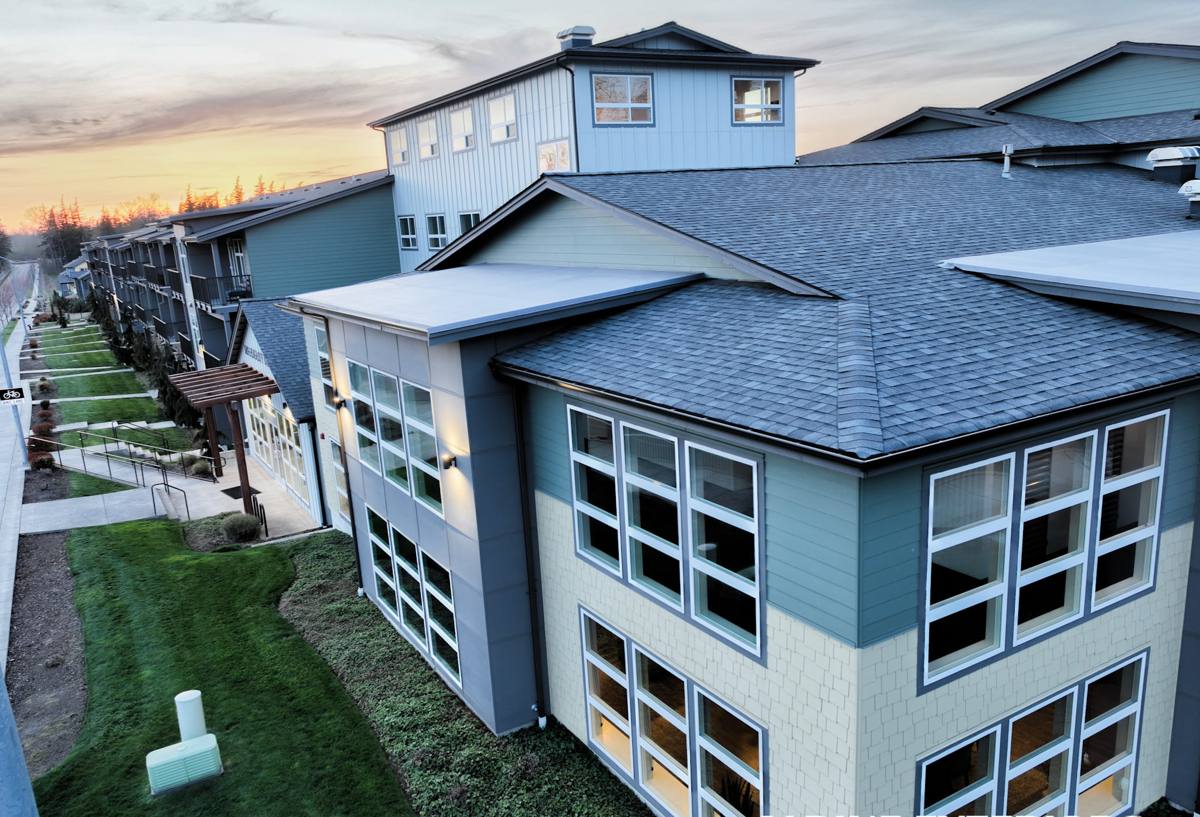
Edgemoor has a mix of older waterfront-adjacent homes and newer builds, and board and batten shows up on both — it reads as clean and architectural on a contemporary build, and it reads as classic Pacific Northwest cottage or farmhouse on an older one. The vertical lines also do something practical: on a lot with tree cover and limited southern exposure, vertical siding sheds water faster off each panel face than horizontal lap siding does, which matters when a wall doesn't get much sun to dry out between storms.
The trade-off is that board and batten has more seams and more fastener penetrations per square foot than lap siding, and every one of those is a place water can try to get behind the cladding. In a climate that stays wet for months at a stretch, that detail work is what separates a board and batten job that looks good for twenty years from one that starts showing problems in five.
Where We See It Used Most
- Full-elevation accents on gables, dormers, and entry features
- Whole-house siding on newer farmhouse-style or modern builds
- Mixed with lap siding as a water table or wainscot transition
- Additions and garages where owners want the batten look to match an existing home
What Correct Board & Batten Installation Actually Requires
Board and batten looks simple — vertical panels, battens over the seams — but the assembly behind it is where the job succeeds or fails. In a wet, coastal-influenced climate like Edgemoor's, we don't treat any of the following as optional:
- A drainage plane behind the panels. Vertical siding needs a way for any moisture that gets past the surface to drain and dry, rather than sitting against the sheathing. A furred-out rainscreen gap does this far better than panels nailed flat to the wall.
- Correct fastener placement and type. Battens and panels need to be fastened per the manufacturer's engineering, not just "wherever it holds." Near the bay, we favor corrosion-resistant fasteners rated for coastal exposure — standard fasteners can streak or fail years before the siding does.
- Flashing at every horizontal interruption. Window heads, roof-to-wall intersections, and any horizontal trim need flashing that sheds water outward, not just caulk holding it back.
- Bottom clearance off grade, decks, and roofs. Board and batten run too close to a deck surface or roofline is one of the most common failure points we find on older homes — it wicks moisture straight into the panel end grain.
- Factory-sealed, factory-finished panel edges. Field-cut edges get primed and sealed before installation, every time, not "when we get to it."
Why We Install Only James Hardie for Board & Batten
Board and batten is sold in a lot of materials, and most of them can be made to look right on install day. The difference shows up two, five, and ten winters later. We standardized on James Hardie fiber cement for this style specifically because of how it behaves once it's wet, which is most of the year around Edgemoor.
| Material | How It Handles Sustained Moisture | Salt Air Behavior | Long-Term Look |
|---|---|---|---|
| James Hardie fiber cement | Non-combustible, dimensionally stable, doesn't swell or rot from repeated wetting | ColorPlus factory finish resists fading and moisture intrusion at the surface | Holds crisp lines and color for decades when installed to spec |
| Primed wood / cedar | Natural material that absorbs moisture, prone to cupping and checking over time | Salt-laden moisture accelerates weathering and finish breakdown | Needs recoating and ongoing maintenance to stay presentable |
| Vinyl board & batten | Won't rot, but can warp or bow with heat and doesn't manage trapped moisture behind it | Can become brittle and discolor faster under coastal UV and salt exposure | Look degrades gradually; panels can't be spot-refinished |
| Engineered wood (LP-style) | Sensitive to sustained moisture at cut edges and seams if not maintained | Edge sealing and caulk maintenance become critical near the water | Good look initially; long-term performance depends heavily on upkeep |
None of these are "bad" products in the abstract — wood and engineered wood siding have real histories and reasonable uses. But for a house sitting in Edgemoor's moisture and salt exposure, we're not willing to put our name on a product whose long-term performance depends on the homeowner staying perfectly on top of recoating, caulk inspection, or edge sealing. Hardie's fiber cement doesn't rot, doesn't need repainting on the same schedule, and comes factory-finished with a warranty that transfers if the home sells.
Moss, Algae, and Salt: The Maintenance Reality of This Location
Whatcom County's moss season is long, and shaded, north-facing walls in tree-covered neighborhoods like Edgemoor are exactly where moss and algae take hold first. On horizontal lap siding, growth tends to collect along the underside of each course. Board and batten has fewer horizontal ledges for it to grip, which is a small but real advantage — but the battens themselves and the panel-to-batten seams still need to be kept clear of buildup so water keeps draining the way the system was designed to.
Salt air adds a second, separate concern: metal hardware. Fasteners, flashing, and any exposed trim metal near the bay corrode faster than the same materials would twenty miles inland. We spec corrosion-resistant fasteners and flashing for Edgemoor jobs for this reason, and it's worth checking on any older siding job in the area — rust streaking below a fastener head is usually the first visible sign that the wrong hardware was used.
Our Process for an Edgemoor Board & Batten Project
- On-site assessment. We look at existing siding condition, wall orientation, moisture history, and how close the home is to shaded or damp-prone areas of the lot.
- Sheathing and moisture barrier check. Anything soft, delaminated, or already carrying moisture damage gets addressed before new siding goes up — covering a problem never fixes it.
- Rainscreen and drainage plane installation. Furring strips or a purpose-built drainage mat go in before any panel touches the wall.
- Panel and batten installation to manufacturer spec. Correct fastener spacing, type, and flashing details at every window, door, and roofline intersection.
- Final detailing. Cut-edge sealing, caulk joints where specified, and a walkthrough so you know what to expect from the finish over time.
Cost Factors for Board & Batten Siding in Edgemoor
Board and batten generally costs somewhat more than standard lap siding of the same material, mainly due to the extra labor of installing and fastening the battens themselves. A few things move the number for a specific Edgemoor home:
| Factor | Why It Matters Here |
|---|---|
| Wall prep and existing damage | Older siding removal often reveals sheathing that needs repair before rainscreen installation |
| Home height and access | Multi-story waterfront-adjacent homes need more staging and scaffolding time |
| Amount of full-elevation vs. accent use | Whole-house board and batten costs more than using it as a gable or entry accent |
| Trim and flashing detail complexity | Homes with more window openings and roof intersections require more flashing labor |
We give firm numbers only after seeing the actual walls, not off a phone estimate — there's too much variation in what's hiding behind existing siding to price it any other way.
Why Hiring a Crew That Already Works Edgemoor Matters
A lot of siding problems we get called to fix in this neighborhood weren't caused by bad material — they were caused by a crew that installed the same way they would on a dry, inland lot. Skipping the rainscreen gap, using standard fasteners instead of corrosion-resistant ones, or leaving cut edges unsealed rarely shows up as a problem in year one. It shows up in year four or five, after a few full wet seasons and some salt exposure have had time to work on the weak points. A crew that regularly works this specific stretch of Whatcom County knows to build for those conditions from the start, not retrofit for them after a callback.
Signs Your Current Board & Batten Siding Needs a Look
- Dark streaking or rust trails below fastener heads or trim
- Persistent moss or algae buildup in the batten seams, not just on the surface
- Soft spots or slight give when you press on a panel near the base
- Gaps opening up between battens and panels, especially near corners
- Paint or finish that's peeling or bubbling rather than just fading evenly
- Visible warping or bowing along a panel's vertical run
If you're weighing new board and batten siding for a home in Edgemoor, or you're seeing any of the signs above on what's already there, we're happy to take a look and walk you through what we'd actually recommend for your specific walls. Fill out the form below for a free, no-pressure estimate.