 Whatcom County
Composite Decking Built for Lynden's Weather, Not Just Its Looks
Lynden sits inland from the Salish Sea, but it doesn't escape the marine climate that defines Whatcom County. Moisture-laden air moves through the Nooksack valley most of the year, and between the fall storms, winter drizzle, and the long stretch of gray, damp months that follow, a deck here spends far more time wet than dry. Add in the region's moss season — which in Whatcom County can run from early fall through late spring — and you have an environment that punishes any decking material with weak spots around moisture.
That's the lens we use when we talk to Lynden homeowners about composite decking. It's not a generic "upgrade your backyard" conversation. It's about picking a product and an installation method that will actually hold up to driving rain, standing water on shaded boards, and the slow creep of moss and algae that settles into anything with a rough or porous surface.
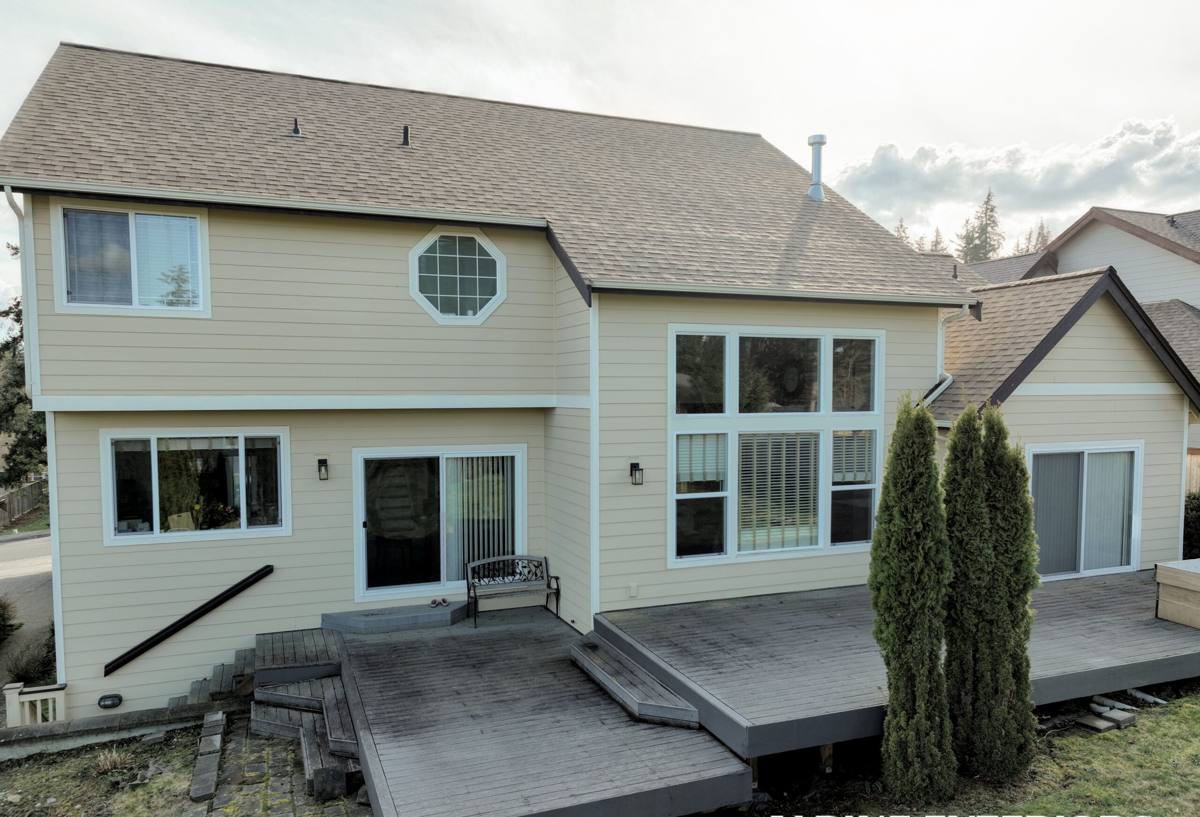
Why Composite Makes Sense for a Lynden Backyard
Wood decking isn't a bad product — but it's an honest trade-off. It needs regular sealing, sanding, and staining to keep water out of the grain, and in a climate where the deck rarely gets a long dry stretch to cure a fresh coat, that maintenance window shrinks. Skip a season and you're often looking at graying, splintering, or soft spots by the ledger and stair stringers where water sits longest.
Composite decking was built to solve exactly that problem. A quality capped composite board doesn't have open wood grain for moisture to wick into, so it resists the swelling, splintering, and rot that Whatcom County's wet season causes in wood. It also doesn't need annual staining — which matters a lot here, since Lynden's short summer dry window doesn't leave much time for a full sealing job anyway.
None of that means composite is maintenance-free. It still needs to be kept clear of moss, pollen, and organic debris, and the substructure underneath still has to be built and vented correctly. Composite reduces the maintenance burden on the board surface itself — it doesn't eliminate the need for a deck that's designed to shed water.
Where Composite Still Requires Judgment
Not every composite product performs the same in a wet climate. Boards with a fully capped profile on all four sides resist moisture intrusion at cut ends and fastener holes far better than partially capped or uncapped boards. Cheaper composite products can also trap moisture between the board and joist if ventilation isn't planned into the substructure, which defeats a lot of the material's advantage. We factor this into which products we recommend and how we detail the framing underneath.
What a Correct Composite Deck Installation Involves
The board itself is only part of a deck's performance in this climate. Most of the problems we get called out to fix on existing decks — composite or wood — trace back to the substructure, not the decking surface.
Substructure and Drainage
Joists need consistent spacing rated for the specific composite product being installed — composite typically requires tighter joist spacing than wood, and manufacturers publish exact specs that voids a warranty if ignored. We also grade and vent the space under the deck so water has somewhere to go instead of pooling against joists or the house foundation, which is a common issue on Lynden lots with heavier clay soil that drains slowly.
Fasteners and Board Spacing
Composite expands and contracts with temperature more than people expect, and gap spacing between boards has to account for that movement — too tight and boards can buckle after a warm stretch; too wide and debris and moss collect in the gaps. We use fasteners and clip systems rated for the specific board profile, not generic deck screws, since mismatched hardware is one of the most common causes of squeaking or board lift we see on other people's installs.
Flashing at the Ledger Board
The ledger connection — where the deck attaches to the house — is the single most important flashing detail on any deck in a climate this wet. Done wrong, water works its way behind the ledger and into the house rim joist, which can cause rot you don't see until it's a structural problem. We flash this connection to shed water away from the house every time, regardless of decking material.
Composite vs. Other Decking Materials for a Lynden Home
| Material | Moisture Behavior | Maintenance | Typical Lifespan |
|---|---|---|---|
| Capped Composite | Resists swelling and rot; low water absorption at board face | Periodic cleaning, no staining/sealing | 25–30+ years |
| Pressure-Treated Wood | Absorbs moisture, prone to warping/splintering without upkeep | Annual cleaning, sealing/staining every 1–2 years | 10–15 years with upkeep |
| PVC (Uncapped Composite Blend) | Very low absorption but can show surface wear faster in UV/moisture cycling | Low, but less forgiving of scratches | 20–25 years |
| Cedar | Naturally rot-resistant but still needs sealing in this climate | Regular sealing, moss/mildew treatment | 15–20 years with upkeep |
We install composite most often in Lynden specifically because it holds up to the moisture cycle without asking the homeowner to keep a maintenance schedule that the local weather makes hard to stick to.
Our Process, Start to Finish
- On-site assessment: We look at drainage, existing framing (if replacing an old deck), house ledger condition, and sun/shade exposure across the deck footprint.
- Material selection: We walk through composite board options and color/finish choices based on your home and budget — no pressure toward the most expensive line.
- Written estimate: A clear scope covering substructure work, decking, railing, stairs, and flashing details, so there are no surprise add-ons mid-project.
- Framing and flashing: Joists, ledger flashing, and drainage grading are done first and correctly — this is the part that determines how the deck performs in five or ten years, not just how it looks on day one.
- Decking installation: Boards, hidden fasteners, and gap spacing installed to manufacturer spec for the specific product.
- Railing, stairs, and trim: Finished to match the composite system, with attention to any transition points where water tends to collect.
- Final walkthrough: We go over care basics for your specific product before we call the job done.
Living With a Composite Deck Through Whatcom County's Moss Season
Composite doesn't rot, but it can still grow moss and algae on the surface, especially in shaded areas or under overhanging trees — a common setup on Lynden properties with mature landscaping. Left unaddressed, that buildup can make boards slick and, over time, hold enough moisture against the surface to stain even a capped board. A basic seasonal routine keeps this from becoming a problem.
- Sweep debris (leaves, needles, pollen) off the deck regularly, especially in fall
- Rinse with a garden hose and mild soap a few times a year; avoid pressure washing directly into board seams
- Keep gutters and downspouts near the deck clear so runoff isn't draining directly onto boards
- Trim back overhanging branches to let sun and air reach shaded sections
- Check railing posts and stair stringers each fall for any movement before winter storms arrive
- Clear gap spacing between boards periodically — trapped debris there holds moisture longest
What Affects the Cost of a Composite Deck in Lynden
| Factor | Why It Matters |
|---|---|
| Deck size and shape | Square footage and number of corners/angles drive material and labor time |
| Substructure condition | Replacing rotted or undersized framing adds cost but is not optional for a safe, long-lasting deck |
| Composite product tier | Fully capped, higher-end boards cost more upfront but perform better long-term in wet climates |
| Railing and stair complexity | Composite or metal railing systems, multiple stair sets, and custom layouts add labor |
| Site access and grading | Sloped lots or limited equipment access can affect both framing approach and labor time |
We give a written, itemized estimate before any work starts, so you know what you're paying for the substructure versus the decking versus railing — not a single lump number that hides where the money is going.
Why It Matters That We Already Work in Lynden
A deck built to a generic national spec sheet doesn't automatically account for Whatcom County's specific rain patterns, soil drainage, or moss pressure. We build decks in this area regularly, which means we've already worked out joist spacing and drainage details that hold up to a full Whatcom County wet season, not just a mild-climate showroom standard. We also know which composite products perform well here versus which ones are better suited to drier regions, because we've seen both installed and maintained locally over multiple seasons.
That local track record also means faster, more accurate estimates — we're not guessing at how your lot drains or how much shade a north-facing deck section will get through a Lynden winter. We've seen the pattern before.
Ready for a Straightforward Estimate
If you're considering a new composite deck or replacing an aging wood one, we're happy to come take a look and walk you through honest options for your property — no pressure, no upsell. Use the form below to request a free estimate.