 Whatcom County
Metal Roofing for Cordata Homes: Built for the Weather We Actually Get
Cordata sits in the north end of Bellingham, close enough to the water that salt-laden air is part of daily life, and squarely inside the wet, gray stretch of the year that defines Whatcom County roofing. If you've owned a home here for more than a few years, you already know the pattern: rain that doesn't so much fall as hang in the air for days at a time, wind off the Strait that drives moisture sideways under poorly flashed edges, and a moss season that seems to start earlier and last longer every year. A roof that isn't specifically detailed for this climate will show it — not in year one, but by year five or six, in ways that are expensive to fix after the fact.
Metal roofing, installed correctly, handles this climate better than almost anything else on the market. Installed poorly, it fails in exactly the same spots asphalt does, just with a bigger price tag attached. This page is about what "correctly" means for a Cordata home specifically, not metal roofing in general.
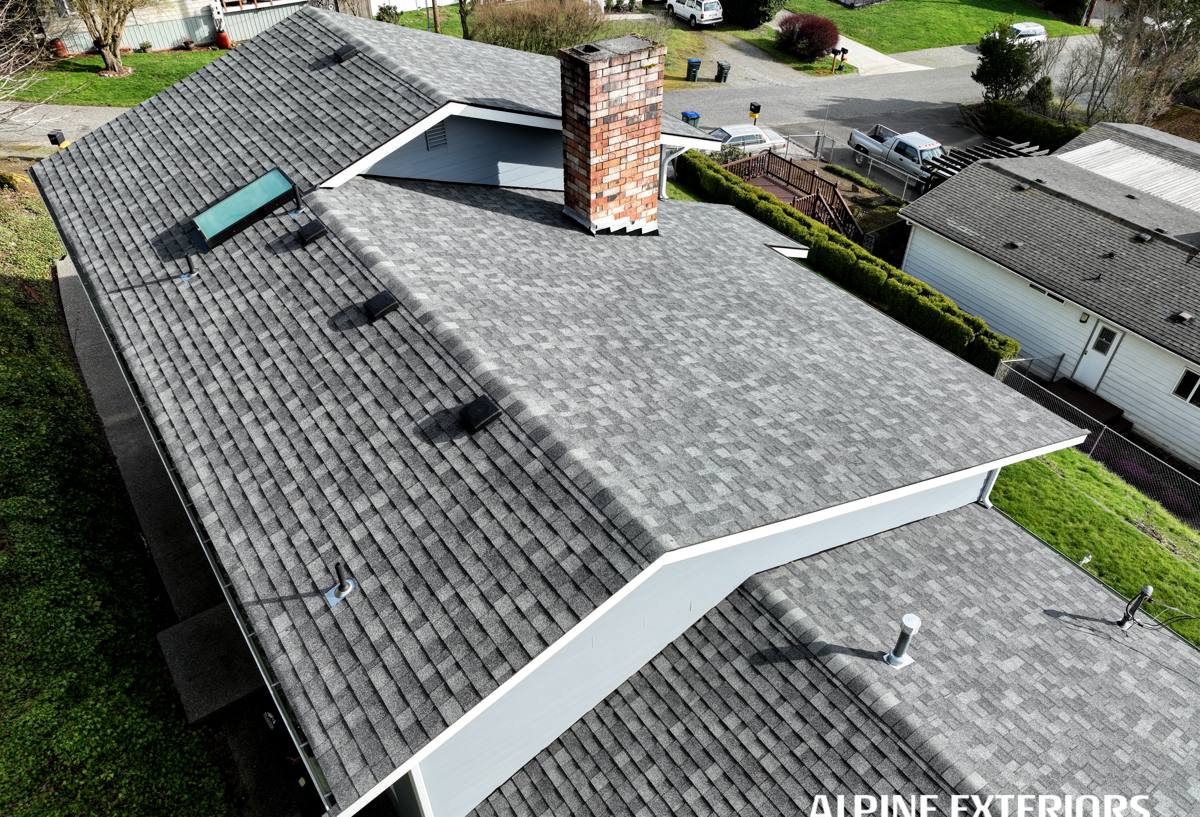
What Whatcom County Weather Actually Does to a Roof
Three things matter more here than in most parts of the country, and they interact with each other.
Salt air and corrosion
Being near the Strait of Georgia and Bellingham Bay means airborne salt reaches roofs on this side of the county even without direct ocean exposure. Salt accelerates corrosion at fasteners, cut edges, and any spot where a protective coating has been scratched or nicked during installation. This is why fastener choice and edge treatment matter more here than they would fifty miles inland.
Driving rain
Wind-driven rain doesn't behave like a garden hose aimed straight down — it pushes water sideways and upward under laps, around penetrations, and into any gap that a fair-weather installer might consider "close enough." Underlayment and flashing details that would pass in a drier climate simply don't hold up to a Whatcom County winter.
Moss and prolonged moisture
Long stretches of damp, shaded weather are exactly what moss and algae need to establish themselves. On a roof surface that holds moisture — valleys, north-facing slopes, areas under tree cover common in Cordata's more established neighborhoods — organic growth isn't just cosmetic. It holds water against the roofing material and, on older metal roofs with worn coatings, accelerates deterioration underneath.
What a Correct Metal Roof Installation Involves
Metal roofing has a reputation for longevity, and it's earned — but that reputation assumes the installation followed a few non-negotiable steps. We treat these as standard on every Cordata roof, not upgrades.
Underlayment built for wet climates
A synthetic, high-temp underlayment with a genuine water-resistant rating goes down first. In a climate where a roof can stay damp for weeks at a stretch, underlayment isn't a formality — it's the actual waterproofing layer if anything ever gets past the metal panels themselves, whether from wind-driven rain, ice, or a future penetration like a new vent or solar mount.
Fastening and panel movement
Metal expands and contracts with temperature swings more than most homeowners expect, even in our relatively mild climate. Fasteners and clips need to allow for that movement without loosening over time or backing out and creating a leak point. This is one of the most common shortcuts we see on rushed installs — fixed fastening patterns that fight the metal instead of working with it.
Flashing at every transition
Valleys, chimneys, skylights, and wall-to-roof transitions are where the vast majority of roof leaks actually start, on metal or any other material. Each of these needs its own properly formed, properly lapped flashing — not a bead of sealant standing in for a flashing detail that was skipped to save time.
Ventilation that matches the assembly
A metal roof over a poorly ventilated attic can trap moisture underneath the deck, which defeats the purpose of installing a weather-resistant surface in the first place. We check intake and exhaust ventilation as part of any metal roofing job, not as an afterthought.
Choosing the Right Metal Roofing System for a Cordata Home
Not every metal roofing product is the right fit for every house, budget, or roofline. Here's how the main options compare for a home in this climate.
| System | Best For | Corrosion Resistance Here | Trade-Offs |
|---|---|---|---|
| Standing seam (concealed fastener) | Homes wanting the longest service life and cleanest look | Excellent — no exposed fasteners for salt air to attack | Higher upfront cost; installation is more labor-intensive and installer skill matters a lot |
| Exposed-fastener panel | Budget-conscious projects, outbuildings, simpler rooflines | Good, but fastener gaskets wear over time and need eventual re-torquing or replacement | More maintenance long-term; visible fastener lines |
| Metal shingle/shake profile | Homes wanting a traditional look with metal's durability | Good with quality coatings; more seams than standing seam | More complex flashing at valleys and edges due to shaped panels |
For most Cordata homes, we steer clients toward standing seam when the budget allows, specifically because of the salt air exposure — no exposed fasteners means fewer points where corrosion can start. Exposed-fastener systems still perform well here when the fasteners are the right gasketed, corrosion-resistant type and the installer accounts for re-checking them down the road.
Moss, Algae, and Keeping a Metal Roof Clean Without Damaging It
Metal doesn't feed moss the way organic roofing materials can, but it isn't immune to growth sitting on its surface, especially in shaded valleys or under overhanging trees common around Cordata. The mistake we see most often is homeowners — or the wrong kind of roofing company — treating a metal roof like a shingle roof when it comes to cleaning.
- Never pressure wash a metal roof directly — it can drive water up under laps and strip factory coatings.
- Skip chlorine-based cleaners; they can degrade paint finishes and harm surrounding landscaping and gutters.
- Trim back overhanging branches where possible to reduce shade and debris buildup in valleys.
- Clear debris from valleys and around penetrations at least once a year — this is where moisture and organic matter collect first.
- Use a soft-bristle brush and a mild, roof-safe cleaning solution if growth needs to be removed by hand.
- Have gutters checked alongside the roof — a clogged gutter backs water up under the roof edge regardless of what the roofing material is.
Our Process, Start to Finish
We keep the process the same whether it's a full re-roof or a repair, because skipping steps is where problems start.
- Walkthrough and honest assessment. We look at the existing roof, attic ventilation, and any trouble spots before recommending anything — including telling you if a repair makes more sense than a full replacement.
- Written estimate with real specifics. Panel type, underlayment, fastening system, and flashing plan spelled out — not a vague lump-sum number.
- Tear-off and deck inspection. We check the decking underneath for rot or soft spots before anything new goes down; this is where problems from a previous roof often get discovered.
- Underlayment and flashing installation. Done to the standard described above, with particular attention to valleys and wall transitions.
- Panel installation. Fastened and seamed to allow for thermal movement, with attention to consistent reveal lines and clean edges.
- Final walkthrough. We review the finished roof with you, including basic maintenance expectations, before calling the job done.
Mistakes We Commonly Find on Older Roofs in This Area
A lot of our metal roofing calls in the Cordata area start as repair inspections on roofs installed by someone else. The recurring issues are worth knowing about, whether you're planning a new roof or trying to figure out why an existing one is leaking.
| Issue | Why It Happens | Consequence |
|---|---|---|
| Sealant used instead of proper flashing | Faster and cheaper than fabricating correct flashing | Sealant degrades in UV and weather within a few years; leak returns |
| Fasteners installed too tight or too loose | Rushed installation, wrong torque | Backed-out fasteners create direct leak points; over-driven fasteners crush gaskets |
| Mismatched or missing ventilation | Roofer only worked on the roof surface, not the attic system | Condensation forms under the deck, leading to hidden moisture damage |
| Standard underlayment used in a high-moisture assembly | Cost-cutting on materials not visible after installation | Underlayment breaks down faster, leaving no real backup if the surface is compromised |
What Homeowners Actually Need to Do to Maintain It
Metal roofing is genuinely low-maintenance compared to most alternatives, but "low-maintenance" isn't "no-maintenance." A short annual check — clearing debris from valleys, confirming gutters are flowing freely, and a visual scan for any loose or displaced flashing after a bad windstorm — catches almost everything before it becomes a real problem. We're happy to do this as a quick seasonal check for clients if climbing on a roof isn't something you want to do yourself.
Why It Matters That We Already Work in Cordata
A roofing crew that mostly works drier climates will default to details that are fine there and inadequate here. Knowing that a north-facing valley in this neighborhood holds moisture two months longer than a south-facing one, or that a particular fastener spec holds up better against the salt exposure this close to the water, isn't something you learn from a manufacturer's install guide — it's something you learn from doing the work here, repeatedly, and going back to fix what didn't hold up. That's the standard we hold every Cordata metal roofing job to.
If you're weighing a new metal roof, a repair, or just want an honest read on the condition of what's up there now, we're glad to take a look. Reach out for a free, no-pressure estimate using the form below.