 Whatcom County
Siding Repair in Cordata: What Whatcom County Weather Does to a Wall
Cordata sits inland enough from the water to feel a little sheltered, but homes here still take a beating from the same weather pattern that defines Whatcom County: long stretches of driving rain from fall through spring, salt-tinged marine air drifting in off the Sound, and shaded, damp lots where moss and algae get a foothold and never really leave. None of that is dramatic on its own. The damage shows up slowly, in siding that stays wet longer than it should, fasteners that back out, and paint that fails years before it would in a drier climate. A siding repair job in this neighborhood isn't just patching a hole — it's addressing why that spot failed in the first place.
We work Cordata regularly, along with the rest of Whatcom County, and the repair calls we get here follow a pretty consistent pattern: moisture intrusion at trim and butt joints, moss buildup on north- and shade-facing walls, and older siding materials — vinyl, untreated wood, or aging composite panels — that were never really built for this level of sustained dampness.
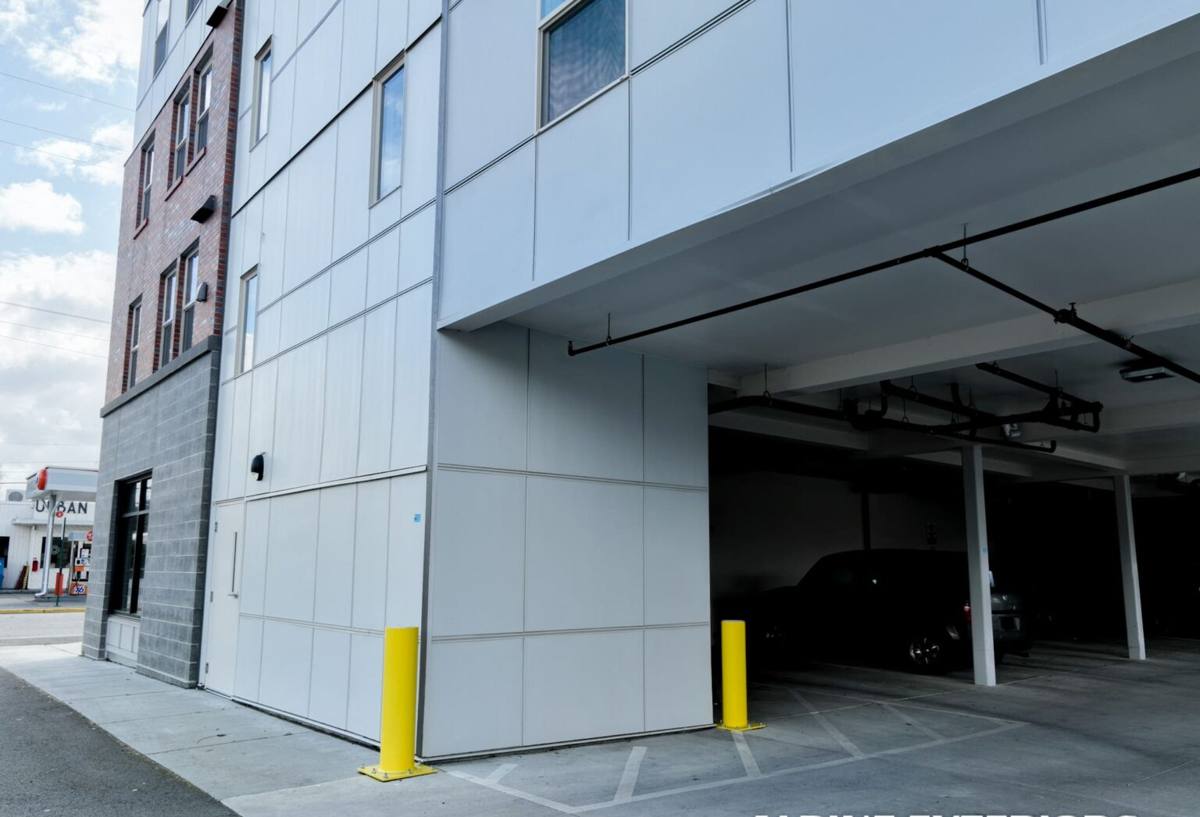
The Cordata Climate Problem: Moisture That Doesn't Dry Out
Rain load and slow drying
Whatcom County doesn't get the heaviest rainfall totals in Western Washington, but it gets long duration — weeks of drizzle and steady rain with short drying windows in between. Siding that's even slightly compromised (a cracked caulk joint, a lifted panel edge, a nail hole) stays wet longer here than it would in a climate with more sun and wind to dry things out. That extended wet time is what turns a small defect into rot, mold, or a soft spot in the wall sheathing behind the siding.
Salt air and coastal proximity
Cordata isn't waterfront, but Whatcom County as a whole sits close enough to Bellingham Bay and the Salish Sea that salt-laden air reaches inland neighborhoods, especially during storms. Salt air accelerates corrosion on exposed fasteners, staples, and metal flashing, and it speeds up the breakdown of paint films on wood and lower-grade composite siding. Over years, that means more frequent fastener failure and more paint maintenance than you'd see in a purely inland climate.
Moss and algae season
Shaded lots, mature trees, and consistent moisture make Cordata good moss territory. Moss holds water directly against the siding surface, which is a problem for wood and older fiber cement that wasn't factory-sealed, and it's cosmetically ugly on any material if it's not dealt with. Repair jobs where moss has been left to grow often reveal soft or delaminating material underneath once it's cleared away.
What a Correct Siding Repair Actually Involves
A lot of "repair" work in this trade is really just cosmetic patching — caulk over a gap, a fresh coat of paint over a stain, a new piece of siding nailed over rot without checking what's behind it. That approach buys a season or two, not a fix. A correct repair follows a different order of operations:
- Diagnose before you touch anything. Pull the damaged piece and check the wall sheathing, house wrap, and framing behind it. If there's hidden moisture damage, patching the visible siding without addressing what's underneath just seals the problem in.
- Identify the water path. Damage rarely happens randomly — it's usually tied to a specific failure point: a missing kick-out flashing, a caulked joint that should have been left open to drain, a butt joint with no proper flashing behind it, or siding installed too close to grade or a deck surface.
- Fix the cause, not just the symptom. Replace compromised sheathing or framing, correct flashing details, and restore proper drainage paths before any new siding goes back on.
- Match or transition the material correctly. If the surrounding siding is sound, we match it. If it's an older or discontinued product, we talk through whether a broader repair or partial re-side makes more sense than chasing a color and profile match that won't hold up long-term.
- Reseal and finish to spec. Proper caulking at the right joints (and none at the joints that need to breathe), correct fastener type and placement, and a finish that matches the surrounding wall.
Why We Only Repair and Install James Hardie Fiber Cement
We get asked fairly often to patch or match vinyl, LP SmartSide, cedar, or older composite siding, and we're upfront about our position: we install and stand behind James Hardie fiber cement exclusively. That's not a marketing line — it's a decision based on what holds up in this specific climate.
Why it matters for repair work specifically
Vinyl expands and contracts with temperature swings and can crack or warp, especially at repair seams where a new piece has to mate with older, already-weathered material. Cedar and primed wood siding are attractive but need consistent repainting and sealing to resist the rot risk that comes with Whatcom County's extended wet season — skip a maintenance cycle and moisture gets in fast. LP SmartSide is an engineered wood product, which means any exposed cut edge or damaged spot is a moisture entry point if it isn't sealed correctly and kept sealed. James Hardie fiber cement is non-combustible, doesn't rot, and its ColorPlus factory finish resists the fading and peeling that salt air and UV cause on field-painted materials. When we repair a Hardie wall, we're working with a material engineered for exactly this kind of weather — not fighting against one.
Material Comparison for Cordata's Climate
| Material | Moisture Resistance | Maintenance Burden | Salt Air / Coastal Durability |
|---|---|---|---|
| James Hardie Fiber Cement | Excellent — engineered for wet climates | Low — factory finish, no repainting cycle needed for years | Strong — non-combustible, resists moisture-driven decay |
| Vinyl | Fair — can trap moisture behind panels if installed loose | Low, but cracks/warps over time and can't be spot-repaired invisibly | Moderate — UV and temperature swings cause brittleness |
| Cedar / Untreated Wood | Poor without diligent upkeep | High — regular painting, sealing, moss removal | Weak — prone to rot and fastener corrosion near salt air |
| LP SmartSide / Engineered Wood | Good if sealed and maintained; vulnerable at cut edges | Moderate — edge sealing and paint upkeep required | Moderate — moisture entry at damaged spots accelerates failure |
Signs Cordata Homeowners Should Watch For
- Persistent moss or algae growth on shaded or north-facing walls
- Soft or spongy siding when pressed, especially near the bottom courses or around windows
- Bubbling, peeling, or chalky paint that keeps coming back after repainting
- Visible gaps or cracked caulk at butt joints, corners, or trim
- Rust streaks below nail heads or fasteners
- Musty smell or visible staining on interior walls that share an exterior wall with damaged siding
- Warped, bowed, or separating panels, particularly on vinyl or older composite siding
Our Process for Cordata Repair Calls
1. On-site assessment
We look at the damaged area and the surrounding wall, not just the spot you called about. Moisture problems in Whatcom County rarely stay contained to one panel.
2. Honest scope conversation
We'll tell you plainly whether this is a targeted repair, a larger section replacement, or a case where a full re-side makes more long-term financial sense — especially if the existing material is aging vinyl or unmaintained wood nearing the end of its practical life.
3. Repair or transition to Hardie
If matching existing siding is the right call, we do that. If the home would benefit from transitioning a section — or eventually the whole exterior — to James Hardie, we'll explain why and let you decide on your own timeline. No pressure, no upsell tactics.
4. Correct installation to manufacturer spec
Proper fastener spacing, flashing details, and caulk placement matter as much on a repair as on a full install. We follow James Hardie's installation requirements because that's what keeps the warranty valid and the wall dry.
Why a Crew That Already Works Cordata Matters
Siding repair isn't just a materials question — it's a local-conditions question. A crew that regularly works Cordata and the surrounding Whatcom County area already knows which orientations tend to hold moss, how the marine layer affects drying times on shaded lots, and what kind of flashing failures show up most often in homes of a given age and construction style in this area. That local pattern recognition speeds up diagnosis and helps us catch problems — like a hidden moisture path behind a seemingly small crack — that a crew unfamiliar with the region's specific rain-and-salt combination might miss on a first pass.
Cost Factors Worth Understanding
We don't publish fixed repair prices because the range is genuinely wide depending on what's found once we open up the wall. A few honest factors that drive cost:
| Factor | Why It Matters |
|---|---|
| Extent of hidden moisture damage | Rotten sheathing or framing behind the visible siding adds labor and material beyond the surface patch |
| Material match availability | Matching older or discontinued siding profiles can take longer and cost more than a straightforward panel swap |
| Wall height and access | Second-story or hard-to-reach sections require more setup and time |
| Flashing and drainage corrections | Fixing the underlying water path, not just the visible symptom, is what prevents a repeat call |
| Scope: patch vs. section vs. full re-side | Sometimes a larger, more efficient repair costs less per square foot than several small patches over time |
If you're seeing moss buildup, soft spots, or recurring paint failure on your Cordata home's siding, we're happy to take a look and give you a straightforward assessment. Reach out for a free, no-pressure estimate using the form below — we'll tell you honestly what we see and what it would take to fix it right.